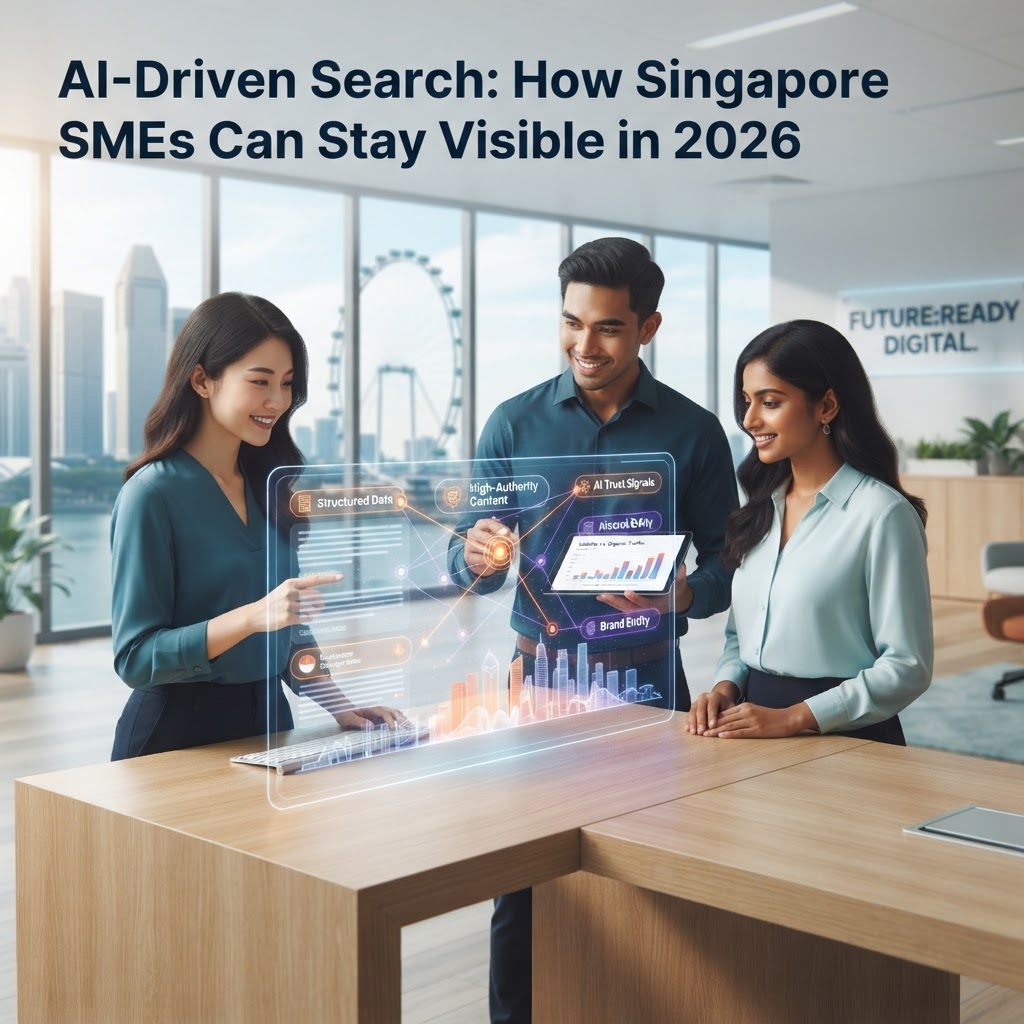
Why integrated web design and SEO matter in 2026
In 2026, conversion-driven websites in Singapore are no longer about pretty layouts alone. Search engines and users expect experiences that load instantly, anticipate intent, and deliver value across devices. Combining modern web design with SEO Singapore best practices turns traffic into measurable revenue: better rankings, higher engagement, and more conversions.
Recent trends—AI in search, visual and voice discovery, and privacy-first analytics—mean designers and SEO specialists must collaborate from day one. Delivering this integration is the fastest route to outranking competitors and converting visitors into customers.
The new fundamentals: speed, accessibility, and clarity
Performance remains the number one determinant of conversion. Page speed impacts both SEO and user behavior. In Singapore’s fast-paced market, users expect near-instant results. Prioritize these elements:
- Optimize images with modern formats (AVIF/WebP) and adaptive loading.
- Implement critical CSS and defer non-essential JavaScript to reduce render-blocking.
- Use edge caching and CDNs oriented for APAC latency.
- Ensure semantic HTML and ARIA attributes for accessibility and crawlability.
A clean, accessible site helps search engines index content properly and reduces friction for users—both directly boosting conversion rates and strengthening organic visibility.
UX design that supports SEO and conversions
User experience (UX) design influences engagement metrics that search engines factor into rankings. Focus on:
- Clear hierarchy: Use headings, short paragraphs, and scannable lists.
- Intent-driven landing pages: Match page content to high-value keyword intent (informational, transactional, navigational).
- Mobile-first interactions: Singapore has high mobile adoption—design touch-friendly CTAs and simplified forms.
- Micro-interactions and trust signals: Loading placeholders, progress indicators, and visible trust badges reduce abandonment.
When UX teams and SEO specialists align, every element—copy, layout, CTA placement—becomes a conversion lever and a ranking signal.
Technical SEO essentials for Singapore sites
Technical SEO sets the foundation for performance and discoverability. Key priorities:
- Structured data: Implement Schema markup for products, reviews, local business info, and FAQs to enhance SERP presence.
- hreflang and regional targeting: If you serve multi-language audiences in SEA, use hreflang correctly.
- Crawl budget and site architecture: Keep important pages within a few clicks of the homepage and avoid deep, orphaned pages.
- Secure, modern hosting: HTTPS, HTTP/2 or HTTP/3, and robust server response times are table stakes.
For businesses scaling in Singapore, linking technical efforts to conversion goals—like ensuring forms render correctly across devices—reduces leakage between search clicks and completed goals.
Content strategy: relevance, trust, and AI-assisted creation
High-quality content continues to fuel SEO Singapore success. In 2026, content needs to be both authoritative and useful. Adopt these tactics:
- Topic clusters: Group pillar pages and related subtopics to concentrate topical authority.
- E-E-A-T focus: Showcase experience, expertise, authoritativeness, and trustworthiness with author bios, citations, and case studies.
- Conversational formats: Use FAQs, short videos, and micro-guides that match voice and visual search queries.
- AI-assisted workflows: Use generative tools to speed research, draft outlines, and surface keyword opportunities—but always human-edit for accuracy and brand voice.
For practical cross-discipline guidance, explore how AI SEO intersects with modern design thinking in regional approaches like SEO Singapore best practices.
Local SEO in Singapore: fine-grained tactics that convert
Local intent is high for many Singapore businesses—especially for retail, F&B, and service providers. Local SEO tactics that increase footfall and conversions include:
- Google Business Profile optimisation with regular posts, accurate categories, and geo-tagged images.
- Local landing pages optimized for neighbourhoods and micro-moments.
- Reviews strategy: Make leaving reviews easy and respond to feedback quickly.
- Local schema and NAP consistency across directories.
Design choices—such as click-to-call buttons and store hours on landing pages—directly affect conversion rates from local search traffic.
AI-driven trends reshaping search and design
AI is transforming both how users find businesses and how designers create experiences. Key 2026 trends:
-
Generative Engine Optimisation (GEO): Search engines increasingly use generative systems to assemble answers from multiple sources. Optimise content to feed those systems—clear facts, structured data, and unique insights help your pages appear in AI-driven summaries. Learn practical GEO approaches tailored for Singapore at generative engine optimisation Singapore.
-
AI search assistants and conversational experiences: Design conversational landing pages and FAQ structures that map to assistant-driven queries.
-
Visual and multimodal search: Optimise images with descriptive filenames, alt text, and structured data so visuals are discoverable.
-
Predictive personalisation: Use AI to tailor content and CTAs in real-time based on user signals; this reduces friction and increases conversion likelihood.
Teams that embrace AI responsibly—combining automation with human validation—will unlock better ROI from search and design investments. For frameworks that bridge AI and marketing, see resources on AI-driven digital marketing in Singapore.
Conversion Rate Optimization (CRO) techniques that scale
Continuous testing is the lifeblood of conversion optimization. Use A/B and multivariate tests to validate assumptions and scale wins. Focus areas:
- Above-the-fold clarity: Test headline variants, lead value propositions, and CTA phrasing.
- Form optimization: Reduce fields, enable autofill, and split long forms into progressive steps.
- Social proof and urgency: Test placement of testimonials, trust badges, and time-limited offers.
- Post-click experience: Ensure landing pages align with ad copy and organic snippets to maintain intent.
Combine analytics insights with qualitative user testing to prioritize experiments and stop chasing vanity improvements.
Measuring success: KPIs that link SEO to revenue
Tie SEO and design work to business outcomes through clear KPIs:
- Organic conversion rate and assisted conversions.
- Organic revenue per visitor.
- Page load time vs bounce rate correlations.
- Local search impressions vs in-store visits (when data is available).
Use event-based tracking and server-side analytics to adapt to privacy changes while retaining actionable insights. For deeper technical approaches to search optimisation, reference guides on AI search optimisation for SMEs in Singapore.
Choosing the right partner in Singapore
When hiring an agency or freelancer, evaluate candidates on three pillars: cross-disciplinary expertise (design + SEO), transparent testing methodologies, and local market experience. Look for case studies showing improved organic traffic and conversion lift—not just ranking changes.
Consider agencies that publish their methodology and offer collaborative roadmaps, so you get a predictable path from discovery to measurable growth. For ecommerce-specific strategies that combine design and SEO, see practical examples at web design and SEO for ecommerce Singapore.
Action plan checklist for 90 days
- Audit: Run a combined design + SEO audit to identify critical speed and crawlability issues.
- Quick wins: Fix Core Web Vitals, compress assets, and optimise key landing page headlines.
- Content roadmap: Create pillar pages and local landing pages aligned to buyer intent.
- Testing framework: Set up experiments for CTAs, forms, and pricing visibility.
- AI readiness: Implement structured data and prepare content snippets for generative systems.
For tactical implementation help and strategy templates, review resources from established local teams like the ones behind iprodezign.
Closing perspective: design and SEO as a growth engine
In Singapore’s competitive digital landscape, web design and SEO are inseparable levers for growth. By prioritising speed, accessibility, and AI-aware content, businesses can build resilient, conversion-focused websites. The 2026 advantage goes to teams that treat design and SEO as a unified discipline—measuring impact in leads, transactions, and lifetime customer value rather than just rankings.
Adopt the integrated approach: audit, prioritise, test, and iterate. That cycle turns organic traffic into predictable business outcomes and positions your brand for sustained growth in a rapidly evolving search environment.