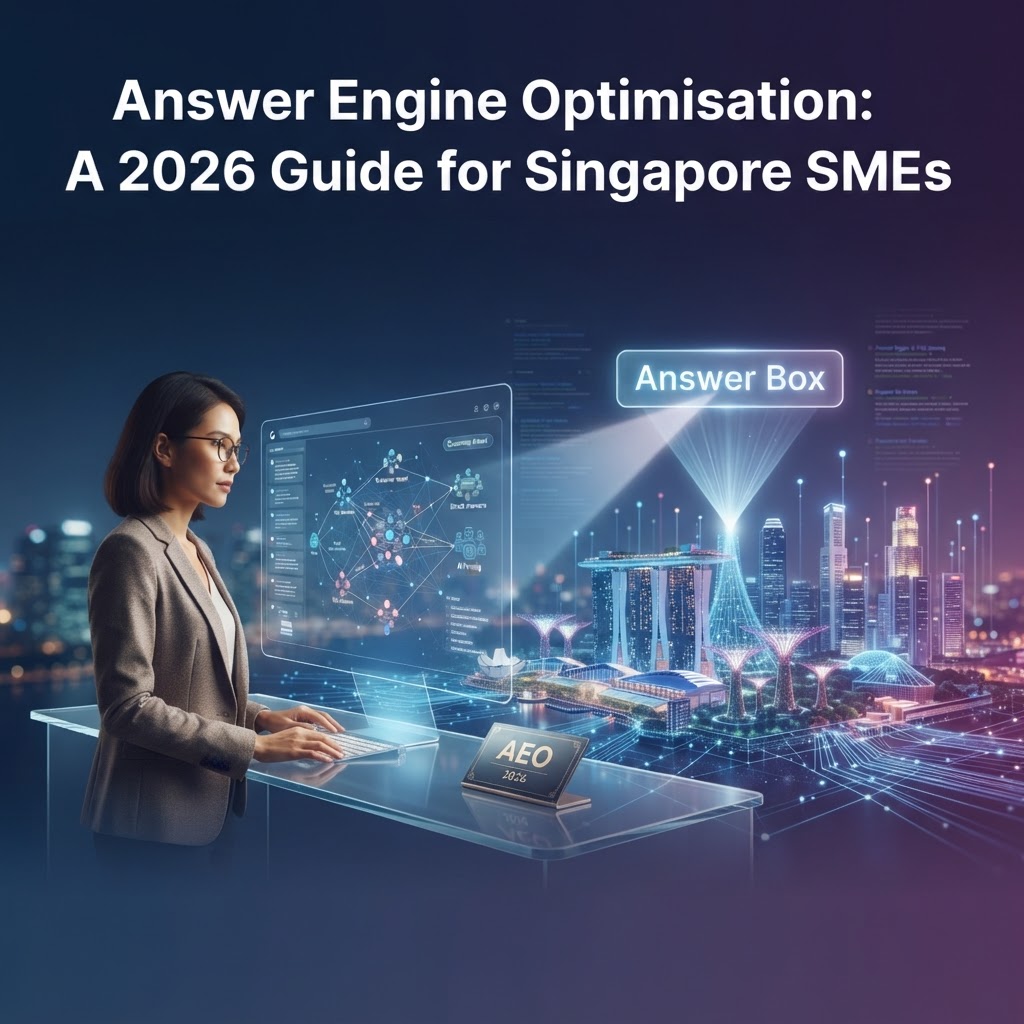
Generative Engine Optimization: A 2026 Guide for Singapore SMEs to Stay Visible
As the digital landscape shifts in 2026, Singaporean business owners are noticing a fundamental change in how potential customers find services. Traditional search, once dominated by a list of ten blue links, is evolving into a conversational experience powered by AI answer engines. This transition marks the rise of Generative Engine Optimization, a critical pivot for SMEs looking to maintain their competitive edge in a crowded APAC market. For local businesses, relying on legacy SEO tactics—like excessive keyword density or basic backlinking—is no longer enough to secure visibility. Today, answer engines prioritize context, intent, and structured authority. If your business is not optimized to be the definitive source of information for your specific niche, you risk falling out of the conversation entirely. At iPro Dezign, we help Singapore SMEs navigate this transition by modernizing web infrastructures and aligning content strategies with AI logic. With support from the Productivity Solutions Grant (PSG), which offers funding for eligible digital transformation projects, you can upgrade your digital presence to meet these new standards without breaking your budget. This guide explores the practical shifts required to succeed in this new era of search.
Table of Contents
Why Generative Engine Optimization Matters for SMEs
The core shift from traditional SEO to Generative Engine Optimization centers on the change from retrieval to synthesis. In the past, search engines merely pointed users to websites. Now, generative AI models analyze millions of data points to generate direct, summarized answers. For an SME in Singapore, this means your brand must become the primary source of truth within your category. If a user asks a query about local furniture customisation or corporate tax advisory, the AI is looking for high-quality, trustworthy, and structured data to cite. When we speak about Generative Engine Optimization, we are referring to the intentional practice of formatting your digital footprint so that AI engines can easily extract, trust, and present your information. This is not about tricking an algorithm; it is about providing clear, authoritative, and helpful answers that align with the user intent behind common search queries. Many Singaporean SMEs face the challenge of being drowned out by larger international players who have bigger budgets. However, AI engines often prioritize local, specific, and hyper-relevant content to answer location-based queries effectively. By focusing on your unique value proposition and answering the specific questions your local customers ask, you can gain a distinct advantage. Our team has observed that businesses which emphasize expert-led content—content written to solve real customer problems rather than just targeting high-volume keywords—tend to perform significantly better when AI models aggregate information. This evolution requires a shift in mindset: stop writing for bots and start building a digital knowledge base that positions your organization as an industry expert in Singapore. Transparency, accuracy, and clear attribution are the new pillars of search engine visibility.
Optimizing Content for AI Clarity and Authority
To succeed in the current environment, your website content must be structured in a way that machines can easily interpret and synthesize. This process begins with a content architecture designed for semantic search. Semantic search focuses on the intent and context of a search query rather than just the literal words. For instance, instead of just repeating the keyword Generative Engine Optimization, you should provide comprehensive answers to questions like, “How does AI search affect Singapore SMEs?” or “What are the benefits of PSG-funded digital transformation?” By creating structured FAQ sections, detailed guides, and informative blog posts that directly address your customers’ pain points, you enable AI to view your content as a reliable resource. We recommend adopting a ‘pillar-cluster’ model. In this framework, you create one extensive, authoritative pillar page about a core service, supported by several smaller, more specific cluster articles that delve into niche topics. This creates a web of interconnected, high-quality content that signals authority to AI models. Furthermore, readability and accuracy are paramount. Avoid overly promotional language; instead, focus on objective, helpful insights that demonstrate expertise. Our team often helps clients audit their existing content to ensure it meets these standards. We check for clarity, factual accuracy, and local relevance. When you present clear, concise information, you make it easier for AI-powered engines to cite your company as the answer. Additionally, including schema markup—which is code that helps search engines understand the context of your page—is essential. This technical layer acts as a roadmap for AI, highlighting your location, service offerings, business hours, and customer ratings, ensuring that the engine extracts exactly what is needed to present your business to potential clients efficiently.
| Metric | Traditional SEO Focus | Generative Engine Optimization |
|---|---|---|
| Core Goal | Ranking for Keywords | Providing Direct Answers |
| Content Style | Keyword-Rich Text | Expertise-Driven Insights |
| Primary Metric | Organic Traffic Volume | Brand Mentions & Relevance |
| Technical Focus | Backlink Profiles | Structured Data & Schema |
The Technical Foundation: Performance and Structure
A high-performing, user-friendly website is no longer optional; it is the bedrock of your visibility strategy. Generative engines are heavily influenced by the technical health of your site, including metrics known as Core Web Vitals. These vitals measure aspects of user experience such as loading speed, interactivity, and visual stability. If your site is slow, clunky, or difficult to navigate, AI engines may ignore it because the underlying experience does not meet the standards required for helpful, efficient browsing. For many Singapore SMEs, older websites often struggle with technical debt—meaning they were built on outdated platforms that are not optimized for modern speed standards. A site that loads in under three seconds is crucial. When we optimize sites for our clients, we focus on minimizing unnecessary scripts, compressing images without losing quality, and ensuring the site is mobile-first, which is critical given the high percentage of mobile users in the APAC region. A headless CMS (Content Management System) approach, where the back-end and front-end are separated, is an excellent way to boost performance and security while allowing for a more personalized user experience. Security is another major component of technical excellence, especially with the strict PDPA (Personal Data Protection Act) requirements in Singapore. AI engines are programmed to prioritize secure, verified, and reliable websites. A site that regularly fails security audits or lacks SSL certificates is often deprioritized by automated systems. By investing in a robust technical foundation, you provide the AI with a stable, fast, and secure environment to crawl and index your content. This effort directly correlates to better visibility because you are demonstrating to the engines that your business provides a professional, high-quality digital experience for the end user.
Navigating the Singapore Digital Landscape with PSG
Navigating the digital transformation process can feel overwhelming, but Singapore SMEs have a massive advantage through government support. The Productivity Solutions Grant is specifically designed to help local businesses adopt digital technologies, covering up to 50% of qualifying costs for web development, eCommerce solutions, and digital marketing integrations. This makes the transition to advanced digital practices much more manageable for small business owners. When you combine the technical requirement of Generative Engine Optimization with a PSG-supported project, you essentially get a double win: a faster, more effective website and a significant reduction in investment costs. At iPro Dezign, we specialize in helping local companies navigate these grants. We understand that your priority is running your business, not managing complex web development projects. That is why we provide a one-stop solution. From the initial consultation to design, development, and long-term content strategy, we handle the technical heavy lifting while keeping you informed at every step. Transparency is a core value for us; we are honest about what it takes to stay visible in 2026. This means focusing on sustainable, long-term growth rather than quick, risky tactics that could harm your brand. Whether you are looking to revamp your eCommerce store or launch a new corporate site, leveraging government funding is a smart way to ensure your business remains compliant and competitive. Being an SME in Singapore means you have access to a unique, supportive ecosystem. By choosing a partner who understands the local regulatory requirements and the nuances of the regional market, you position your brand to thrive despite the shifting nature of search. Let us focus on the technical implementation of your digital growth, so you can focus on delivering the service your customers deserve.
In conclusion, the shift toward Generative Engine Optimization represents a move toward a more intelligent, helpful internet. While the change might feel daunting, the core requirement remains the same: providing value to your customers. By prioritizing authoritative content, solid technical performance, and strategic use of support frameworks like the PSG, Singapore SMEs can maintain and grow their visibility. At iPro Dezign, we are committed to being your partner in this journey, offering expertise, reliability, and clear guidance. If you are ready to ensure your business stays ahead, we invite you to reach out for a consultation. Let us examine your current digital footprint and explore how we can position your brand for sustainable success in this new, AI-driven era. Your growth is our mission.
Frequently Asked Questions
What is the main difference between traditional SEO and Generative Engine Optimization? Traditional SEO focuses on getting your site to rank as a link in a list. Generative Engine Optimization focuses on making your content clear and authoritative so AI models can cite your site directly in a summary.
How can PSG help my SME with this transition? The Productivity Solutions Grant can cover up to 50% of the costs for qualifying digital transformation projects, including website rebuilds that improve performance, security, and schema structure, all of which are essential for AI visibility.
Do I still need standard SEO if I focus on Generative Engine Optimization? Yes. Most AI engines still crawl websites based on traditional standards of quality. A solid technical foundation and high-quality content are the basis for both traditional rankings and AI citations.
How long does it take to see improvements in visibility? Results depend on your market and starting point, but most technical and content improvements yield measurable outcomes within 3 to 6 months as AI models re-index your improved data.
How does iPro Dezign support my SME? We offer a one-stop service from technical development to content strategy and PSG grant application support, ensuring your business meets the latest digital standards without the stress of managing complex technical projects alone.