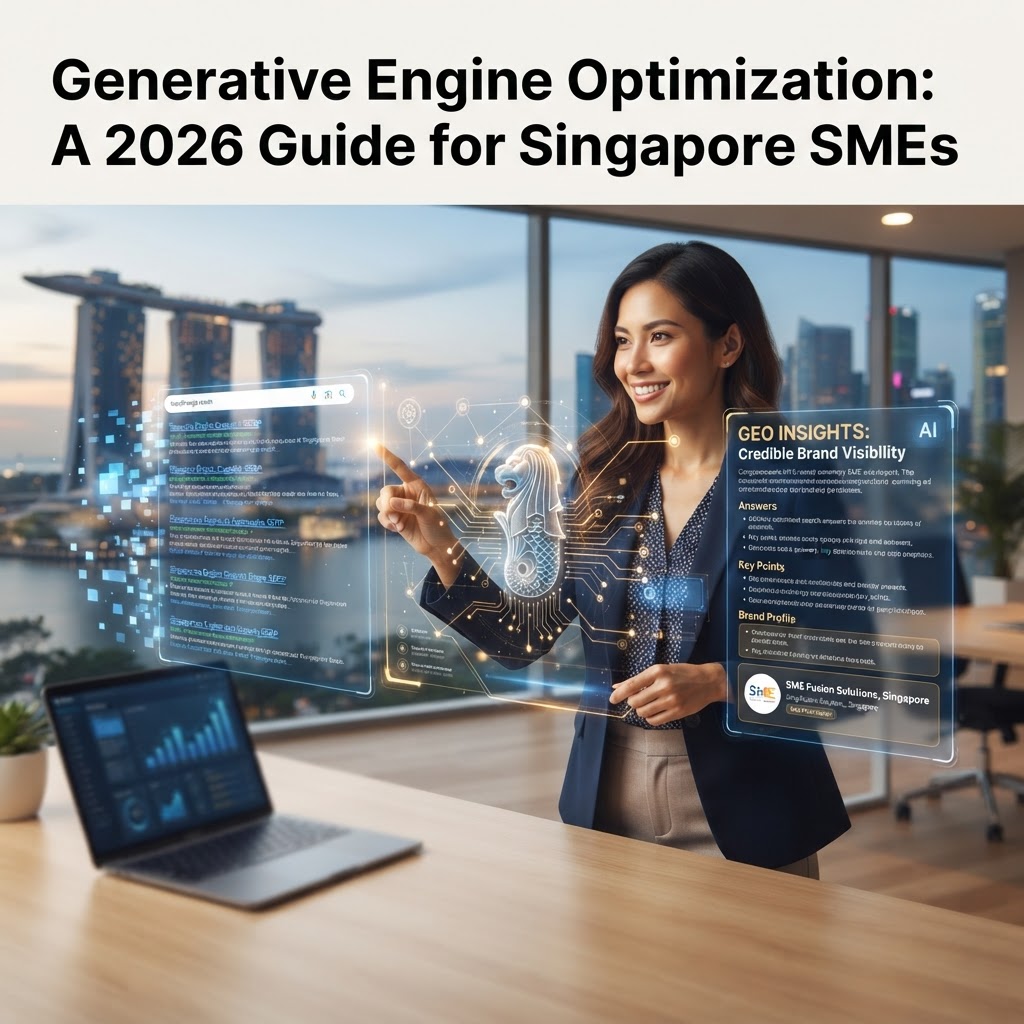
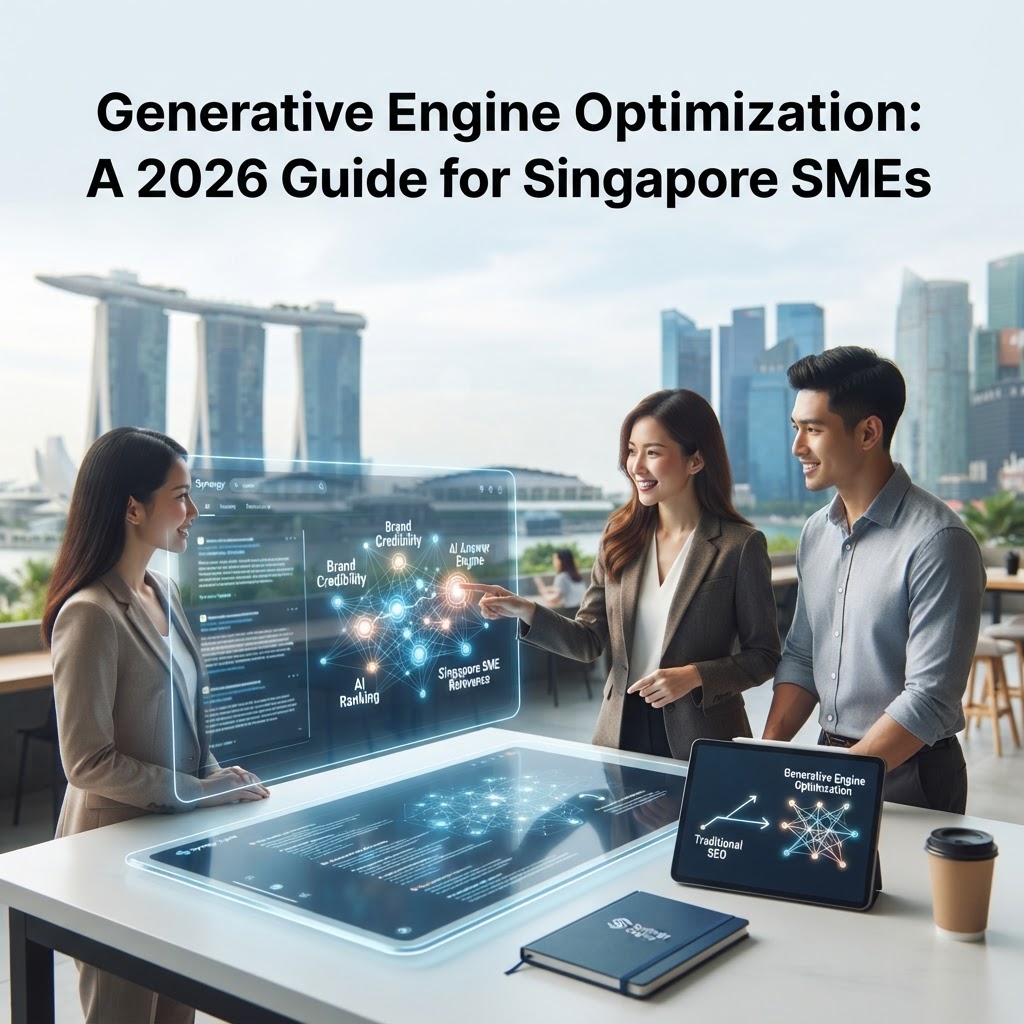
Generative Engine Optimization: A 2026 Guide for Singapore SMEs to Stay Visible
As the digital landscape in Singapore shifts, traditional search strategies are no longer the sole path to online visibility. We are entering the era of Generative Engine Optimization (GEO), where AI-powered search experiences generate summaries rather than simple blue-link lists. For Singaporean small and medium-sized enterprises (SMEs), this change represents a shift in how customers discover your services. Whether you operate an eCommerce store or a professional services firm, your brand needs to be present within the AI-generated responses provided by tools like ChatGPT, Gemini, or search-integrated AI assistants. At iPro Dezign, our team has monitored these trends closely to help local businesses adapt their digital presence. Achieving visibility in this new ecosystem requires moving beyond keyword stuffing and embracing technical precision, structured data, and high-authority content that AI models can trust. This guide explores how you can leverage GEO to remain competitive, ensuring that when potential customers ask AI about your industry, your business is the authoritative answer they find. Let us explore the technical and strategic steps required to thrive in this evolving environment while maintaining a focus on measurable ROI and sustainable growth for your business.
Table of Contents
What is Generative Engine Optimization?
Generative Engine Optimization (GEO) is the practice of refining your online presence so that AI search engines and large language models (LLMs) can easily access, process, and cite your content in their generated responses. Unlike traditional Search Engine Optimization (SEO) that aims to rank a page at the top of a list, GEO aims to ensure your brand is included within the concise, narrative-based answers that AI interfaces provide. For a Singapore SME, this is critical because users are increasingly asking complex questions such as “Where can I find reliable IT support in Singapore?” rather than searching for generic keywords. AI tools synthesize information from multiple sources to provide a direct answer. If your website is not structured in a way that allows these models to understand your value proposition, you risk being left out of the conversation. Our experience at iPro Dezign suggests that GEO is not about replacing traditional SEO but about augmenting it with a focus on machine-readability. The core objective is to provide high-quality, verifiable information that AI models recognize as trustworthy. This involves a shift toward creating content that answers specific user intents clearly and concisely. By structuring data through schema markup—a form of code that provides search engines with specific details about your content—you help AI models accurately categorize your business, location, and services. As we navigate 2026, the businesses that succeed are those that prioritize clarity and technical hygiene, ensuring that when an AI engine summarizes an industry, your brand appears as a credible, highly-relevant citation in the resulting summary. It is a strategic evolution that demands a proactive approach to how you present your digital identity to the world.
Building a Technical Foundation for AI Search
The technical architecture of your website is the primary gateway for AI models to understand your relevance. In the context of GEO, elements like site speed, mobile responsiveness, and clean code are not just user-experience features; they are signals of quality that AI crawlers evaluate. A website that takes too long to load or contains broken architecture creates friction for the bots that aggregate data for generative answers. Our team frequently helps local clients optimize their Core Web Vitals—a set of metrics defined by Google that measure load time, interactivity, and visual stability—to ensure that the site is performant for both human visitors and AI agents. Furthermore, the use of a headless CMS (a content management system where the front-end display is separated from the back-end database) can provide a competitive edge in how information is structured and delivered. A clean, semantic HTML structure allows AI to parse your content hierarchy effectively. Without this, your message may be lost in cluttered code, preventing AI from surfacing your business as a relevant answer. Consider the impact of technical debt on your visibility; if your site is slow or outdated, you are not just missing human visitors, but you are also failing to build the trust necessary for AI citation. Integrating structured data is non-negotiable. By implementing schema markup correctly, you define your business hours, pricing, and service areas in a language that computers understand. This transparency builds the authority that AI models seek. When building your digital strategy, it is wise to view these technical updates as an investment in infrastructure. Many Singapore SMEs can leverage PSG grants to offset the costs of these performance-driven website builds, making it a highly accessible way to upgrade your digital foundations while remaining compliant with current privacy standards like PDPA.
| Technical Metric | Impact on GEO | Action Required |
|---|---|---|
| Core Web Vitals | High | Optimize LCP and CLS scores |
| Structured Data | Critical | Implement JSON-LD schema |
| Mobile Responsiveness | High | Ensure fluid, mobile-first design |
| API Accessibility | Medium | Ensure content is indexable via bots |
Content Strategy: Authority, Trust, and Utility
Content for the age of generative search must move beyond volume and focus on depth. While traditional SEO often incentivized the creation of long-form posts stuffed with keywords, GEO demands information density and factual accuracy. AI models are trained to prioritize answers that provide clear, actionable utility. This means your content strategy should focus on addressing the specific pain points of your target audience in Singapore. For example, rather than writing a generic article about “digital marketing,” write a detailed guide on “How Singapore SMEs can leverage PSG grants for digital transformation.” This specific, high-utility content acts as a primary source for AI when users ask about local digital solutions. The goal is to establish your brand as a repository of expertise. To do this, ensure your content is structured logically with clear headings, summarized takeaways, and bulleted lists. AI models find it easier to extract information from well-organized, paragraph-based content that directly addresses a query. Transparency is equally important; AI models are increasingly penalized or steered away from inaccurate information. By citing sources, maintaining current facts, and providing unbiased advice, you increase the likelihood of your site being chosen as a reliable citation. At iPro Dezign, we advise our clients to treat their website as an expert knowledge base. Every page should serve a purpose—explaining a service, solving a technical problem, or providing transparent pricing information. When you provide genuine, helpful answers to common questions in your niche, you are essentially training the AI to view your brand as a trustworthy authority. This shift toward quality over quantity is the hallmark of a successful GEO strategy in 2026, ensuring that your digital footprint is not just visible, but respected by both users and the AI interfaces they consult daily.
The Singapore SME Advantage: Trust and Local Context
For SMEs operating in Singapore, local context is your greatest competitive advantage against global competitors. AI engines are increasingly sensitive to user location and the relevance of local service providers. When a user in Jurong or Tampines searches for a specific service, the AI assistant will naturally prioritize information that is geographically relevant and locally verified. This is where your brand can outpace generic, international content providers. Ensure your website explicitly lists your Singapore business address, local phone number, and service areas. Better yet, create localized landing pages that reference specific neighborhoods or local regulations relevant to your industry. This hyper-local approach acts as a signal of intent and proximity, which AI systems are programmed to favour when delivering results to a local user. Furthermore, build your local digital authority by engaging with local industry platforms, ensuring your Google Business Profile is fully updated, and encouraging positive, authentic reviews. These off-site signals are often cross-referenced by AI models to determine the legitimacy of your business. As an SME, you possess the agility to personalise your communication in ways larger organizations cannot. You can demonstrate your commitment to Singapore’s business environment by maintaining PDPA-compliant websites and showcasing your active status in local trade associations. When your brand is consistently represented as a reputable, local entity across the web, AI models are more likely to present your business as the go-to solution. Remember that building this level of trust is a marathon, not a sprint. Consistency in your digital presence, paired with a focus on local relevance, creates a cumulative effect that positions your business at the forefront of AI-driven discovery, ultimately leading to higher-quality enquiries and sustained growth for your local enterprise.
Conclusion
Adapting to the era of Generative Engine Optimization is a necessary step for any Singapore SME aiming to stay visible in 2026. By focusing on technical precision, high-quality content that provides genuine utility, and leveraging your local advantage, you can ensure your brand remains a central part of the conversation. The transition from traditional SEO to GEO is not a hurdle, but an opportunity to build a more robust, authoritative, and user-focused digital identity. Whether you are looking to audit your current site for performance, implement structured data, or refine your content strategy, iPro Dezign is here to help you navigate these changes. We invite you to reach out for a consultation to discuss how we can support your growth and help you leverage available PSG funding. Let us build a resilient digital future for your business together.
Frequently Asked Questions
1. How does GEO differ from traditional SEO? GEO focuses on providing clear, structured data that AI models can use to generate summaries, whereas SEO traditionally focuses on ranking individual pages for keyword searches.
2. Is my website ready for GEO? A GEO-ready site requires clean, semantic HTML, fast loading speeds (Core Web Vitals), and comprehensive structured data (schema markup) to help AI understand your offerings.
3. Can I use PSG grants for GEO services? Many digital marketing and web development services at iPro Dezign are eligible for PSG support, which can cover up to 50% of your project costs. Please contact us to check your eligibility.
4. How long does it take to see results with GEO? Like any digital strategy, building authority takes time. You can expect to see improvements in site performance and AI-citation potential over several months of consistent optimization.
5. Should I stop doing SEO and only focus on GEO? No, you should integrate both. A strong SEO foundation provides the necessary traffic and authority that AI models use to feed their generative summaries.