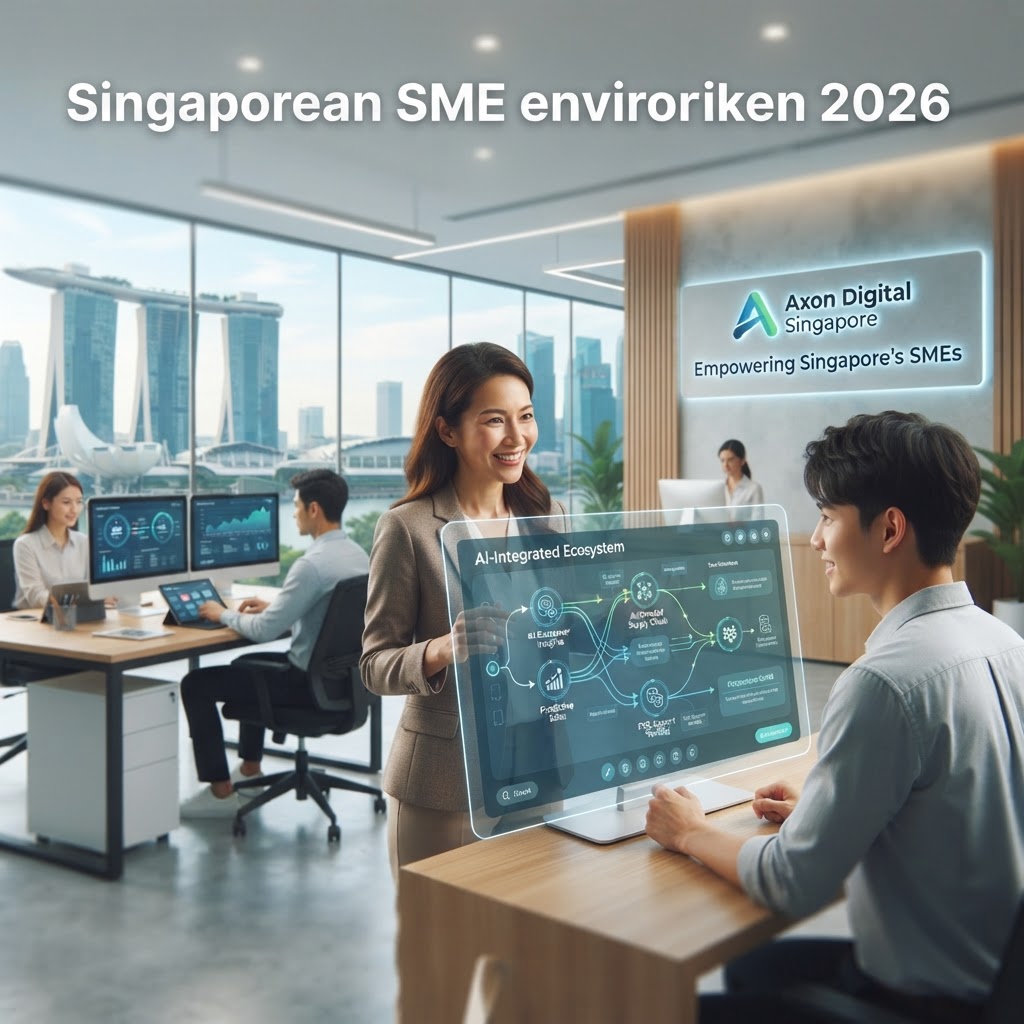
Digital Transformation for SMEs in Singapore: A 2026 Guide to AI-Led Growth
As we navigate the competitive landscape of 2026, Singaporean SMEs are moving beyond simple digital visibility. The era of basic websites has transitioned into a sophisticated phase where intelligence and automation define market leadership. For many local business owners, the current imperative is to embrace digital transformation for SMEs by integrating AI-driven workflows into their daily operations. Whether you are a retail store looking to personalise customer journeys or a service provider aiming to automate enquiry handling, the digital ecosystem today requires more than just a presence; it demands performance. At iPro Dezign, our team has observed that businesses which leverage AI-integrated ecosystems report higher operational efficiency and improved customer retention. With the Productivity Solutions Grant (PSG) still available to help offset costs by up to 50%, there has never been a more opportune time to upgrade your infrastructure. This guide explores the strategic steps to modernise your business while ensuring compliance with local standards like PDPA and maximising your return on investment through smarter technology choices.
Table of Contents
The Evolution of the SME Digital Landscape
The Singaporean business environment has changed significantly over the past few years. In 2026, the focus has shifted from mere existence online to the quality of the user experience and the intelligence behind the data. Digital transformation for SMEs is no longer an optional upgrade; it is a fundamental requirement for staying relevant in a mobile-first APAC market. Businesses that continue to rely on outdated, non-responsive platforms are finding that their customer acquisition costs are rising while conversion rates plummet. Our agency has consistently noted that SMEs performing well are those that have migrated from static pages to dynamic, content-managed environments. These modern frameworks allow for real-time adjustments based on visitor behaviour, creating a smoother path from initial interest to final purchase. Furthermore, the modern consumer expects instant information. If a page fails to load within three seconds, or if the navigation is confusing, users move to competitors. To remain competitive, your business needs to move beyond legacy systems that require constant manual intervention. Instead, the move toward automated content delivery and intelligent customer support bots has become standard practice. This transition allows your team to focus on high-value tasks while the digital system handles repetitive enquiries, scheduling, and basic data collection. We see this shift as a transition from being a reactive business to a proactive one. When you invest in a robust digital foundation, you are not just ticking a box for your current marketing campaign; you are building an asset that grows in value as your data collection and AI integration mature. Success in this new phase requires a deliberate approach to selecting tools that integrate seamlessly with existing workflows.
Building an AI-Integrated Ecosystem
Creating an AI-integrated ecosystem starts with the right foundation. For many Singaporean SMEs, this means adopting a headless CMS (Content Management System) where the back-end content management is decoupled from the front-end display. This architecture allows for faster deployment of updates and a more personalised experience for users across different devices. When we talk about AI integration, we are referring to the deployment of machine learning algorithms that analyse user intent. For instance, an e-commerce platform using AI can predict what a user might be looking for based on their previous browsing history or their interaction with your site. This level of personalisation was once the domain of large multinational corporations, but in 2026, it is accessible to any SME with the right technical partner. Beyond the user interface, AI integration extends to your backend operations. Automated customer relationship management (CRM) systems can now score leads, categorise enquiries, and even draft initial email responses that feel authentic and helpful. This efficiency is critical for lean teams in Singapore. However, the most important aspect of this infrastructure is security. With the increasing sophistication of cyber threats, your AI tools must be PDPA compliant and secure. Our team emphasises that building a modern ecosystem is a long-term investment. It is not about buying every shiny new tool on the market, but about selecting a few core components that communicate effectively with one another. When your website, your email marketing software, and your CRM are perfectly synchronised, the amount of time spent on manual data entry decreases significantly. This reduction in administrative overhead provides the breathing room necessary for SME owners to focus on strategic growth and product development. When you invest in these systems, you are essentially installing a virtual workforce that never sleeps, ensuring your business is ready to capture opportunities at any time of the day or night.
| Metric | Traditional Site | AI-Integrated Ecosystem |
|---|---|---|
| Loading Speed | 4-6 Seconds | < 2 Seconds |
| Conversion Rate | Baseline | Increased by 20-40% |
| Manual Data Entry | High | Minimal/Automated |
| Customer Personalisation | Generic | Targeted/Dynamic |
Performance-First Strategies for 2026
Achieving peak performance in 2026 requires a deep understanding of Core Web Vitals, which are the metrics Google uses to measure user experience, including loading performance, interactivity, and visual stability. A site that scores highly on these metrics is not only more likely to rank well in search results but is also far more likely to convert visitors into paying customers. Many SMEs in Singapore struggle with heavy, bloated code that drags down these vital scores. At iPro Dezign, we prioritise lean, performance-first builds that load instantly on mobile devices, which remains the primary way most Singaporeans browse the web. Improving your site speed involves optimising images, utilising modern caching techniques, and minimizing the use of unnecessary third-party scripts. Beyond the technical speed, performance includes the accessibility and clarity of your content. A site must be intuitive; if a customer cannot find the “contact us” button within five seconds, they will leave. We focus on clear calls to action and purposeful design that guides the user toward a specific goal. Furthermore, the role of SEO (Search Engine Optimisation) has evolved. It is no longer about stuffing pages with keywords; it is about providing the most relevant and helpful answer to a user’s query. Our strategy involves creating high-quality content that addresses real-world pain points while technical structures ensure that search engines can easily crawl and index your site. When we combine high-speed infrastructure with relevant, well-structured content, the result is a site that acts as a consistent growth engine. This is the cornerstone of our philosophy: design with the user in mind, build with the machine in mind, and always measure the outcomes. By treating your digital presence as a living product that is constantly refined based on real data, you ensure that your business remains ahead of the curve in a fast-moving digital economy.
Leveraging PSG for Sustainable Growth
Funding remains one of the most effective levers for SME owners in Singapore. The Productivity Solutions Grant, or PSG, offers a way for businesses to adopt pre-approved digital solutions while receiving up to 50% funding support. Many business owners are understandably concerned about the upfront capital required for a major digital overhaul. Fortunately, the grant structure is designed to mitigate this risk, making professional-grade digital transformation for SMEs a practical reality rather than a distant dream. When we work with clients to leverage this support, we focus on identifying the specific packages that will yield the highest return. It is important to note that the grant is not just a financial aid tool; it is a benchmark for quality. To be pre-approved, digital solutions must meet rigorous standards set by government agencies, ensuring that you are investing in reliable, tested technology. Our role as your digital partner is to navigate the complexities of this process, from verifying your eligibility to implementing the specific modules that qualify for funding. The benefit of using the grant is that it allows you to allocate more budget toward growth-focused marketing and customer acquisition rather than just infrastructure costs. Even without the grant, our one-stop solutions are designed to be cost-effective by focusing on high-impact upgrades. We believe in transparency, and we are always happy to discuss how your specific business goals align with available funding opportunities. Our goal is to make the entire process as frictionless as possible so you can get back to what you do best: running your business. By partnering with an agency that understands both the technical and administrative aspects of the SME landscape in Singapore, you are positioning your business for long-term success. It is a collaborative approach that puts your specific needs at the centre of every decision, ensuring that the digital tools you adopt are actually used effectively by your team. Ultimately, the combination of professional guidance and financial support creates a clear path for sustainable, measurable growth in 2026 and beyond.
Conclusion
As we have explored, the path to digital transformation for SMEs in 2026 is paved with AI-driven strategy and performance-focused engineering. Whether you are aiming to enhance your user experience through faster loading times or looking to automate your backend operations, the goal remains the same: to create a resilient business that thrives in an increasingly digital environment. By leveraging resources like the PSG and focusing on a measurable ROI, you can build an online presence that not only attracts customers but engages them meaningfully. At iPro Dezign, we are committed to being your growth partner. If you are ready to evaluate your current setup or want to understand how your business can benefit from these modern strategies, we invite you to book a consultation today. Let’s discuss how we can help you move your business forward.
Frequently Asked Questions
What is the main goal of digital transformation for SMEs in 2026? The primary goal is to shift from basic web presence to AI-integrated ecosystems that improve operational efficiency and provide superior customer experiences.
How does PSG funding help my business? The PSG grant covers up to 50% of the cost of approved digital solutions, allowing you to upgrade your technology infrastructure while managing your budget effectively.
What are Core Web Vitals and why do they matter? These are Google’s metrics for measuring site performance, such as loading speed and interactivity, which directly impact your search rankings and user satisfaction.
How do I ensure my website is PDPA compliant? Compliance involves implementing transparent data collection practices, secure storage protocols, and ensuring users have clear control over their personal information on your platform.
Why is a headless CMS recommended? A headless CMS offers greater flexibility, improved security, and faster loading speeds by decoupling the back-end content management from the front-end user experience.