Generative Engine Optimization: A 2026 Guide for Singapore SMEs
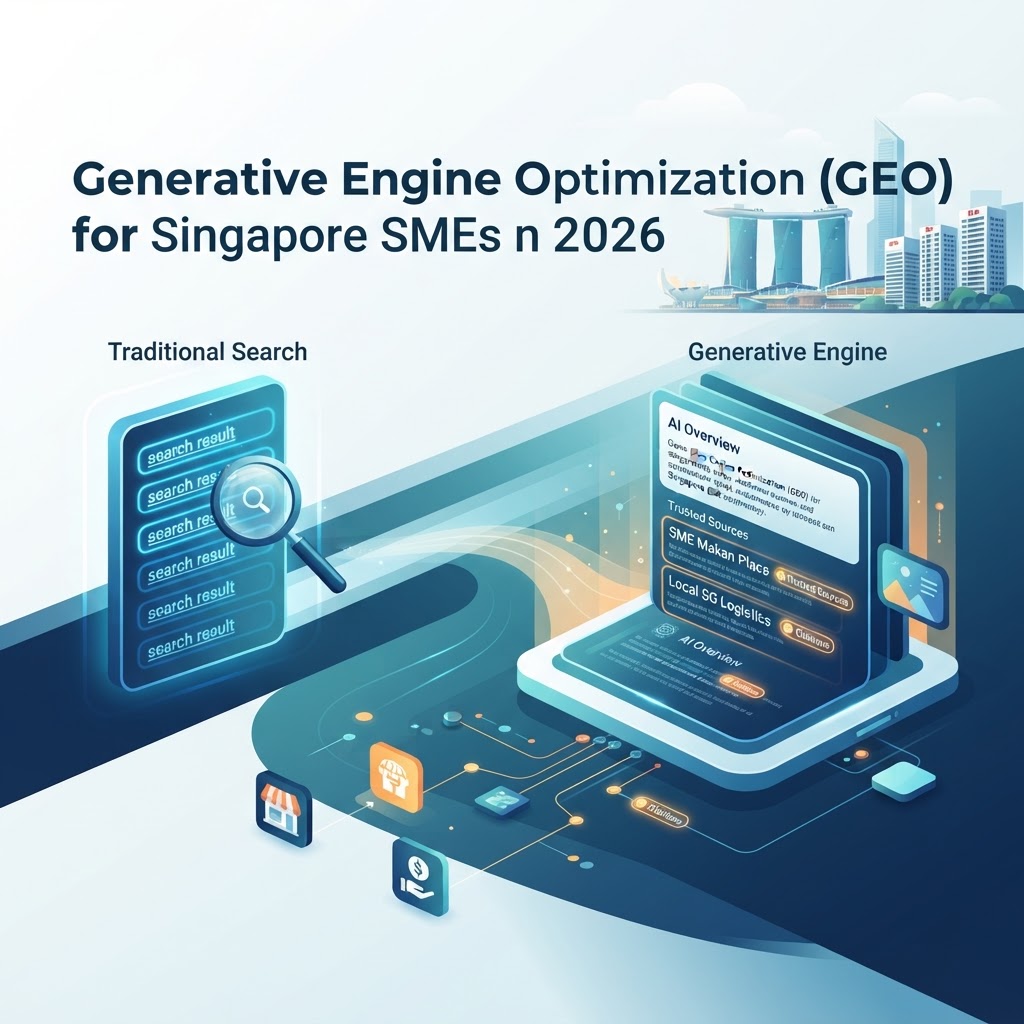
The digital landscape in Singapore is shifting beneath our feet. For years, SME owners have focused their energy on ranking for specific keywords in traditional search results. However, the rise of AI Overviews and conversational search interfaces has changed the game entirely. We have entered the era of Generative Engine Optimization (GEO). When a customer asks a search engine a question about your industry, they are no longer just looking for a list of blue links. They are looking for a direct, synthesized answer generated by artificial intelligence. To remain visible in this new environment, your business needs a strategy that prioritizes factual accuracy, structured data, and high-authority content that AI models can trust. At iPro Dezign, we help local businesses adapt their digital presence to meet these evolving search behaviours. This guide explains how you can prepare your website to thrive in an age where the search engine acts as a consultant, not just a directory, and why your SEO strategy must evolve to survive these structural changes in online discovery.
Table of Contents
Understanding Generative Engine Optimization
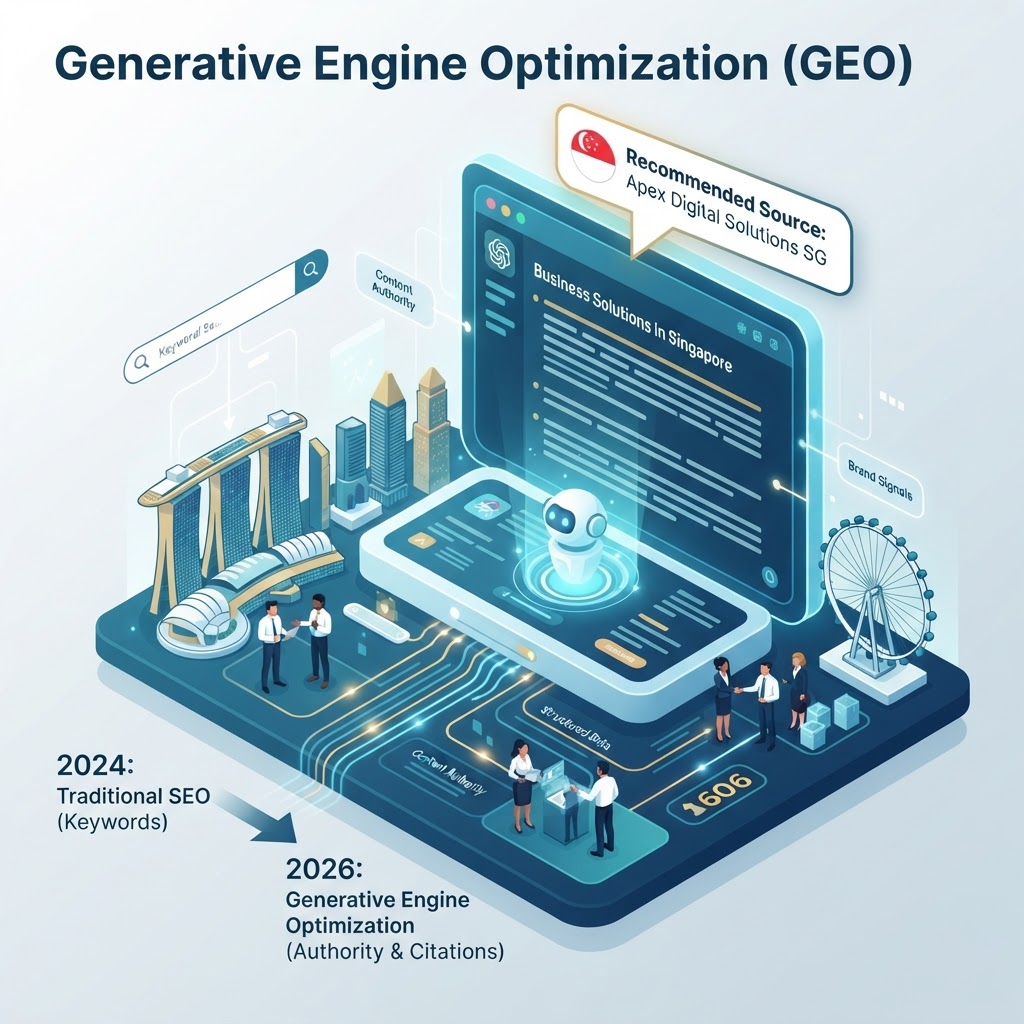
Generative Engine Optimization represents a fundamental shift in how digital agencies approach visibility. Unlike traditional SEO, which relies heavily on link-building and keyword density, GEO focuses on making your content easily digestible and verifiable for large language models. These models scan thousands of sources to curate a coherent answer to user queries. If your website is technically opaque, poorly structured, or lacks clear, authoritative answers to common industry questions, the AI will likely overlook your site in favour of more transparent competitors. In the Singapore SME context, this means your digital presence must act as a reliable source of truth. AI models favour content that is well-structured and contextually rich, allowing them to extract specific pieces of information to include in their summaries. When a user searches for services such as web development or digital marketing, they increasingly rely on AI-generated summaries that pull insights from multiple platforms. If you have not optimized for this, you risk becoming invisible to a segment of the market that values efficiency over traditional browsing. GEO is about being the cited authority in that summary. Our team identifies that the core mechanism behind this shift is the reliance on Entity SEO. An entity is a person, place, thing, or concept that search engines understand through its attributes and relationships. By clearly defining your business as an entity within the digital landscape—via schema markup and high-quality internal linking—you increase the likelihood that an AI will identify your site as a credible reference point. This transition from keyword-focused tactics to entity-focused intelligence requires a partner that understands both the technical architecture of the web and the semantic logic of current artificial intelligence models.
Technical Foundations for AI-Readiness
For Singaporean SMEs, technical performance is the bedrock upon which all visibility is built. AI models require clean, fast, and structured data to function effectively. If your website suffers from poor Core Web Vitals—the metrics Google uses to measure loading speed, visual stability, and interactivity—the AI crawlers may struggle to process your content, leading to lower indexation. We often find that older websites are bloated with unnecessary scripts that slow down the server and confuse search crawlers. When we rebuild sites, we prioritize headless CMS architectures or lightweight, performance-focused platforms that offer superior loading times. Beyond raw speed, structured data is a critical component of GEO. Schema markup is essentially a common language that helps search engines understand the context of your content. By applying structured data to your product pages, service listings, or blog articles, you essentially provide a map for the AI to understand exactly what you offer. For example, if you are an eCommerce business, structured data helps the AI categorize your pricing, stock levels, and review ratings, which are then used in the generated summary. This technical layer ensures that your information is not just present, but machine-readable. We also emphasize PDPA compliance and secure, responsive design. Mobile-first indexing remains relevant, as most Singaporean users interact with AI assistants via smartphones. A website that is not fully responsive or fails to meet basic accessibility standards is essentially invisible to the modern, mobile-centric consumer. We provide one-stop solutions that cover these technical hurdles, often assisting our clients in leveraging PSG (Productivity Solutions Grant) funding to cover up to 50% of the costs associated with digital infrastructure upgrades, making professional-grade performance accessible to smaller firms.
| Technical Metric | Impact on GEO | Target Goal |
|---|---|---|
| Largest Contentful Paint | High | Under 2.5 Seconds |
| Cumulative Layout Shift | High | Under 0.1 |
| Entity Markup | Critical | Full JSON-LD Schema |
| Mobile Usability | Critical | Pass Google Test |
To succeed in 2026, you must view your website as an application that serves both human visitors and machine entities. The performance of your server impacts how frequently AI crawlers visit your domain to update their knowledge base. A slow site is often perceived as an unreliable source, causing the AI to prioritize more responsive, faster alternatives when summarizing information for the end-user. Therefore, our agency focuses on performance engineering, ensuring that every line of code contributes to faster load times and better indexing.
Content Strategy in the Age of AI
Content is no longer about hitting a specific keyword volume. It is about expertise, experience, and authority. This is often referred to as E-E-A-T, and it remains the golden standard for content strategy in the era of Generative Engine Optimization. When we develop content for our clients, we focus on answering the specific questions that Singaporean customers are asking at each stage of their journey. Instead of broad, generic topics, we shift toward deep-dive answers that provide genuine value. For instance, if you are a logistics firm, an AI model is unlikely to cite a generic page about shipping. It is, however, highly likely to cite a well-researched article that provides a comparative analysis of local courier rates and regulatory requirements in Singapore. Your content needs to address the ‘why’ and ‘how’ behind your services. We often recommend a ‘question-answer’ content structure, where articles directly address the queries found in user searches. This makes it easier for AI algorithms to pick up your content as a direct answer. Moreover, original data and local insights are powerful assets. If you can publish unique research about the Singapore SME landscape, you become a primary source that other sites and AI models naturally reference. This citation-based approach is how you earn your place in the generative engine results. It is also important to move away from overly promotional tone-deaf language. Modern AI is trained to filter out fluff and identify genuine information. We help clients craft content that is professional, consultative, and devoid of hyperbolic marketing jargon, which ultimately builds trust with both the AI algorithms and your human readers. Our team acts as a partner in this process, helping you identify the gaps in your existing content library and filling them with high-quality, intent-driven pieces that position your brand as a leader in your specific niche.
Measuring Success and ROI
Measuring the success of your SEO strategy in the generative era is more nuanced than tracking simple rankings. Since rankings are no longer a single, universal position, we shift our focus toward visibility metrics and qualitative engagement. We track how often your brand is mentioned in AI-generated summaries and the volume of traffic driven by non-traditional search channels. It is vital to understand that success is not an overnight occurrence; it is a cumulative process of improving technical performance, deepening content authority, and consistently engaging with the market. Our approach is deeply rooted in transparency. We provide our clients with clear, actionable reporting that connects digital efforts to tangible business outcomes, such as leads, sales, and enquiries. We understand that for an SME owner in Singapore, every dollar invested in digital marketing must show a return. That is why we focus on measurable ROI-driven strategies that optimize for long-term growth rather than short-term spikes. We frequently assist our clients in evaluating their digital roadmap, ensuring that every project is scoped to maximize impact. Whether we are helping you apply for a PSG grant to offset costs or optimizing your site for better conversion rates, our goal is to ensure your business remains competitive in an increasingly automated world. The reality is that the market is changing, and businesses that fail to adapt to the requirements of generative search will find themselves slowly pushed out of the conversation. Our team is committed to helping you navigate this change, providing the expertise and technical support needed to thrive. By focusing on technical excellence, content quality, and a consultative partnership, we enable our clients to achieve sustainable, measurable growth in the Singapore market, securing their place as authoritative voices within their respective industries, regardless of how the search engine landscape evolves in the future.
Ultimately, Generative Engine Optimization is about preparing your business for the next phase of digital interaction. By aligning your website with the requirements of AI models, you are not just improving rankings; you are building a more robust, user-friendly, and authoritative platform for your business. We are ready to help you navigate this transition, ensuring your brand remains relevant and discoverable in the evolving Singaporean digital landscape.
Frequently Asked Questions
What is the main difference between SEO and Generative Engine Optimization? Traditional SEO targets ranking on a list, while GEO focuses on providing synthesized answers that AI models can easily cite.
How can Singapore SMEs benefit from the PSG grant for this work? Eligible SMEs can receive up to 50% funding for digital solutions that enhance their operational efficiency and online presence, including rebuilds that support modern SEO.
Do I still need to worry about keyword rankings? Keywords still matter for user intent, but they are no longer the primary signal; entity relevance and clear, authoritative content now take precedence.
How long does it take to see results with GEO? Results depend on your current digital baseline, but most foundational improvements in performance and content structure show measurable progress within three to six months.
Is it worth changing my entire website to support AI-readiness? Yes, if your site is outdated, slow, or poorly structured, it will struggle to be cited by AI engines, making a professional rebuild a strategic investment in future growth.