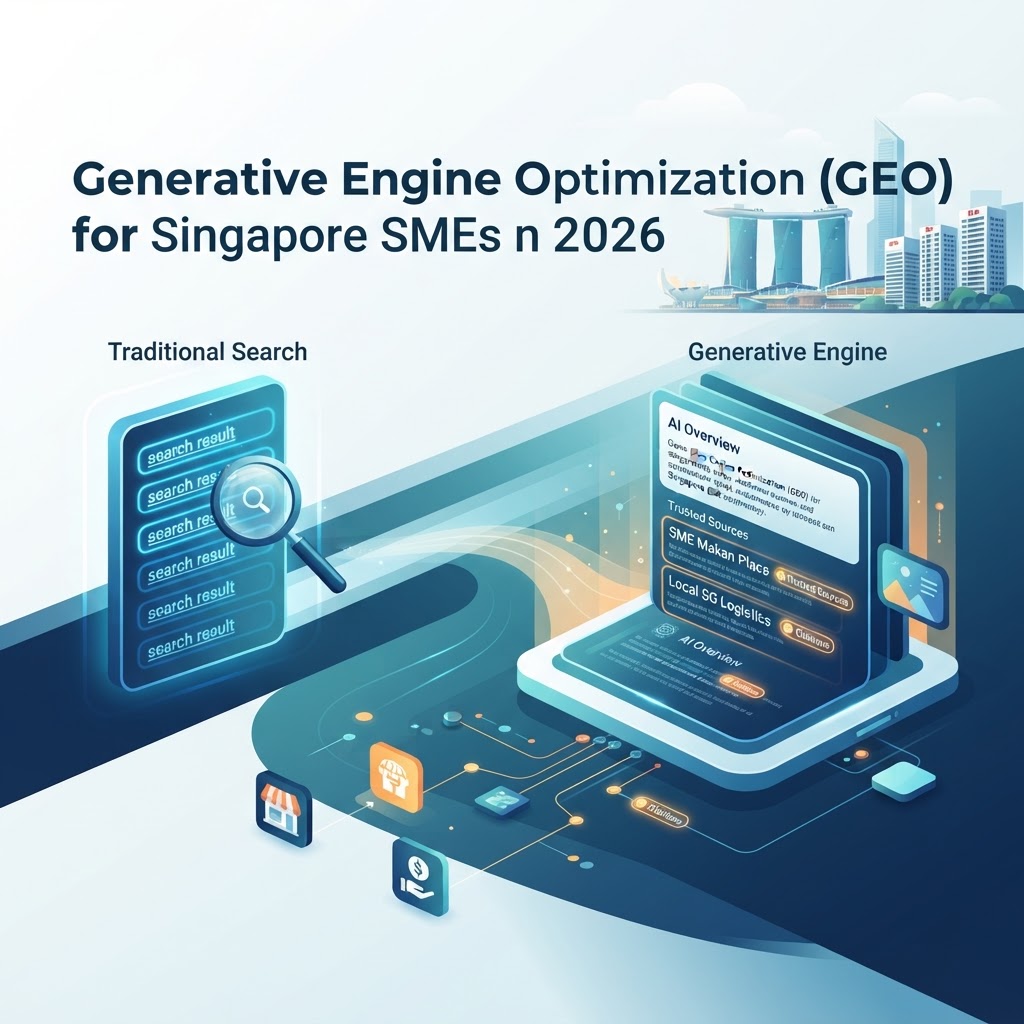
Generative Engine Optimization: A 2026 Guide for Singapore SMEs
As we navigate through 2026, the digital landscape for Singapore businesses has shifted significantly. Search is no longer just a list of blue links; it is now dominated by conversational AI and AI Overviews that synthesize information directly on the search results page. For local SME owners, this means that traditional search engine optimization strategies are no longer sufficient on their own. Instead, we must embrace Generative Engine Optimization to ensure your brand remains visible when consumers ask AI platforms for recommendations. This evolution moves us away from chasing individual keywords and toward establishing authority, clarity, and trust in the eyes of generative models. At iPro Dezign, we recognise that for an SME to thrive in the modern Singapore market, its digital footprint must be structured for machine understanding as much as for human readability. This guide explores how your business can adapt to this new era of conversational search, leverage local support schemes like the Productivity Solutions Grant (PSG), and maintain a competitive edge in an increasingly automated environment.
Table of Contents
What is Generative Engine Optimization?
Generative Engine Optimization (GEO) represents the next frontier in digital discoverability. Unlike traditional SEO, which focuses on ranking for specific keywords to drive traffic to a website, GEO focuses on positioning a brand’s expertise, products, and services so they are cited as primary sources by generative AI models like ChatGPT, Gemini, or Perplexity. When a potential customer in Singapore asks an AI assistant to recommend a local provider for IT services or eCommerce solutions, the AI constructs a response based on the data it deems most authoritative and relevant. If your content is not structured correctly—lacking technical clarity, semantic context, or structured schema data—the engine may overlook your business entirely. At iPro Dezign, our approach to GEO involves refining your website’s technical architecture so that large language models can easily parse your value proposition, service offerings, and local relevance. We focus on building what we call ‘AI-readable content’ that emphasizes factual accuracy, clear answers to common industry queries, and deep subject matter expertise. By answering the ‘who, what, where, and why’ of your business in a structured, crawlable format, we help ensure that when an AI is queried, your brand is the one cited as the go-to solution. Think of GEO as creating a clear, definitive digital fingerprint that AI models can identify with confidence, thereby increasing the likelihood that your services are recommended in conversational responses. This requires a shift in mindset: moving from writing for robots that scan text to writing for intelligent models that summarize information for humans. We help clients audit their existing content to ensure it serves this purpose, stripping away fluff and replacing it with high-value insights that generative engines crave.
Why Conversational Search Matters for Singapore SMEs
The transition toward conversational search is not just a passing trend; it is a fundamental shift in how Singaporean consumers behave online. In our fast-paced market, users value speed and direct answers. Instead of clicking through five different websites to compare prices or read reviews, a user might ask their AI assistant, “Which creative agency in Singapore offers PSG-approved web design services?” The AI will then synthesize data from multiple sources to provide an immediate answer. If your website is not optimized for this type of query, you are missing out on high-intent traffic that has already moved down the sales funnel. For SMEs, this represents both a risk and an opportunity. The risk is invisibility; the opportunity is being the singular, trusted brand that the AI recommends. Achieving this requires that your content reflects your business’s unique identity, localized experience, and commitment to standards like PDPA compliance. Furthermore, search engines are now rewarding sites that demonstrate E-E-A-T—Experience, Expertise, Authoritativeness, and Trustworthiness. When AI models look for sources to cite, they prioritise sites that display clear contact details, case studies, and professional credentials. We have observed that businesses that actively maintain updated, accurate, and helpful content are far more likely to be featured in AI summaries. By integrating these practices, you provide the signals that AI needs to validate your business as a reputable entity. It is about building a digital presence that feels solid and reliable, not just one that is stuffed with keywords. Our team helps you audit your online reputation to ensure that when the AI ‘looks’ at your brand, it sees a company that is active, professional, and established in the Singapore market, thus increasing your chances of being a top-tier recommendation for your target audience.
Strategic Pillars for AI Visibility
Improving your brand’s presence in generative engines requires a methodical approach that balances technical performance with content quality. The foundation is technical excellence: ensuring your site is fast, secure, and mobile-responsive. AI models prioritise high-performing websites because they want to offer users a seamless experience if they click through for more information. Metrics such as Core Web Vitals—the industry standard for measuring page load, interactivity, and visual stability—are essential here. A site that loads quickly and is easy to navigate on a smartphone is inherently more trustworthy to an AI than a cluttered, sluggish one. Beyond technical metrics, content strategy must evolve. Instead of targeting generic, high-volume keywords, we suggest focusing on long-tail, intent-driven questions that your potential customers are actually asking. Are they asking about the cost of a migration project? The eligibility requirements for a grant? The security implications of cloud storage? By answering these questions comprehensively and clearly, you position your content as a resource that AI models can use as a factual basis. To assist with your planning, we have outlined the core pillars of our optimization strategy in the table below, which highlights how different elements contribute to your visibility:
| Optimization Pillar | Actionable Objective | AI Impact |
|---|---|---|
| Structured Data (Schema) | Implement JSON-LD to describe business entities clearly. | Directly feeds machine-understandable data to AI. |
| Authoritative Content | Create comprehensive FAQs that address pain points. | Increases likelihood of being cited as a factual source. |
| Technical Performance | Optimise Core Web Vitals for speed and responsiveness. | Improves trust signals for the AI engine. |
| Local Context | Verify business profile and local Singapore citations. | Ensures relevance for geographic-based searches. |
Each of these pillars serves a specific purpose in building your digital presence. By using schema markup, for instance, you are effectively giving the search engine a map of your business operations. When the engine processes a query, it can immediately cross-reference this structured data with the user’s intent. This precision is the difference between being ignored and being selected. We advise all our clients to review their current content strategy through this lens of clarity and structure, ensuring that your expertise is communicated not just for human eyes, but for the machines that bridge the gap between your brand and your future customers.
The Future of Digital Growth with iPro Dezign
As we look toward the remainder of 2026 and beyond, the role of a digital agency has transformed from being a mere builder to becoming a strategic partner in growth. Growth is no longer just about volume; it is about precision and the ability to adapt to changing search dynamics. At iPro Dezign, we pride ourselves on being an extension of your team, providing the technical expertise required to navigate these complexities. Whether it is leveraging the PSG grant to fund up to 50% of your digital transformation costs or implementing a headless CMS that provides the flexibility to adapt to new search technologies, our focus remains on measurable ROI and sustainable growth. We believe in transparency and honest advice. We do not promise magical outcomes, but we do promise a rigorous, evidence-based approach to your digital architecture that improves your visibility and user engagement over time. Digital growth is a marathon, not a sprint, and having a reliable partner who understands the nuance of the Singapore market is a significant asset. Our team is always a call away to discuss your specific business challenges, whether you are looking to modernise an aging eCommerce platform, enhance your site security in accordance with local regulations, or develop a content strategy that resonates with the new generation of AI-enabled search users. We have helped numerous local SMEs shift from stagnant digital assets to high-performing growth drivers. We invite you to reach out for a consultation, where we can assess your current web performance and discuss how a tailored digital strategy can help you capture more market share in the evolving search landscape. By choosing a partner that understands both the technical depth and the commercial realities of running a business in Singapore, you are setting a foundation for long-term success that survives the rise of automation and remains focused on what truly matters: serving your customers well.
In conclusion, the rise of AI-driven search environments is an invitation to refine your digital strategy rather than a signal of alarm. Generative Engine Optimization is simply the modern way of ensuring that your brand’s value, expertise, and local presence are clear to both users and the sophisticated systems they use every day. By prioritizing technical performance, structured data, and high-quality, authoritative content, you can position your business as a leader in your sector. We are here to support your journey, providing the technical expertise and strategic guidance needed to thrive. Contact us today to learn more about how we can assist you with your digital goals and to explore your PSG eligibility for upcoming projects.
Frequently Asked Questions
1. What is the difference between SEO and Generative Engine Optimization? SEO focuses on ranking in traditional lists, while GEO ensures your brand is cited by AI as a factual, relevant source.
2. How does an SME start with GEO? Begin by auditing your technical SEO, implementing structured data (schema), and creating content that directly answers customer questions.
3. Can I use PSG grants for digital optimization? Yes, many digital services, including website development and optimization projects, may be eligible for up to 50% funding through the Productivity Solutions Grant.
4. How long does it take to see results? While outcomes vary, most significant digital performance improvements are observed over a 3 to 6-month period of consistent, strategic implementation.
5. Why is site speed important for AI search? AI models favor sites that provide a high-quality user experience; therefore, fast, stable, and secure websites are more likely to be selected as credible sources.