Generative Engine Optimization: A 2026 Guide for Singapore SMEs
The landscape of search in Singapore is undergoing a fundamental transformation. For years, SME owners have focused on blue-link rankings to drive traffic. However, the rise of AI Overviews and conversational search tools means that traditional search engine optimization (SEO) is no longer sufficient. Today, businesses must embrace Generative Engine Optimization Singapore to remain visible as users increasingly rely on AI to synthesize answers rather than clicking through to websites. This shift represents a move from chasing individual keywords to becoming a trusted source of data for large language models. As a digital agency committed to helping local businesses, our team understands that being cited by AI models is now the primary objective for sustainable digital growth. In this guide, we explore how you can adapt your digital strategy, leverage your existing assets, and prepare your online presence for the era of AI-driven discovery, ensuring your company remains relevant in the modern Singaporean marketplace.
Table of Contents
The Shift to AI-Powered Search
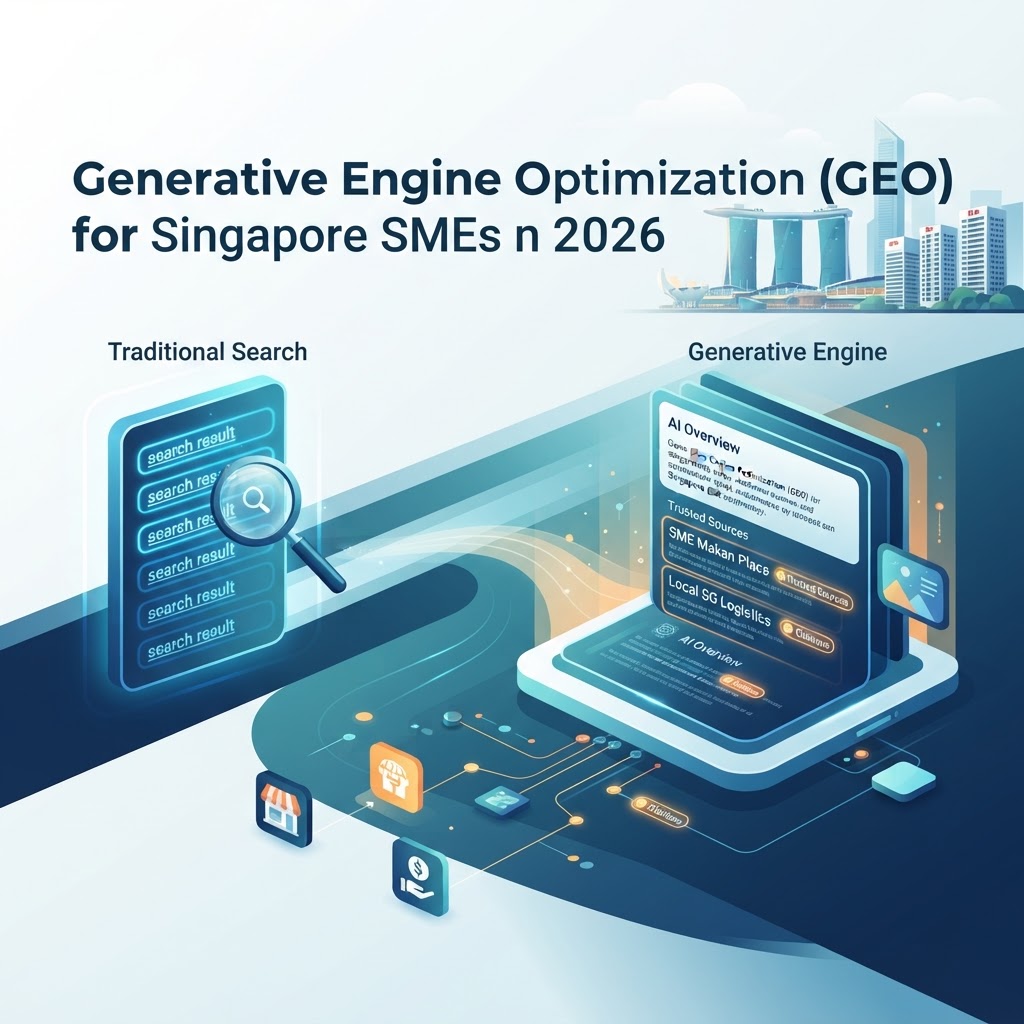
The transition from standard search to generative search is perhaps the most significant change in web technology since the introduction of mobile-first indexing. In the past, Google functioned primarily as a directory that pointed users to relevant pages. Today, generative engines process vast quantities of information to provide immediate, concise answers directly on the results page. For Singapore SMEs, this means the top-of-funnel traffic that previously relied on high-volume keywords is becoming harder to capture through traditional means. Our analysis indicates that users now prefer asking complex, multi-layered questions rather than typing short phrases. When a customer asks about the best way to leverage a government grant for their business, they no longer want a list of fifteen websites to visit; they want a synthesized answer that explains the process, the eligibility, and the next steps. Generative Engine Optimization Singapore requires a complete rethink of how we present business data. Instead of scattering information across multiple landing pages, we must now structure our web content to act as definitive reference points that AI models can easily parse. This does not mean that traditional SEO is dead, but it does mean that your website must offer depth, accuracy, and clear schema markup to be included in these new AI-powered summaries. Businesses that fail to adapt their content strategies risk falling into a digital blind spot where they are excluded from the conversational answers provided to potential customers. Our approach focuses on consolidating high-quality expertise into clear, authoritative sections that provide value both to human readers and the AI crawlers that index your site. By anticipating the questions your clients have, you can position your brand as the expert source that engines reference in their outputs.
Foundations of Generative Engine Optimization
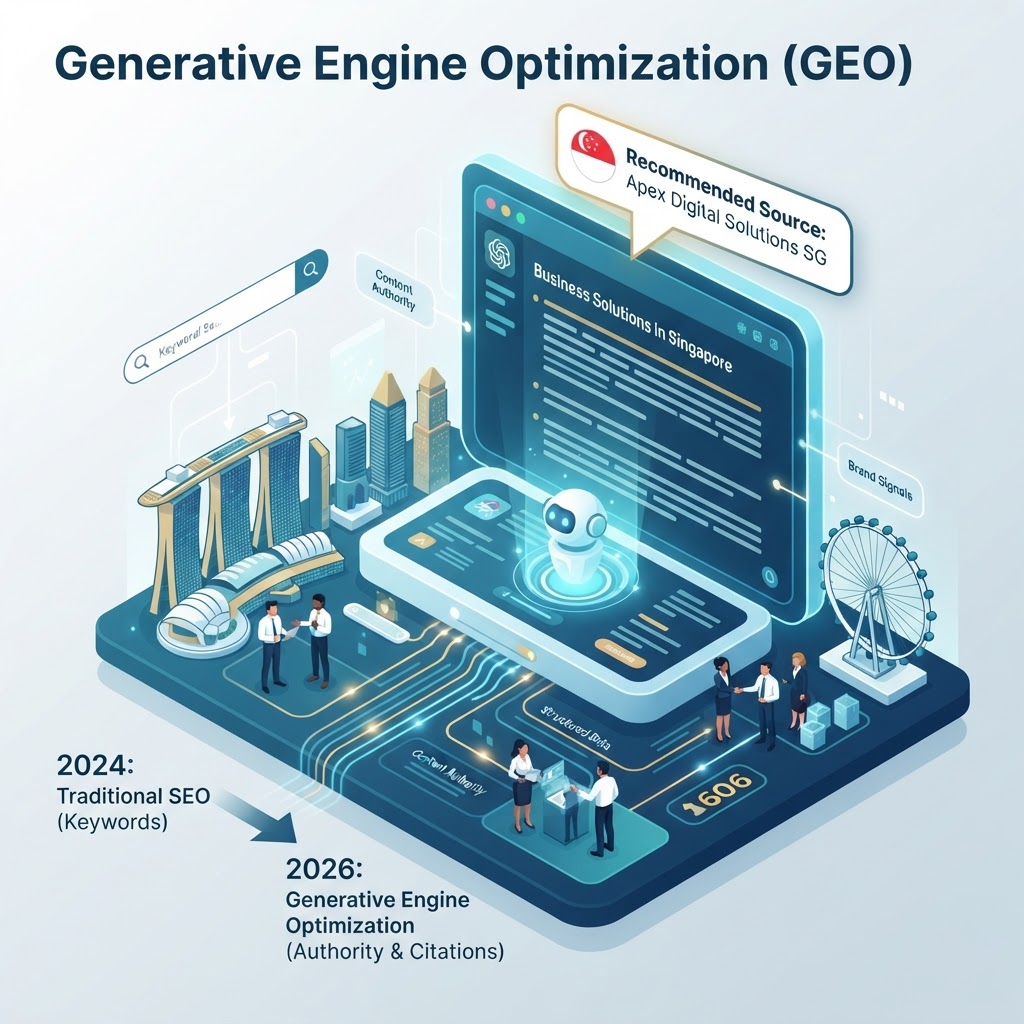
Foundations for this new era begin with understanding the shift from keyword density to topical authority. In the context of Generative Engine Optimization Singapore, topical authority refers to the breadth and depth of your coverage on a specific subject. If your firm provides accounting services for local startups, you need more than just a page listing your services; you need comprehensive guides, FAQs, and white papers that address every aspect of startup finance, from PDPA compliance to tax planning in Singapore. AI models prioritize sources that demonstrate a high degree of certainty and consistency. This means your content must be factually accurate, regularly updated, and presented in a structured format that machines can interpret. One of the most effective ways to build this authority is by utilizing technical standards like Schema markup. Schema is a form of code that provides search engines with context about your content, such as the type of service you offer, your business location, and even your reviews. Without this structured data, an AI might struggle to understand that your ‘professional consultation’ is actually a service eligible for PSG funding. We help our clients implement these technical backbones to ensure that when an AI engine needs a local expert, your business is the one it finds. Furthermore, the importance of a fast, mobile-responsive website cannot be overstated. Since most AI models access sites via mobile crawlers, your Core Web Vitals—the metrics measuring loading speed and visual stability—must be optimized. A site that performs well in these metrics is more likely to be crawled and cited. By investing in a high-performance, mobile-first design, you lay the necessary groundwork for future-proofed digital visibility. The goal is to provide a seamless experience that AI crawlers can navigate effortlessly, ensuring your content is consistently evaluated as high-quality.
| Metric | Traditional SEO Focus | Generative Engine Optimization |
|---|---|---|
| Primary Goal | Blue-link ranking | Citation within AI answers |
| Content Style | Keyword-targeted articles | High-authority, factual hubs |
| Measurement | Traffic and click-through | Citations and brand mentions |
| Core Technique | Backlinks | Structured data and accuracy |
Optimising Content for AI Citations
To win at Generative Engine Optimization Singapore, you must change how you write. Traditional marketing copy often focuses on persuasion and sales flair, but AI models gravitate toward descriptive, information-rich, and neutral content. This is a critical adjustment for many SMEs. When we advise on content strategy, we recommend a hybrid approach where you maintain brand voice while strictly adhering to data-driven structures. Start by creating long-form content that answers the ‘who, what, where, when, and why’ of your services in a clear, concise manner. Use header tags effectively to break down complex topics into digestible pieces that an AI model can summarize. For example, if you are a marketing agency, avoid vague claims. Instead, provide detailed case studies that explain the methodologies used, the timelines involved, and the specific outcomes achieved—all while maintaining client confidentiality. AI engines are designed to avoid hallucinatory content by pulling from sources that provide specific, verifiable evidence. When you structure your content as a series of clear answers, you become the primary candidate for an AI to quote in its response. Additionally, focus on local signals. Since you are operating in the Singapore market, your content should reflect local nuances. Reference local regulations, currency (SGD), and regional search intent. This signals to AI platforms that your content is highly relevant to users in Singapore, which increases the likelihood of your brand being featured in local AI summaries. By being the best source of specific, localized information in your niche, you naturally transition from being just another website to becoming a go-to authority. This is a deliberate process of building trust, not just through links, but through the inherent quality and structured utility of your digital presence. When we assist our clients with this, we focus on auditing existing content to fill gaps that AI models typically look for in high-quality information sources.
Building the Technical Infrastructure
Technical excellence is the final, essential pillar of Generative Engine Optimization Singapore. While content is what the user consumes, the technical infrastructure is how the AI understands it. As a digital agency, we emphasize the need for a modern, headless or well-optimized content management system. A headless CMS allows for cleaner code and faster performance, which are critical for meeting the high standards required for AI indexing. Furthermore, security is no longer an optional feature. AI models and search platforms prioritize sites that adhere to strict security protocols, such as HTTPS and consistent updates to your software plugins and themes. If your site is sluggish, prone to errors, or lacking a clear internal linking structure, you are effectively creating barriers for the bots that scan the web. Our team focuses on building sites that are structurally sound, using semantic HTML to ensure that the relationship between different pages is clear. Think of this as organizing your library so that the librarian—the AI—can instantly find the book it needs. We also advocate for regular performance audits. Even a perfectly built site can slow down over time as plugins are added or databases grow. By monitoring load times and fixing broken links, you maintain the technical hygiene that keeps your content indexed reliably. Importantly, you should also leverage your online reviews. AI models often aggregate sentiment from various platforms. Ensuring your business has a consistent presence across trusted local directories and professional review sites provides the social proof that AI engines use to validate your credibility. When technical speed meets high-quality, structured content, you create an environment where your brand is consistently the most logical choice for an AI to highlight. This is not about tricks; it is about building a professional, high-functioning digital asset that reflects your business excellence while adhering to the modern requirements of the search ecosystem. We are always ready to discuss how these improvements can be funded through available grants.
As you navigate these changes, remember that consistency remains key. Generative Engine Optimization Singapore is an ongoing investment in your brand’s digital authority. By refining your content to be more helpful, ensuring your technical foundation is robust, and consistently providing value to your users, you position your business to thrive in the face of evolving search technologies. Our team is here to assist you in making these transitions, whether it is through a website audit, content strategy planning, or technical rebuilds. We invite you to reach out for a consultation to discuss your specific needs and explore how your business can leverage current funding opportunities to upgrade your digital presence. Let us work together to ensure your brand remains a trusted, visible authority in the future of search.
Frequently Asked Questions
What is Generative Engine Optimization?
It is the process of structuring your website content to be accurately understood and cited by AI-powered search engines, moving beyond traditional keyword ranking.
Why is this important for Singapore SMEs?
As AI summaries become more common, traditional search results are being pushed lower, making it vital to appear directly in AI-generated answers.
Does this mean I should stop doing traditional SEO?
No, think of it as an evolution. Traditional SEO practices like technical speed and quality content are actually foundational to succeeding with generative engines.
How can I get help with these updates?
Our team provides specialized digital services to help SMEs adapt their web presence, and many of these projects are eligible for PSG grant funding support.
What is the first step to take?
The first step is conducting a technical and content audit to identify where your site currently lacks the structure and clarity required by modern search algorithms.