Generative Engine Optimization: A 2026 Guide for Singapore SMEs
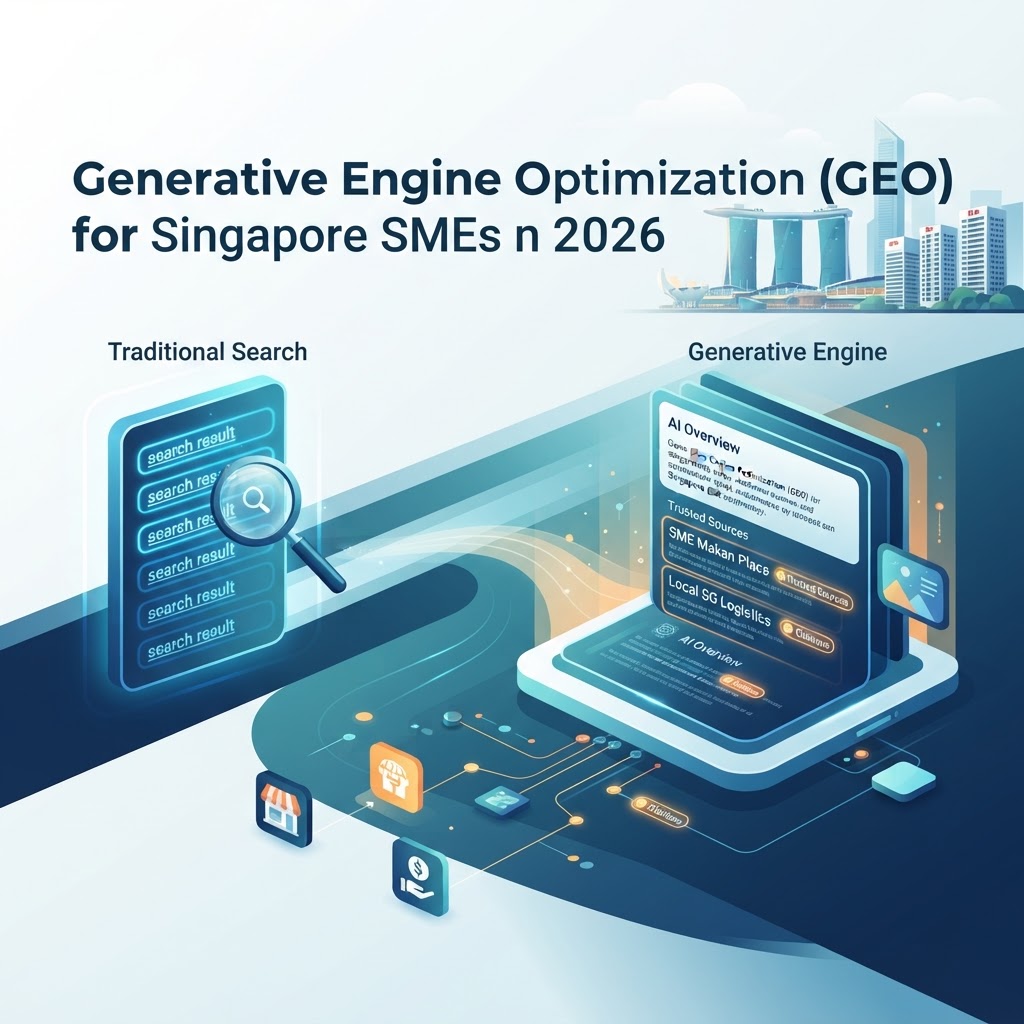
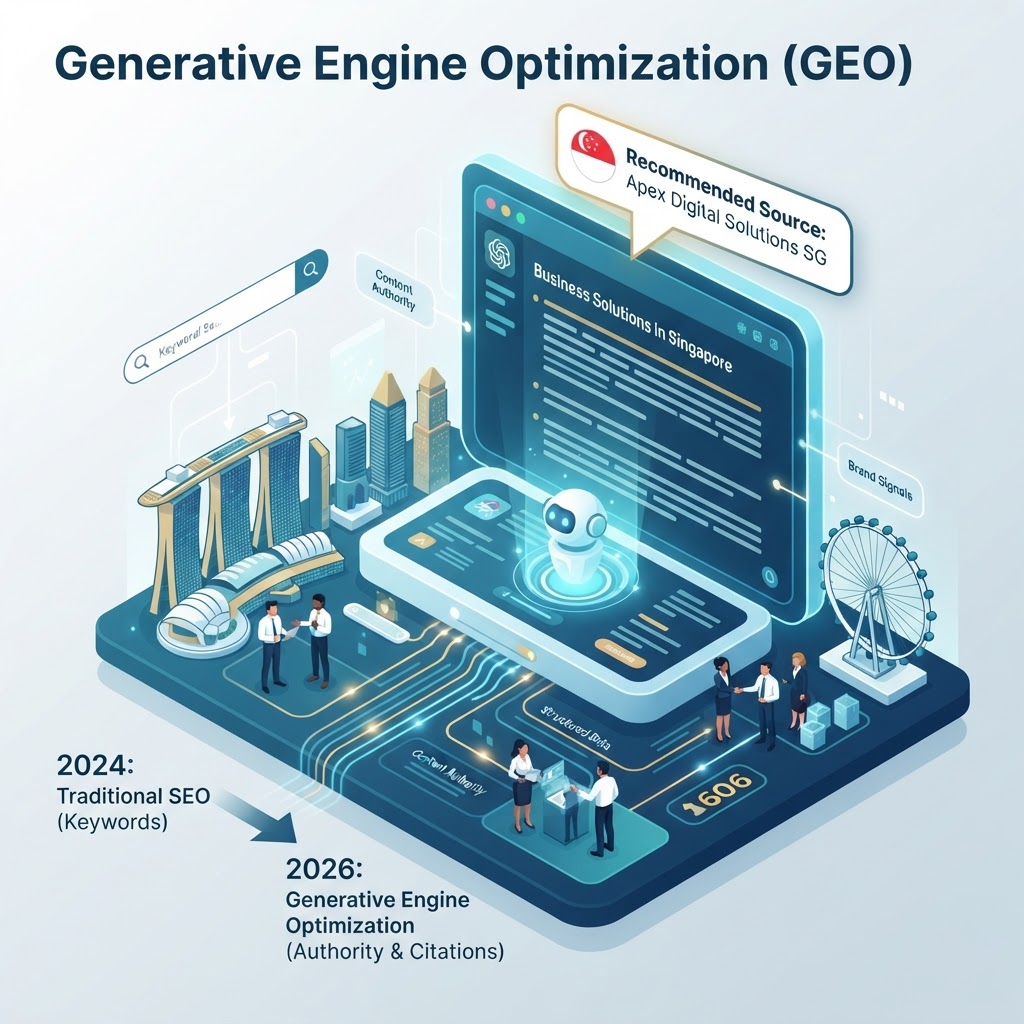
The digital landscape in Singapore is undergoing a fundamental shift. For years, SME owners have focused on traditional Search Engine Optimization (SEO) to climb the rankings on Google. However, the rise of AI-powered search—where platforms provide direct, synthesized answers rather than just a list of blue links—means your strategy must evolve. This is where Generative Engine Optimization Singapore (GEO) becomes critical. GEO is the practice of structuring your digital content so that AI models, like ChatGPT, Gemini, and Perplexity, can easily access, verify, and cite your business as an authoritative source. As a business owner in Singapore, ignoring this shift is no longer an option. Whether you are managing an eCommerce store or a service-based agency, the goal is to position your website as the primary data source for AI queries. By focusing on technical accuracy, expertise, and structured data, iPro Dezign helps Singapore SMEs navigate this transition effectively. We ensure your brand remains visible when customers ask AI for recommendations, leveraging our deep understanding of digital ecosystems to keep your business competitive in an era defined by intelligent discovery and automated insights.
Table of Contents
Understanding the Shift to Generative Engine Optimization
The transition from traditional search to generative search represents a change in how users consume information. Historically, searchers looked for a website to click on; now, they look for a direct answer provided by an AI interface. For a Singapore SME, this means your objective is to be the primary citation within those generated responses. Generative Engine Optimization Singapore is not about replacing your existing SEO efforts; it is about augmenting them to suit the needs of large language models. These models function by pulling data from trusted, highly relevant, and logically structured web sources. If your website lacks clear information architecture, AI models may struggle to understand what your business actually does, causing you to lose out on potential traffic. At iPro Dezign, we observe that AI models place a higher premium on factual, objective, and well-structured data than on keyword density alone. To excel, businesses must move away from repetitive keyword usage and focus on providing comprehensive answers to customer queries. When a potential client asks an AI about the best digital marketing services in Singapore, the AI checks a vast index of information. By ensuring your site is built with semantic markup—code that tells search engines exactly what a piece of content means—you make it significantly easier for the AI to identify your company as a leader in your field. We help SMEs audit their existing content to ensure it meets these new standards, bridging the gap between legacy SEO and the future of AI-driven discovery. This requires patience, a commitment to high-quality information, and a strategic approach to how your digital assets are mapped across your site architecture.
Building a Technical Foundation for AI Readiness
Technical performance remains a cornerstone of digital visibility, regardless of how search changes. AI models require fast, secure, and well-indexed websites to crawl, parse, and incorporate into their summaries. In 2026, the focus for Singapore businesses should be on Core Web Vitals—the industry standard metrics for site speed, visual stability, and interactivity. If your website suffers from high loading times or a poor mobile experience, the AI is less likely to prioritize your content. Furthermore, the use of headless CMS platforms and structured data is essential. Structured data, or schema markup, is a form of code that provides search engines with explicit context about your page content. Think of it as a labels system that tells the machine: This is a review, this is a product price, and this is a service description. Without it, you are essentially asking the AI to guess what your site is about. When we partner with SMEs, we emphasize the need for mobile-first designs, as the majority of Singaporean consumers interact with brands through mobile devices. Speed is not just a vanity metric; it affects how thoroughly your site is indexed by AI agents. A site that loads under three seconds is much more likely to be crawled effectively. Beyond speed, PDPA compliance and secure protocols (HTTPS) are non-negotiable. A site that triggers security warnings is a site that AI models will avoid. Below is a comparison of traditional site metrics versus the requirements for modern generative engine optimization, which we use to guide our clients through their digital transformation journeys during our consultations and project scoping phases.
| Metric | Traditional SEO Focus | GEO Focus |
|---|---|---|
| Site Speed | Conversion rates | Crawl efficiency and AI parsing speed |
| Keyword Use | High volume density | Topical authority and semantic relevance |
| Data Structure | Standard HTML | Advanced JSON-LD and Schema Markup |
| Mobile | Responsive design | AI-friendly mobile accessibility |
Crafting Authoritative Content for AI Citations
Quality content is the fuel for generative search engines. AI models are trained to prioritize sources that demonstrate expertise, authoritativeness, and trustworthiness. In the Singapore market, this means creating content that answers specific, locally relevant questions rather than writing generic blog posts. If your business is a local service provider, you need to build content that discusses the nuances of the Singapore landscape—such as specific industry regulations, local trends, or the application of PSG (Productivity Solutions Grant) funding to your services. AI models favour content that provides unique, first-party insights rather than recycled information from other sites. Our team works with clients to identify the specific questions their customers are asking and builds a content library that serves as the authoritative voice on those topics. This involves using clear, concise language and avoiding overly technical jargon where possible. It also means structuring your articles so that the key takeaway is easily extractable by an AI. Using headers, bulleted lists, and clear definitions helps the model understand the hierarchy of your argument. When you provide a direct, accurate answer to a question at the start of an article, you increase the likelihood of your content being selected for an AI summary. Furthermore, maintaining an active and updated website is vital. Stale content is often ignored by AI algorithms. We encourage our clients to regularly audit their pages for accuracy, ensuring that all information reflects current market realities in Singapore. By consistently producing helpful, objective, and well-referenced material, you build a digital reputation that AI models can rely upon, effectively securing your spot as a top-cited source within your industry niche and local market segment.
Measuring ROI and Adapting to the New Search Ecosystem
Measuring the impact of your Generative Engine Optimization Singapore strategy requires a departure from old-school metrics like simple keyword rankings. While rankings still hold some weight, the real metric of success in 2026 is the quality and frequency of your brand mentions in AI-generated responses. You should monitor whether your brand appears as a cited source in AI interactions related to your service category. Tools that track brand sentiment and mention frequency are becoming more critical than traditional rank-tracking software. Additionally, you must look at your referral traffic patterns. If you notice an increase in high-intent traffic from AI platforms, this is a strong signal that your GEO efforts are paying off. At iPro Dezign, we help our clients connect these metrics to actual business outcomes, such as lead generation and sales conversions. Remember, the ultimate goal is not just to be seen, but to turn that visibility into a tangible business return. We understand that investing in a digital rebuild or a strategy overhaul is a significant decision for any SME, which is why we offer guidance on leveraging government funding like the PSG grant to offset costs. By investing up to 50% of your budget through such support, you can implement enterprise-grade SEO and GEO strategies while preserving your operational cash flow. Adapting to the new search ecosystem is a process of iterative improvement. It requires ongoing monitoring, technical vigilance, and a willingness to refine your content based on data. As your digital partner, our role is to provide the technical expertise and strategic foresight needed to keep your business ahead of the curve, ensuring that your digital footprint remains relevant, authoritative, and profitable in the evolving landscape of AI-powered search engines.
The shift towards generative search is not a temporary trend; it is the new reality of how information is accessed. By focusing on technical excellence, structured data, and authoritative content, your business can thrive in this environment. If you are looking to audit your website for AI readiness or wish to explore how you can leverage government support for your digital upgrade, our team is ready to assist. We offer professional consultations to help you navigate the complexities of digital marketing and GEO. Reach out to us today to discuss how we can help you build a more resilient, AI-friendly online presence that drives consistent, long-term business growth for your Singapore-based company. Let us transform your website into an authoritative engine for your brand.
Frequently Asked Questions
What is the primary difference between SEO and Generative Engine Optimization? Traditional SEO aims to rank blue links on a search results page, while GEO aims to have your content cited directly within AI-generated answers.
Do I still need traditional SEO if I invest in GEO? Yes, both are complementary. A site that is not technically optimized for traditional search will rarely be considered authoritative enough by AI models for citation.
How can my Singapore SME benefit from the PSG grant for this? Many digital marketing and web development services are eligible for the Productivity Solutions Grant, which can cover up to 50% of your project costs to improve your digital infrastructure.
How long does it take to see results from GEO? Like traditional SEO, GEO is a long-term strategy. Consistent updates and technical maintenance typically show measurable improvements in visibility over several months.
Why is structured data important for AI? Structured data provides the context that AI models need to understand your content’s meaning, making it much more likely that your information will be selected for a summary.