Beyond SEO: How Singapore SMEs Can Win in the Age of AI Search and GEO
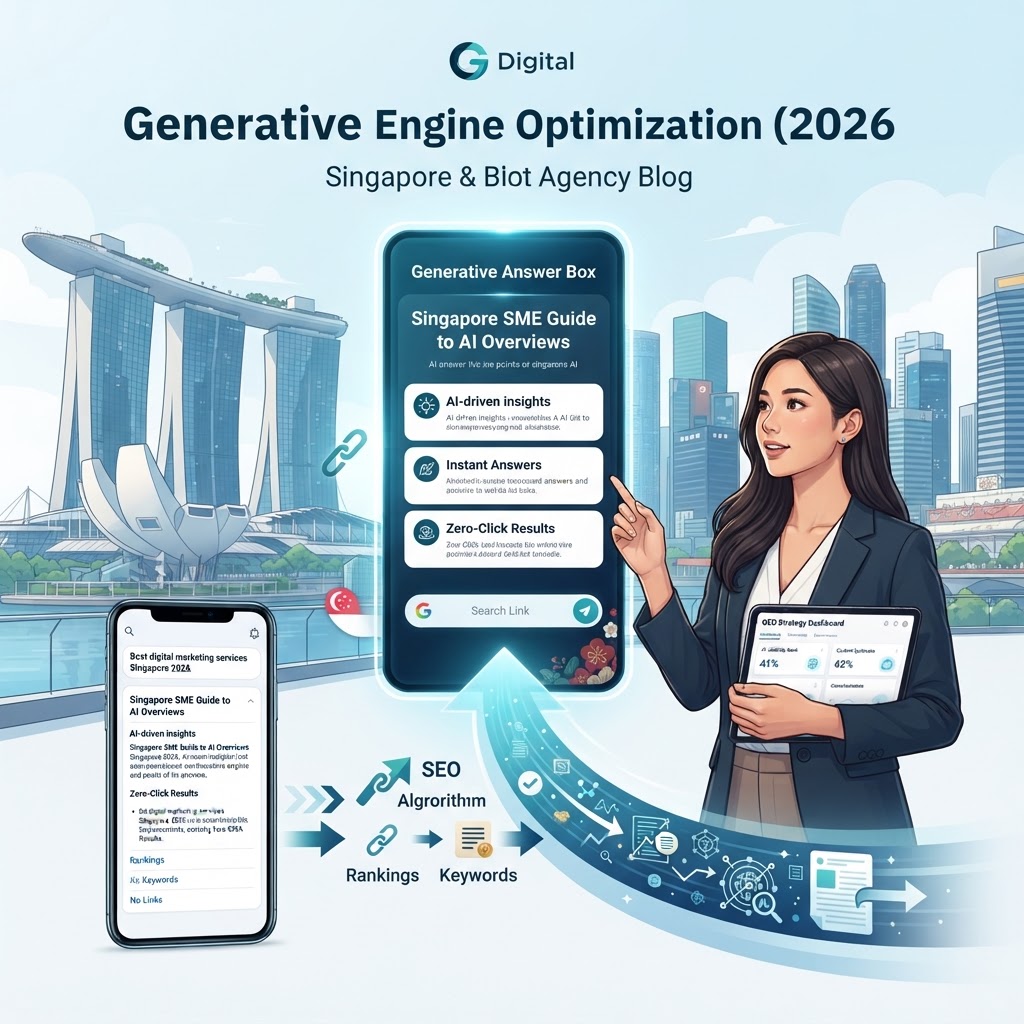
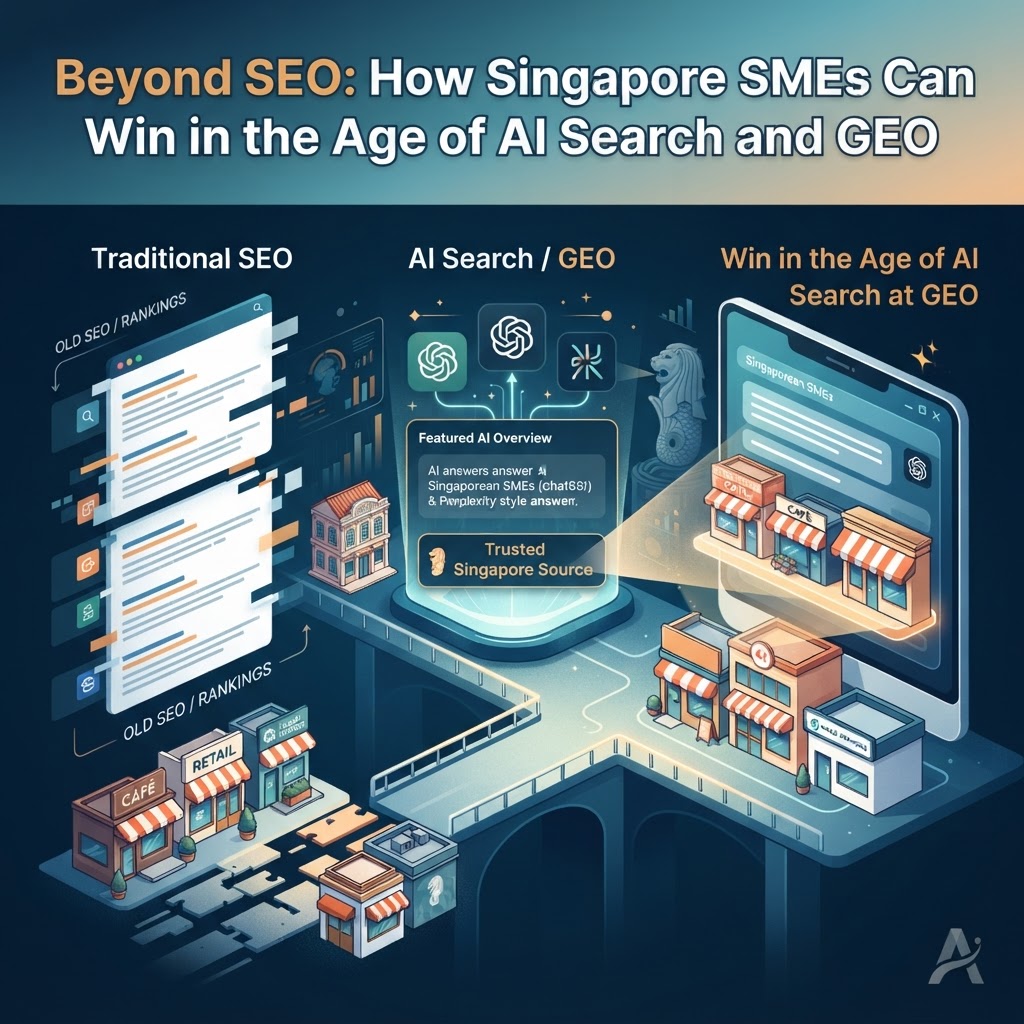
The digital landscape for Singaporean businesses is undergoing a seismic shift. For years, the primary objective for marketing managers and SME owners was to secure higher positions on traditional search engine results pages. However, the rise of AI-powered search, including Google’s AI Overviews, Perplexity, and ChatGPT, has changed the rules of the game. Now, businesses must pivot their focus toward Generative Engine Optimisation (GEO) to remain visible and relevant. When a potential customer asks an AI bot for recommendations, they no longer scan a list of ten blue links; they expect a concise, direct, and authoritative answer. If your business is not cited as a trusted source within these AI-generated responses, you risk becoming invisible. Adapting to this new reality is not just about technical adjustments; it is about demonstrating expertise and providing clear, structured information that AI models find valuable. At iPro Dezign, we specialise in helping Singapore SMEs navigate this transition by modernising their digital presence and ensuring they remain competitive in an increasingly automated search environment.
Table of Contents
Why Traditional SEO is Evolving into GEO
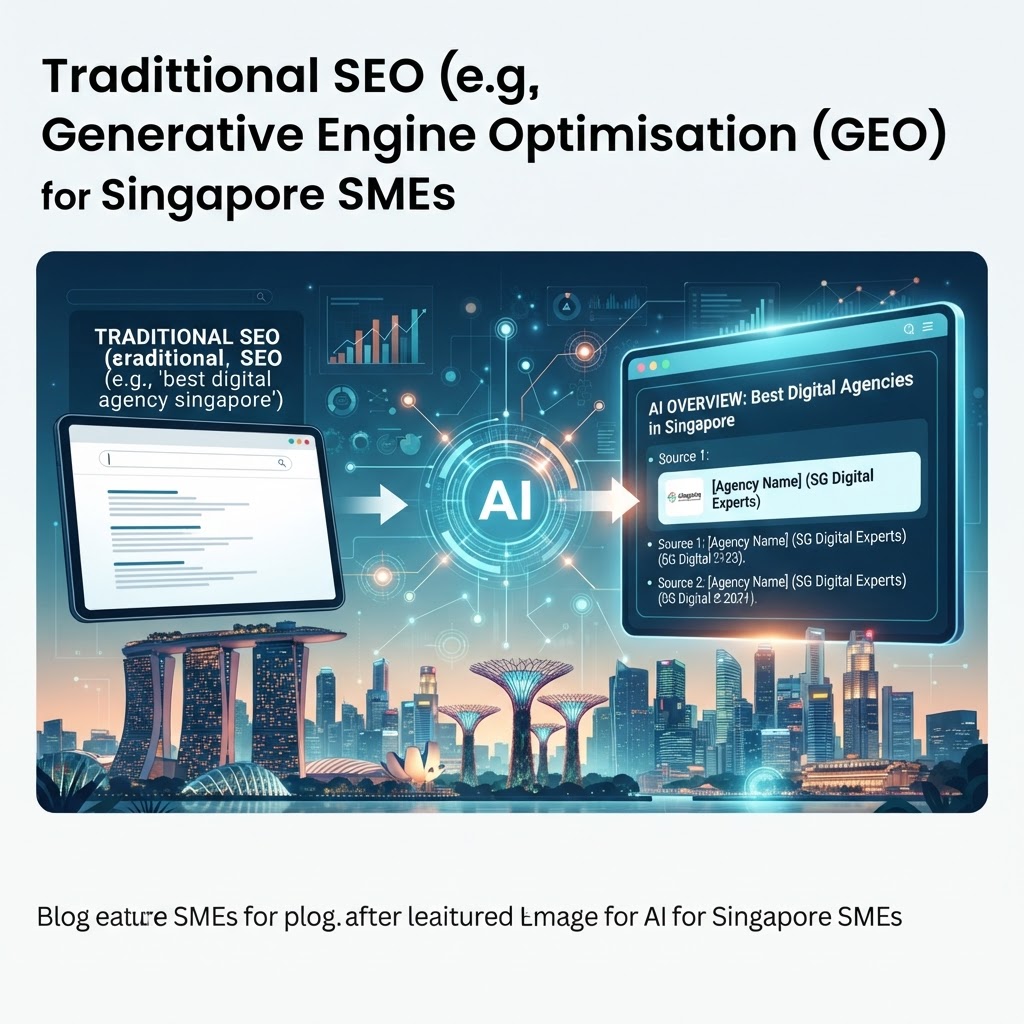
Traditional search engine optimisation has long relied on keyword density, backlink volume, and meta-tag manipulation to convince search algorithms of a site’s relevance. However, the introduction of Generative Engine Optimisation represents a departure from these legacy tactics. Modern AI search systems do not merely index pages; they synthesise information to provide holistic answers to user queries. For an SME in Singapore, this means your content must be structured to support machine comprehension rather than just matching search terms. When an AI agent processes a request, it looks for high-authority, semantically rich content that provides concrete solutions to specific problems. If your website architecture is outdated or cluttered, AI crawlers may struggle to extract the necessary information to feature your brand in their summaries. This shift requires a focus on E-E-A-T—Experience, Expertise, Authoritativeness, and Trustworthiness. By consistently publishing insights, case studies, and clear service descriptions, you teach AI models that your agency or shop is a primary source of truth within your industry. Our team has observed that when sites are restructured to be more semantic and data-rich, their chances of appearing in AI snippets increase significantly. This is not about tricks or quick fixes; it is about building a digital foundation that supports the way modern users consume information. As we guide our clients through this shift, we emphasise that the goal is no longer just to get a click, but to be the source that the AI references directly. This elevates your brand status and provides immense value to users, which eventually leads to higher engagement rates and more qualified leads. Preparing for this environment involves auditing your current content to ensure it answers the ‘who, what, and why’ questions clearly and professionally.
The Core Foundations of Generative Engine Optimisation
To master Generative Engine Optimisation, businesses must prioritise content that is both readable for humans and easily parsed by machines. This dual-purpose content strategy is essential for modern competitiveness. AI models rely on structured data, or schema markup, to understand the relationships between different pieces of information on your site. For instance, if your Singapore SME provides professional consulting, your site must explicitly use schema to define your location, service offerings, business hours, and pricing structures. Without this technical layer, the AI may fail to associate your business with the relevant geographic or service-based queries. Beyond technical tagging, the quality of your prose matters more than ever. AI models are trained on vast datasets and are increasingly sophisticated at identifying ‘fluff’ or low-value content. To rank effectively, your copy must provide genuine expertise. We recommend adopting a consultative approach in your writing: explain complex concepts simply, address common customer pain points, and provide clear data-backed evidence. When we build websites for our clients, we ensure that every page is designed with clear hierarchical headings and structured layouts that facilitate content consumption. Consider the following table which contrasts traditional SEO tactics with the modern requirements for AI visibility.
| Metric | Traditional SEO Focus | Modern GEO Focus |
|---|---|---|
| Keywords | Keyword stuffing/density | Contextual semantic depth |
| Content | Length and link volume | Expertise and clear answers |
| Visibility | Ranking for specific terms | Citations in AI responses |
| Authority | External backlink count | Brand trust and factual accuracy |
By shifting your focus to the right-hand column of this table, you create a sustainable model for long-term growth. Investing in these foundational elements now ensures that your brand remains the preferred choice when users ask AI engines for expert advice in your specific field. Remember that the ultimate goal is to provide a seamless user experience that AI models find indispensable for their final answer generation.
Leveraging Local Context for AI Visibility
For Singaporean SMEs, local context is a significant advantage in the race for AI relevance. AI search engines are designed to provide highly personalised responses, and they heavily weight geographic signals when a user is searching for local services. Whether you operate a retail shop in Orchard Road or a professional service firm in the Central Business District, your GEO strategy must highlight your local presence. This means ensuring your business information is consistent across all platforms, including Google Business Profile, local directories, and your own website. Being a local, trusted partner in the Singapore ecosystem allows your brand to appear whenever a customer asks, ‘Where can I find a reliable provider near me?’ We assist our clients in mapping their local footprint, ensuring that their location data is precise, their service areas are clearly defined, and their reputation is managed through verifiable customer feedback. In addition to technical alignment, you should create content that speaks to the specific needs and regulations of the Singapore market. Mentioning compliance with local standards like PDPA, or noting your eligibility for PSG funding to help cover up to 50% of your digital transformation costs, provides the local signals that AI models look for. By localising your content, you are not just targeting search terms; you are building trust with the very algorithms that dictate visibility in our local region. When users query for services, they trust brands that appear to be established, stable, and deeply embedded in their local community. Our team helps you craft this narrative by combining local SEO best practices with modern AI-friendly content structures. This multi-layered strategy ensures that your brand does not disappear into the generic void of the global internet, but instead stands out as a relevant and accessible solution for Singaporean consumers who value local expertise and reliability.
Technical Performance as a Trust Metric
Technical performance is the backbone of any successful digital presence, and it plays a critical role in how AI crawlers evaluate your site. If your website suffers from slow load times, poor mobile responsiveness, or broken navigation, the AI engine will likely deem your content unreliable or difficult to parse. In the context of Generative Engine Optimisation, we look at Core Web Vitals—the specific metrics Google uses to measure user experience, such as Largest Contentful Paint (LCP), which tracks how long it takes for the main content to load. A slow website acts as a negative signal to search engines. If a site takes longer than three seconds to load, visitors and bots alike are more likely to move on. Our approach at iPro Dezign involves building ‘performance-first’ websites that leverage modern frameworks and clean code to ensure instant loading speeds. We focus on optimising image delivery, minifying scripts, and utilising efficient hosting solutions tailored for the Singapore market. Beyond load speed, we ensure that your site is fully mobile-optimised, as a vast majority of traffic in APAC originates from mobile devices. An AI engine evaluating your site will scan for ‘mobile-friendliness’ and penalise layouts that force users to zoom or scroll excessively. By investing in a high-performance build, you are essentially telling the search engine that your brand is modern, professional, and worthy of recommendation. Furthermore, a clean, well-coded site is easier for AI bots to crawl and index accurately. When we rebuild client sites for performance, we often see a compounding effect: better load times improve user engagement, which reduces bounce rates, which in turn reinforces your authority in the eyes of search algorithms. This technical excellence is part of our commitment to delivering results that align with the rigorous standards of today’s digital landscape. If your website has not been audited for speed or mobile performance in the last two years, it is likely that you are missing out on significant opportunities for AI-driven visibility.
Conclusion: Future-Proofing Your Business
Adapting to the age of AI search is not an option; it is a necessity for SMEs in Singapore. As search evolves from simple keyword matching to complex, generative reasoning, your brand’s digital presence must keep pace. By focusing on Generative Engine Optimisation—creating content that is semantically rich, technically sound, and locally relevant—you can secure your place as a trusted authority. At iPro Dezign, we provide the technical expertise and strategic guidance needed to navigate this transition effectively. From rebuilding your site for peak performance to structuring your data for AI comprehension, we help you build a sustainable foundation. Our team is ready to help you leverage PSG funding to make these improvements more affordable. Don’t wait for the search landscape to leave you behind. Contact us today to discuss your digital strategy, request a quote, or schedule a consultation to see how we can position your SME for success in the era of AI.
Frequently Asked Questions
What is Generative Engine Optimisation? It is the process of structuring your website content to be accurately understood and cited by AI engines like ChatGPT and Google AI Overviews.
Why is traditional SEO no longer enough? AI engines provide direct answers, reducing the need for users to click through to websites, so you must now focus on being cited within the AI response itself.
How can I improve my visibility in AI summaries? By focusing on high-authority, expert-led content that answers specific user questions and using structured schema markup to help AI bots process your data.
Can PSG funding be used for web development? Yes, Singapore SMEs can often access PSG grants to cover up to 50% of the costs associated with digital transformation and website rebuilds.
How does site performance affect AI search? AI engines prioritise reliable, fast, and mobile-friendly websites; poor technical performance can lead to your content being ignored or de-prioritised by search algorithms.