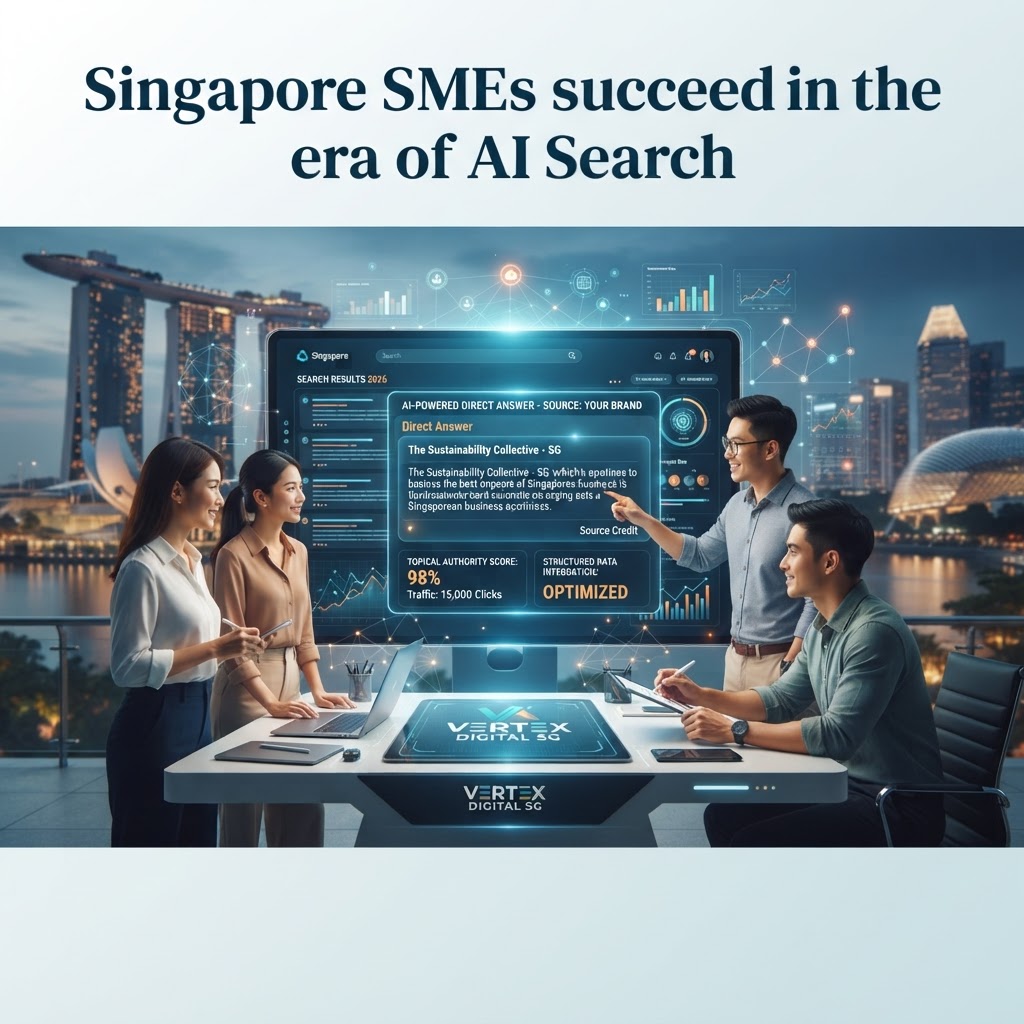
Leveraging AI-Powered Digital Marketing for Singapore SMEs: A Practical Guide
As we navigate the competitive landscape of 2026, Singaporean small and medium-sized enterprises (SMEs) are facing a crucial transition. The era of basic automation is fading, replaced rapidly by the era of AI-powered digital marketing. For business owners and marketing managers in Singapore, this is not merely a technical upgrade but a fundamental shift in how you connect with customers. By moving toward hyper-personalization and data-backed content optimization, your business can significantly improve engagement levels and operational efficiency. In a market as tech-savvy as ours, consumers now expect digital experiences that feel relevant, timely, and seamless. Whether you are running an eCommerce store or a service-based business, leveraging artificial intelligence allows you to move beyond mass-market tactics to deliver precision-targeted content that resonates with individual needs. At iPro Dezign, we understand that this shift can feel overwhelming. However, by adopting a structured, results-focused approach, your SME can harness these advanced tools to compete effectively while maintaining strict adherence to local regulations like the Personal Data Protection Act (PDPA). This guide explores how you can integrate these innovations to drive sustainable growth for your Singaporean brand.
Table of Contents
The Strategic Edge of AI-Powered Digital Marketing
Adopting AI-powered digital marketing is no longer a luxury reserved for large enterprises; it is a critical necessity for Singaporean SMEs aiming to stay relevant. In a local market defined by high smartphone penetration and rapid digital adoption, businesses must be able to parse vast amounts of customer data to make informed decisions. AI acts as the connective tissue between your raw data and your bottom line. It allows you to predict consumer trends, identify content gaps, and refine your advertising spend with a level of accuracy that manual tracking simply cannot match. For many SMEs, the primary barrier is the perceived complexity of integrating these systems. However, the objective is not to build a complex machine learning infrastructure from scratch, but to utilize accessible tools that align with your specific business goals. By prioritizing performance-first builds and data-driven insights, our team helps businesses transition from reactive marketing to proactive strategy. When you use AI to analyze historical engagement, you can forecast future demands, allowing you to allocate your marketing budget toward the channels that actually yield conversions. This is particularly relevant for businesses looking to stretch their marketing dollars in an expensive digital ecosystem. Furthermore, AI helps in maintaining the balance between aggressive growth and PDPA compliance. By utilizing local cloud-hosted solutions and respecting data privacy frameworks, you can build trust with your audience. Remember, AI does not replace your human expertise; it amplifies it by removing the guesswork. When your marketing strategy is informed by hard data rather than intuition alone, you mitigate risk and increase the likelihood of achieving consistent, measurable ROI. The focus remains on building a sustainable digital footprint that serves your customers’ needs at every touchpoint of their journey, ensuring your brand stands out in a crowded marketplace.
Driving Engagement Through Hyper-Personalisation
Hyper-personalisation is the process of using AI to deliver tailor-made content to individuals at the exact moment they need it. In Singapore, where consumers value efficiency, a generic marketing message is often ignored. To succeed, your digital marketing must leverage AI to analyze user behavior, site navigation, and past interactions to dynamically update your website and email communications. For instance, an eCommerce store might show different landing pages to a first-time visitor compared to a returning loyalty member. This level of granular control keeps customers engaged longer and encourages higher conversion rates. Our approach to hyper-personalisation revolves around understanding the user intent behind every click. We don’t just look at traffic metrics; we evaluate the user journey to determine where friction exists. By implementing AI-driven recommendations engines, you can serve products or services that align perfectly with the user’s history, turning a browsing session into a completed transaction. The table below outlines how traditional marketing methods compare to AI-enhanced approaches in today’s Singaporean context.
| Metric | Traditional Approach | AI-Powered Approach |
|---|---|---|
| Customer Data Usage | Segmented by broad demographics | Individual behavioral patterns |
| Content Delivery | Static website assets | Dynamic, real-time content |
| Customer Feedback | Manual surveys and emails | Predictive sentiment analysis |
| Ad Spending | Trial and error testing | Automated predictive budget allocation |
As you can see, the shift is about moving from collective assumptions to individual insights. When our team assists clients in integrating these technologies, we emphasize that personalization must feel helpful rather than intrusive. By providing relevant solutions—such as timely reminders, tailored product bundles, or location-based offers—you foster a deeper relationship with your clientele. This fosters customer loyalty, which is essential for long-term survival in the competitive SME landscape. Furthermore, when your website is built with a performance-first mindset, these dynamic changes don’t sacrifice speed. Maintaining Core Web Vitals—the metrics Google uses to measure user experience—remains a top priority during any digital transformation project.
Boosting Operational Efficiency and Content ROI
For many Singaporean SMEs, the challenge is not just reaching customers but doing so while managing limited internal resources. AI-powered digital marketing serves as a powerful force multiplier for your marketing department. Tasks that once consumed dozens of manual hours, such as keyword research, content drafting, and social media scheduling, can now be streamlined through sophisticated automation tools. This efficiency gain allows your team to focus on high-level strategy and creative development—areas where human empathy and business context remain irreplaceable. For example, AI can analyze which blog topics drive the highest time-on-page metrics, allowing you to produce more of what your audience actually enjoys reading. This data-backed approach to content optimization ensures that every dollar spent on content creation contributes to your overall marketing objectives. Efficiency also extends to lead management. Using automated lead scoring, AI can identify which prospects are most likely to convert, enabling your sales team to prioritize follow-ups effectively. This ensures that no potential revenue is lost due to delayed response times, a critical factor for success in the fast-paced Singapore market. Additionally, by automating routine customer interactions, you provide 24/7 service without needing an oversized support staff. Our agency focuses on building these automated systems using reliable, secure platforms that integrate smoothly with your existing tech stack. We advocate for a “build once, optimize often” strategy. By ensuring your website is optimized for speed and accessibility from the beginning, you lower the technical overhead required for future AI integrations. When your digital foundation is solid, you spend less time troubleshooting and more time growing. The goal is to create a lean, responsive organization that can adapt to changing consumer preferences without needing to reinvent its processes every single quarter.
A Practical Implementation Framework for SMEs
Implementing AI does not happen overnight, and a phased approach is often the most prudent path forward for Singaporean SMEs. The first step involves an audit of your existing data infrastructure. Before applying any AI, ensure you have reliable tracking, such as Google Analytics 4, properly set up to collect actionable data. Once your data is clean and organized, the next phase is to identify the most impactful areas for improvement. For most businesses, this is either customer acquisition or conversion optimization. Start small: perhaps by deploying an AI-powered chatbot for basic customer support or using an AI tool to refine your email marketing subject lines. These low-risk experiments provide immediate feedback on how your audience responds to automated interventions. As you see results, you can scale your investment. Our team often helps clients navigate the PSG (Productivity Solutions Grant) landscape, which can provide funding for up to 50% of the cost for eligible digital solutions. Leveraging this government support makes the transition to advanced marketing tools more affordable, effectively lowering the barrier to entry for local businesses. During implementation, it is vital to keep your staff involved; AI should be presented as a tool for empowerment rather than a replacement. Training your team on how to interpret AI insights ensures that the technology is being used effectively. Security and compliance remain the bedrock of this framework. Always ensure that your AI tools are vetted for PDPA compliance and that you are transparent with your customers about how their data is being used to enhance their experience. By prioritizing security and human-centric design, you build a brand that is both cutting-edge and deeply trusted. A successful AI journey is one that consistently aligns with your core business values, providing measurable ROI that justifies the effort and investment involved in your digital evolution.
Conclusion
Embracing AI-powered digital marketing represents a vital evolution for Singaporean SMEs aiming to thrive in the years ahead. While the technology is advanced, the objective remains simple: to serve your customers better, faster, and with more relevance. By leveraging data-backed insights, you can stop guessing and start growing with confidence. From hyper-personalization that deepens customer relationships to operational efficiencies that protect your margins, the benefits of this transition are substantial. At iPro Dezign, we are committed to helping you navigate this journey with practical, performance-focused solutions that respect your budget and your business needs. If you are ready to evaluate your current digital presence or explore how PSG-eligible solutions can assist your growth, we are always a call away. Let’s work together to build a future-proof strategy for your business.
Frequently Asked Questions
- Is AI-powered marketing suitable for very small businesses? Yes, many AI tools are designed to scale, allowing small teams to achieve professional-level results with minimal overhead.
- How does the PSG grant apply to these services? The Productivity Solutions Grant provides funding for pre-approved digital solutions that help SMEs streamline operations, often covering up to 50% of eligible costs.
- How do I ensure my AI strategy complies with the PDPA? Always choose reputable platforms, maintain clear data privacy policies, and ensure that personal data is processed securely and with explicit user consent.
- Does AI replace the need for a digital marketing agency? No, AI provides the data and automation, but a professional agency provides the strategy, oversight, and creative direction required to ensure the tech delivers real business results.
- What is the first step to get started? The best first step is a comprehensive digital audit to understand your current performance and identify where AI can deliver the most immediate impact.