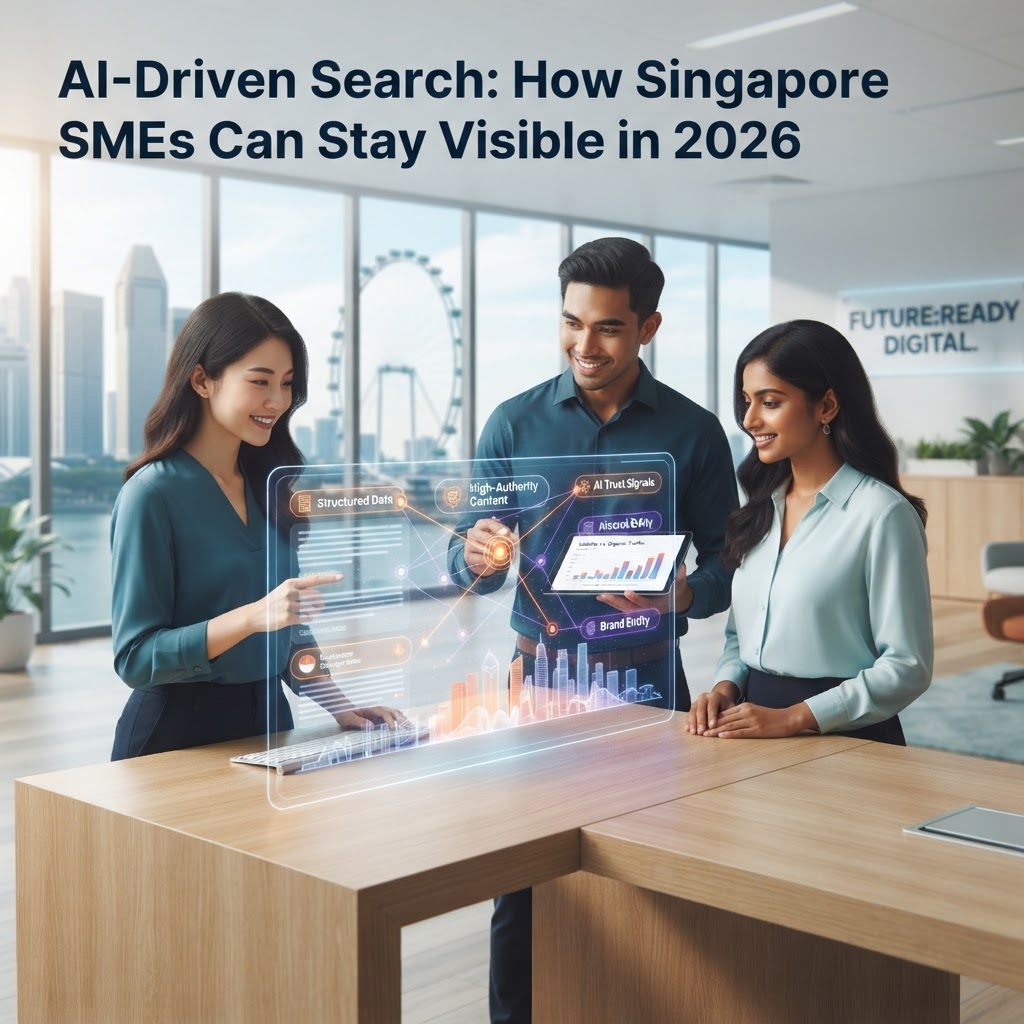
AI Search Optimization for Singapore SMEs: A 2026 Guide to Growth and PSG Funding
The digital landscape in Singapore is shifting rapidly as artificial intelligence transforms how consumers find products and services online. For local business owners, the traditional way of appearing on a search results page is no longer the only goal. Today, AI search optimization for Singapore SMEs represents the next frontier in maintaining a competitive digital presence. As users increasingly rely on conversational AI and generative search experiences to answer complex queries, your website must be built to serve both traditional search engines and these intelligent platforms. This evolution demands a shift in strategy, focusing on high-quality content structure, technical performance, and user-centric architecture that helps AI models understand your brand authority. With the support of government schemes like the Productivity Solutions Grant, which offers up to 50 percent funding for digital transformation projects, SMEs now have a practical, cost-effective pathway to modernise their operations. By partnering with an experienced digital agency, you can bridge the gap between legacy web infrastructure and the requirements of an AI-first era. This guide outlines how to navigate these technical complexities while leveraging local funding to secure sustainable long-term growth for your business.
Table of Contents
Understanding the AI Shift in Search
In the past, search engine optimization primarily focused on targeting specific keywords to capture traffic from traditional blue-link listings. However, the rise of generative AI search models has fundamentally changed the user experience. Singaporean consumers are now interacting with AI-powered tools that synthesize information from various sources to provide direct answers, reducing the need to click through multiple websites. For a local SME, this means your visibility now depends on whether an AI model perceives your content as an authoritative source of truth. AI search optimization in Singapore is not about tricks or shortcuts; it is about building a digital footprint that machines find easy to interpret, index, and cite. When an AI tool parses your data, it looks for structured information that verifies your business identity, service quality, and local relevance. This requires a shift towards semantically rich content that addresses user intent comprehensively rather than just stuffing keywords into a page. Our team often explains to clients that you are no longer just writing for a search algorithm, but for a knowledge-gathering engine that values precision, clarity, and logical organization. By focusing on entity-based SEO—where you define your business as an entity in the eyes of search engines—you can ensure that when a customer asks for a recommendation for a service in Singapore, your brand is the one referenced by the AI. This process involves consistent NAP data (Name, Address, Phone number), schema markup to describe your business attributes, and an overall site architecture that reflects deep industry expertise. Adapting to this environment is essential for staying relevant, as the gap between those who adopt AI-ready structures and those who remain static continues to widen in our increasingly digital-first economy.
The Technical Foundation: Core Web Vitals and Performance
Before you can achieve any level of search visibility, your website must function as a high-performance engine. Technical health is the backbone of all effective search strategies, particularly when catering to automated systems that prioritize speed and accessibility. In our experience, we consistently observe that sites with poor performance struggle to rank, regardless of the quality of their written content. This is where Core Web Vitals come into play. These are a set of metrics developed by Google to quantify the user experience, specifically focusing on loading performance, interaction latency, and visual stability. For instance, the Largest Contentful Paint (LCP) measures how long it takes for the main content to load, while Cumulative Layout Shift (CLS) tracks how much the page elements jump around as it renders. In the context of AI crawlers, a site that loads slowly or breaks during the loading process is often deprioritized because it provides a poor experience for the end user. At our agency, we emphasize that a technical rebuild is not just about making a site look modern; it is about cleaning up the underlying code to ensure efficiency. When we help Singaporean SMEs upgrade their digital presence, we prioritize clean code, image compression, and efficient server response times. These steps are vital because they remove the friction that prevents search engines from crawling and indexing your pages effectively. Furthermore, as more Singaporeans use mobile devices to conduct business searches, mobile-first design is non-negotiable. An unresponsive or cluttered mobile site will frustrate both your visitors and the AI algorithms that crawl your pages. By investing in a high-performance build today, you create a robust environment that can handle future updates to search technology, ensuring your business remains competitive and accessible to your target audience throughout the year.
| Metric | Description | Importance for AI Search |
|---|---|---|
| LCP | Loading Speed | High – Machines prioritize fast assets |
| CLS | Visual Stability | Medium – Affects usability scores |
| INP | Interaction Latency | High – Indicates site responsiveness |
Content Strategy for AI Visibility
Creating content that appeals to AI systems requires a shift toward quality, depth, and helpfulness. Gone are the days when churning out thousands of words of generic text would yield results. Today, AI models are trained to detect high-value content that provides genuine answers to user problems. As a Singapore-based SME, your goal is to establish topical authority in your niche. If you provide interior design services, your website should feature comprehensive resources on space planning, material selection, and local building regulations rather than just a sparse contact page. This strategy helps the AI understand that your business is an expert in its field. To optimize effectively, our team focuses on producing structured, original insights that build trust. We encourage our clients to answer the specific questions their customers ask, from cost estimates to project timelines, using clear headings and logical formatting. This makes it significantly easier for AI search engines to pull snippets from your site and present them to users as authoritative answers. Additionally, it is critical to adhere to data privacy standards like the PDPA. Protecting user data while providing helpful information builds the credibility that search engines value. When your content is well-structured and answers the user’s intent without being overly promotional, you increase the likelihood of being cited as a source. Remember that the goal is to be helpful first; if you help the reader solve their problem, the search engines will eventually reward you with better visibility. This collaborative approach between human-centric marketing and machine-readable structure is the key to thriving in 2026. Consistent, well-researched content that addresses the unique pain points of the Singapore market will differentiate your brand from competitors who rely on outdated, low-quality strategies. Always keep the conversation focused on value, as this remains the best way to earn trust from both potential customers and the automated systems that bring them to your site.
Maximising PSG Funding for Digital Upgrades
Navigating the costs of digital transformation can be challenging for SMEs, but the Singapore government provides significant support through the Productivity Solutions Grant (PSG). This grant is designed to help local businesses adopt IT solutions and equipment to improve their internal processes. Since digital transformation often includes website redesigns, eCommerce implementation, and search-focused content projects, many of our clients are able to secure up to 50 percent funding to offset these investments. This support is a powerful tool for any business looking to modernise their operations without bearing the full financial burden upfront. The key to maximizing this grant is to partner with a pre-approved vendor who understands the specific documentation and compliance requirements associated with the application process. Our agency prides itself on guiding clients through this journey, ensuring that your project scope aligns with the grant’s objectives while maintaining the high standards of technical excellence required for success. When you integrate PSG-funded projects into your growth plan, you are not just getting a new website; you are investing in a foundation that is engineered for modern search requirements and sustainable traffic. By leveraging this subsidy, you can prioritize long-term technical debt reduction, such as migrating to a headless CMS—a setup where the back-end content management is decoupled from the front-end display for greater speed—or implementing advanced security protocols. This financial relief allows you to focus your internal resources on your core business operations while our team manages the complex technical aspects of your growth strategy. Engaging in a consultation to check your eligibility is the first step toward a more efficient and profitable future. Our founder-led approach ensures that you always have a partner who is genuinely invested in your success, ready to provide honest advice on how to best utilize your grant allocation for maximum ROI. We believe in transparency and working with our clients to build a sustainable partnership, one that grows alongside your business as the digital landscape continues to evolve in the coming years.
Conclusion
The transition toward an AI-first search landscape is not a challenge to be feared, but an opportunity to be seized. By focusing on technical performance, high-quality content, and strategic investments through government funding, Singapore SMEs can solidify their market position for 2026 and beyond. A well-built, fast, and informative website acts as a 24/7 digital representative of your business, and when optimized for both humans and machines, it becomes your most effective growth asset. We encourage you to review your current web infrastructure and consider how these modern standards can be applied to your business goals. Our team is always available to discuss how we can help you navigate this transition, provide support with your PSG application, and build a digital strategy that delivers lasting results. Reach out today to start the conversation and take the first step toward your business’s future growth.
Frequently Asked Questions
1. What is AI search optimization and why does it matter for my Singapore SME?
It is the practice of ensuring your website is structured for AI models to understand, index, and recommend your content. It matters because consumers are increasingly using conversational search to find services, and you want your brand to be the authoritative source they find.
2. How can the Productivity Solutions Grant help with my website project?
The PSG provides up to 50 percent funding for pre-approved digital solutions. It can significantly lower the financial barrier to upgrading your website architecture, improving technical performance, or implementing new digital sales tools for your business.
3. What are Core Web Vitals and why are they important?
Core Web Vitals are key performance metrics that measure loading speed, visual stability, and interactivity. They are critical because modern search algorithms penalize slow or unstable sites, affecting your overall online visibility and conversion rates.
4. Can you help with the PSG application process for a website project?
Yes, we guide our clients through the necessary steps to ensure their project scope aligns with grant requirements, making the process as straightforward as possible for business owners.
5. How long does it typically take to see results from these optimizations?
Technical and content improvements typically take 3 to 6 months to reflect in your search presence. Results vary based on your specific market, current site health, and the consistency of your ongoing digital strategy efforts.