Beyond SEO: How Singapore SMEs Can Master Generative Engine Optimisation (GEO) in 2026
The digital landscape in Singapore is shifting beneath our feet. For years, SME owners and marketing managers have focused on traditional Search Engine Optimisation (SEO) to climb Google’s blue links. However, the rise of AI-driven platforms like ChatGPT, Perplexity, and Google’s AI Overviews has transformed how our customers find information. Today, users often receive direct, conversational answers rather than a list of websites to click. This change makes Generative Engine Optimisation (GEO) the critical frontier for businesses that want to remain visible in 2026. If your website is not structured to be cited by these artificial intelligence systems, you risk becoming invisible to a growing segment of your audience. At iPro Dezign, we help Singaporean businesses navigate this transition by focusing on the technical and content requirements that make your brand an authoritative source for AI systems, ensuring you stay ahead in an increasingly automated online marketplace.
Table of Contents
What is Generative Engine Optimisation?
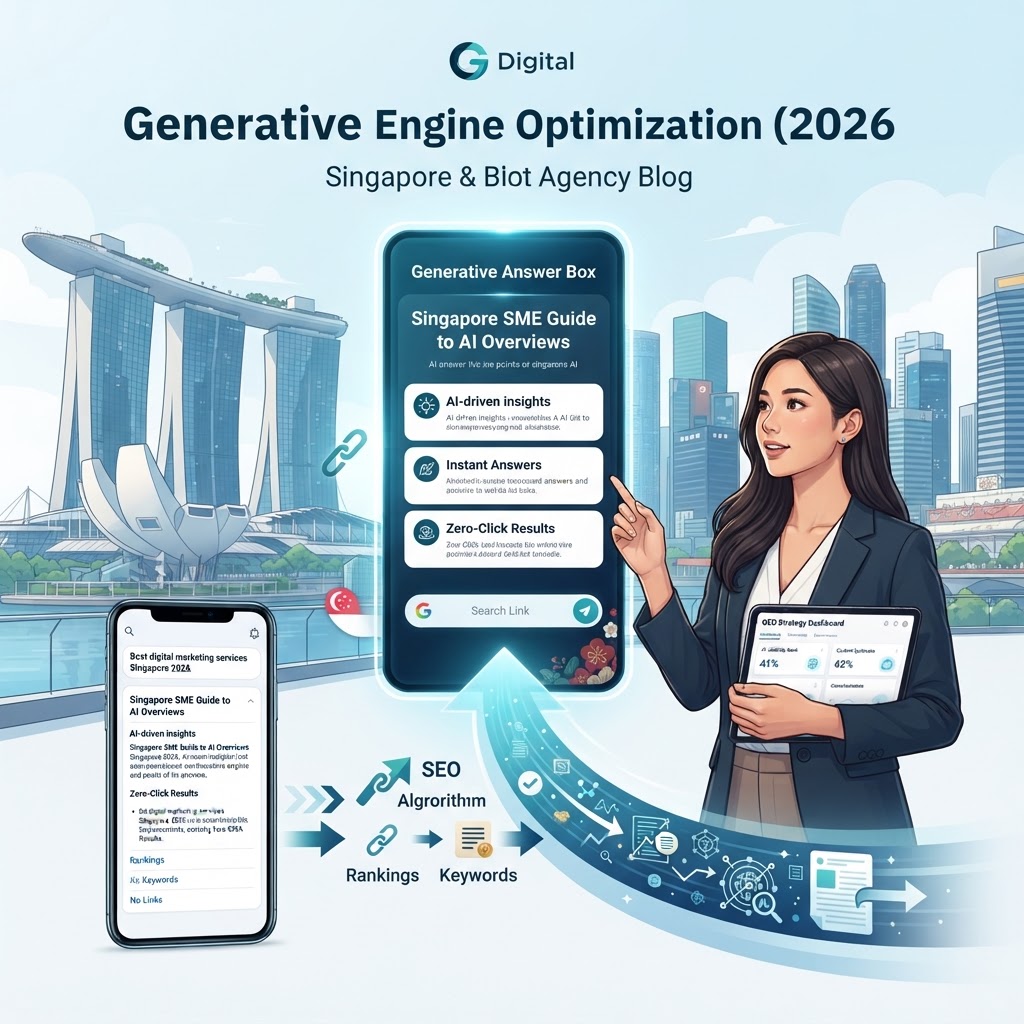
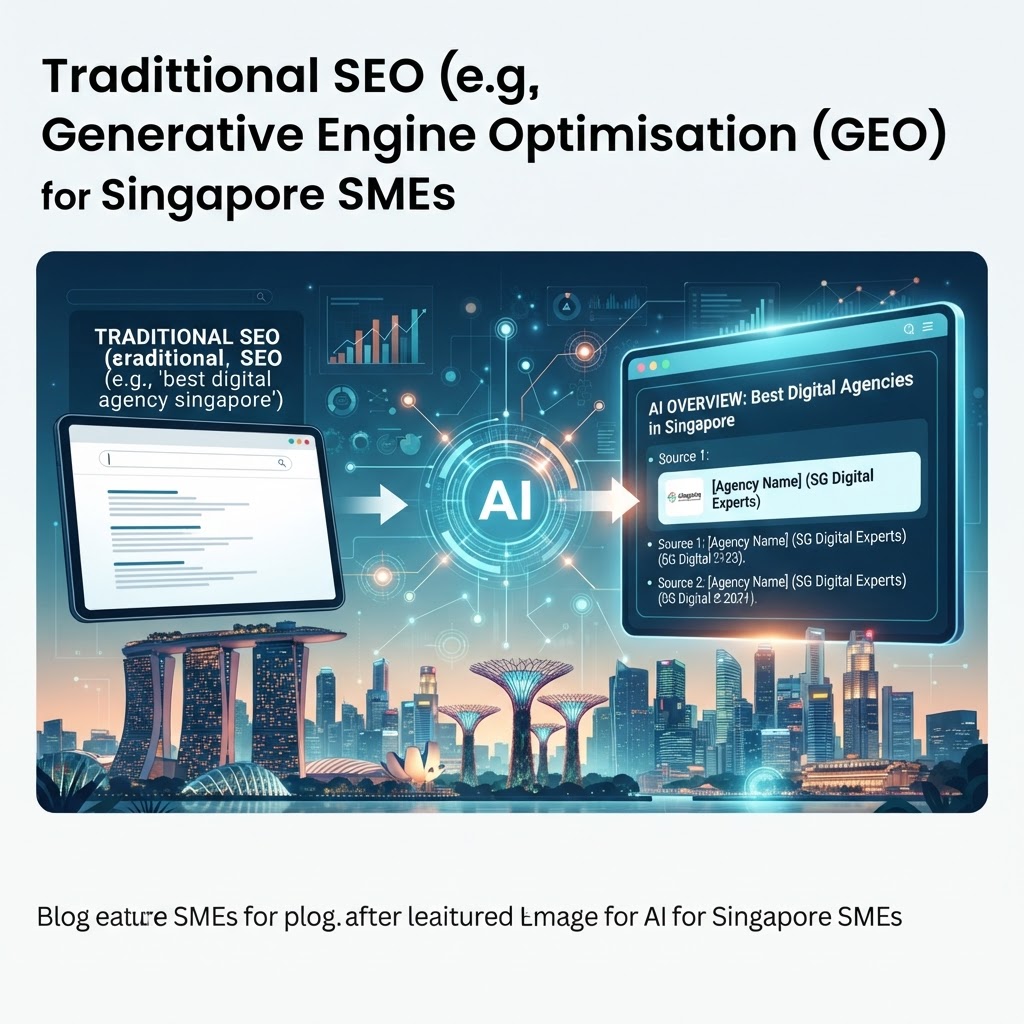
Generative Engine Optimisation (GEO) is the practice of optimising your digital assets so that AI-powered search engines and chatbots select your content as a primary source for their responses. Unlike traditional SEO, which prioritises high rankings to generate clicks to your landing page, GEO focuses on being the “truth” that an AI presents to the user. When a potential customer asks an AI a complex question about an industry-specific service, the system synthesises information from various sources to craft a summary. If your brand is cited as an authority, you earn brand awareness and trust, even without the immediate click. For Singaporean SMEs, this is a major shift from chasing keywords to becoming the definitive answer for your niche. Think of it as moving from being just another shop in a crowded market to being the industry expert whose advice is constantly referenced. As AI models become more integrated into search engines, the definition of success evolves to include how accurately and frequently your content is cited by these generative tools. The primary challenge for businesses today is that these models do not operate like standard search crawlers; they look for depth, entity authority, and structured data that clearly explains the who, what, where, and why of your business. By implementing GEO strategies, you align your website with the requirements of these advanced technologies, ensuring that your expertise is recognised and rewarded in every automated response. It requires a fundamental shift in mindset from simple keyword targeting to entity-based search, where your brand acts as a central hub of information that machines can confidently process and recommend to local users seeking genuine solutions for their business needs.
Building a Technical Foundation for AI Readiness
Before you can influence how an AI speaks about your business, you must ensure your technical house is in order. In the context of GEO, technical performance is not just about page speed, but about information architecture. We often see Singaporean SMEs struggling because their websites are built on bloated, outdated platforms that confuse search bots. A robust foundation starts with structured data, specifically Schema markup. This is code that you add to your website to help machines understand your content. By clearly defining your business hours, services, office location, and customer testimonials through Schema, you provide AI models with the precise data points they need to verify your credibility. Additionally, you must consider the performance of your site, often measured by Core Web Vitals, which are Google’s metrics for user experience covering loading speed, visual stability, and interactivity. A site that loads quickly and is mobile-optimised is far more likely to be crawled and indexed effectively by AI agents than a site that hangs or breaks on mobile devices. At iPro Dezign, our team focuses on building lean, high-performance websites that serve both human users and machines. We recommend that businesses audit their current setup to identify any bottlenecks that might prevent AI crawlers from accessing key information. When we rebuild client websites, we ensure that every header tag, internal link, and media file is structured to be readable by modern AI systems. The following table provides a comparison of how different technical factors impact your ability to be cited by generative engines compared to traditional search methods.
| Technical Factor | Traditional SEO Impact | GEO (AI) Readiness Impact |
|---|---|---|
| Structured Data (Schema) | Helps with Rich Snippets | Vital for AI Source Citation |
| Page Load Speed | Direct Ranking Factor | High Priority for Bot Crawling |
| Mobile Responsiveness | High Importance | Critical for Local AI Context |
| Content Depth | High Keyword Density | High Entity Authority Focus |
By focusing on these technical pillars, you ensure that when an AI system scans the web for information regarding your specific service or product in the Singapore market, your site is technically prepared to provide the correct, verified, and high-quality data that these models demand for their responses.
Crafting Content That AI Models Trust
Content for Generative Engine Optimisation differs significantly from the blog posts we wrote a decade ago. To succeed in the era of AI, your content must be built upon the pillars of accuracy, authority, and specificity. AI models are programmed to favour information that is verifiable and well-supported by primary evidence. This means your website should feature original research, expert opinions from your team, and detailed breakdowns of your service outcomes rather than generic, fluff-filled marketing copy. When we talk to Singaporean SME owners, we emphasise the importance of creating “entity-rich” content. An entity is a distinct concept or object—such as a specific accounting service or a particular type of web development project—that the AI can understand and link to your brand. By creating long-form content that answers the “why” and “how” behind your services, you position your brand as a repository of knowledge that the AI can confidently cite. It is also important to maintain a tone that is professional and helpful; AI models are trained to avoid hyperbolic claims or overly promotional language. Instead, focus on demonstrating expertise through case studies, transparent service explanations, and addressing common client pain points directly. For instance, explaining exactly how your process complies with PDPA standards in Singapore provides the AI with specific, high-value data that it can use to answer queries about trust and security. Avoid repeating keywords in a way that feels unnatural, as this can trigger AI filters that identify low-quality content. Instead, use natural language that mirrors how a customer would ask a question during a consultation. When your website provides clear, concise, and accurate answers, you become the primary source for the generative engine, effectively securing your place in the AI-driven future.
Future-Proofing Your Digital Presence in Singapore
Staying ahead in the digital landscape requires a proactive approach to technology and strategy. In Singapore, where competition is fierce and consumers are highly tech-savvy, relying on yesterday’s methods will eventually lead to stagnation. Future-proofing your business means investing in infrastructure that allows you to adapt to new search trends as they emerge. This involves regular audits of your digital assets to ensure they remain compatible with evolving search engine standards. One of the best ways for local SMEs to manage these costs and maintain high standards is by leveraging the Productivity Solutions Grant (PSG). This government initiative provides up to 50% funding for qualified digital solutions, allowing your business to upgrade its web presence, secure your site, and implement modern GEO-ready frameworks without overextending your budget. As your digital partners, our team can guide you through the process of assessing your current digital health, planning for necessary updates, and identifying which specific improvements will yield the highest return on investment. The future of search is not just about rankings; it is about visibility within the generative ecosystem. Businesses that provide clear, structured, and helpful data will thrive, while those that remain stagnant will find it harder to capture the attention of modern buyers. By choosing a partner that understands both the technical demands of AI and the practical needs of Singaporean businesses, you can move forward with confidence. We focus on long-term growth and technical excellence, helping you build a digital presence that is not only robust and secure but also perfectly positioned to be found by the automated systems that are shaping the future of commerce. Let’s discuss how we can refine your strategy to ensure your brand remains the authoritative voice in your industry throughout 2026 and beyond.
The shift toward Generative Engine Optimisation marks a new chapter in digital marketing. While it may seem complex, the transition is rooted in the same principles of quality and authority that have always defined great businesses. By focusing on technical accuracy, providing genuine expertise, and staying adaptable, you can ensure your brand is cited by AI as a trusted leader in the Singapore market. Remember that this is a long-term investment in your brand’s digital equity. Whether you need a technical audit of your current site, a content refresh to meet AI standards, or a complete digital overhaul supported by the PSG grant, our team is ready to help you navigate these changes. Reach out today for a consultation and let us help you prepare for the future of search.
Frequently Asked Questions
What is the main difference between traditional SEO and GEO? Traditional SEO focuses on ranking in blue links to drive clicks, whereas GEO focuses on creating authoritative, structured content that AI models use to provide direct, cited answers to user queries.
Do I still need traditional SEO if I use GEO? Yes, they are complementary. A strong technical SEO foundation is required for AI crawlers to even understand and trust your content, making them two sides of the same coin.
How can Singapore SMEs afford these upgrades? Many digital infrastructure upgrades, including web rebuilds and security enhancements, are eligible for the PSG grant, which can provide funding for up to 50% of the cost, making professional digital transformation highly accessible.
What role does structured data play in GEO? Structured data provides machines with a blueprint of your website’s information, helping AI models accurately identify your business details, services, and expertise, which increases the likelihood of being cited.
How long does it take to see results from GEO efforts? GEO is a long-term strategy focused on building entity authority. While technical fixes can yield faster results, building a reputation as a trusted AI source typically happens over several months of consistent content and technical refinement.