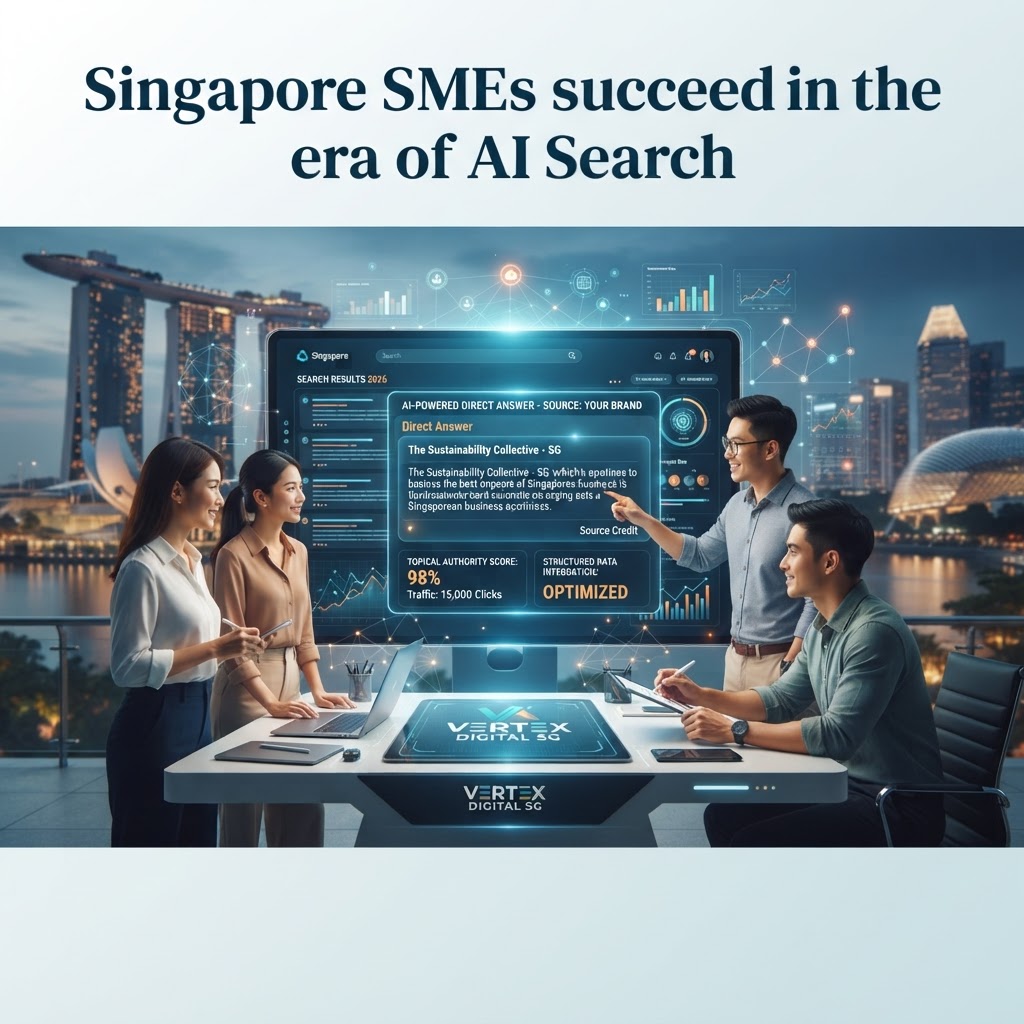
Why AI SEO matters for Singapore in 2026
Search in 2026 is reshaped by generative models, embeddings and personalised experiences. For businesses in Singapore — a dense, highly connected market with multilingual users — adopting AI SEO is no longer optional. AI helps scale research, automate repetitive tasks, and surface user intent faster, enabling a digital marketing agency Singapore can rely on to deliver measurable outcomes for local brands.
The landscape: what’s changed since 2023
- Search is more semantic and multimodal: models understand images, audio and context better.
- Google’s Search Generative Experience and competing LLM-driven features push featured content and long-form answers.
- Privacy and cookie-less targeting mean first-party signals, server-side tracking and quality content are decisive.
- Local intent and voice queries have grown — users ask conversational, location-based questions.
These shifts make traditional SEO tactics necessary but insufficient. AI-first strategies focus on meaning, context, and deliverability.
Core AI SEO tactics your digital marketing agency Singapore should apply
- Intent-driven content architecture
Map queries to intent buckets (informational, transactional, local, navigational) using AI clustering of search data. Use embeddings to group queries by semantic similarity and then design pages that satisfy clusters rather than isolated keywords.
- Generative-first content workflow (with human oversight)
Use generative engines to draft outlines, meta descriptions and structured content blocks. Then apply human editing for accuracy, local nuance and brand voice. This hybrid approach scales content creation while preserving trust signals.
Read a practical implementation in the AI search optimization Singapore SME guide: https://iprodezign.com/ai-search-optimization-singapore-sme-guide-6/.
- Structured data and SGE-ready snippets
Mark up key entities, FAQs, product info and local business details with Schema.org. Rich markup increases the chance of being surfaced in generative responses and knowledge panels.
- Vector search & internal embeddings
Maintain a vector index of your site’s content to power internal search, content recommendations and faster retrieval for RAG flows used by chat assistants. This helps surface long-tail pages and converts knowledge into UX improvements.
- Automation for scale (but measure everything)
Automate repetitive SEO tasks — metadata templates, canonical checks, internal linking suggestions — but keep analytics and A/B testing active to validate impact.
Content strategy: quality, E-E-A-T and generative engines
E-E-A-T (Experience, Expertise, Authoritativeness, Trustworthiness) is amplified by AI content: models can produce accurate-sounding copy, so human verification and source citations are essential. Prioritise:
- Local case studies and author bios to signal expertise.
- Data-backed long-form resources that AI can reference when generating answers.
- Multilingual content for Singapore’s audiences; test simplified localization rather than straight machine translation.
For tactical guidance on generative engine optimisation and workflows, see this generative engine optimization Singapore SME guide: https://iprodezign.com/generative-engine-optimization-singapore-sme-guide-12/.
Technical SEO in an AI-first era
- Core Web Vitals and mobile performance remain critical; generative features prefer fast, reliable sources.
- Server-side rendering and edge caching help with dynamic, personalised pages while maintaining crawlability.
- Implement API endpoints for structured data and conversational snippets so bots and LLMs can pull authoritative facts.
Ensure canonicalization and language tags are correct for multilingual pages. Use sitemaps that include semantic categories and content clusters for better discovery.
Local SEO: essential for Singapore businesses
Singapore’s geography and high mobile use mean local signals convert strongly. Focus on:
- Google Business Profile optimisation (complete attributes, posts, photos).
- Local schema for address, hours, service area and payment options.
- Location landing pages built around cluster-based intent and local FAQs.
For agencies helping clients with site builds and local presence, consider the guide to hire digital marketing agency Singapore for web design 2026 to align web and local SEO efforts: https://iprodezign.com/hire-digital-marketing-agency-singapore-for-web-design-2026-3/.
Tools and tech stack suggestions
- Query & intent analysis: semantic clustering tools (use open-source or enterprise embedding stacks).
- Content generation + control: prompt management systems and a human review layer.
- Vector DBs: Milvus, Pinecone, or open-source alternatives.
- Monitoring: GA4 (or server-side analytics), Search Console, rank trackers with SERP feature tracking.
- Automation: CI/CD for content and schema deployments; scheduled audits.
If you’re exploring practical AI search optimisations for SMEs, this resource on AI search optimisation Singapore SME covers applicable tools and approaches: https://iprodezign.com/ai-search-optimisation-singapore-sme/.
Measurement: KPIs that matter in 2026
Move beyond rankings-only metrics. Track: organic conversions, assisted conversions from organic, engagement on AI-surface pages, impressions in SERP features, and retention metrics for users arriving via generative results. Use experiment-driven SEO: A/B test page variations where feasible and measure impact on conversions and session quality.
Workflow: blending AI with human expertise
A repeatable process for teams at a digital marketing agency Singapore looks like this:
- Data ingestion (queries, logs, analytics)
- Semantic clustering and priority scoring
- Generative drafts and structured outlines
- Human editing, localization and E-E-A-T sign-offs
- Technical implementation (schema, render strategy)
- Measurement and iteration
Design roles for prompt engineers, content strategists, SEO developers and analytics owners to keep the feedback loop tight.
Privacy, ethics and brand safety
- Label AI-produced content where required and maintain transparent authorship for credibility.
- Validate content against trusted sources to avoid hallucinations.
- Ensure user data processing complies with local regulations and privacy best practices.
Example AI SEO playbook for a Singapore SME (quick checklist)
- Conduct semantic query clustering for top 50 commercial and local intents.
- Create 10 cluster-focused pages with robust schema and local FAQs.
- Implement vector search for internal knowledge and power RAG for chat support.
- Automate meta and internal linking suggestions, review weekly.
- Run A/B tests on AI-generated vs. human-first pages and measure conversion uplift.
For a hands-on framework that makes an agency AI-ready, review this guide on AI ready Singapore digital marketing agency web design 2026: https://iprodezign.com/ai-ready-singapore-digital-marketing-agency-web-design-2026/.
Common pitfalls and how to avoid them
- Overreliance on raw AI output: always add local nuance and fact-checking.
- Ignoring site architecture: clusters without good navigation or internal linking won’t rank.
- Measuring only rankings: track revenue and engagement to prove ROI.
Final implementation priorities for 2026
- Build a semantic content map using embeddings.
- Operationalise hybrid content creation: AI drafts + humans.
- Fortify structured data and local listings for visibility in generative results.
- Invest in measurement and experimentation to validate impact.
Adopting these AI SEO strategies positions Singapore businesses to capture the growing share of search-driven conversions. For agencies, the advantage comes from combining technical execution, local market knowledge and ethical AI practices into repeatable, measurable programs that scale.