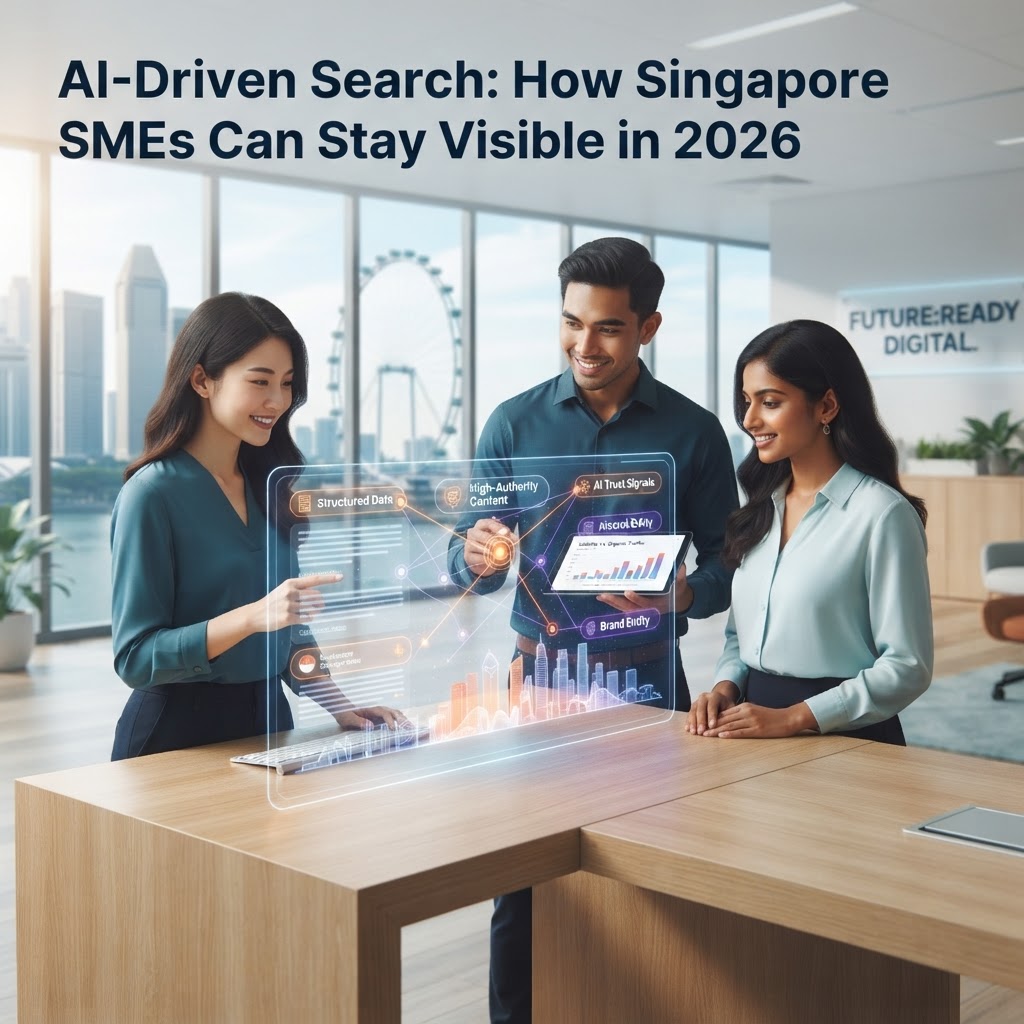
Answer Engine Optimisation: A 2026 Guide for Singapore SMEs
The landscape of online search has fundamentally shifted. For years, Singaporean business owners focused their digital strategy on capturing high-volume keywords to secure a blue link on a traditional search results page. However, as we enter 2026, the rise of artificial intelligence has transformed search into an answer-first environment. Consumers are no longer browsing lists of websites; they are asking direct questions to AI models and expecting immediate, accurate summaries. This transition represents the era of Answer Engine Optimisation (AEO). For local SMEs in Singapore, this is not just another technical trend but a necessary evolution in how you connect with customers. If your content is buried in long-form prose without clear, structured answers, you risk becoming invisible to the modern user. At iPro Dezign, we help our partners navigate this shift by ensuring their websites are not just mobile-friendly or fast, but engineered for AI extractability. Whether you are an eCommerce store or a service provider, understanding AEO is now the primary lever for maintaining your digital presence and driving sustainable organic growth in a crowded local market.
Table of Contents
Understanding Answer Engine Optimisation
Answer Engine Optimisation goes beyond the traditional SEO tactics that focused on keyword density or backlink volume. In the past, Google indexed pages primarily to rank them against competing URLs. Today, platforms like ChatGPT, Perplexity, and Google’s own AI Overviews aggregate information to provide a single, authoritative answer. The goal of AEO is to structure your information so that it acts as the primary data source for these AI models. When a potential client in Singapore searches for the best office renovation services or the most efficient accounting software, the AI agent pulls snippets from across the web to build its response. If your website provides concise, data-backed, and well-structured answers, you stand a much higher chance of being cited as the source. This is vital for local businesses because AI models prioritise local intent and factual accuracy. To succeed, you must adopt a conversational writing style that addresses specific user pain points directly. Think of it as answering a client enquiry in your office; you provide the most relevant information immediately before diving into the background details. By anticipating the questions your audience asks during their research phase, you can align your content strategy to meet these AI requirements. This shift moves your focus from vanity metrics like site-wide keyword rankings to entity-based authority. You want the AI to perceive your brand as the definitive authority on your specific niche. Our team works with clients to identify these high-value questions and restructure existing content into formats that AI engines prefer. This includes creating clear summaries, using schema markup to explain data, and ensuring that every service page addresses a specific user query with precision. Success in AEO requires moving away from keyword-stuffed articles toward comprehensive, expert-led content that answers the ‘who, what, when, where, and how’ of your business.
Architecting Content for AI Relevance
Structuring your website architecture is the second pillar of a successful AEO strategy. AI engines rely on semantic understanding—they need to ‘read’ your site with clarity. If your content is messy, cluttered with technical jargon, or lacking clear headings, the machine will struggle to extract the correct information. We suggest a hierarchical approach where primary service pages act as hubs for specific, commonly asked questions. For example, if you offer digital marketing services in Singapore, you should have dedicated sub-pages that answer specific queries like ‘how much does SEO cost’ or ‘why is web design important for conversions’. By organizing your information logically, you help the AI model understand the relationship between different topics on your site. Furthermore, the use of structured data or schema markup is non-negotiable. Schema is a form of code that you add to your website to help search engines understand your content better. It provides explicit clues about the meaning of a page, such as identifying a business address, a product price, or a service review. When an AI scans your site, it prioritises data that is marked up correctly because it is easier to verify. Beyond structure, content quality remains paramount. You must provide value that goes beyond what generic AI could generate on its own. This means injecting local insights into your copy. Mention Singapore-specific regulations, discuss how your solutions comply with local PDPA standards, or reference industry trends within the regional context. The table below illustrates the shift in strategy required for modern businesses. | Feature | Old SEO Strategy | Modern AEO Strategy | | :— | :— | :— | | Focus | Keyword Volume | User Intent & Clarity | | Content Style | Long-form articles | Direct answers & summaries | | Primary Metric | Page Views | AI Citations & Conversions | | Technical Need | Simple Sitemap | Schema Markup & Core Web Vitals | | Goal | Link Clicks | Brand Authority & Trust | By following this structure, your site becomes a trusted resource that AI models are incentivised to reference. We focus on performance-first builds that ensure your site structure remains clean, fast, and easy to navigate.
Technical Foundations for Higher Visibility
Even with excellent content, technical performance acts as the gatekeeper for AI crawlers. If your website is slow, insecure, or fails to render properly on mobile devices, you will not be considered for AI-generated results. In the Singapore market, where mobile browsing is the standard, a mobile-first approach is the bare minimum requirement. Core Web Vitals—a set of metrics that measure how users experience the speed and responsiveness of a web page—are critical for both search engines and AI crawlers. These include LCP (Largest Contentful Paint, or how quickly the main content loads), INP (Interaction to Next Paint, or how fast the site reacts to clicks), and CLS (Cumulative Layout Shift, or whether the site jumps around during loading). A slow or unstable site signals to AI that your resource is unreliable. Beyond performance, security is equally important. An SSL certificate is a basic requirement, but modern sites must go further to ensure total compliance with local data protection expectations. Our agency prioritises headless CMS architectures and optimised codebases that remove unnecessary bloat, allowing AI agents to crawl your pages with minimal energy and maximum speed. Think of technical SEO as the foundation of a building; if the structure is unsound, the best marketing copy in the world will not help you stand out. Many local SMEs are eligible for the PSG grant, which provides up to 50% funding for digital solutions like website revitalisation. Using these grants to invest in a faster, more secure, and schema-ready website is a smart business decision. By upgrading your technical stack, you ensure that when an AI bot visits your site to learn about your products or services, it encounters a smooth, professional, and efficient experience. This reliability is rewarded by search engines and AI platforms alike. We focus on building sites that load in under three seconds, ensuring that every visitor—human or digital—receives an immediate, frictionless experience that builds confidence in your brand.
Strategic Implementation for Singapore SMEs
Implementing an AEO strategy is a process, not a quick fix. For a busy SME owner, this might feel overwhelming, but it is manageable when broken down into clear, measurable stages. Begin by auditing your existing content. Are you answering the most frequent questions your customers ask during discovery calls? If not, create a content plan that addresses these queries head-on. Ensure that each answer is concise and supported by evidence or local context. Next, look at your website’s technical health. Use performance testing tools to identify bottlenecks that could be hindering your visibility. If you find your site is struggling, consider a comprehensive rebuild. With up to 50% funding support via the PSG grant, the cost of a high-performance, future-ready website is significantly lower than most owners anticipate. Once your site is technically sound and your content is structured for answers, monitor how your brand is being cited by AI tools. Track not just organic traffic, but also brand sentiment and enquiries. Remember that AEO is a long-term partnership with your digital audience. We emphasize a consultative approach, moving away from short-term tactics that offer nothing but temporary spikes. Our role is to build a digital asset that grows in authority over time. We help you define your business goals, identify the right technology stack, and implement an ongoing content strategy that keeps you relevant as AI models evolve. Reliability is the cornerstone of our service. As your digital partner, we provide the technical expertise while you focus on running your business. The journey to better AI visibility requires patience and a commitment to quality. By focusing on helpful, structured, and fast-loading content, you position your Singapore SME to thrive in this new era. Reach out to our team to discuss how your website can benefit from these modern optimisation techniques and how we can support your business in securing the necessary grants to make it happen today.
Conclusion
Adapting to the era of Answer Engine Optimisation is no longer optional for SMEs aiming to stay competitive in the Singapore market. By prioritising direct, structured answers, investing in high-performance technical foundations, and leveraging local insights, you can secure your brand’s place in the future of search. The shift toward AI-powered results offers a unique opportunity to build deeper trust with your customers by becoming the source they rely on for accurate information. Whether you are ready to audit your current site or explore how to utilise PSG funding for a digital upgrade, our team at iPro Dezign is here to guide you. We focus on results, transparency, and building long-term digital growth. Let’s have a conversation about your business goals and ensure you are positioned for success in the evolving digital landscape.
Frequently Asked Questions
What is the main difference between traditional SEO and AEO? Traditional SEO focuses on ranking for keywords to get clicks, while AEO focuses on providing concise, structured data to be cited as an authoritative answer by AI models.
How can Singapore SMEs benefit from the PSG grant for this? Many digital marketing and web development projects are eligible for up to 50% funding via the PSG grant, which can cover the costs of building a faster, schema-optimised website.
Does a faster website really improve my visibility with AI? Yes, AI crawlers favour efficient, high-performance sites that provide a smooth user experience, as these are viewed as more reliable and authoritative sources.
Should I still write long-form blog posts? Long-form content is still valuable for depth, but it must be structured with clear headings, summaries, and schema markup to ensure AI can extract the key answers effectively.
How long does it take to see results with an AEO strategy? As with all sound digital strategies, it is a gradual process. Most clients notice improvements in brand authority and site performance within 3 to 6 months of implementation.