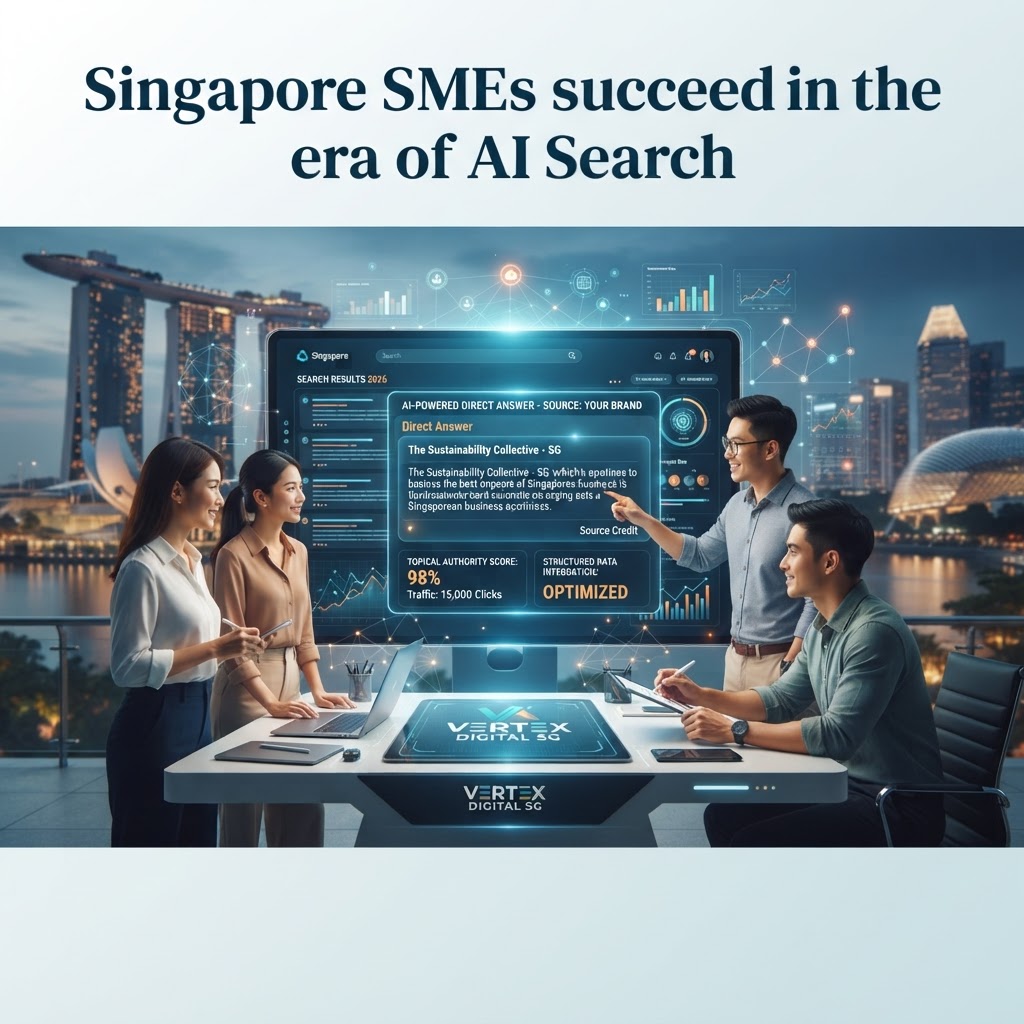
Beyond SEO: Why Singapore SMEs Must Adopt GEO and AEO in 2026
The digital landscape in Singapore is shifting beneath our feet. For years, SME owners have relied on traditional Search Engine Optimization (SEO) to drive traffic. However, with the integration of AI search tools like Google AI Overviews and ChatGPT, the way customers find your products is changing. Today, it is not just about ranking for a blue link; it is about providing the precise answer that an AI needs to cite your business. To remain visible in this new era, your digital strategy must pivot toward Generative Engine Optimization (GEO) and Answer Engine Optimization (AEO). Ignoring these shifts risks leaving your website invisible to the growing number of users who now prefer conversational search. At iPro Dezign, we help Singapore businesses navigate this complexity. By focusing on intent-driven content and technical architecture, we ensure your site is built to thrive in an AI-first future. Whether you are leveraging PSG grants to modernise your infrastructure or simply looking to stay competitive in the APAC market, understanding these concepts is the first step toward reclaiming your digital dominance and securing long-term sustainable growth for your business.
Table of Contents
The Fundamental Shift in Search Behaviour
For over a decade, the primary goal of any digital marketing strategy was to achieve a top spot in standard search engine result pages. Businesses invested heavily in keyword research, backlink building, and content creation to satisfy specific algorithms. While these tactics still hold some value, they are no longer sufficient. Singaporean consumers are increasingly turning to generative AI tools and AI-powered search features to obtain immediate, synthesized answers rather than clicking through multiple websites to piece together information. This shift marks a transition from information retrieval to information synthesis. When a user asks a question, the search engine now acts as a consultant, summarising data from multiple sources to provide a single, authoritative answer. If your business is not positioned as one of those sources, you essentially do not exist in that user’s journey. This is particularly critical for SMEs in Singapore that rely on local search volume for services, retail, or B2B consultations. Relying solely on legacy SEO practices ignores the fact that generative AI prioritises clarity, technical accuracy, and domain authority. Our team observes that the businesses best prepared for this shift are those that have already moved away from keyword stuffing toward creating helpful, authoritative, and structured data. Understanding the user intent behind every query is paramount; you must anticipate not just what the user is searching for, but what specific problem they are trying to solve. By aligning your content strategy with these new interaction models, you can ensure that your brand remains central to the user experience, regardless of whether the search interface is a traditional browser or a conversational AI agent designed for quick discovery.
Mastering Generative Engine Optimization for Modern Visibility
Generative Engine Optimization (GEO) is the practice of optimising your content to be consumed and cited by generative AI engines. Unlike traditional SEO, which focuses on satisfying a search algorithm, GEO focuses on being the most reliable source for a generative model to synthesise a response. This means moving beyond generic blog posts and focusing on depth, expertise, and precision. In the context of the Singapore market, this involves crafting content that directly answers common questions about your industry, services, or product categories. For example, if you run a local furniture store, your content should not just describe your chairs but explain why specific materials are better suited for Singapore’s humid climate. By becoming the authoritative source on such niche topics, you increase the likelihood that an AI will pull your content as a reference. Furthermore, GEO requires a rigorous approach to structured data. Search engines use schema markup to understand the context of your content, such as product prices, service areas, and company details. When our team helps clients with web builds, we implement advanced schema to ensure AI models can parse your data effortlessly. It is also important to consider the tone of your content; AI models favour objective, fact-based, and highly structured information. Avoid overly promotional language that lacks substance. Instead, provide detailed guides, comparison tables, and FAQ sections that address the core pain points of your target audience. When your website functions as a clean, reliable data source for AI, you build a foundation that is resilient against future algorithm updates. Remember, the goal is to provide value that AI tools find indispensable for their own query synthesis, thus keeping your business at the forefront of the user’s digital experience.
Implementing Answer Engine Optimization to Capture AI Citations
Answer Engine Optimization (AEO) is the logical partner to GEO, focusing on the specific delivery of answers in a format that AI tools can easily extract. While GEO is about your overall authority, AEO is about being the direct answer to a user’s prompt. To succeed, you must think in terms of conversational queries. Many people use voice search or typed questions that start with who, what, where, when, or why. Your website must provide clear, concise responses to these queries. A common strategy our team employs is the creation of “answer boxes” within your content. By placing a direct answer at the top of a page—typically in 50 words or less—you make it simple for AI tools to grab that snippet for their responses. Additionally, formatting matters immensely. Using HTML tags correctly, bullet points, and numbered lists helps AI parse your content hierarchy. This is where technical excellence in web design plays a role. A well-structured site allows for better data extraction, which translates into better visibility. We often guide our clients in reviewing their existing content to ensure that every page has a clear purpose and a defined audience. For instance, a comparison table can be highly effective for AEO because it presents structured data in a way that AI models can easily compare attributes. The following table illustrates the shift between traditional and modern search approaches:
| Metric | Traditional SEO | GEO/AEO Approach |
|---|---|---|
| Core Focus | Keyword Ranking | Answer Accuracy |
| Content Style | Volume-Based | Expertise-Based |
| Primary Goal | Click-Through Rate | Source Citation |
| Data Structure | Standard HTML | Advanced Schema |
By shifting your focus to these metrics, you align your business with the way modern consumers discover information. It is not just about being found; it is about providing the answer that builds trust with the potential customer at the exact moment they need it most, whether through a chatbot or an AI-summarised search result.
Building Technical Foundations for Future-Proof Rankings
Technical performance is the backbone of any successful AI-ready strategy. Even the most well-written content will struggle to be indexed if your website is slow, insecure, or difficult for bots to crawl. In Singapore, where mobile penetration is exceptionally high, a mobile-first approach is mandatory. Core Web Vitals, which measure user experience metrics such as loading speed and visual stability, have become even more important as AI engines prioritise sites that provide a seamless user experience. If your site takes too long to load, both users and AI bots will move on. We frequently see SMEs using outdated platforms that are heavy, non-responsive, and riddled with bloat, which directly harms their ability to compete in the current environment. Our team focuses on building lean, performance-first websites that prioritise speed and clean code. We often recommend headless CMS architectures or modern, lightweight frameworks that deliver content rapidly to the user’s browser. Security is another critical aspect; AI engines favour sites that are secure, use HTTPS, and comply with PDPA regulations, as trust signals are a massive component of how AI evaluates authoritative sources. Furthermore, we encourage our clients to explore PSG (Productivity Solutions Grant) funding to offset the costs of upgrading their digital infrastructure. Many SMEs are eligible for up to 50% funding, making it the perfect time to modernise your site to meet the standards required for GEO and AEO. Investing in a robust digital foundation is not just a technical expense; it is a strategic move that prepares your business for the next decade of digital interaction. By ensuring your site is fast, secure, and structured, you create a home for your brand that AI agents will trust, cite, and recommend to your prospective customers, ensuring your business stays ahead of the competition in an increasingly crowded and automated marketplace.
Conclusion
Adapting to the era of Generative Engine Optimization and Answer Engine Optimization is not optional for Singaporean SMEs; it is a necessity for long-term survival. As AI continues to reshape the search experience, your ability to provide concise, authoritative, and technically sound information will be your greatest competitive advantage. We encourage you to audit your current digital presence and consider how your content might be better structured for an AI-first world. At iPro Dezign, we specialise in building high-performance websites that align with these evolving search standards. We are here to help you navigate this transition, whether you need a full site rebuild or strategic advice on your content architecture. Contact our team today to discuss your digital growth and check your eligibility for PSG funding support.
Frequently Asked Questions
What is the main difference between traditional SEO and GEO? Traditional SEO focuses on ranking blue links based on keywords, while GEO focuses on making your site an authoritative source for AI engines to synthesise and cite information.
How can Singapore SMEs benefit from PSG grants for this transition? Many digital marketing and web development projects are eligible for PSG funding, covering up to 50% of the costs, which helps SMEs modernise their platforms without excessive financial strain.
Do I need to stop doing traditional SEO? No, traditional SEO is still relevant, but it must be supplemented with GEO and AEO strategies to remain effective in an environment where AI provides direct answers.
How does site speed affect AI visibility? AI models prioritise websites that provide a fast, secure, and high-quality user experience; therefore, slow sites are less likely to be used as trusted sources for generated responses.
How do I start implementing AEO on my website? Start by identifying the most common questions your customers ask, then create clear, concise content blocks on your site that directly answer those questions using structured data and helpful formatting.