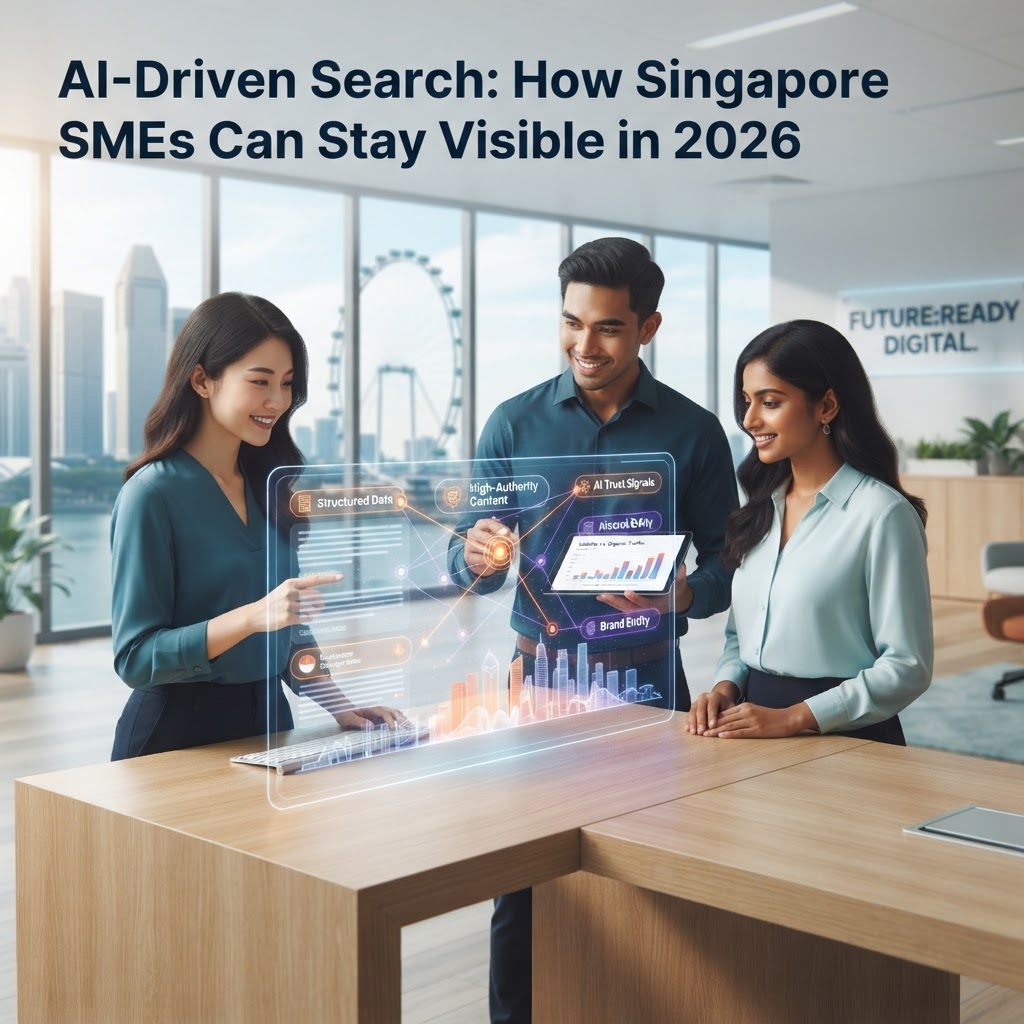
Beyond SEO: A Singapore SME Guide to Generative Engine Optimization (GEO) in 2026
The digital landscape in Singapore is shifting beneath our feet. For years, SME owners have focused on traditional Search Engine Optimization (SEO) to climb the rankings on Google. However, the emergence of AI-powered search tools like Google AI Overviews and Perplexity has fundamentally changed how customers find your business. Today, we are entering the era of Generative Engine Optimization (GEO). Unlike traditional search, which points users toward external links, these generative engines synthesise information into a direct answer. If your business is not positioned correctly, you risk being bypassed entirely by these AI interfaces. As a digital partner, our team at iPro Dezign understands that this transition is not just about keeping pace with technology; it is about maintaining your visibility in a market that is increasingly dominated by automated, intelligent summaries. In this guide, we will break down what GEO means for your Singapore business, why it is critical for your future growth, and how you can adapt your digital presence to ensure your brand remains a cited source of truth in the AI-driven search ecosystem of 2026.
Table of Contents
What is Generative Engine Optimization?
Generative Engine Optimization (GEO) refers to the technical and content-based process of making your website more accessible and understandable to AI models that power search experiences. Traditional SEO focuses on keywords and backlinks to earn a top spot on a blue-link result page. Conversely, GEO focuses on authority, structured data, and clarity to ensure that an AI tool selects your content as the primary source of its summary. When a potential customer asks an AI tool about the best digital agency in Singapore or the benefits of a specific eCommerce platform, the AI scans thousands of data points to generate an answer. Your goal is to be the expert source that the AI cites as the foundation for that answer. This requires a shift in mindset from targeting search volume to targeting the intent behind deep, authoritative knowledge. AI tools rely heavily on schema markup—a form of structured data that tells search engines exactly what your content is about—and topical authority. If you own a bakery in Tiong Bahru, for example, your content should not just mention bread; it should provide comprehensive, detailed information about your ingredients, sourcing, and the history of your craft. When your content is structured logically and backed by high-quality, verifiable data, AI agents are significantly more likely to include your business as a cited authority. This process moves beyond mere visibility into the realm of being a trusted information provider. Our digital agency has observed that sites utilizing clean, semantic HTML and high-quality, non-repetitive content are already seeing better inclusion in AI-generated responses. Understanding this evolution is the first step toward securing your relevance in the coming years of AI-augmented discovery.
Why Singapore SMEs Need GEO Now
For Singaporean business owners, the stakes of ignoring Generative Engine Optimization are high. As mobile-first APAC users shift their habits toward AI conversational search, the traditional click-through traffic model is beginning to evolve. If your website is buried in a pile of unstructured, slow-loading pages, an AI agent will likely skip your brand in favor of a competitor that offers a better, more concise summary. This is particularly relevant for SMEs seeking to compete in crowded sectors like retail, professional services, or local tourism. The benefit of being the source that an AI tool cites is substantial; it establishes an immediate layer of trust between your brand and the prospective customer. When a user sees your business highlighted in an AI overview, it acts as a recommendation from a supposedly neutral party. Furthermore, the efficiency of your website—often measured by metrics like Largest Contentful Paint (LCP)—is critical. LCP measures the time it takes for the largest visual element on your page to load, and it is a key component of Core Web Vitals, which are the metrics Google uses to measure user experience. A site that loads quickly and is mobile-responsive ensures that the AI can crawl and index your content efficiently. Ignoring these technical requirements is no longer an option. Our experience shows that SMEs who invest in their digital infrastructure today are significantly better positioned to lead their respective industries tomorrow. By embracing GEO, you aren’t just reacting to a trend; you are proactively refining how your digital assets interact with the future of the internet. This proactive approach ensures your brand stays front-and-center when your potential customers are asking the tough questions that lead to direct purchases.
| Metric | Traditional SEO Focus | GEO Focus |
|---|---|---|
| Core Objective | Keyword Ranking | Source Citation |
| Target Content | Keyword Density | Topical Authority |
| Technical Focus | Backlinks | Structured Data (Schema) |
| Success Indicator | Click-through Rate | Mention/Entity Inclusion |
How to Shift from SEO to GEO Tactics
The strategic shift to Generative Engine Optimization requires a move toward high-signal content. You must move away from thin, repetitive blog posts designed only to stuff keywords. Instead, prioritize content that answers specific, complex questions your customers are likely to ask AI engines. Think about the common pain points your Singaporean customers face. Are they asking about the differences between specific software suites, the cost of custom web design, or the nuances of local tax compliance? Create content that functions as the authoritative answer to those queries. This is what we call entity-based optimization. You want to be defined by AI as an entity that holds expertise on a specific subject. Use clear headings, bulleted lists, and concise paragraphs that summarize information effectively. AI models prefer content that is easy to parse. Furthermore, ensure your website is compliant with PDPA (Personal Data Protection Act) standards and maintains a professional tone that reflects your business values. We often tell our clients that the website is no longer just a digital business card; it is a repository of institutional knowledge that must be accessible to both humans and machines. You can start this shift by auditing your current content. Identify the pages that receive the most traffic and ask whether they truly provide the comprehensive, expert-level information required to satisfy a sophisticated AI search tool. If not, refresh them. Add detailed, data-backed insights, include internal links to related service pages, and ensure that your meta-data and schema markup accurately reflect the content on the page. By doing this, you assist the search engine in its mission to deliver high-quality, relevant, and authoritative results to the user. This is a journey, not an event, and consistent refinement of your digital presence will yield the best long-term results.
Implementation and the PSG Pathway
Implementing these changes can seem daunting, but it is a manageable process when approached strategically. Many Singapore SMEs can leverage government support to modernize their digital infrastructure. The Productivity Solutions Grant (PSG) provides funding for SMEs looking to adopt pre-approved digital solutions, which can cover up to 50% of the cost for eligible web development and performance optimization projects. Investing in a professional rebuild or upgrade allows you to hit the technical benchmarks required for GEO, such as fast load times, mobile responsiveness, and robust schema integration. Our team specializes in guiding SMEs through the PSG process, ensuring that your investment results in a high-performance site that is built to last. When we rebuild a client’s site for modern performance, we focus on headless CMS architectures and streamlined code to ensure the fastest possible user experience. This technical excellence is the bedrock upon which you build your GEO strategy. It is about creating a site that is not only beautiful and functional for your customers but also perfectly optimized for the crawlers and algorithms of tomorrow. We believe in transparency and measurable ROI. Whether it is improving your site’s navigation, enhancing its mobile experience, or ensuring your content is structured for maximum relevance, our goal is to empower you to grow. You do not need to navigate the complexities of AI search alone. Partnering with a team that understands both the local Singapore business landscape and the global shift in search technology provides you with a distinct advantage. We encourage you to reach out for a consultation, discuss your current digital presence, and see how we can help you align your strategy with the requirements of the new generative search age. Let us build a future-proof foundation for your business today.
Conclusion
The rise of Generative Engine Optimization marks the most significant change in search since the dawn of the internet. For Singapore SMEs, this evolution is an opportunity to prove your expertise and capture a new, intent-driven audience. While the technical demands are higher, the payoff is a deeper, more authoritative relationship with your customers. By focusing on semantic clarity, technical performance, and high-quality, entity-rich content, you can ensure that AI tools identify your business as the definitive source. At iPro Dezign, we are committed to helping our clients navigate this shift with professionalism and expertise. Whether you need a full site audit, a performance-led rebuild, or strategic content guidance, we are always a call away. Explore your PSG eligibility, streamline your digital presence, and position your brand for long-term success. Contact our team today to begin your journey toward mastering GEO and securing your brand’s visibility in 2026.
Frequently Asked Questions
1. Is GEO going to replace traditional SEO completely?
GEO is an evolution, not a total replacement. While AI summaries are becoming the default, high-quality links and organic traffic remain vital for long-term brand discovery and conversion.
2. How does PSG funding help with GEO implementation?
PSG grants can subsidize the cost of building high-performance, mobile-optimized websites which are fundamental to GEO success. We help you identify eligible solutions to keep your costs down.
3. What is the most important technical factor for GEO?
Fast loading times (LCP) and clean, structured schema data are the most critical factors. They allow AI models to easily read, understand, and index your expert content.
4. Can I do GEO optimization on my own?
Yes, by focusing on producing high-quality, factual content and technical site hygiene. However, professional guidance helps ensure your efforts yield measurable, long-term returns.
5. How do I start a GEO strategy today?
Start by auditing your site for speed and structured data. Focus on creating comprehensive, authoritative content that answers the core questions your specific customers ask.