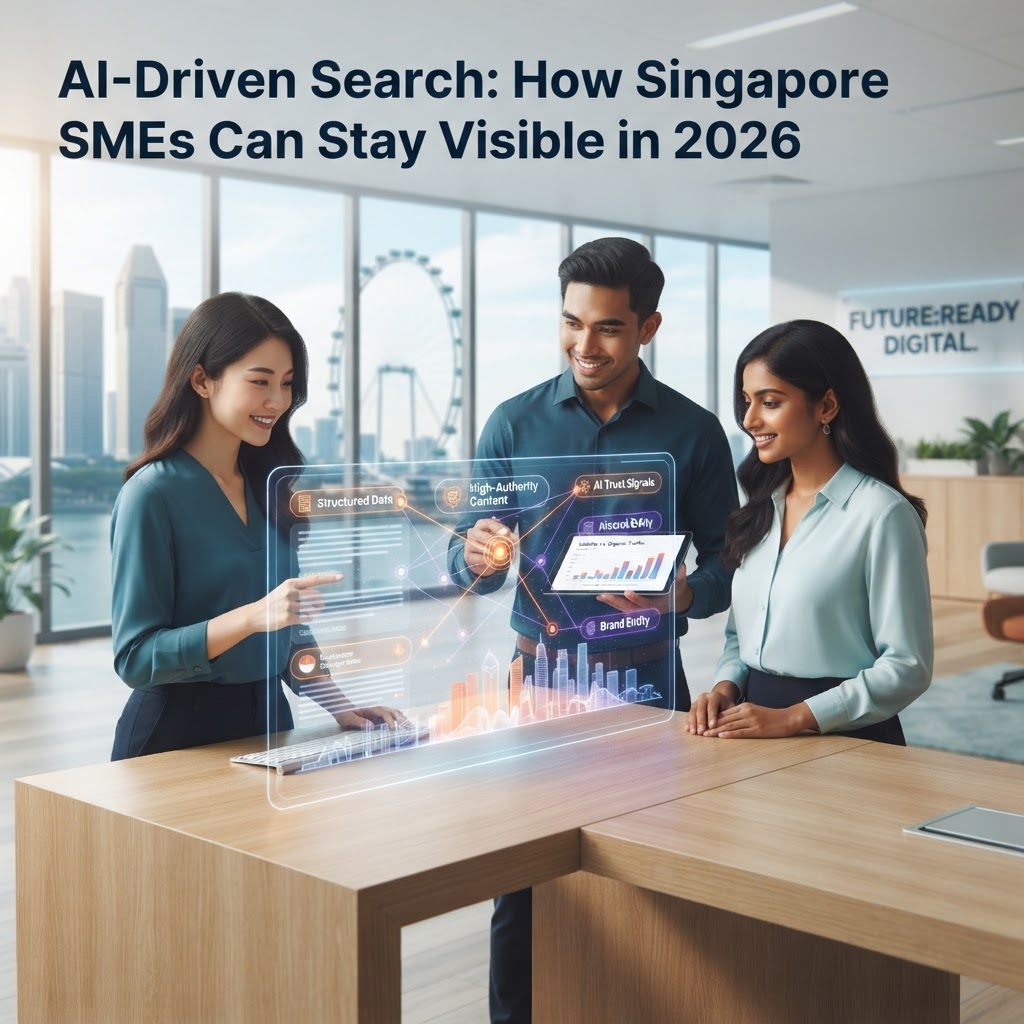
Generative Engine Optimization: A 2026 Guide for Singapore SMEs
As search engines evolve into sophisticated answer engines, the way Singaporean customers discover businesses is shifting dramatically. Traditional search engine optimization focused on blue links and keywords is no longer sufficient in a landscape dominated by artificial intelligence. Today, businesses must embrace Generative Engine Optimization to remain visible when AI models generate direct answers. For Singapore SMEs, this transition is not merely a technical upgrade; it is a vital step toward ensuring your brand remains a trusted source in the modern digital ecosystem. At iPro Dezign, our team understands that being cited by an AI is the new benchmark for online authority. Whether you are running an eCommerce store or a professional services firm, aligning your content strategy with these emerging technologies is essential. This guide explains how to adapt your digital presence for the future, leveraging our expertise to navigate these changes while considering support through government initiatives like the Productivity Solutions Grant (PSG) which can help offset up to 50% of your digital transformation costs.
Table of Contents
The Strategic Shift: From Links to Citations
In the past, SEO success was measured by how many clicks a website received from a list of search results. Today, Generative Engine Optimization requires a fundamentally different mindset. Generative engines process vast amounts of data to provide summarized, contextual answers directly on the results page. This means that if your content is not structured in a way that AI models can ingest, process, and trust, you risk becoming invisible to the modern user. For many Singapore SMEs, the reliance on basic keyword stuffing or shallow content is no longer sustainable. AI models favour authoritative, well-researched, and structured information that addresses the user’s intent clearly and concisely. When our team helps businesses prepare for this shift, we focus on building a repository of knowledge that answers the specific questions your customers are asking. This involves shifting from generic service descriptions to deep-dive articles, comprehensive FAQs, and structured data that clearly labels your offerings. By positioning your business as a primary source of truth, you increase the likelihood that an AI will cite your brand as an expert resource. This is not about tricks or shortcuts; it is about providing genuine value that AI algorithms find easy to parse and verify. The goal is to be the go-to authority in your niche, providing clear answers that the AI uses to construct its responses. As search habits change, being the source cited within the answer box provides a unique competitive advantage that drives brand awareness and establishes your business as a leader in your specific industry. It is a long-term strategy built on reliability, relevance, and technical precision that serves both human visitors and the advanced machines that help them find information.
Optimizing Content for Generative Engines
Optimizing content effectively for these new platforms involves several layers of strategic execution. First, your content must be readable for both humans and AI. This means using clear headings, bulleted lists, and concise paragraphs that get straight to the point. AI models thrive on structured information, so ensuring your website uses schema markup—a type of code that helps search engines understand the context of your data—is non-negotiable. Furthermore, creating content that addresses common pain points with actionable advice helps establish your brand as a helpful partner rather than just a vendor. For Singaporean business owners, this means showcasing your expertise by answering specific queries related to your market, such as how local regulations affect your services or how your products meet regional standards. When we audit websites, we look for opportunities to enhance content depth. We do not just look at keywords; we evaluate how well the content answers the ‘why’ and ‘how’ behind your services. Consider the following comparison of traditional content strategies versus modern generative-friendly approaches in the table below.
| Metric | Traditional SEO Approach | Generative Engine Optimization |
|---|---|---|
| Primary Goal | High ranking position | Becoming a cited authority |
| Content Style | Keyword-driven text | Contextual, value-led answers |
| User Goal | Driving click-throughs | Establishing brand trust via AI |
| Technical Focus | Backlinks and meta-tags | Schema, structure, and intent |
By moving toward an answer-led format, you improve your chances of being featured in summaries generated by major platforms. This involves creating ‘pillar’ pages that cover broad topics in detail, supported by ‘cluster’ content that answers specific, long-tail questions. Our team helps you map out these content hierarchies to ensure that your website architecture aligns with the way AI models organize and retrieve information. It is about becoming the primary node of information for your industry, ensuring that when an AI looks for the best advice, your domain is the one it confidently recommends to the end user.
Technical Excellence and Core Web Vitals
Technical performance is the backbone of any successful digital strategy. Even if your content is exceptional, a poorly performing website will hinder your ability to be indexed and cited. Core Web Vitals—a set of metrics that measure real-world user experience, including loading speed, interactivity, and visual stability—are essential for your site’s health. In 2026, these metrics are more critical than ever. An AI model that attempts to crawl a site with a slow Largest Contentful Paint (LCP) time, which measures how long it takes for the main content to load, will likely move on to a faster, more accessible competitor. Our team focuses on building performance-first websites that prioritize these technical standards. This includes minifying code, optimizing imagery for mobile users, and ensuring your headless CMS (a content management system where the back-end is separated from the front-end) is optimized for rapid data delivery. Many SMEs in Singapore struggle with legacy websites that are bloated with unnecessary plugins and scripts, significantly dragging down performance. When we rebuild these sites, we see immediate improvements in how search engines engage with the content. Beyond speed, security is a major factor. Ensuring your site has an active SSL certificate and follows the latest PDPA (Personal Data Protection Act) standards is not just a regulatory requirement; it is a signal of trust that AI algorithms monitor. A secure, fast, and stable website is far more likely to be prioritized in generated answers because it guarantees a safe experience for the final user. By investing in a high-performance build now, you prepare your business to handle the increased scrutiny of AI-driven indexing, ensuring your brand stays at the forefront of your customer’s search journey while maintaining high engagement levels across all devices.
Navigating the Local Landscape and PSG Opportunities
Operating a business in Singapore requires an acute understanding of the local digital landscape. With high mobile penetration and tech-savvy consumers, the expectations for web experiences are incredibly high. Generative Engine Optimization here requires not just international best practices, but a local touch. Whether you are targeting local B2B sectors or regional eCommerce markets, your content must reflect the nuances of the Singapore business environment. For many, the cost of a full digital transformation can be a hurdle. Fortunately, the Singapore government provides significant support through the Productivity Solutions Grant (PSG). This initiative allows eligible SMEs to receive funding for up to 50% of the cost of adopting pre-approved digital solutions. Our agency is well-versed in these schemes and can help you determine if your project qualifies. Investing in your digital presence today is an investment in your business’s future viability. By combining our one-stop digital solutions with potential grant support, you can affordably implement advanced features like automated content structuring, AI-ready schema implementation, and high-performance site architecture. This is a collaborative journey where we act as your growth partner, not just a service provider. We take the time to understand your unique business model, your competitive landscape, and your specific growth targets. From the initial consultation to the final site launch, our team remains responsive and dedicated to your success. We believe in transparency, regular communication, and measurable outcomes. When you partner with us, you are getting more than a website build; you are getting a future-proof strategy that ensures your business remains visible, authoritative, and profitable in an era where AI defines the search experience. We invite you to book a consultation today to review your current site architecture and discuss how you can stay ahead in this evolving digital world.
The shift to generative engines is an opportunity to redefine your brand’s digital presence. While the landscape of search is changing, the core principles of delivering value, building trust, and ensuring technical excellence remain unchanged. By focusing on high-quality, structured content and a robust, high-performance website, you can position your SME to thrive in this new environment. Remember, the goal of Generative Engine Optimization is not to fight the machines, but to provide them with the best possible data to represent your business accurately. We are here to guide you through this transition with professional, result-focused strategies that make sense for your business. Whether you need a comprehensive site audit, a performance-led rebuild, or just advice on where to start, our team is just a call away. Let us help you navigate these changes and secure your digital future. Contact us today to check your eligibility for PSG funding and begin your transformation.
Frequently Asked Questions
What is the main difference between traditional SEO and Generative Engine Optimization? Traditional SEO focuses on earning clicks through blue links, while Generative Engine Optimization focuses on providing structured data that AI models use to synthesize answers.
How can Singapore SMEs benefit from the PSG grant? The PSG grant can cover up to 50% of costs for approved digital solutions, making it an excellent opportunity to upgrade your website and infrastructure at a reduced investment.
Why is site speed important for AI indexing? AI models prefer sites that load quickly because it suggests a better, more reliable user experience, leading to higher trust scores and better inclusion in generated answers.
What is schema markup and why do I need it? Schema markup is code that helps AI understand your content structure. It makes it easier for engines to identify your services, prices, and location, significantly improving your visibility.
Is it still worth investing in traditional content? Yes, high-quality, long-form content is the raw material that powers generative answers. Without deep, expert-led content, AI models have nothing reliable to cite when answering user queries.