Generative Engine Optimization: How Singapore SMEs Can Stay Visible in 2026
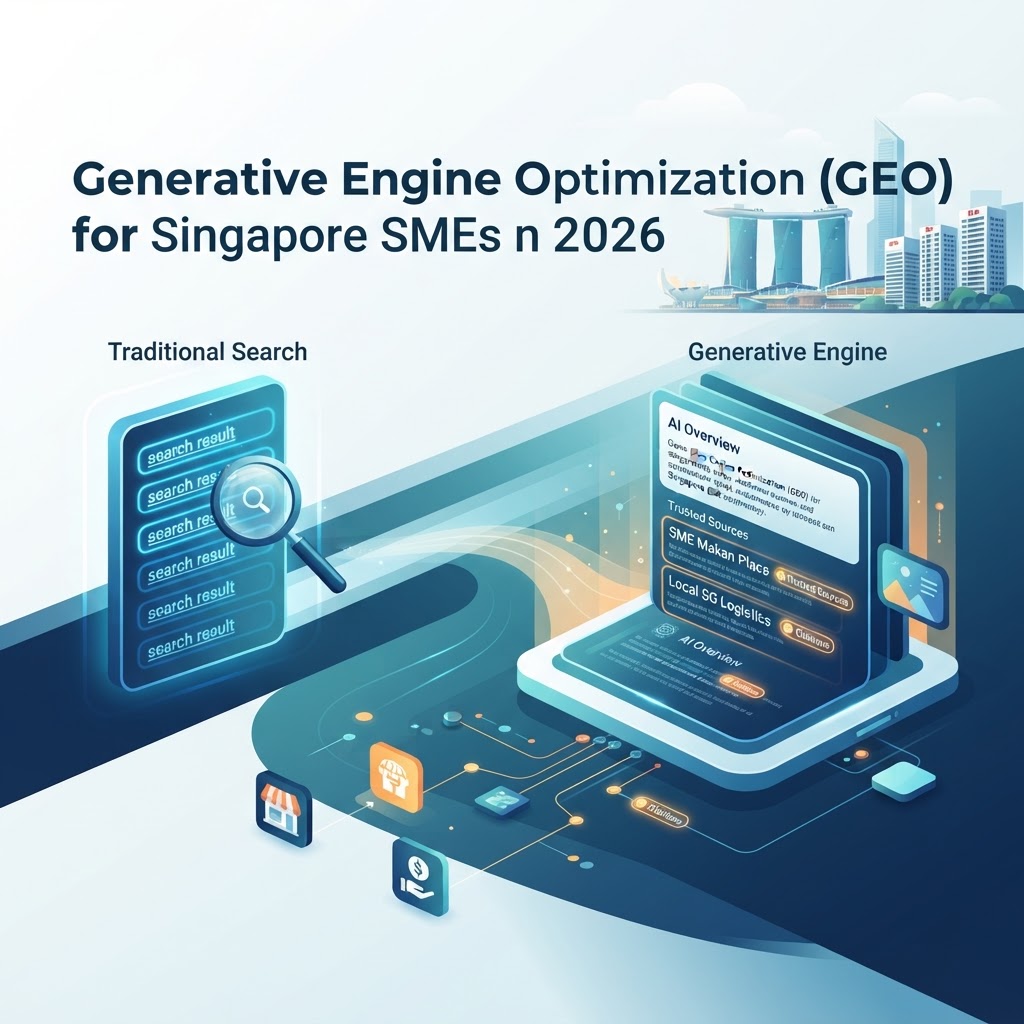
Search behaviour is shifting rapidly as AI-powered platforms change how users find information. In 2026, the traditional ten blue links are no longer the primary destination for many searchers. Instead, users are turning to AI-generated summaries that provide direct answers, effectively placing brands inside an automated response. For Singapore SMEs, this evolution represents both a challenge and a strategic opportunity. To maintain visibility, businesses must transition from traditional search tactics to Generative Engine Optimization. This approach focuses on ensuring your brand’s content is cited, accurate, and authoritative enough for AI models to prioritize in their outputs. As a Singapore-based digital agency, our team specializes in helping local SMEs navigate this transition by integrating high-quality, data-rich content with robust technical foundations. Whether you are aiming to leverage the Productivity Solutions Grant (PSG) for a website overhaul or refine your existing content strategy, understanding how these engines process information is now essential. This guide explores the practical steps you can take to stay visible, build trust with AI, and continue growing your digital presence in an increasingly automated landscape.
Table of Contents
What is Generative Engine Optimization?
Generative Engine Optimization, or GEO, is the strategic process of tailoring your online content so that AI-driven search engines, such as those integrated into major browsers and platforms, can easily identify, verify, and cite your brand in their summaries. Unlike traditional SEO, which prioritizes keywords for ranking, GEO emphasizes factual accuracy, clarity, and authority. When an AI tool generates a summary for a user searching for services in Singapore, it synthesizes data from multiple sources. If your website provides concise, structured, and expert-level information, you increase the likelihood of being referenced as a primary source. This visibility is vital because AI summaries often answer the user’s intent without them ever needing to click through to a website. By focusing on GEO, you move your digital footprint from the bottom of the page to the top of the conversation.
For a Singapore SME, this means creating content that acts as an authoritative resource. AI models are trained to favour information that is well-structured and contextually relevant. If your business offers a specific service, such as corporate accounting or digital marketing, your website must explain these topics with depth. You need to anticipate the questions your customers ask the AI and provide clear, direct, and helpful answers. Our team finds that brands that prioritize entity-based content—content that defines who they are, what they do, and why they are trusted—perform better in generative results. This isn’t just about keywords; it is about establishing your brand as a reliable entity in the digital ecosystem. As AI tools continue to develop, they will increasingly value businesses that offer verifiable, unique insights. We encourage SMEs to shift their focus from ‘chasing rankings’ to ‘building authority,’ ensuring that every page on their site serves a distinct, high-value purpose that an AI model can confidently recommend to a potential client looking for a solution in the local Singapore market.
Optimising for AI Comprehension and Trust
Building trust with generative engines requires a shift in how you present information. AI models utilize complex algorithms to evaluate the credibility of web pages. They look for signals that demonstrate expertise, authoritativeness, and trustworthiness. For an SME, this means ensuring your business information is consistent across all platforms, including Google Business Profile, social media, and your website. If your contact details, services, and location information vary, AI models may struggle to build a coherent profile of your company, potentially leading them to pass over your business in favor of a more consistent competitor. Providing clear, schema-rich data is one of the most effective ways to help these machines interpret your content. Schema markup is code added to your website that helps search engines understand the context of your data, such as your business hours, pricing, and service areas in Singapore.
Furthermore, the tone and structure of your content matter. AI models prefer content that is easy to parse and logically organized. Use H2 and H3 tags to break down complex topics into digestible sections. When you answer a question, lead with the most important information first, followed by supporting details. This mirrors how AI models synthesize answers, making it easier for them to extract your content for their summaries. You should also ensure that your website adheres to high security and performance standards. AI engines are designed to surface safe and reliable information; therefore, a site that is slow, insecure, or hard to navigate is unlikely to be prioritized. Our team consistently works with SMEs to optimize their existing content by removing filler, improving readability, and ensuring the technical structure supports the needs of modern AI. By providing accurate data and a smooth user experience, you create a digital presence that is not only welcoming to humans but also highly readable for the algorithms that define modern discovery.
| Factor | Traditional SEO | Generative Engine Optimization |
|---|---|---|
| Primary Goal | High ranking in search results | Credibility and citation in AI summaries |
| Content Focus | Keywords and intent matching | Accuracy, authority, and structured data |
| Technical Focus | Meta tags and backlinks | Schema markup and data consistency |
| Measurement | Clicks and rankings | Brand mentions and quality traffic |
The Technical Foundations of Visibility
Technical performance is the backbone of visibility in the age of AI. While your content might be excellent, it cannot achieve its full potential if the technical foundation is weak. Concepts like Core Web Vitals—a set of metrics used by engines to measure user experience, including loading speed and visual stability—are more important than ever. If your website is sluggish, AI engines may penalize your presence, as they prioritize resources that are reliable and fast. A site that loads in under three seconds, for instance, provides a better experience for users and is more likely to be crawled and indexed effectively by AI crawlers. Additionally, ensuring your site is fully mobile-responsive is non-negotiable in an APAC market where the majority of browsing happens on smartphones. A broken or unresponsive mobile design will drive potential customers away and harm your credibility with AI platforms that prioritize mobile-first indexing.
Another key aspect is the use of a modern, efficient content management system. A bloated, poorly maintained website often suffers from technical debt, which refers to the hidden costs of poor code. This can lead to security vulnerabilities and slow performance. We often recommend headless CMS architectures or optimized WordPress builds to our clients because they offer superior speed and security. These platforms allow for better data structuring, which is essential for GEO. Beyond speed, your site must comply with local regulations, such as the Personal Data Protection Act (PDPA). When users feel secure on your site, they spend more time there, providing more signals to AI models that your site is a quality destination. Think of your website as a digital storefront. If the door is stuck or the displays are messy, customers will leave. Investing in a robust, fast, and secure website is a foundational step that every SME should take to ensure they remain visible in the long term, regardless of how search technology evolves.
Strategic Growth and PSG Support for SMEs
Many Singapore SMEs feel overwhelmed by the need to constantly update their digital strategies. The good news is that the government provides support for digital transformation through the Productivity Solutions Grant. This grant can cover up to 50% of the cost of qualifying digital projects, including website rebuilds, eCommerce platforms, and CRM integration. Utilizing these funds allows your business to invest in high-quality digital infrastructure, such as performance-oriented web builds that meet all current technical requirements for visibility. Instead of viewing these changes as a burden, think of them as an investment in the future competitiveness of your brand. By using the grant to partner with an experienced agency, you can ensure that your move toward GEO-compliant web design is handled correctly from the start, minimizing risks and maximizing the return on your investment.
Partnering with a digital agency that understands both the technology and the local landscape is vital. Our team offers a consultative approach, helping you assess your current site and determining which improvements will yield the highest ROI. We focus on results that matter, such as improved site performance, better conversion rates, and a stronger digital presence that resonates with both AI models and human customers. We believe in transparency and patience, working with you to build a sustainable strategy that does not rely on short-term fixes. When you choose to upgrade your digital platform with PSG support, you are setting your business on a path of long-term growth. We help our clients navigate the entire process, from grant eligibility to final deployment, ensuring that the transition is smooth and stress-free. If you are ready to modernize your online presence and ensure your brand stays visible in the age of AI, let us have a conversation about how we can support your growth and help you thrive in the evolving digital environment.
Conclusion: Staying visible in 2026 and beyond requires a proactive shift in how you view search. By focusing on Generative Engine Optimization, you are preparing your business to thrive in a landscape where AI summaries define discovery. The transition involves creating content that is clear, authoritative, and structurally sound, alongside a technical foundation that prioritizes speed and security. As a Singapore SME, you have access to resources like the PSG to help fund these necessary upgrades. Our team is here to guide you through this process with professional, consultative expertise. We help you move past outdated tactics and implement strategies that build real, measurable authority. If you are ready to ensure your brand remains a top choice in AI-powered search, reach out today to book a consultation and explore your options.
Frequently Asked Questions
1. What is the main difference between traditional SEO and GEO?
Traditional SEO focuses on keyword rankings and clicks, while GEO focuses on making your content accurate and authoritative so that AI engines include it in their summaries.
2. Why should my SME care about AI-generated summaries?
Users are increasingly using AI to find answers. If you aren’t the source cited in those summaries, you lose the opportunity to connect with potential customers early in their search journey.
3. Can I still use the PSG for a website project?
Yes, the Productivity Solutions Grant remains a vital tool for SMEs looking to upgrade their digital infrastructure, including web design, to meet modern performance standards.
4. How do I improve my visibility for AI?
Focus on creating high-quality, entity-rich content and ensuring your technical performance, such as load times and security, is optimal. Schema markup also helps AI understand your data.
5. Is a full website rebuild necessary for GEO?
Not always. Often, optimizing your current site for performance and structuring your existing content correctly can yield significant results without a complete, from-scratch rebuild.