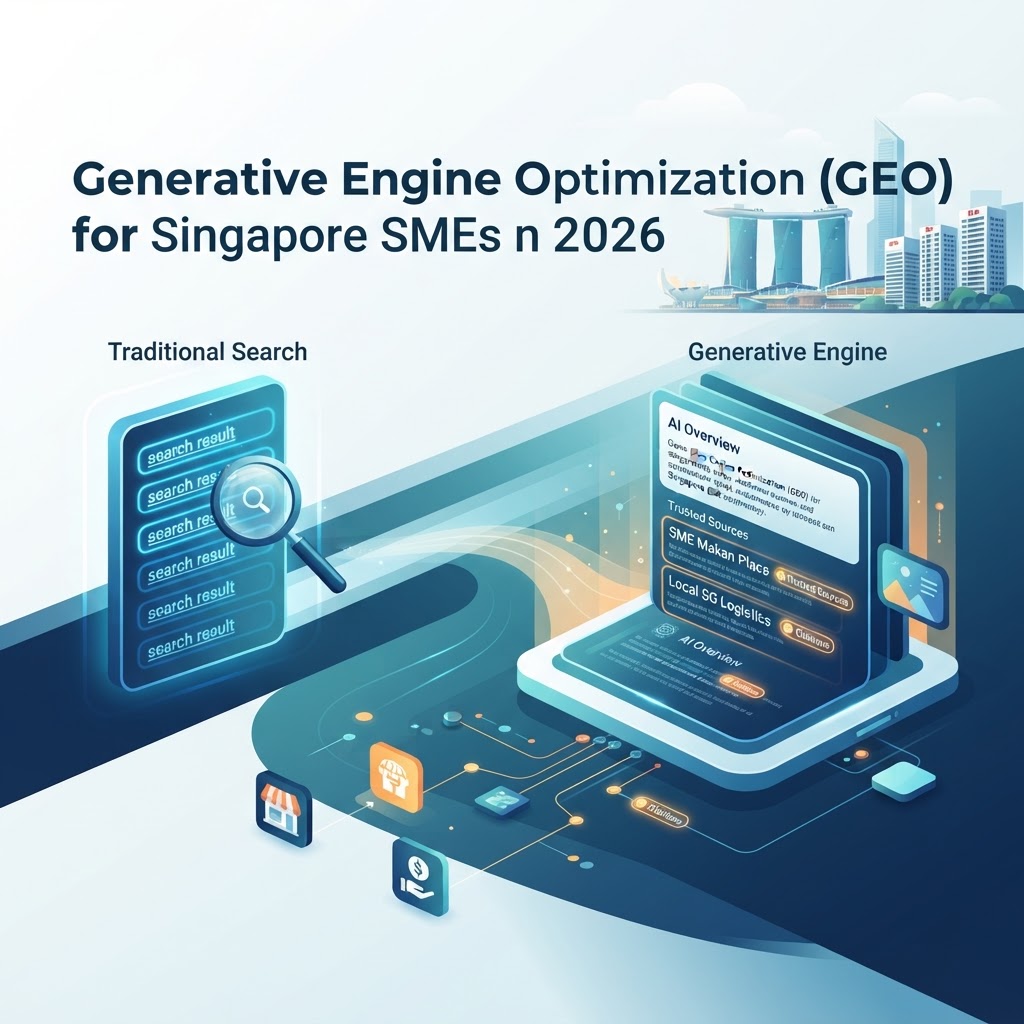
Generative Engine Optimization: A 2026 Guide for Singapore SMEs
The digital landscape for Singaporean businesses is shifting rapidly as AI-driven search experiences become the new standard. For years, digital marketing strategies have focused on traditional keyword-based SEO, aiming to rank blue links on a search results page. However, with the rise of AI Overviews and conversational search, that focus is no longer enough. To maintain visibility and authority in 2026, Singapore SMEs must adopt Generative Engine Optimization. This approach prioritizes being the primary source of truth for AI models rather than just attracting clicks to a website. At iPro Dezign, our team understands that being present in AI-generated summaries is now critical for capturing the attention of your target audience. As search engines evolve to synthesize information directly for users, your business needs to position itself as a trusted, authoritative expert. This guide explores how you can adapt your digital strategy, leverage local advantages like the PSG grant, and ensure your brand remains front and centre in the age of conversational search.
Table of Contents
What is Generative Engine Optimization?
Generative Engine Optimization, often abbreviated as GEO, represents a fundamental shift in how digital content is created and structured for search. Unlike traditional search engine optimization, which focuses on satisfying algorithms to achieve a higher position in a list, GEO is about tailoring content so that AI models like Gemini or ChatGPT can identify, extract, and cite your information as a factual, helpful answer. In the context of the Singapore market, this means moving beyond simple keyword density. You are now writing for both human readers and sophisticated language models that synthesize millions of data points to provide an instant answer. When a user asks a question about local services—such as finding a reliable web development firm or an eCommerce solution—AI engines scan the web for the most comprehensive, credible, and context-aware responses. To succeed, your business must demonstrate expertise, experience, authoritativeness, and trustworthiness. This is not about tricks or shortcuts; it is about organizing your website data so that it is semantically clear. You should use structured data, which is essentially code that helps search engines understand the context of your content, such as whether a specific piece of text is a product price, a service description, or a company location. By providing this clarity, you help AI systems interpret your site correctly. If your content is well-structured and provides genuine value, it becomes much more likely to be selected as the source for an AI summary. As a local SME, you have a unique advantage: you can provide localized, specific, and hyper-relevant content that global, generic sites cannot match. Focusing on the nuance of your specific niche in Singapore allows you to become the go-to authority in your sector.
Why Generative Engine Optimization Matters for Local SMEs
For many Singapore SME owners, the primary goal of digital marketing is to ensure that prospective clients find them when they have an immediate need. As AI Overviews increasingly occupy the top section of search pages, a business that does not appear in these summaries risks losing significant visibility. Generative Engine Optimization is essential because it allows you to capture traffic before a user even clicks a link. When an AI generates a summary, it often includes citations or links back to the source material. By becoming an expert-backed resource, you earn premium placement in these snapshots. Furthermore, local SEO has become intrinsically linked to AI performance. Since search engines now factor in geographic context, your Google Business Profile and location-based content are more important than ever. If you run a business in Singapore, your digital presence needs to reflect your local presence. This includes maintaining accurate NAP (Name, Address, Phone) information across all platforms and generating locally focused content that addresses specific community needs. For example, if you offer professional services, creating content about local industry trends, compliance with the PDPA (Personal Data Protection Act), or leveraging the PSG grant demonstrates that you are a local expert. Our team at iPro Dezign often advises clients that AI models prioritize sites that exhibit clear expertise. If your content is vague or poorly structured, AI engines will ignore it in favor of competitors who provide concise, fact-based answers. Investing in a high-performance website that is both fast and mobile-responsive is another critical pillar here. Core Web Vitals, which are metrics that track loading performance and visual stability, directly influence how easily a bot can crawl and understand your pages. A slow, outdated site is not only a poor experience for humans; it is a signal to AI that your content may not be a high-quality, up-to-date source of information for the end user.
| Metric | Traditional SEO Focus | GEO Focus |
|---|---|---|
| Primary Goal | Page Ranking | Answer Selection |
| Target Audience | Search Algorithms | AI Models & Humans |
| Content Style | Keyword Optimization | Entity & Context Clarity |
| Success Signal | Click-through Rate | Citation & Brand Presence |
Core Tactics for AI Search Authority
Achieving success with Generative Engine Optimization requires a multi-layered approach to content and technical architecture. First, you must prioritize entity-based content. Instead of just targeting keywords, identify the key topics or entities your business represents. If you are an eCommerce retailer, your entities might include specific product categories, brand names, or local delivery zones. By consistently producing high-quality, long-form content that explores these entities in depth, you help AI models associate your brand with those topics. Second, technical excellence is non-negotiable. Modern AI search relies on machines being able to read your site content efficiently. This means your website must be built on a clean, modern framework that supports schema markup. Schema markup is a type of code you place on your website to help the search engines return more informative results for users. When we build sites for our clients, we integrate structured data that clearly identifies service pricing, operating hours, and customer reviews. This provides the context AI needs to include you in their answers. Third, do not overlook the power of local credibility. For Singapore SMEs, this means building a backlink profile that includes reputable local news sources, industry bodies, and community partners. These signals verify to AI models that your business is a legitimate, well-regarded entity within the local ecosystem. Finally, remember that your content must be readable for humans as well. AI models are trained on human-written content, so prioritize clarity, accuracy, and depth. Avoid fluff and focus on answering the actual questions your customers are asking. For instance, instead of writing a generic post about digital marketing, write a detailed article on how a specific business type can navigate the current digital landscape in Singapore. This specific, problem-solving content is what AI models are designed to surface, helping you gain more visibility among the audience that matters most to your business growth objectives.
Building a Sustainable Growth Partnership
Growth in the digital age requires a partner who understands both the technical and business sides of the equation. At iPro Dezign, we view our relationships with clients as long-term partnerships. We do not just build a website and walk away; we ensure that your digital assets remain optimized for the latest developments in search technology. Whether you are looking to revamp your web presence, launch a new eCommerce portal, or optimize for Generative Engine Optimization, having an experienced team by your side is vital. Many SMEs are eligible for the PSG (Productivity Solutions Grant), which can cover up to 50% of the cost of approved digital solutions. Navigating the grant process can be complex, but our team specializes in helping businesses qualify and implement these solutions effectively. We believe that your website should be a high-performing engine that works as hard as you do. When we help a business modernize its web presence, we focus on performance metrics, security compliance, and user experience. We explain the technical jargon, such as LCP (Largest Contentful Paint, a metric that measures how fast the main content of a page loads) and ensure that your site is built to handle the demands of modern users. Our focus is always on measurable outcomes. We track how your changes affect engagement, enquiries, and sales, allowing us to pivot and improve your strategy over time. We pride ourselves on our responsiveness and our commitment to transparency. You deserve a partner who is always a call away, who explains the why behind every tactic, and who approaches your business with the same level of care and dedication as our own. Whether you are just beginning to explore your digital transformation or are looking to refine your existing presence, let us help you build a strategy that delivers sustainable results. Your growth is our priority, and we are ready to help you navigate the evolving search landscape with confidence and technical expertise.
As we navigate 2026, the shift toward AI-assisted search is not a temporary trend but a permanent change in how information is accessed and consumed. Singapore SMEs that embrace this shift through proactive Generative Engine Optimization will be well-positioned to maintain their authority and capture market share. By focusing on technical clarity, high-quality content, and strong local signals, your business can ensure that it remains the preferred answer in an AI-driven world. We invite you to reach out to our team for a consultation to discuss your specific needs. From website modernization to grant-supported digital transformation, we provide the expertise required to grow your business effectively. Book a conversation with us today to see how we can help your brand stay relevant, visible, and competitive in this new era.
Frequently Asked Questions
1. What is the main difference between traditional SEO and Generative Engine Optimization? Traditional SEO focuses on ranking in lists of links, whereas Generative Engine Optimization focuses on being selected as the primary source of information in AI-generated answers.
2. Is local SEO still relevant in an AI-driven search environment? Yes, local SEO is more critical than ever. AI models prioritize geographic context to provide relevant answers to local queries, making your business profile and location data essential.
3. Can iPro Dezign help with PSG grant applications for my website project? Our team is experienced in helping SMEs navigate the digital transformation landscape and can provide guidance on how to leverage support for your web projects.
4. How long does it take to see results from these strategies? Results depend on your current digital footprint and market competition, but a consistent, performance-first approach typically starts showing improvements in engagement and traffic over several months.
5. Do I need to be a large company to benefit from AI-focused strategies? No, small and medium enterprises can often be more agile, allowing them to implement structured data and high-quality local content faster than larger, slower-moving competitors.