Generative Engine Optimization: A 2026 Guide for Singapore SMEs
The digital landscape for Singaporean businesses is undergoing a fundamental shift as search engines transform into answer engines. For many years, companies focused their digital marketing strategy on traditional keyword-based SEO, hoping to rank high on search engine result pages. However, the rise of AI Overviews and conversational search models has changed how potential customers discover products and services. Today, Generative Engine Optimization has become the essential framework for ensuring your business content remains visible, credible, and influential. As AI models synthesise information from across the web, your goal is to transition from merely chasing search volume to becoming a trusted source of information that these models can reliably cite. For local SMEs, this evolution presents a unique opportunity to build long-term authority. By understanding how large language models process data and value expertise, our team at iPro Dezign helps businesses align their digital assets with these new technological requirements. Whether you are seeking to leverage PSG grants for website modernisation or aiming to refine your content strategy for the AI era, this guide outlines the practical steps required to navigate the future of digital discoverability in our competitive local market.
Table of Contents
- Understanding the Shift Toward Generative Search
- Technical Foundations of Generative Engine Optimization
- Content Strategies That Influence AI Models
- Leveraging Local Expertise and PSG Support
- Frequently Asked Questions
Understanding the Shift Toward Generative Search
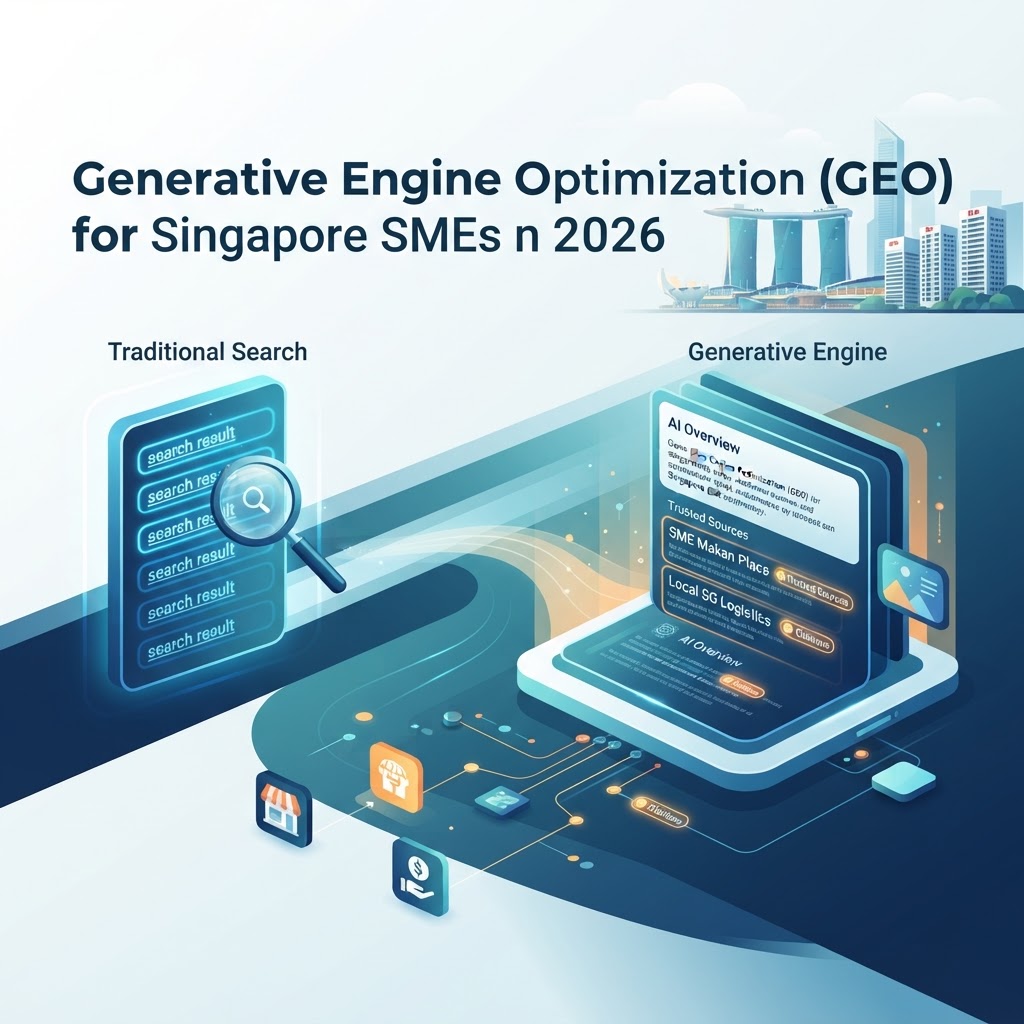
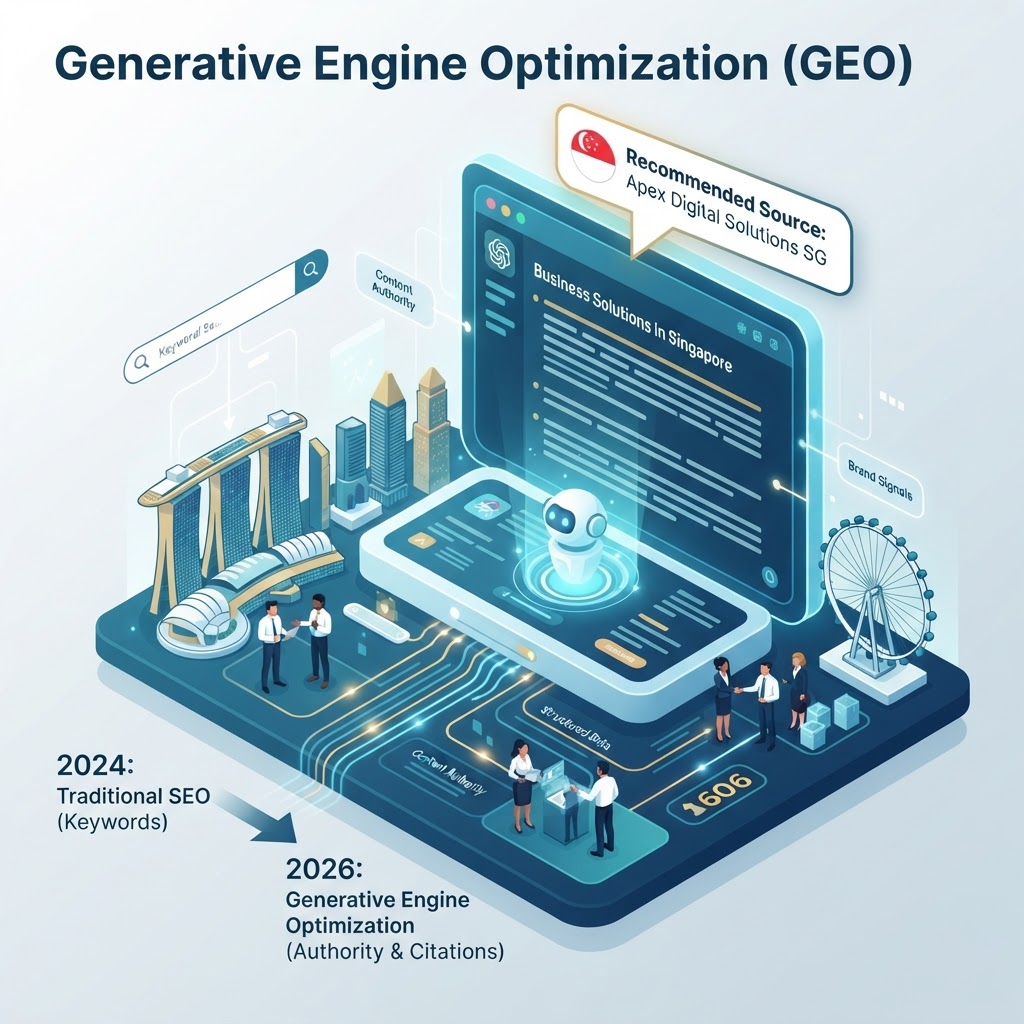
The traditional search experience, where a user types a query and receives a list of blue links, is quickly being replaced by a more conversational, AI-driven interface. In 2026, Singaporean consumers are increasingly turning to AI-integrated search tools to provide direct answers, compare services, and resolve complex queries without needing to click through multiple websites. For SME owners, this transition feels significant because the traditional metrics of success—like simply ranking for a specific high-volume keyword—are becoming less predictive of actual business growth. Generative Engine Optimization represents a strategic pivot toward making your business information highly accessible and trustworthy for machine learning models. Instead of optimizing for a set of algorithms that look for exact keyword matches, you must now focus on providing high-quality, structured data that accurately describes your expertise and business offerings. When an AI model generates an overview, it aggregates data from multiple sources to synthesize a response. If your website provides concise, accurate, and context-rich information, you increase the likelihood of being cited as a primary source. This change requires a departure from thin, keyword-stuffed content toward comprehensive, educational pieces that answer specific user pain points. We have observed that businesses in Singapore often struggle with this shift because they continue to use legacy SEO tactics that no longer provide the same level of impact. To remain relevant, your content strategy must prioritize depth, clarity, and logical structure. By positioning your SME as a thought leader, you provide the precise, factual inputs that AI search engines rely on to populate their summaries. This is not about tricks or shortcuts, but about ensuring that your digital footprint accurately reflects your professional competence in a way that modern AI systems can easily ingest, understand, and eventually recommend to your prospective customers.
Technical Foundations of Generative Engine Optimization
Technical performance remains the backbone of any successful digital strategy, especially as search engines shift toward processing web content through complex AI models. A website that is slow, unresponsive, or poorly structured is difficult for modern crawlers to parse effectively. The technical foundations of Generative Engine Optimization begin with core web vitals, which measure real-world performance metrics such as site speed, visual stability, and load times. If your platform is plagued by technical debt, such as bloated code or unoptimized imagery, you create friction for the AI agents attempting to index your site. Beyond raw speed, you must implement structured data, often referred to as Schema markup. This language allows search engines to understand the relationships between your business name, your physical address in Singapore, your service categories, and your customer reviews. By embedding this metadata into your site architecture, you provide a clear roadmap for AI models to verify your credentials and business identity. We strongly recommend that SMEs move toward headless CMS architectures if they require a high degree of performance and modularity. This separation of the front-end presentation from the back-end content management system allows for faster page loads and a more secure, streamlined delivery of information. Furthermore, accessibility and mobile-friendliness are not optional in the APAC region where mobile search dominance is absolute. Ensure your site adheres to the latest PDPA guidelines while maintaining a robust security protocol that keeps customer data safe. A secure, fast, and well-structured website acts as a reliable data warehouse for AI models. When the underlying architecture is clean, it becomes easier for search algorithms to crawl, index, and eventually cite your content within their generated summaries, effectively elevating your brand above competitors who rely on older, less efficient technologies.
| Metric | Traditional SEO Focus | Generative Engine Optimization |
|---|---|---|
| Primary Goal | Search Ranking | Information Citation |
| Content Style | Keyword Density | Thematic Authority |
| Core Asset | Metadata Tags | Structured Knowledge Graphs |
| Value Metric | Click-Through Rate | Brand Influence & Trust |
Content Strategies That Influence AI Models
To thrive in the era of generative AI, your content must pivot from generic broad-term coverage to deep, expert-led analysis that solves specific problems for your audience. AI models are programmed to favour information that demonstrates E-E-A-T: Experience, Expertise, Authoritativeness, and Trustworthiness. In Singapore, where customers value reliability and professional service, this is a distinct competitive advantage. You should focus on creating long-form educational content that addresses the unique challenges of your niche. For example, if you operate an interior design firm, do not just post generic blog entries about home styles. Instead, provide detailed guides on the costs of renovations in Singapore, the nuances of HDB compliance, or tips for space-saving in compact urban apartments. This kind of specific, actionable advice is highly valued by AI models because it provides the granular detail needed to answer user questions effectively. You should also ensure that your content is written in a clear, accessible tone that avoids unnecessary jargon. When an AI system processes your content, it assesses the semantic quality of your writing; if your content is logically organized with clear headings and summaries, the probability of it being included in an AI overview increases significantly. Avoid over-optimizing for keywords; instead, focus on entity optimization, which involves covering all aspects of a specific subject thoroughly. By linking your content to other credible sources and maintaining a consistent voice, you establish a knowledge graph that search engines recognize as authoritative. Furthermore, integrating case studies and transparent, evidence-based data helps build the trust that AI systems prioritize when selecting citations. Remember that your content serves two audiences: human readers who need solutions and AI agents that need clarity. Striking this balance requires a disciplined approach to research and writing, focusing on the quality of your insights rather than the volume of your production, ensuring your brand is positioned as the primary authority.
Leveraging Local Expertise and PSG Support
Navigating the transition to Generative Engine Optimization can be a daunting task for busy SME founders, but you do not have to do it alone. The Singapore digital ecosystem is well-supported by government initiatives designed to help businesses upgrade their digital infrastructure. The Productivity Solutions Grant (PSG) provides an excellent opportunity to cover up to 50% of the cost for approved digital solutions, including website development and the implementation of advanced content management systems. Working with an experienced digital partner allows you to focus on your core business while your team of experts manages the technical implementation, security compliance, and content strategy required to stay competitive. Our approach is consultative and founder-led, ensuring that we understand your unique business objectives before proposing a strategy. We believe that professional digital solutions should be transparent, measurable, and tailored to the local market context. Whether your goal is to refresh your web presence to meet modern performance standards or to develop a sophisticated content strategy that aligns with AI requirements, professional guidance is invaluable. A collaborative partnership ensures that you are not just ticking boxes, but building a foundation for sustainable digital growth. We emphasize a results-driven philosophy, focusing on technical excellence and high-quality web design that improves user conversion rates and long-term brand equity. Because we understand the local landscape, we can ensure that your digital assets remain compliant with Singaporean data regulations while positioning you for maximum visibility in the new era of search. By investing in a partnership that values transparency and technical rigour, you can confidently navigate these technological shifts, ensuring your business stays ahead of the curve, attracts the right enquiries, and makes the most of available support grants to build a resilient and highly effective digital presence for the future.
The shift toward AI-integrated search is not a temporary trend but a fundamental change in how information is accessed and consumed. By prioritizing Generative Engine Optimization, you are preparing your business for long-term relevance. While search algorithms will continue to evolve, the core requirement remains the same: providing clear, accurate, and valuable content that satisfies the user’s intent. By focusing on technical excellence, establishing your brand as a trusted authority, and utilizing resources like the PSG grant to fund necessary improvements, you place your business in the strongest possible position. Our team at iPro Dezign is ready to partner with you on this journey. Reach out today for a consultation to evaluate your current digital performance and explore how we can support your growth.
Frequently Asked Questions
- What is the main difference between traditional SEO and Generative Engine Optimization? Traditional SEO focuses on ranking for specific keywords to drive traffic, while Generative Engine Optimization focuses on being cited as a source of truth within AI-generated summaries.
- How can my Singapore SME benefit from PSG funding for this? Many digital website rebuilds and performance improvements qualify for PSG grants, which can cover up to 50% of the cost, making it easier to modernise your digital infrastructure.
- Will AI replace the need for a website? No, websites are essential as the original source of high-quality data. AI models need original, expert content to function, and your website remains your primary digital asset.
- How do I prove E-E-A-T to search engines? You demonstrate this by publishing high-quality, author-led content, including clear references to your credentials, and ensuring your site architecture is technically sound and secure.
- How long does it take to see results? Building authority in the eyes of AI models is a long-term commitment. While technical fixes provide immediate performance gains, content authority typically grows steadily over several months.