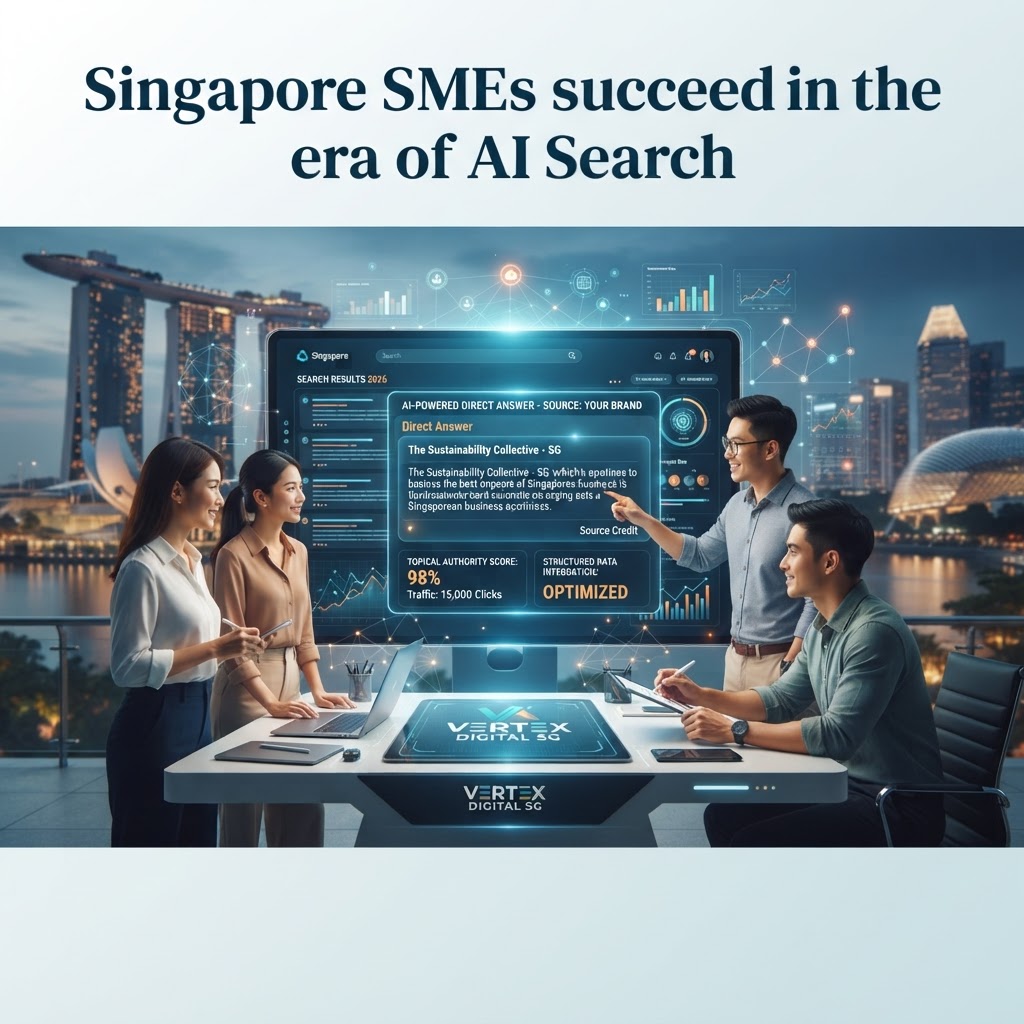
The new AI-driven landscape for SEO Singapore
Singapore’s digital ecosystem is evolving faster than ever. In 2026 the intersection of machine learning, generative models and search behavior has redefined how businesses find and convert customers online. For companies working with a digital marketing agency singapore, relying on traditional tactics alone is no longer sufficient — AI is reshaping ranking signals, content creation, and the user journeys that convert visitors into customers.
This article breaks down the AI trends every SEO Singapore practitioner and digital marketing agency singapore should prioritize in 2026, with practical tactics, KPI guidance, and spotlights on emerging search formats.
Why AI matters for SEO Singapore right now
AI affects SEO Singapore across three layers: how search engines interpret queries, how content is generated and optimized, and how personalization alters the user experience. Modern search engines incorporate large language models and generative engines to deliver direct answers, multimedia results, and personalized recommendations. For local businesses and agencies in Singapore, this means:
- Visibility now depends on being useful to both users and machine agents (answer engines and bots).
- Organic performance ties more closely to structured data, semantic context, and user signals than simple keyword density.
- Personalization and local intent (e.g., “near me” or Singapore-specific queries) require more dynamic content strategies.
A pragmatic digital marketing agency singapore combines technical SEO mastery with AI-driven content systems to stay competitive.
Answer Engine Optimization: design for concise, authoritative results
Search is shifting from ten blue links to instant answers and task completion. Answer Engine Optimization (AEO) focuses on structuring content so AI-driven engines can extract and surface it directly. That means:
- Emphasize structured data (JSON-LD), FAQ/HowTo schema, and precise Q&A blocks.
- Craft short, factual snippets alongside deeper, pillar content to capture both featured answers and long-form engagement.
- Monitor answer extraction with tools and continuous testing.
For an actionable framework on AEO for Singapore SMEs, see this guide on answer engine optimisation for Singapore SMEs.
(Internal link: answer engine optimisation for Singapore SMEs)
Generative Engine Optimization: optimizing for machines that generate content
Generative engines are changing how users discover information. Rather than simply returning links, engines synthesize answers from multiple sources. To ensure your brand is used as a source and not overlooked:
- Produce authoritative, well-cited content with clear provenance and original insights.
- Use canonicalization, clear authorship, and timely updates so generative systems can trust your pages.
- Mix long-form research with short, structured data units that machines can recombine.
Explore techniques to align content with generative models in this generative engine optimization guide.
(Internal link: generative engine optimization guide)
AI Search Optimization: signals, experiments and measurement
AI search optimization expands traditional SEO by adding model-aware signals: relevance to intent clusters, conversational context, and cross-modal indexing (text, image, video). Practical steps:
- Map user intents against conversational flows and optimize content for intent clusters rather than single keywords.
- Implement multimodal optimization (image alt text, video transcripts, and structured captions) to increase inclusion in rich results.
- Run continuous experiments using search simulators and query probes to detect how updates affect AI-selected snippets.
For a practical guide focused on Singapore SMEs, review this AI search optimization resource.
(Internal link: AI search optimization guide)
AI-powered personalization: better experiences, higher conversions
Personalization is no longer optional. AI-powered personalization tailors content, offers, and journeys at scale. For local businesses in Singapore this translates to:
- Segment-first content — dynamic modules that change by geography, device, or prior behaviour.
- Product and service recommendations driven by small data signals (past visits, local events, stock availability).
- Real-time A/B/n testing where AI continuously reallocates traffic to better performing variants.
A digital marketing agency singapore that masters personalization will deliver measurable lift in engagement and conversion rates. Learn how personalization frameworks apply to SMEs here.
(Internal link: AI-powered personalisation for SMEs)
Smart AI web design: performance, accessibility and crawlability
Design and front-end performance remain core SEO Singapore concerns. Smart AI web design uses automation to deliver both delightful UX and search-friendly pages. Key principles:
- Prioritize Core Web Vitals: use AI-assisted testing tools to identify and fix render-blocking resources.
- Progressive enhancement: ensure critical content is server-rendered or pre-rendered for bots and answer engines.
- Accessibility and semantic markup so generative engines can read and reformat content reliably.
Digital marketing agency singapore teams are increasingly combining AI design assistants with traditional engineering to produce pages optimized for humans and machines. For tactics and case studies, review this AI web design resource.
(Internal link: smart AI web design for digital marketing agencies)
Practical roadmap for agencies and in-house teams
Adopting AI-focused SEO Singapore strategies requires a clear roadmap. Here’s a practical sequence most digital marketing agency singapore teams should follow:
- Audit content and technical health
-
Crawl the site, identify missing schema, and map content to intent clusters.
-
Build a data layer for measurement
-
Consolidate analytics, search console, and on-site event data to spot personalization opportunities.
-
Prioritize quick wins
- Implement structured data for common features (FAQ, HowTo, LocalBusiness).
-
Fix Core Web Vitals issues that block search performance.
-
Deploy AI-enabled workflows
- Use generative models for research briefs, but enforce human editing and source citation.
-
Apply AI assistants for image optimization, meta description drafts, and internal link suggestions.
-
Continuous experimentation and governance
- Create guardrails for autogenerated content to prevent factual drift and brand inconsistency.
- Run controlled experiments (statistical A/B tests) and monitor SERP volatility.
This staged approach balances speed with risk control, enabling teams to scale AI capabilities without sacrificing quality.
Local SEO Singapore: hyperlocal signals and trust
Singapore’s compact market amplifies local signals: NAP consistency, localized content, and reviews are critical. Specific tips for local success:
- Keep Google Business Profile optimized with regular posts, up-to-date services, and structured offerings.
- Encourage verified reviews and respond promptly; AI-driven engines weigh recent, local feedback heavily.
- Create city- and neighborhood-level pages with purpose, unique offers, and local schema.
Local-first strategies help small businesses outperform larger competitors that rely on generic national content.
KPIs that matter in 2026
Shift measurement from vanity metrics to AI-aware KPIs:
- Answer share: percentage of queries where your content is used as the answer or source.
- Engagement-to-conversion rate: how personalized journeys convert versus static pages.
- SERP diversity score: presence across featured snippets, video, images, and local packs.
- Content trust metrics: backlink growth from authoritative domains and citation frequency in generative outputs.
A digital marketing agency singapore should align client reporting to these metrics to demonstrate real, business-focused impact.
Risk management and ethical considerations
AI introduces new risks: hallucinations, privacy concerns, and bias. Mitigation strategies include:
- Human review and fact-checking of generated content before publishing.
- Data minimization and explicit consent for personalization features.
- Transparent disclosures when content is AI-assisted, which builds user trust and reduces regulatory risk.
Agencies must balance automation benefits with responsible governance to protect brand equity.
Skills and team structure for 2026
The ideal team blends traditional SEO skills with AI fluency. Core roles include:
- SEO strategist with model-aware optimization skills.
- Data engineer to manage signals and personalization layers.
- Content editor trained to validate and enrich AI drafts.
- Front-end engineer focused on performance and accessibility.
Investing in cross-training prevents silos and accelerates adoption of new tools.
Conclusion: a practical advantage for Singapore businesses
For businesses in Singapore, integrating AI into SEO and marketing workflows is no longer experimental — it’s strategic. A forward-looking digital marketing agency singapore will combine structured data, model-aware content, personalization, and strong governance to secure sustainable organic growth. By focusing on answer readiness, generative trust, and local relevance, organisations can convert the complexity of 2026’s search environment into measurable advantage.