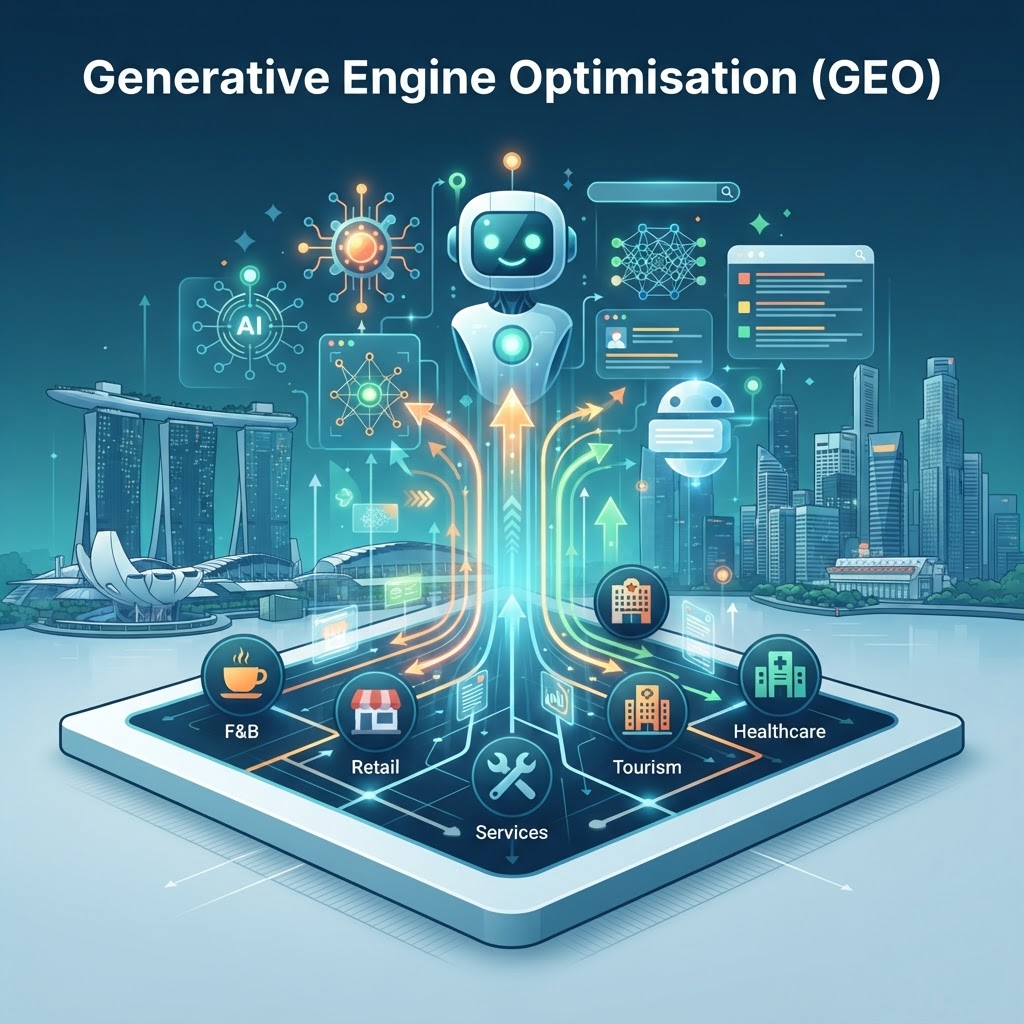
What is Generative Engine Optimisation (GEO)? A Guide for Singapore SMEs
The way your customers find your business is undergoing a fundamental shift. For years, digital marketing strategies were built around traditional search engine optimisation (SEO), focusing on keywords to climb the Google ladder. Today, the landscape is evolving. With the rise of AI-powered search tools like ChatGPT, Claude, and Google AI Overviews, users are increasingly bypassing traditional website links to get direct, summarised answers. This transition requires a new approach known as Generative Engine Optimisation (GEO). For Singapore SMEs, adapting to this change is no longer optional; it is a necessity for staying relevant in an increasingly AI-driven market. At iPro Dezign, we specialise in helping local businesses navigate this transition. By focusing on how AI models process information and build trust in their outputs, we help your brand become the go-to authority that AI citations prioritise. Understanding GEO allows you to maintain visibility even when traditional search results become secondary to the conversational responses provided by modern artificial intelligence. This guide explains how to prepare your digital presence for the future of search.
Table of Contents
What is Generative Engine Optimisation?
Generative Engine Optimisation, or GEO, is the strategic process of enhancing your digital content so that AI-powered search engines and chatbots are more likely to reference your brand when answering a user query. Unlike traditional SEO, which prioritises technical factors like backlinks and meta tags to improve site-wide rankings, GEO focuses on the quality, structure, and factual authority of your content. When a user asks an AI model about the best accounting software in Singapore or a reliable local renovation company, the model synthesises information from multiple sources to provide a coherent, helpful answer. If your business is cited as a primary source, you gain immediate authority and trust. Achieving this requires moving beyond simple keyword stuffing. AI models are trained on massive datasets and prioritise content that is comprehensive, neutral, and clear. They seek out businesses that provide deep insights, step-by-step solutions, and well-structured data. When we talk about GEO, we are talking about ensuring your website acts as a reliable node in the broader knowledge graph. This involves optimising for natural language queries—the types of questions people ask out loud to their smart devices or type into chat interfaces. These queries often start with “how,” “why,” or “which,” and they demand immediate, actionable value. Your website needs to provide that value without requiring the user to click away to a landing page, though keeping them engaged enough to eventually do so is the goal. By focusing on entity recognition and context, businesses can ensure that AI models identify their specific services as the answer to local Singaporean needs, effectively future-proofing their search strategy against the changing tides of web technology.
Why GEO Matters for Singaporean Businesses
For Singaporean SMEs, the shift toward AI-centric search is a pivotal moment that influences how local service providers engage with customers. As mobile-first users in Singapore increasingly rely on voice search and conversational interfaces to find everything from dining spots to professional services, the traditional search page is becoming fragmented. If your business relies solely on traditional SEO, you risk being pushed down the search results page by AI-generated summaries. GEO matters because it secures your seat at the table where decisions are made. When an AI presents a curated list of recommendations to a user, being included in that list provides a layer of social proof that is arguably more powerful than a high organic search ranking. Furthermore, this approach aligns perfectly with the sophisticated digital expectations of our local market. Singaporean consumers value efficiency and clarity; they prefer quick, accurate answers over sifting through endless search links. By optimising for AI, you are inherently improving the user experience for your human visitors as well. This dual benefit is essential for businesses looking to scale. We have observed that clients who start focusing on GEO now gain a significant competitive edge over those still clinging to outdated, link-heavy strategies. It is not just about rankings anymore; it is about being the primary reference point. Consider the local context: businesses leveraging PSG funding to modernise their digital assets have a unique opportunity to integrate GEO principles directly into their new web infrastructure. Whether you are in eCommerce, professional consulting, or retail, the goal is to be the expert that AI models trust. By providing high-quality, structured information, you influence the data that powers the next generation of discovery. The following table highlights the distinct differences between traditional SEO and the emerging discipline of GEO.
| Metric | Traditional SEO | Generative Engine Optimisation (GEO) |
|---|---|---|
| Core Objective | Website ranking and clicks | AI citation and trust |
| Priority | Keywords and backlinks | Contextual accuracy and authority |
| Content Style | Optimised for crawler bots | Optimised for natural language |
| Success Metric | Organic traffic volume | Brand mentions in AI responses |
Implementing GEO Tactics for AI Visibility
Implementing a successful GEO strategy starts with a deep dive into the types of queries your customers are asking. Unlike traditional search, where you might target high-volume terms like “digital agency Singapore,” GEO requires targeting intent-based questions such as “how to apply for a PSG grant for digital marketing” or “why does my business need a headless CMS?” When our team develops content for clients, we ensure that every paragraph provides clear, concise, and verifiable information. AI models are programmed to prefer sources that are perceived as factual and authoritative. This means your website needs to be built on a foundation of technical excellence. We focus on factors like semantic search capability, where the structure of your HTML helps machines understand the relationship between different topics on your page. Using schema markup is crucial here; it gives search engines and AI tools a roadmap of your business, explicitly defining what services you offer, your operating hours, your location, and even your customer reviews. Speed also plays a vital role. Even if your content is perfect, a site that takes ten seconds to load will frustrate users and fail to meet the performance standards that AI models use to judge quality. We prioritise Core Web Vitals—a set of metrics that measure real-world user experience—to ensure your site is fast, responsive, and stable. Furthermore, we encourage our clients to build comprehensive knowledge hubs. Instead of creating thin content to target individual keywords, we advocate for creating long-form, pillar-style content that covers a subject from multiple angles. This makes your site a logical destination for an AI to scrape and cite. When your content is the most informative and well-structured answer available, the AI will naturally favour your brand as the preferred source, driving high-intent traffic directly to your doorstep.
Choosing the Right Digital Partner for AI Adaptation
Navigating the transition to AI-integrated search requires a partner who understands both the technical side of development and the strategic side of digital marketing. Many agencies in Singapore still rely on outdated tactics, promising results that simply do not hold up in an AI-driven environment. At iPro Dezign, we believe in a consultative approach that starts with your business goals. We don’t just build websites; we build high-performance digital engines that are designed to evolve with the changing landscape. Our expertise in web development, coupled with our deep understanding of how search algorithms are adapting to AI, ensures that your digital presence is not just compliant but competitive. We help SMEs leverage the Productivity Solutions Grant (PSG), which can cover up to 50% of the cost for eligible digital solutions. This makes upgrading your website to a modern, GEO-ready architecture a financially sound investment. When we partner with a business, we prioritise transparency and education. You deserve to know why we are making certain technical changes, such as implementing a headless CMS for better performance or refining your content strategy for better AI indexing. We treat your growth as our own, providing the ongoing support and analysis needed to stay ahead of the curve. Our team is always a call away, ready to assist with updates or strategic pivots as new AI tools emerge. We focus on measurable outcomes—such as improved user engagement, higher conversion rates, and better brand visibility—rather than hollow metrics that don’t impact your bottom line. Choosing a partner for this journey is a critical business decision. You need a team that is honest about the effort required, patient in explaining the technical nuances, and committed to long-term success rather than short-term gains. By working with us, you are choosing a partner that values integrity, technical excellence, and the specific needs of the Singaporean SME landscape. Let us help you future-proof your digital presence and turn AI search into your strongest growth channel.
In conclusion, Generative Engine Optimisation is no longer a futuristic concept but a present-day imperative for businesses in Singapore. As AI models continue to redefine how information is discovered and presented, your website must be built to meet these new standards. By prioritising clear, authoritative, and well-structured content, you ensure that your brand remains visible and relevant. Whether you are looking to modernise your existing web architecture or launch a new site, we are here to guide you through the process. Our expertise in digital transformation, combined with our ability to help you navigate PSG grant eligibility, ensures that you can achieve a sophisticated, results-driven online presence. Contact our team today to book a consultation and learn how we can help your business thrive in the era of AI search. We are always happy to discuss your goals and show you how a strategic approach to digital design and content can deliver measurable returns.
Frequently Asked Questions
1. What is the main difference between traditional SEO and GEO? Traditional SEO focuses on ranking websites in a list of links, while GEO focuses on getting your brand cited as a trusted source within AI-generated answers.
2. Can I use PSG grants for GEO-related website upgrades? Yes, many digital solutions designed to improve your website’s performance and structure are eligible for PSG funding, covering up to 50% of the cost.
3. Does GEO replace the need for traditional SEO? Not entirely. While search habits are shifting, a strong foundation of traditional technical SEO remains essential to help AI models crawl and index your site effectively.
4. How long does it take to see results with a GEO strategy? GEO is a long-term strategy focused on building authority; while technical improvements can show immediate performance gains, brand trust within AI models is built through consistent, high-quality content over time.
5. Why is local Singaporean context important for GEO? AI models prioritise location-specific relevance; by optimising your content for Singaporean intent and local keywords, you ensure the AI recommends your business to the correct target audience.