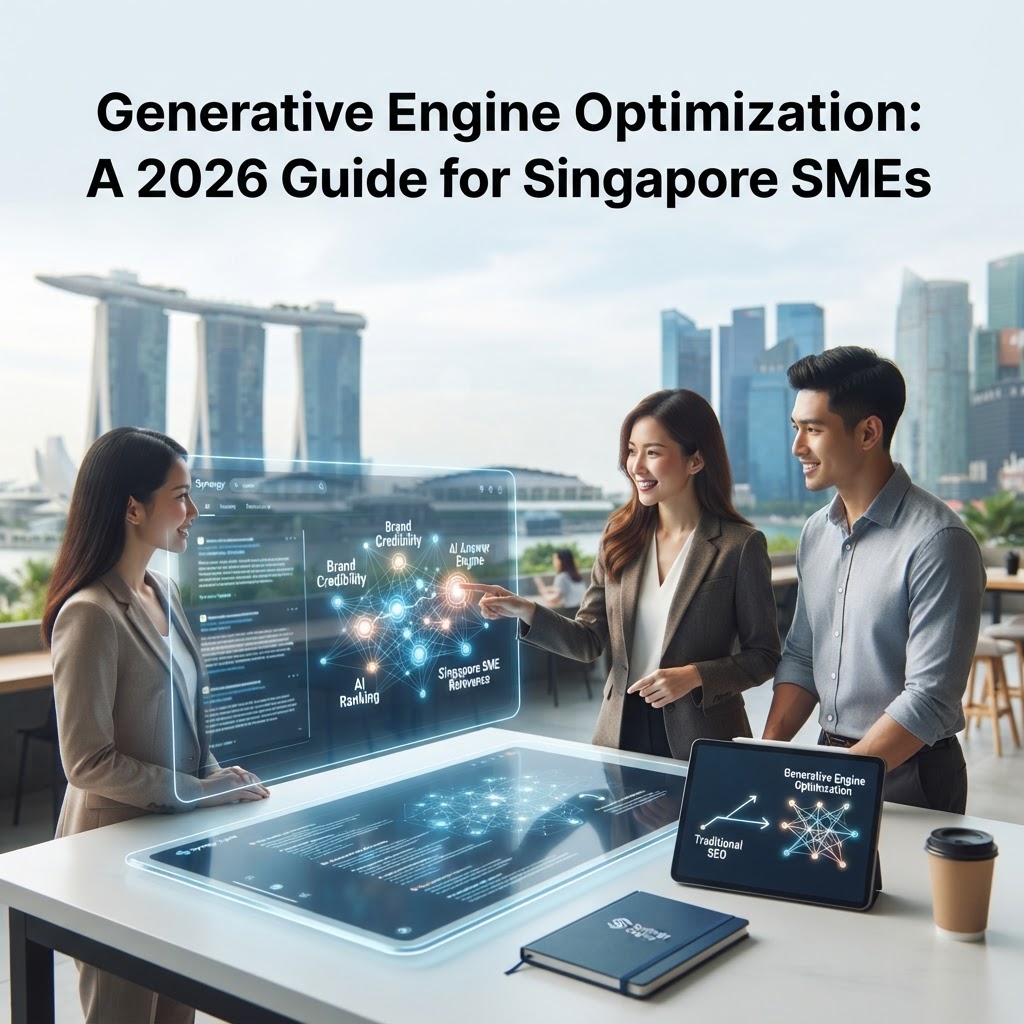
Is Your Website Ready for AI Search? A 2026 Guide for Singapore SMEs
As AI-powered search tools like Google AI Overviews increasingly transform how users discover content online, Singapore SMEs must adapt their digital strategies. Traditional Search Engine Optimisation (SEO) focused on keyword rankings and backlinks is no longer sufficient. Instead, a proactive shift towards Generative Engine Optimisation (GEO) — optimising for AI-generated search results — is essential to stay visible in this evolving landscape. For local businesses, understanding how to make their websites AI-ready can significantly impact their online reach, citation frequency, and ultimately, their revenue. From adopting AI-compatible web design principles to leveraging tools that facilitate AI citation and prioritisation, SMEs need a comprehensive approach. This guide provides practical insights on how Singaporean SMEs can future-proof their websites for 2026 and beyond, ensuring their digital presence remains strong amid rapid AI advancements.
Table of Contents
Understanding AI Search and Its Impact on Local Business
AI search tools like Google AI Overviews are changing the discovery landscape by providing users with concise, summarised information directly in search results. Unlike traditional SEO that relies on precise keyword matches and backlinks, AI search prioritises authoritative, well-sourced content that can be cited and referenced confidently. For Singapore SMEs, this shift means their websites must be more than just optimised for human visitors; they need to be designed to be recognised as valuable sources by AI algorithms. This involves ensuring content clarity, schema markup for data structuring, and authority signals that AI can easily reference. As AI-driven search becomes more prevalent in Singapore’s competitive digital environment, businesses that adapt early will benefit from increased visibility in AI-powered snippets and summaries. Moreover, understanding how AI search engines evaluate and process website data enables SMEs to tailor their content and structure for better citation and consideration by AI tools. Staying ahead requires a clear grasp of this new paradigm and proactive website optimisation.
How to Optimise Your Website for AI Search with Generative Engine Optimisation
Optimising for AI search—referred to as Generative Engine Optimisation—requires a strategic approach that combinesContent quality: Your content must be comprehensive, authoritative, and easily understandable. Use clear language, bullet points, and numbered lists to improve readability. Technical structuring: Implement schema markup and structured data to help AI search engines comprehend your website content better. This can include company details, reviews, products, and FAQ snippets. Site performance: A fast-loading website enhances user experience and is favoured by AI algorithms. Regularly monitor core web vitals, such as Largest Contentful Paint (LCP) and Cumulative Layout Shift (CLS), to ensure optimal performance. AI citation: Build credibility by acquiring reputable backlinks and mentioning authoritative sources within your content. Use tools like Google’s Search Console to identify how your site is perceived and where improvements are needed. Localisation and relevance: Tailor your content to Singapore’s local context, incorporating relevant keywords and culturally resonant themes. Keep content updated to reflect current trends and business offerings in Singapore. As an example, a site that employs schema for local reviews, loads within 3 seconds, and features expert-written content that addresses local SMEs’ needs will stand a better chance of being cited by AI tools. Regularly reviewing analytics and staying informed about evolving AI search techniques is essential to refine your GEO strategy continuously.
Adopting AI-Ready Web Design for Better User Experience and Conversion
AI-ready web design goes beyond aesthetics; it ensures that your website is optimised for AI recognition and seamless user interaction. A key aspect is making your website mobile-first, as most AI-driven discovery in Singapore and across APAC occurs on mobile devices. Faster load times, achieved through optimising images, code, and hosting, directly contribute to better Core Web Vitals—essential metrics that impact ranking and AI prioritisation. Incorporate clean, logical site architecture that AI algorithms can easily navigate and understand. Use descriptive, structured data for elements like products, services, and reviews, which can be pulled into AI snippets and summaries. Additionally, designing content to answer common questions in a clear, concise manner can qualify your site for featured snippets and AI citations. Employing a headless CMS or other flexible platforms can facilitate rapid updates and structured data management. For Singapore SMEs, an investment in responsive, fast, and well-structured websites not only improves search engine recognition but also elevates the user experience, leading to higher engagement and conversion rates. Given the local market’s mobile-centric behaviour, AI-ready web design is crucial to unlocking new visibility opportunities in the future.
Measuring Success and Next Steps for FutureProofing Your Website
Ensuring your website is optimised for AI search requires ongoing monitoring and refinement. Key performance indicators include site speed metrics like LCP, bounce rate, average session duration, and bounce rate. Tools such as Google Analytics and Google Search Console provide insights into how your content performs in AI-driven search results. Track KPI trends over time to assess improvements in visibility and engagement. It’s also essential to stay updated on changes in AI search algorithms and practices through industry resources and local digital forums. Next steps involve continuous content updates, technical audits, and refining schema markup based on AI citation patterns. Consider leveraging Singapore’s PSG funding, which can cover up to 50% of the costs for website upgrades that enhance performance and AI compatibility. Partnering with experienced local digital agencies like iPro Dezign ensures your website remains future-proof by aligning technical excellence with local market needs and compliance standards like PDPA. Preparing your website today means positioning your SME for higher search relevance, increased citations, and sustained online growth in an AI-dominant search environment.
In conclusion, as AI search tools redefine online discovery, Singapore SMEs need to start prioritising Generative Engine Optimisation now. Adapting your web design and content strategies ensures your business stays prominent and accessible in a competitive digital economy. Reach out to digital experts to explore your options and maximise your website’s AI readiness, supported by Singapore’s PSG grants and local expertise.
Frequently Asked Questions
1. What is Generative Engine Optimisation?
It is the process of optimising your website to be recognised and cited favourably by AI-powered search engines, involving structured data, quality content, and fast performance.
2. How soon can I see results from optimising for AI search?
Changes might take from a few weeks to several months, depending on your current website status and how aggressively you implement optimisation strategies.
3. Is local content more important than global content?
For Singapore SMEs, local content tailored to Singaporean audiences, with relevant keywords and context, enhances relevance and AI recognition in the local search ecosystem.
4. Can I optimise my website myself, or should I hire an agency?
While basic optimisations are feasible, expert guidance ensures comprehensive strategies like schema markup and performance enhancements are correctly implemented for AI readiness.
5. How does PSG funding support website optimisation?
The Productivity Solutions Grant (PSG) in Singapore can cover up to 50% of costs for approved digital upgrades, including website performance and optimisation that are essential for AI search readiness.