The AI-driven shift for SEO Singapore and Web Design Singapore in 2026
Singapore’s digital market is accelerating: consumer expectations, regulatory changes, and AI advancements have created a new playbook for growth. For brands and agencies focused on seo singapore and web design singapore, 2026 is the year to combine machine learning, UX-first design and measurement discipline to win sustained traffic, conversions and customer loyalty.
This article breaks down practical AI-forward tactics you can apply now — from technical SEO and local discovery to design systems and measurable CRO — with an implementation roadmap and key metrics to track.
Why AI changes the rules (and creates opportunities)
AI has moved past novelty into operational infrastructure. For SEO Singapore, that means smarter keyword discovery, automated content optimization, and predictive ranking signals. For web design singapore, AI powers personalization, automated accessibility fixes, and performance improvements via code suggestions and image optimization.
Key opportunities:
– Accelerated ideation and testing: AI cuts research and A/B cycle times.
– Better personalization: Contextual content that boosts engagement.
– Performance automation: Smarter compression, lazy loading, CDN rules.
– Local intelligence: Enhanced local search features for Singapore’s multi-language market.
Technical SEO foundations for 2026
Focus on speed, crawl efficiency and semantic clarity.
- Core Web Vitals and mobile-first: Prioritise Largest Contentful Paint, Interaction to Next Paint, and Cumulative Layout Shift. Use real-user monitoring (RUM) from Google Search Console and synthetic lab tests from Lighthouse and WebPageTest.
- Semantic markup and structured data: Implement schema for articles, products, events, FAQs and localBusiness to increase SERP real-estate and voice search eligibility.
- Crawl budget and index management: Use log-file analysis plus AI-driven prioritization tools to ensure high-value pages are crawled and indexable.
- Internationalization: Implement hreflang and localized content for Singapore’s English, Mandarin, Malay and Tamil audiences.
Apply tools: Google Search Console, Screaming Frog, Semrush, and AI-powered platforms for content clustering and gap analysis.
Content and intent optimization (AI-assisted)
AI is best used to augment editorial strategy rather than replace it.
- Intent clustering: Combine keyword clustering with session and funnel data to create topic hubs that map to commercial, navigational and informational intent.
- Content quality signals (E-E-A-T): Use subject-matter experts to review AI drafts; publish transparent author bios and data sources for trust.
- Semantic enrichment: Generate entity tables and FAQs for long-tail coverage — a tactic that boosts featured snippets and voice results.
- Localization at scale: Use AI to draft regional variants, then apply human editing and legal checks for Singapore-specific nuances.
Local SEO tactics for Singapore markets
Singapore’s dense urban market makes local search critical for many businesses.
- Google Business Profile optimization: Keep hours, services, images and posts fresh. Encourage and respond to reviews promptly.
- Local content hubs: Create neighbourhood-level landing pages with unique content and schema.
- Citation consistency: Ensure NAP (name, address, phone) is uniform across directories and data aggregators used in Singapore.
- Voice and zero-click optimization: Structure answers so voice assistants and SERP features can extract them.
Refer to in-depth guides on agency approaches to local and growth-focused design: web design singapore.
UX and web design trends for conversion (Web Design Singapore)
Design is no longer just aesthetics — it’s a conversion engine. For web design singapore, combine visual clarity with AI-enabled personalization.
- Design systems and component libraries: Maintain consistency, speed up releases and improve accessibility.
- Performance-first visuals: Use AVIF/WebP, automatic responsive images, and server-side image transforms.
- Micro-interactions and progressive disclosure: Use subtle animations to guide users without hurting performance or CLS.
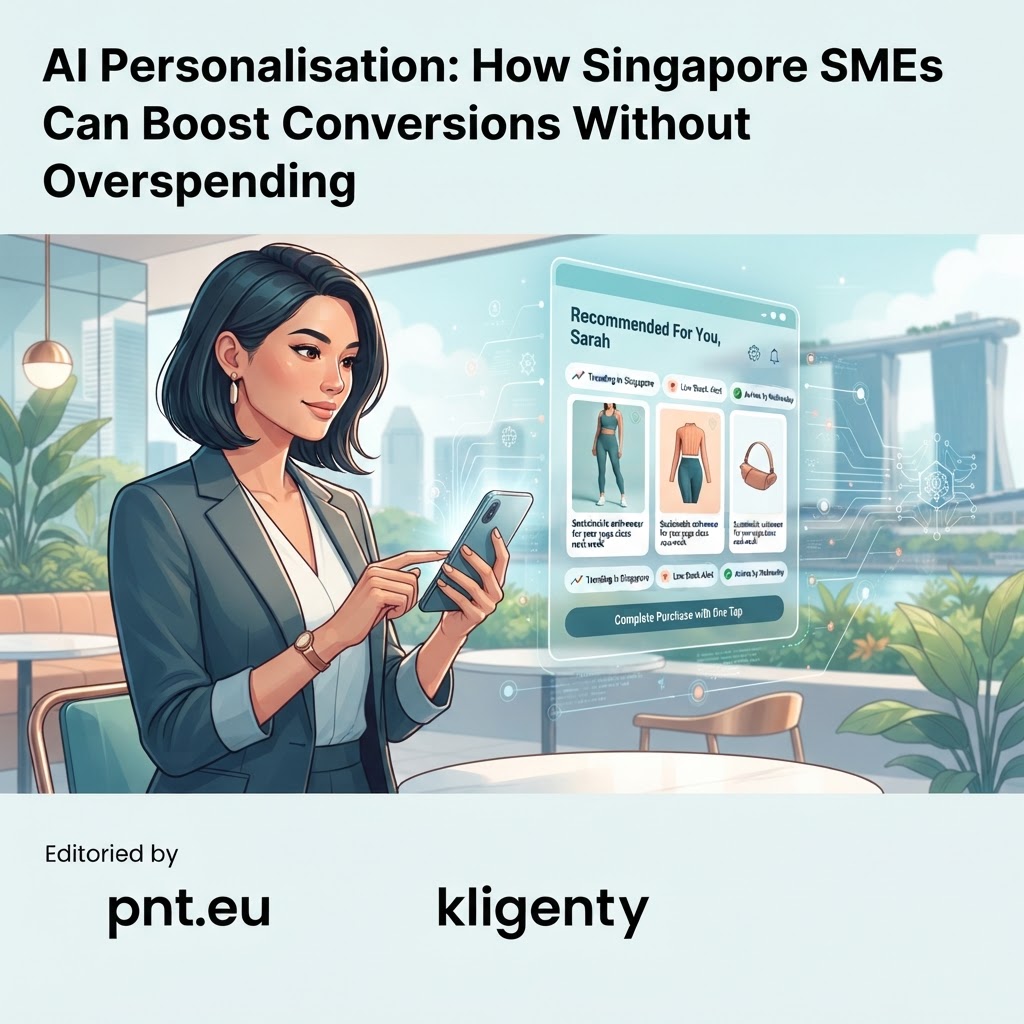
- Personalization with guardrails: AI can tailor hero content, CTAs and product surfaces based on session data; keep privacy and consent top-of-mind.
Explore case studies and PSG grant-aligned approaches for scalable design: agentic web design.
AI tools that unlock value for SEO and design
Adopt an ecosystem approach: combine niche tools with your analytics stack.
- Content intelligence: platforms that suggest topics, headlines and internal linking based on performance data.
- Visual optimization: automated image compressors, responsive delivery and perceptual quality checks.
- UX research at scale: AI-driven session summary tools and heatmap generation to rapidly test hypotheses.
- Predictive analytics: models that forecast traffic lift from on-page changes or backlink acquisition.
For Singapore SMEs adopting AI strategically, start with frameworks that match grants and compliance guidance: AI for Singapore SMEs.
Measurement: KPIs and dashboards for 2026
Move from vanity metrics to outcome metrics. Track leading indicators and downstream impact.
Primary KPIs
– Organic sessions and qualified traffic (by intent cluster)
– Conversion rate by landing page and device
– ROI per content topic or campaign
– Core Web Vitals (LCP, FID/INP, CLS)
– Average position and visibility for priority keywords
Advanced signals
– Assisted conversions from content and design changes
– Engagement depth (time on meaningful sections, scroll-to-conversion)
– Local discovery metrics and store visits (where applicable)
Build a consolidated dashboard combining Google Analytics 4, Search Console, RUM, and CRM-sourced conversions.
Practical 90-day roadmap (agency or in-house)
Days 0–30: Audit and prioritise
– Run a technical SEO and performance audit.
– Map high-intent keywords and content gaps; identify quick-win pages.
– Set up tracking (GA4 + server-side tagging) and a central dashboard.
Days 31–60: Implement quick wins
– Fix technical issues: canonical tags, robots, mobile responsiveness.
– Implement structured data on priority pages.
– Improve page speed with image optimization, preconnect and critical CSS.
Days 61–90: Scale and test
– Launch a topic hub and 4–6 AI-assisted but human-edited articles targeted at priority clusters.
– Run A/B tests on hero messaging, CTAs and form flows.
– Implement personalization experiments for top-converting user segments.
Scaling responsibly: governance, privacy and accessibility
- Data governance: Keep user consent front and centre; use anonymized data for personalization models.
- Model auditing: Regularly review AI outputs for bias, hallucinations and factual accuracy.
- Accessibility: Automatic scans plus manual checks to meet WCAG and Singapore accessibility expectations.
For agencies advising SMEs on AI-driven marketing adoption, consider structured guides and grant-aligned approaches: AI-driven digital marketing.
Hiring and partnership checklist
If you’re hiring external support, look for:
– Cross-functional teams proficient in SEO analytics, front-end performance and AI tooling.
– Case studies in local market optimizations and multilingual projects.
– Transparent measurement frameworks and a prioritised backlog.
When evaluating agencies for search and growth, a focused SEO partner can be a major lever: seo singapore.
Quick tactical checklist (actionable takeaways)
- Audit Core Web Vitals and fix one LCP bottleneck this month.
- Create a three-page local content hub for a target neighbourhood.
- Add FAQ schema to 5 high-intent landing pages.
- Run a content cluster targeting conversational queries and publish with expert review.
- Implement server-side image transforms and test AVIF delivery.
For agency growth tactics and deeper web design playbooks, reference this practical resource: web design singapore.
Final note
The convergence of AI, UX and technical SEO means teams that integrate these disciplines will outperform. By balancing automation with human oversight, focusing on measurable outcomes, and tailoring experiences to Singapore’s diverse audience, organisations can build resilient digital channels for 2026 and beyond.
For a practical start, align your first 90 days around technical health, high-intent content, and one prioritized personalization experiment. Execute with measurement, and iterate based on real user behavior and outcomes.