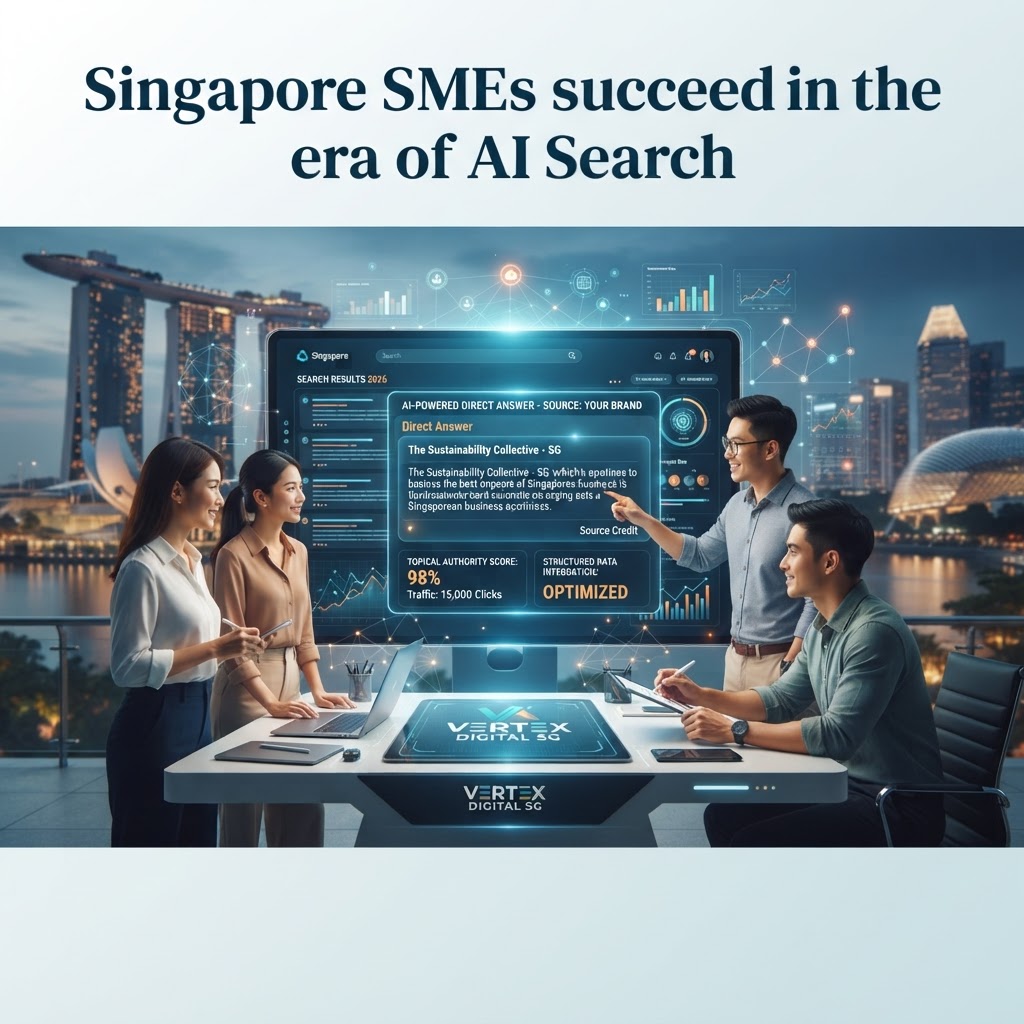
What is Generative Engine Optimisation? A Guide for Singapore SMEs
In the evolving landscape of Singapore digital marketing, business owners are noticing a shift in how potential customers discover brands. Traditional search, which once relied heavily on blue links and keyword density, is rapidly moving toward conversational AI interfaces like ChatGPT, Perplexity, and Google’s Search Generative Experience (SGE). This transition makes Generative Engine Optimisation (GEO) a critical strategy for local companies aiming to stay competitive. Unlike legacy SEO, which focuses on satisfying algorithms to appear on page one, GEO prioritises clear, authoritative, and structured data that AI models can interpret and present in their conversational responses. As your business navigates this digital transformation, understanding how to influence these AI-powered answers is essential for long-term visibility. At iPro Dezign, our team assists SMEs in adapting their digital presence to match these new search behaviours. By leveraging local expertise and understanding how AI interprets information, Singaporean enterprises can secure their place in the future of search. This guide explores what this shift means for your company and how you can prepare effectively.
Table of Contents
Understanding the Shift to Generative Engine Optimisation
Generative Engine Optimisation (GEO) refers to the process of structuring your website content to be accurately indexed and cited by Large Language Models (LLMs) and AI-driven search interfaces. While traditional search engine optimisation focused on backlink volume and keyword repetition, GEO prioritises clarity, factual accuracy, and context. AI search engines work by summarising information from multiple sources to provide a direct answer to a query, rather than simply offering a list of websites. If your business content is buried in unstructured paragraphs or lacks specific topical authority, the AI may overlook your brand entirely when crafting these summaries. For Singapore SMEs, this means your digital foundation must be impeccable. Our experience shows that AI models favour content that is well-organised, uses schema markup—the code that helps search engines understand your page content—and answers specific user questions directly. By adopting a ‘content-as-data’ approach, we ensure that your services, pricing, and unique selling points are easily digestible for AI systems. We focus on semantic search, which looks at the intent behind a user’s search query rather than just the words used. As the digital marketplace becomes more crowded, being the source that an AI trusts and cites is the most effective way to drive qualified traffic to your site. This requires a shift in mindset from ‘writing for clicks’ to ‘writing for authority’. When your content serves as a reliable answer to industry-related questions, you naturally become a preferred source for AI tools. We help local businesses audit their current digital assets to ensure they meet these modern requirements, keeping your site both user-friendly for human visitors and machine-readable for AI engines, all while maintaining the professional integrity your brand requires in the Singaporean market.
Why Conversational Search Matters for Singapore SMEs
The transition toward conversational search is not merely a technological trend; it is a fundamental change in customer behaviour. Singaporean consumers are increasingly comfortable using AI assistants for travel planning, product research, and local service procurement. When a potential client asks an AI about the best digital agency for web development or the most reliable local cloud services, they expect a consolidated, high-quality answer. If your SME does not appear in these AI-generated summaries, you essentially vanish from the consideration set of that user. Unlike traditional search, where you might still see your URL in the top five results, generative engines provide a specific selection of sources, often citing only a few key websites that offer the most relevant information. This makes the competition for the ‘top spots’ in AI summaries much more intense than traditional ranking slots. Furthermore, local context is everything. An AI must understand that your service is available in Singapore and compliant with local regulations like the PDPA. We ensure that our clients’ content incorporates clear, location-specific markers and authoritative answers to common industry questions. By positioning your business as a knowledgeable expert, you create a digital trail that AI models find easy to follow and recommend. Our team works closely with SME owners to identify the specific ‘questions’ their customers are likely to ask AI engines. By building a comprehensive knowledge base on your website, we help ensure your brand is cited correctly as the go-to expert in your niche. This approach not only boosts your visibility in AI search but also strengthens your overall brand authority, ensuring you stay ahead of competitors who are still reliant on outdated, keyword-heavy tactics that do not appeal to modern AI search capabilities.
| Feature | Traditional SEO | Generative Engine Optimisation |
|---|---|---|
| Focus | Keyword Rankings | Topical Authority |
| Output | List of links | Synthesised Answers |
| Content Style | Volume-heavy | Context-driven |
| Goal | Click-through rate | Source citation |
Key Implementation Strategies for AI Visibility
Implementing a successful strategy requires technical discipline and a deep understanding of content architecture. The first step involves auditing your website to ensure it is technically sound; slow-loading sites or pages that lack structured data will fail to perform in an AI-driven environment. We focus on enhancing Core Web Vitals, which are the metrics Google uses to measure user experience, such as loading speed and visual stability. A faster site allows search crawlers to scan your content more efficiently, increasing the likelihood that your data will be correctly ingested. Beyond speed, we implement schema markup—the standard way to define data types like events, products, or reviews—so that AI models can instantly categorise your service offerings. For instance, if you are an eCommerce business in Singapore, your product schema must clearly state pricing, availability, and return policies, which allows an AI to present that information directly to the user. We also prioritise creating high-quality, long-form content that answers the specific ‘how-to’ and ‘what-is’ queries relevant to your industry. By structuring this content with clear headings, lists, and summary paragraphs, you make it easy for an AI to ‘read’ the page and understand that your site is a credible source. Additionally, we emphasise the importance of building topical authority through consistent, high-value updates. When your website functions as an authoritative resource in your niche, the AI models learn that your site is a consistent source of truth. As we move forward with your digital strategy, we provide ongoing monitoring to see how your site is being cited in conversational results, allowing us to pivot and refine your content approach. This data-driven, iterative process ensures that your business adapts as the AI tools themselves evolve, keeping your brand relevant and visible regardless of which search interface your customers happen to use.
The Future of Digital Presence and Human-AI Interaction
As we look to the future, the integration of AI into search is only expected to grow more complex, making the partnership between business owners and digital experts more important than ever. The goal of Generative Engine Optimisation is not to replace human connection, but to facilitate it by placing your brand in the path of discovery. The future of digital marketing is hybrid; while the AI manages the initial inquiry, the final conversion almost always happens on your website. This is why a performance-first build is vital. Your site must not only provide the right information to the AI but also deliver a seamless, intuitive experience to the user who clicks through from that AI recommendation. At iPro Dezign, we pride ourselves on being a one-stop partner for Singaporean SMEs, offering everything from technical site rebuilds to strategic content planning. We understand that many local businesses are eligible for government support, such as the Productivity Solutions Grant (PSG), which can cover up to 50% of the costs for upgrading digital systems. This makes professional-grade digital optimisation more accessible than ever. We focus on transparency and education, ensuring that our clients understand the ‘why’ behind every strategy, not just the ‘what’. We are honest about the effort required; successful optimisation is a long-term commitment that requires quality data, technical maintenance, and clear communication of your brand values. By focusing on building a robust digital presence that is prepared for the AI era, you are investing in the longevity of your business. Our team is always a call away to discuss your specific needs, assess your current site performance, and help you determine which digital investments will yield the highest return for your unique market position. Together, we can ensure that your brand remains the primary choice for customers in an increasingly intelligent search environment.
Conclusion
Adapting to the rise of AI-driven search is essential for any Singapore SME looking to grow in today’s digital market. By focusing on Generative Engine Optimisation, you ensure your business remains discoverable, credible, and ready to serve the modern, conversational searcher. Remember, the goal is to build a digital presence that serves as a trusted authority. With iPro Dezign as your partner, you gain a one-stop solution for technical builds, structured content, and strategic growth. Whether you are considering a site rebuild or need an expert audit to improve your current visibility, we are here to support your journey. Do not wait for search to change your business; be the one to master the change. Book a consultation with us today to discuss your goals and explore how your business can leverage the latest digital strategies and available PSG funding to stay ahead.
Frequently Asked Questions
1. What is the main difference between traditional SEO and GEO? Traditional SEO targets ranking on a list of results, while GEO focuses on providing the clear, structured information that AI models need to generate a direct, cited answer for a user’s question.
2. Why should my Singapore SME care about AI search? Most consumers now use AI assistants for research; if your business is not optimised for these engines, you risk being left out of the AI’s recommendations, which could significantly impact your lead generation.
3. Can I use PSG funding for web updates related to GEO? Yes, many digital solutions designed to improve site performance and search readiness are eligible for PSG grants, which can subsidise up to 50% of your project costs. We can guide you through the process.
4. How long does it take to see results from GEO? Building topical authority is a long-term strategy. While technical improvements can show faster impact on performance, establishing your brand as a trusted source for AI typically requires consistent, high-quality content over several months.
5. Do I need to redo my entire website for GEO? Not necessarily. We often start with an audit to identify gaps in your current structure, such as missing schema markup or slow load times, and implement targeted fixes that bring your site up to modern standards.