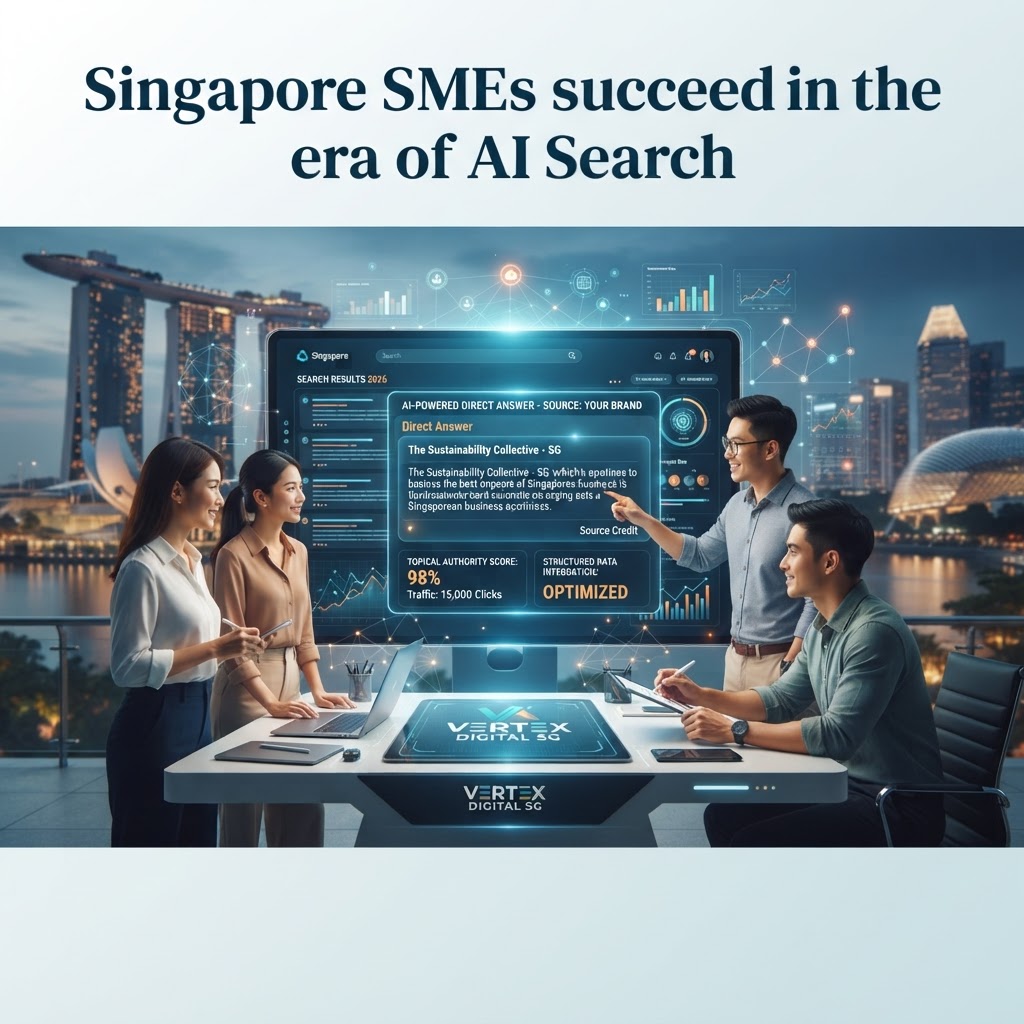
Digital Transformation for Singapore SMEs: A Practical Guide to AI and Growth
In the rapidly shifting economic landscape of Singapore, digital transformation for Singapore SMEs has evolved from a competitive advantage into a fundamental necessity for long-term survival. As local businesses navigate higher operational costs and a tightening labour market, the integration of artificial intelligence and advanced digital tools offers a path toward improved efficiency and scalability. Our team observes that many SME owners feel overwhelmed by the sheer volume of technology available, yet the core principles of successful transformation remain grounded in clear strategy and measurable outcomes. By focusing on practical implementations—such as automating routine customer service, optimising supply chain logistics, or enhancing digital storefronts—businesses can achieve significant gains in productivity. Supported by national initiatives like the Productivity Solutions Grant, or PSG, which can cover up to 50% of the cost for pre-approved digital solutions, Singaporean firms are better positioned than ever to make this transition. This guide explores how your business can leverage modern technology to streamline workflows, improve customer engagement, and maintain a competitive edge, all while navigating the complexities of the current digital ecosystem with professional guidance.
Table of Contents
- Understanding the Digital Shift in Singapore
- Implementing AI for Operational Efficiency
- Strategic Digital Marketing and Performance
- Maximising ROI through PSG and Government Support
- Frequently Asked Questions
Understanding the Digital Shift in Singapore
The landscape for small and medium-sized enterprises in Singapore is increasingly defined by how effectively they integrate technology into their daily operations. Digital transformation for Singapore SMEs involves a comprehensive reassessment of how a business provides value to its customers, manages internal processes, and maintains security in an age of data-driven decision-making. At our agency, we see many companies attempting to digitise without a clear roadmap, often resulting in fragmented software stacks that create more friction than they resolve. To successfully navigate this transition, SME leaders must first evaluate their current digital maturity. Are your customer interactions manual and prone to human error? Is your website merely a static brochure, or does it serve as a high-conversion sales engine? Identifying these gaps is the first step in our consultative process. A digital-first approach requires adopting a mindset that prioritises agility, mobile-responsiveness, and data security—all critical factors in the highly competitive APAC market where users expect instant gratification and secure experiences. Compliance with the Personal Data Protection Act, or PDPA, is also paramount; as you gather more data, your infrastructure must be robust enough to protect sensitive information while enabling growth. By viewing technology as an enabler rather than an added cost, local businesses can shed outdated legacy systems that stifle progress. We encourage a focus on interoperability, ensuring that your customer relationship management software, inventory systems, and marketing platforms can communicate seamlessly. This level of connectivity not only saves time but provides the actionable insights needed to pivot quickly when market conditions change. Embracing this shift requires patience and a structured approach, but it creates a resilient foundation that supports sustainable growth in an unpredictable global economy.
Implementing AI for Operational Efficiency
Artificial intelligence is no longer reserved for large multinational corporations; it is an accessible, powerful tool for SMEs looking to reclaim lost hours and reduce operational overhead. In the context of digital transformation for Singapore SMEs, AI integration typically focuses on automating repetitive tasks and extracting intelligence from customer data. Imagine replacing manual data entry or basic enquiry responses with intelligent automation, allowing your human talent to focus on high-value strategy and creative problem-solving. Our team has worked with numerous local businesses to implement AI-driven chatbots that manage routine queries about service hours, pricing, and appointment scheduling, providing 24/7 coverage without increasing payroll costs. Beyond customer-facing tools, AI excels in internal workflow optimisation. For instance, predictive analytics can help retail SMEs forecast inventory requirements, reducing waste and ensuring high-demand items are always in stock. This proactive approach to stock management directly impacts the bottom line by freeing up working capital. Furthermore, content generation and personalisation tools now allow smaller teams to deliver professional-grade marketing assets at scale. While AI tools are powerful, they require careful configuration to ensure the output aligns with your brand identity and regulatory requirements. It is essential to remember that AI is a tool to augment your human experts, not replace them entirely. The quality of your AI outcomes depends entirely on the quality of your inputs and the integrity of your data. We advocate for a phased implementation: start by identifying the most time-consuming, low-complexity processes in your office, pilot an automation tool to address that specific bottleneck, measure the time saved, and refine your approach before scaling to more complex areas of your business. This iterative process prevents operational disruption while ensuring you remain in control of your digital roadmap.
Strategic Digital Marketing and Performance
A website serves as the heart of any digital strategy, yet many SMEs struggle with poor conversion rates and sluggish performance metrics. Improving your digital presence involves more than just design; it requires a focus on technical excellence and user experience. We often discuss the importance of Core Web Vitals, which are a set of specific metrics Google uses to evaluate the loading performance, interactivity, and visual stability of a webpage. When a site takes too long to load—often due to heavy, unoptimised imagery or bloated code—visitors frequently leave before they even see your offering. This leads to higher bounce rates and missed opportunities. By choosing a performance-first build, perhaps utilising a headless CMS—a backend-only content management system that allows for faster content delivery and greater flexibility—you can ensure that your site provides a seamless experience for your visitors, whether they are on mobile or desktop. Coupled with search engine optimisation, or SEO, which ensures your site is discoverable by people looking for your specific services, these technical updates form the bedrock of sustainable growth. The goal is to build a digital asset that works as hard as your top-performing employee. We track key performance indicators like conversion rate, cost per acquisition, and organic traffic growth to ensure that every dollar spent on your website delivers a return. Transparency is key here; we provide regular reporting so that you understand exactly which tactics are moving the needle and which require adjustment. As a partner, our role is to demystify these technical concepts, ensuring you make informed decisions that align with your business goals rather than chasing vanity metrics that do not contribute to revenue. Consistency in your digital marketing, supported by a fast, secure website, allows you to build lasting trust with your local audience.
Maximising ROI through PSG and Government Support
Financial incentives play a major role in the successful implementation of digital tools for local businesses. The Singapore government offers various grants, most notably the Productivity Solutions Grant, which is designed to help businesses adopt pre-approved digital solutions with substantial subsidies. Navigating these grants can appear complex, but the potential ROI is immense when you consider that funding can cover up to 50% of the cost for qualified projects. When we partner with a client, we help identify which components of their digital transformation strategy might qualify for such support. This financial buffer allows SMEs to take bolder steps toward modernisation than they might otherwise consider. For example, upgrading your legacy inventory system or deploying a new, SEO-optimised eCommerce store becomes much more attainable when a portion of the expenditure is offset by government grants. Beyond just the immediate funding, these initiatives encourage the adoption of industry-standard tools that ensure long-term compatibility and security. It is vital to view these grants as a partnership between your business and the national effort to digitise the economy. However, we always caution our clients that technology is only as good as the strategy behind it. Investing in a pre-approved tool is only effective if your team is trained to use it and if the tool addresses a genuine operational need. We work closely with SME owners to ensure that the solutions selected will grow with their business, rather than becoming obsolete within a year. The following table provides a high-level view of how we prioritise digital investments to balance immediate needs with long-term scalability:
| Investment Area | Expected Benefit | Priority |
|---|---|---|
| Website Performance | Higher Conversion & SEO | Critical |
| Customer Data Security | Compliance & Trust | Critical |
| Workflow Automation | Labour Cost Reduction | High |
| Digital Marketing | Traffic & Sales Growth | Medium |
By categorising your digital investments this way, you ensure that your budget is allocated toward initiatives that provide the most significant impact on your bottom line. We invite you to contact our team to discuss your eligibility for PSG and to audit your current digital setup for potential growth opportunities.
Ultimately, digital transformation is not a destination but an ongoing process of refinement and adaptation. By leveraging AI to sharpen your internal processes, prioritising technical performance for your digital storefronts, and utilising available government grants to lower the barrier to entry, your SME can thrive in the modern market. Remember that while technology changes, the fundamentals of business—delivering value, building relationships, and maintaining integrity—remain constant. Our team is committed to acting as a steady, expert guide for your company as you navigate this transformation. Whether you are looking to rebuild a sluggish website, automate your marketing workflows, or simply understand how to better utilise your existing digital tools, we are always a call away. Book a consultation with our experts today to assess your current standing and map out a practical, growth-oriented digital roadmap for your business. Let us help you convert technology into a sustainable competitive advantage.
Frequently Asked Questions
- What is the typical timeline for an SME digital transformation? A full transformation is iterative, but core website or automation projects can show performance improvements within 3 to 6 months.
- Does your agency help with PSG applications? We provide the necessary technical documentation and support to assist you in your grant application process for our pre-approved solutions.
- Is my SME too small for AI implementation? No. AI is highly scalable and can start with simple, low-cost tools that solve immediate productivity pain points for even the smallest teams.
- How do you ensure my business remains PDPA compliant? We build privacy-by-design into all our projects, ensuring data collection methods are transparent, secure, and aligned with Singapore’s regulatory standards.
- Why is website speed so important for conversion? Users often abandon websites that take longer than 3 seconds to load; speed is a direct factor in user satisfaction and search engine rankings.