Introduction
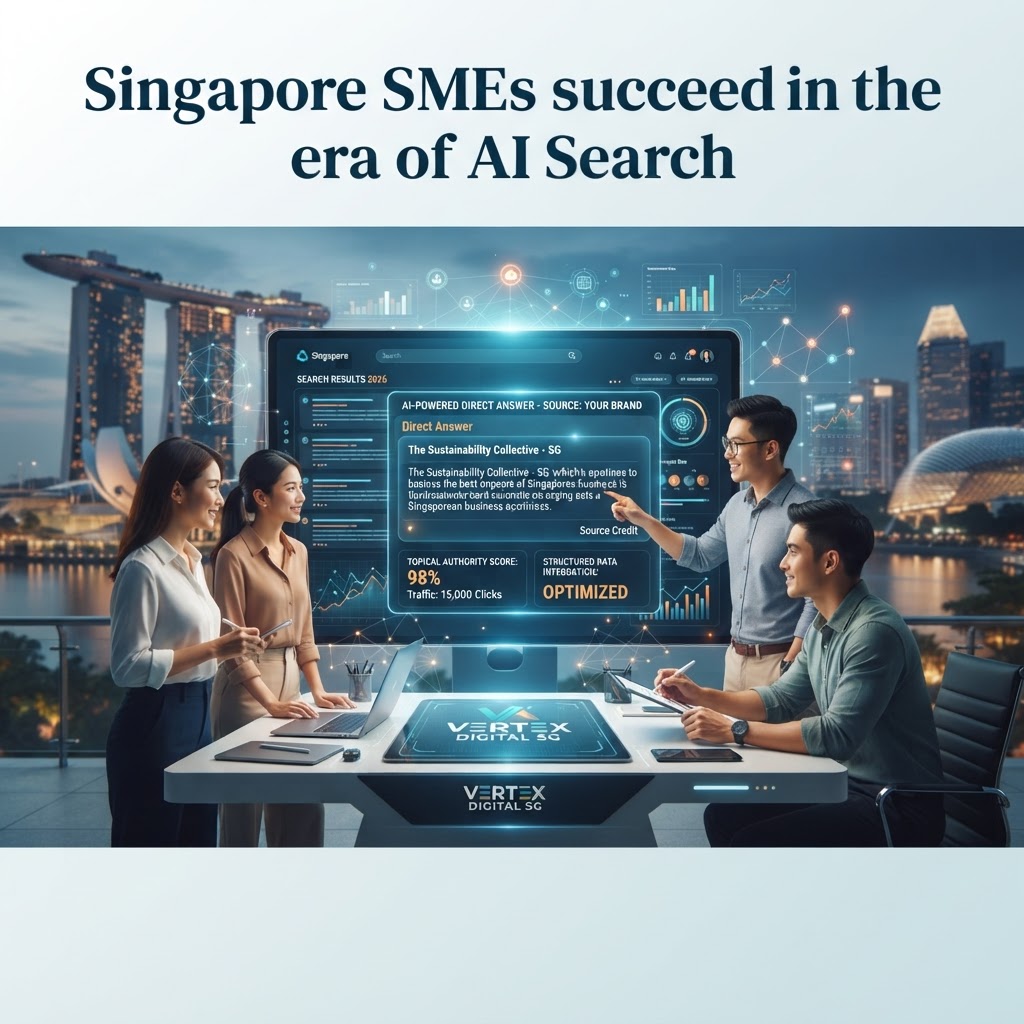
Singapore’s digital landscape in 2026 is defined by speed, personalization and search systems that understand intent at scale. For a digital marketing agency in Singapore, mastering AI-driven web design is no longer optional — it’s the primary lever for client acquisition, retention and measurable growth. This article synthesizes the trends, tools and tactical roadmap agencies need to deliver modern websites that perform for users and search engines alike.
web design Singapore strategies now blend traditional UX fundamentals with AI capabilities: generative assets, dynamic personalization, automated accessibility fixes and search-aware content structures. Below we break these elements down into actionable guidance tailored to agency workflows.
Why AI matters for web design in 2026
AI accelerates every phase of web design and maintenance: ideation, design iteration, development, QA and on-going optimization. The key benefits for a digital marketing agency Singapore teams should prioritise are:
- Faster time-to-launch with generated templates and component libraries.
- Higher conversion rates through real-time personalization and predictive UX flows.
- Improved site performance via automated code and image optimization.
- Better discoverability from AI-informed content structures and schema.
By integrating AI into web projects you reduce manual toil, deliver measurable SEO wins and create more scalable retainer services for clients.
Core AI capabilities to adopt
-
Generative design systems: Use model-driven mockup tools to create responsive layout variations within minutes. They can produce copy, initial imagery and layout suggestions that designers refine.
-
Smart asset pipelines: AI-based image compression, vector simplification and on-the-fly WebP/AVIF generation reduce page weight without manual rework.
-
Personalization engines: Real-time content modules driven by user signals (location, referral source, device) increase relevance and lift conversion.
-
Accessibility automation: Tools that scan and auto-fix ARIA, contrast and keyboard navigation issues speed compliance and broaden reach.
-
Content generation and clustering: Generative models accelerate topic ideation and help produce SEO-friendly outlines and metadata.
Each capability should be paired with measurement so the agency can prove uplift to clients.
AI + UX: Designing for clarity and conversion
AI shouldn’t replace human-centred UX; it should augment it. Practical patterns that work in Singapore’s market include:
- Data-driven wireframing: Use heatmaps, session replays and AI summarization to inform layout decisions.
- Micro-personalization of landing pages: Swap hero messages, CTA text or imagery for high-intent segments to increase CTR.
- Progressive disclosure: Let AI decide when to show upsell modules or chat prompts to avoid overwhelming users.
Process tip: run A/B tests on AI-suggested changes and keep control groups. Continuous experimentation is the best way to validate AI-driven UX improvements.
Technical SEO and AI: a two-way street
Search engines are increasingly influenced by helpfulness signals and structured metadata. For a digital marketing agency Singapore teams must:
- Use AI to generate rich, structured snippets and schema that reflect real-world product/service attributes.
- Employ generative engine optimization practices to align content with emerging SERP features and answer engines.
- Optimize for speed and Core Web Vitals using automated auditing and remediation tools.
Internal resources and case studies show that when content and technical foundations are maintained with AI augmentation, organic traffic and conversion quality both improve. For practical guidance on SEO integration, agencies should consolidate site-level optimization checklists into every build.
generative engine optimization frameworks are a useful reference when mapping content to new search modalities.
Tooling stack suggestions for agencies
A recommended stack balances no-code/low-code tools with developer workflows:
- Design: AI-assisted design platforms for rapid prototypes.
- CMS: Headless CMS with AI plugins for content generation and structured data.
- Frontend: Component libraries with automated performance bundling.
- Personalization: Edge-based personalization services integrated via APIs.
- Analytics: Event-driven analytics and experiment platforms for rapid learning.
Integrations should prioritize developer experience (DX) and reduce handoffs between designers, developers and marketers.
Workflow: from discovery to continuous optimization
- Discovery & intent mapping — use search intent signals and client KPIs.
- AI-assisted content & wireframes — generate outlines and layout candidates.
- Rapid prototype & validation — test with real users and adjust using AI summarization of feedback.
- Build with performance-first technologies — automate image and code optimization.
- Launch with experimentation flags — enable rapid rollouts and rollbacks.
- Continuous improvement — tie experiments to revenue or conversion metrics and iterate.
This workflow lets agencies deliver value quickly while maintaining control and governance.
Measuring impact and ROI
KPIs that matter for clients in Singapore include:
- Conversion rate (by channel and segment)
- Time to first meaningful paint and Core Web Vitals
- Organic visibility metrics for prioritized keywords
- Average order value or lead quality
- Cost-per-acquisition from paid channels after organic improvements
Use event-based analytics and attribution models to connect web design improvements to real business outcomes. Build a simple dashboard that ties AI-driven changes to client revenue impacts to secure long-term retainers.
For deeper SEO playbooks and search-focused optimization, consult authoritative guides tailored for agencies.
AI search optimization and targeted SEO frameworks are especially useful during the measurement phase.
Scalability: packaging AI web design as a service
Agencies can monetize AI web design in several ways:
- Fixed-scope rapid build — fast prototypes delivered with AI tooling for an accelerated price.
- Optimization retainer — continuous personalization, content refreshes and performance tuning.
- Platform-as-a-service — offer a templated, AI-driven site platform for specific verticals (e.g., F&B, finance).
Create internal playbooks and reusable component libraries to reduce cost-per-project and increase margins.
Governance, ethics and data privacy
Singapore’s PDPA and global privacy expectations require agencies to be mindful when personalizing content:
- Use consent-first architectures for personalization and tracking.
- Anonymize user signals where possible and document data flows for clients.
- Audit models for bias in content recommendations and ensure transparency in automated decisions.
Good governance reduces legal risk and improves client trust—both critical in the Singapore market.
Common pitfalls and how to avoid them
- Over-reliance on AI without human QA: Always include human review for brand voice and compliance.
- Ignoring performance: Generated assets can bloat pages; enforce compression and lazy-loading.
- Poor measurement: Track the right KPIs from day one to evaluate AI changes objectively.
Address these early in onboarding to streamline delivery and maintain quality as you scale.
For agency-focused implementation checklists and deeper SEO tactics, review specialized resources that explain site-level and content-level strategies.
SEO Singapore for digital marketing agency resources can help operationalise these checklists.
Roadmap: what to implement first (90-day plan)
Days 0–30: Audit current client sites for CX, performance and content gaps. Start with AI-assisted audits to surface quick wins.
Days 30–60: Implement low-friction personalization and image/code optimizations on a single pilot project. A/B test the top 1–2 UX hypotheses.
Days 60–90: Scale successful patterns into a templated offering, document the playbook and train delivery teams.
After 90 days, transition pilot learnings into recurring revenue offerings and expand to additional clients.
For prescriptive next steps on generative optimizations, agencies can refer to practical guides and step-by-step manuals.
web design tips for digital marketing agency 2026 materials are useful when formalising agency playbooks.
Closing summary
AI web design in Singapore for 2026 is about combining machine speed with human insight to deliver measurable business outcomes. Digital marketing agencies that adopt a disciplined, metrics-driven approach—backed by ethical data practices and scalable tooling—will win more clients, increase retention and demonstrate clear ROI. Adopt a phased roadmap, measure everything, and standardize the most successful AI-driven patterns into repeatable services to stay competitive in Singapore’s rapidly evolving market.