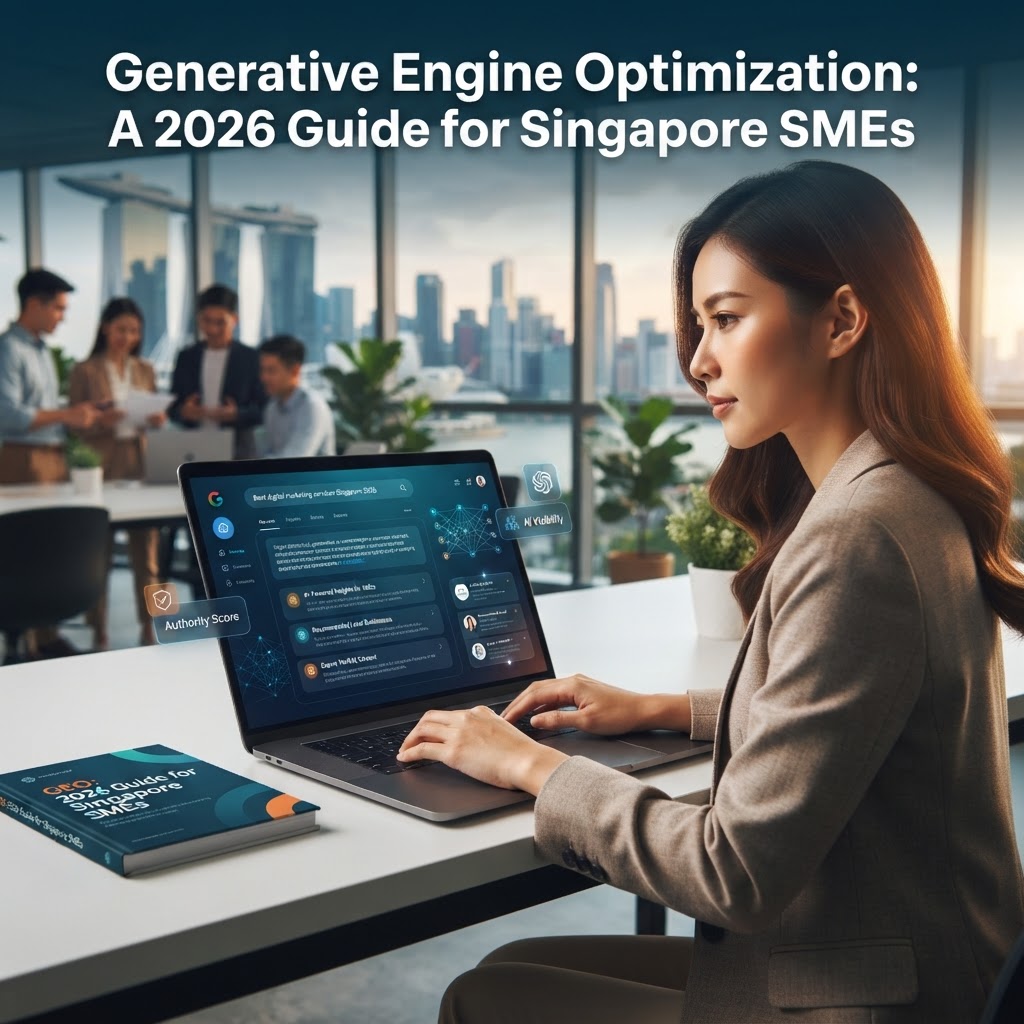
Generative Engine Optimization: A 2026 Guide for Singapore SMEs
In the digital landscape of 2026, the way customers find Singapore businesses has fundamentally shifted. Traditional search queries are no longer just blue links on a results page; they are becoming conversational, AI-driven experiences. For local SMEs, relying solely on legacy SEO techniques is like using a map from a decade ago. To remain visible, brands must now master Generative Engine Optimization Singapore techniques, ensuring their content is indexed and trusted by artificial intelligence models like ChatGPT, Gemini, and Claude. As search engines evolve to prioritize direct answers over mere lists of sites, your content strategy needs an urgent update to stay relevant.
At iPro Dezign, our team has monitored this shift closely. We help businesses navigate this transition by focusing on authority, structured data, and performance-first web builds. Whether you are looking to leverage PSG funding for a platform upgrade or simply need to understand how to optimize for the AI-first future, this guide explains how you can maintain your competitive edge in the modern search environment.
Table of Contents
What is Generative Engine Optimization?
Generative Engine Optimization, or GEO, is the practice of ensuring your brand information is accurately identified, understood, and cited by AI-driven search engines and large language models. Unlike traditional search engine optimization, which focuses on earning high rankings on a results page to drive clicks to your website, GEO focuses on being the primary source of truth for an AI assistant. When a user asks an AI about your services in Singapore, you want that engine to synthesize your content and present your business as the definitive answer. This requires moving beyond keyword stuffing toward a strategy built on high-quality, verifiable data that AI systems can process reliably. Our team views this as a shift from competing for traffic to competing for relevance and authority within a machine-learning ecosystem.
To succeed, Singapore SMEs must prioritize technical transparency and high-level topical authority. AI models crawl the web, but they specifically favour content that is logically structured, clear, and easy to parse through schema markup. Schema is a form of code that provides search engines with specific context about your website content—such as pricing, local address, operating hours, or product features. Without this structure, an AI may struggle to differentiate between a general blog post and a specific service page. By refining your technical foundation, you enable AI to ingest your brand information without friction. At iPro Dezign, we specialise in auditing these technical setups, ensuring that Singapore SMEs meet the necessary standards to function as reliable entities in the AI search era. This is not just about rankings anymore; it is about visibility in the conversational answers that define the modern consumer journey.
Why AI Search Requires a New Strategy for Singapore SMEs
The transition to AI-integrated search is not a future event; it is our current reality. Local consumers now frequently use AI interfaces to compare products, find professional services, and read summaries of local businesses. When a user asks a question like, ‘What are the best web design agencies in Singapore that offer PSG support?’, they expect a curated, factual answer, not a generic list of ads. If your website does not explicitly state your capabilities, offer transparent information, and maintain a high level of factual integrity, the generative engine will simply skip you. For SMEs, this represents both a significant risk and a substantial opportunity. The risk is invisibility; the opportunity is being the single, trusted provider the AI recommends to its users. This requires a shift in mindset from targeting keywords to answering complex, user-intent queries.
The Singapore business context presents unique challenges, particularly regarding the need for trust, local compliance, and high service standards. When an AI summarizes a business, it looks for social proof, verified local data, and consistent branding across platforms. If your Google Business Profile, your official website, and your social channels present conflicting information, the AI might downgrade your authority, leading to lower visibility in generative results. This is why our approach emphasizes a holistic digital presence. We help clients ensure their digital footprints are synchronised, updated, and fully compliant with local regulations like PDPA. By maintaining a clean, fast, and authoritative digital presence, you signal to AI algorithms that your business is a reliable, established entity within the Singapore market. This level of technical diligence is what separates market leaders from those who fall behind during this critical technological shift.
| Metric | Traditional SEO Focus | Generative Engine Optimization Focus |
|---|---|---|
| Primary Goal | Traffic and Click-through | Citations and Direct Answers |
| Content Style | Keyword-driven text | Expert, factual, and structured data |
| Authority Signal | Backlinks and Page Rank | Verified entity data and brand reputation |
| User Goal | Visiting a website | Getting information directly in chat |
Tactical Steps for Generative Engine Optimization Singapore
To implement an effective Generative Engine Optimization Singapore strategy, businesses must focus on three core pillars: content quality, technical structure, and local relevance. First, content must shift toward answering ‘how-to’ and ‘what-is’ queries with extreme clarity. Use headings, lists, and tables to break down information into digestible, factual components. If your business provides a specific service, write a dedicated, authoritative page that answers every potential question a customer might have about that service. AI systems love clarity; when you structure your content to be easily parsed, you significantly increase the likelihood that an engine will quote your business as a top recommendation. Avoid flowery, fluff-filled marketing copy. Instead, adopt a consultative, expert tone that provides real value to the reader. This directly aligns with the authoritative nature of professional, SME-led content that machines currently prioritize.
Second, ensure your website technical health is beyond reproach. This involves optimizing for Core Web Vitals, which are Google’s standards for measuring user experience, including page load speed, visual stability, and interactivity. A slow website is a sign of poor quality to both humans and AI. If an AI cannot load your site to crawl the data, it cannot verify your expertise. Third, leverage local signals. Ensure your business NAP—Name, Address, and Phone number—is consistent everywhere. For Singapore SMEs, mentioning your familiarity with local business environments, your eligibility for government grants like the PSG, and your focus on regional compliance acts as a powerful local trust signal. Our team at iPro Dezign often assists clients by building high-performance, mobile-responsive platforms that are pre-configured to meet these AI requirements. By treating your website as an enterprise-grade digital asset rather than just a brochure, you lay the groundwork for long-term growth and visibility in an AI-dominated search ecosystem.
Measuring ROI and Technical Performance in 2026
Measuring success in the age of generative search requires moving beyond simple keyword position tracking. While traditional ranking reports still hold some value, they rarely reflect how AI interfaces interpret your brand. Instead, focus on brand visibility, referral traffic quality, and conversion rates. Are you appearing in generative answers? Is your brand being mentioned by AI in a positive context? These are the new KPIs for a modern digital strategy. At iPro Dezign, we work with our partners to monitor brand sentiment and engagement metrics that indicate your business is being positioned as a market authority. ROI is found when your website provides a seamless path from discovery to enquiry. When a potential client finds your business through an AI recommendation, they are often already halfway through their decision-making process; the job of your website is then to convert that high-intent lead into a project consultation.
We also emphasize performance monitoring as a continuous process. Digital excellence is not a one-time setup; it is a routine of audits, content refinements, and technical updates. We keep our clients informed about emerging trends in AI search, ensuring their strategies are adjusted in real-time. For many Singapore SMEs, the ability to utilize government grants to subsidise these upgrades is a vital financial lever. By professionalising your digital presence, you not only improve your AI visibility but also enhance the user experience for every visitor, leading to higher engagement and better conversion rates. Investing in your digital architecture is an investment in your company’s future revenue. We take pride in our transparent, consultative approach, helping business leaders understand exactly how their budget is being used to build a robust, AI-ready foundation. It is about building a partner relationship that evolves alongside the technology, ensuring your SME stays ahead of the curve throughout 2026 and beyond.
Conclusion
As we navigate the complexities of 2026, the shift toward Generative Engine Optimization is undeniable. For Singapore SMEs, success lies in transitioning from keyword-chasing to building genuine, structured, and authoritative digital footprints that AI systems trust. While the technical requirements—such as schema implementation, speed optimisation, and consistent local signals—may seem daunting, they are essential for long-term visibility. By focusing on quality and technical excellence, you ensure that your business remains the go-to answer for customers in your niche. Our team at iPro Dezign is ready to partner with you on this journey, providing expert, results-driven support every step of the way. Whether you are ready to start a website rebuild or need a professional audit to assess your current standing, we are here to help. Contact our team today to explore your options and see how we can help your business thrive.
Frequently Asked Questions
1. How is Generative Engine Optimization different from traditional SEO? Traditional SEO focuses on ranking in blue links, whereas GEO focuses on being the source of truth for AI-generated answers.
2. Does my small business in Singapore really need to worry about AI search? Yes. As more customers use tools like ChatGPT or AI-integrated search, your visibility depends on whether AI systems can correctly identify and trust your content.
3. Can I use PSG grants to improve my website for AI search? Yes, we help SMEs leverage PSG funding to upgrade their digital platforms, which includes implementing the technical foundations needed for better AI visibility.
4. What is the most important technical factor for GEO? Structured data (schema markup) and site speed are critical, as they help AI systems crawl and understand your business information without technical friction.
5. How long does it take to see results? While results depend on your market and starting point, consistent technical and content improvements typically begin to improve your digital authority within a few months of implementation.