Why local SEO matters for agencies in Singapore in 2026
Competition for local attention in Singapore has never been fiercer. As consumer expectations shift—driven by on-device AI, instant map results and mobile-first browsing—digital marketing agencies that master local SEO will capture higher-quality leads, better conversion rates and sustained client growth. This guide focuses on practical, measurable local SEO Singapore strategies tailored for a digital marketing agency Singapore to win in 2026.
The search landscape in 2026: trends that change local SEO
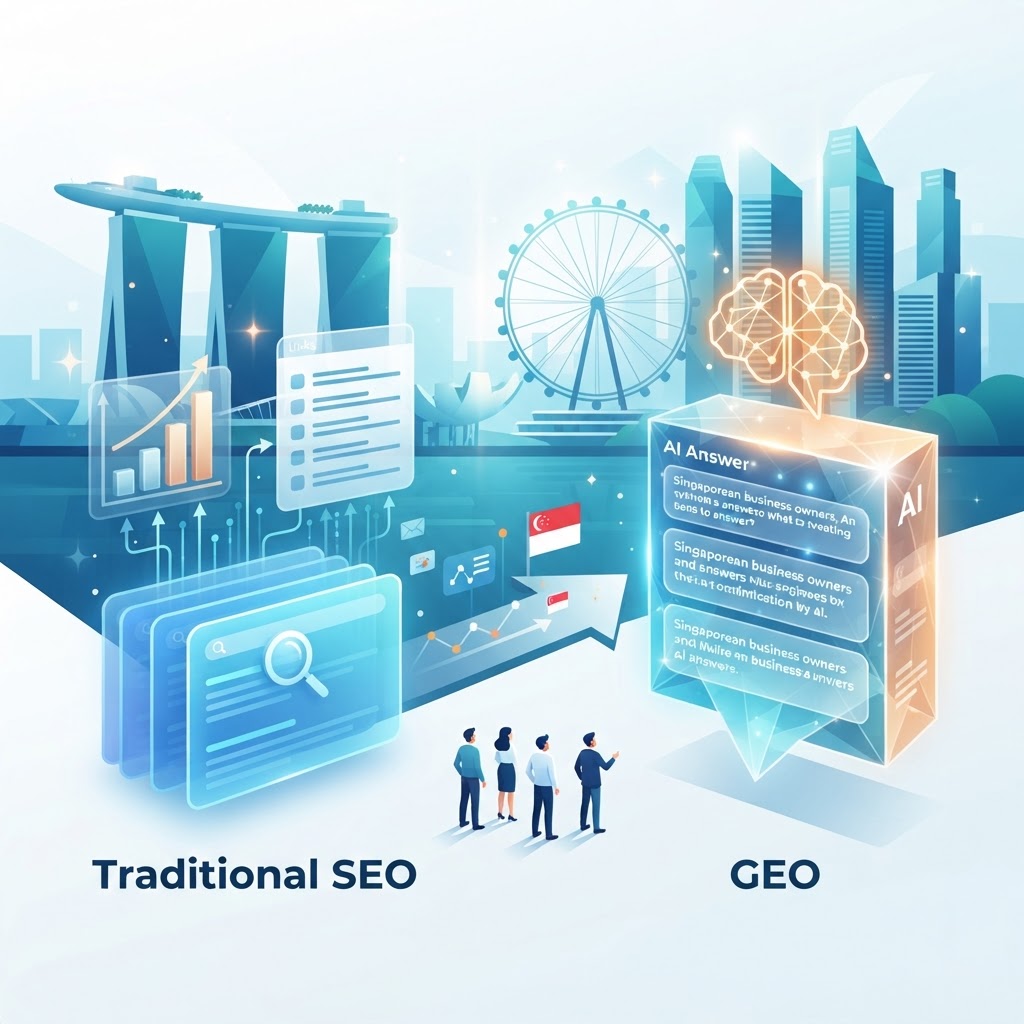
- AI-first results: Generative search and search experiences increasingly summarize and prioritize local queries. Rich answers now often replace traditional listings, so controlling structured data and authoritative content is crucial.
- Mobile and voice dominance: Singapore’s high mobile penetration and growing voice search usage means local intent queries—”near me” and conversational phrases—are common.
- Privacy and first-party data: With tighter privacy rules and cookieless tracking, agencies must rely more on first-party signals (calls, bookings, interactions) and server-side analytics.
- Maps and local packs upgraded: Google and map providers prioritize entities with verified listings, consistent citations, and strong review profiles.
Understanding these shifts lets agencies design local strategies that align with how users actually find and choose businesses.
Core local SEO fundamentals every digital marketing agency Singapore must master
- Google Business Profile (GBP): Fully optimize GBP (correct category, business description, photos, services, attributes). Use weekly posts and Q&A to signal freshness.
- Consistent NAP: Ensure name, address, phone are identical across website, directories and citations. Small inconsistencies undermine rankings and conversion trust.
- Local keyword architecture: Map services to city/suburb modifiers and conversational queries. Prioritize buyer-intent queries (e.g., “plumber near Tiong Bahru”) alongside informational content.
- Multilingual optimization: Singapore’s audience may search in English, Mandarin, Malay and Tamil. Provide language variants and hreflang where appropriate to capture local intent.
Technical local SEO: architecture, schema and performance
Technical excellence separates high-performing local sites from the rest:
- Mobile-first and Core Web Vitals: Fast LCP, low CLS and responsive UX are non-negotiable. Pair mobile-first templates with server-side rendering for dynamic content.
- LocalBusiness schema: Implement structured data for LocalBusiness, Service, GeoCoordinates, and OpeningHours to improve eligibility for rich results.
- Location pages and canonicalization: For multi-location clients, create unique, optimized location pages with local content, schema and distinct metadata—avoid thin duplicate pages.
- Sitemap and crawl hygiene: Include location pages in XML sitemaps, block irrelevant parameterized pages and ensure server response times are fast from Singapore-hosted or edge CDN points.
- Accessibility and indexability: Ensure content is indexable by crawlers and optimized for voice/featured snippet formats (concise answers, FAQ schema).
For agencies focused on modern delivery, integrating mobile-first web design principles into technical SEO workflows dramatically reduces time-to-rank for location pages.
Content strategy: hyperlocal authority and practical assets
Content remains king—local content converts. Focus on:
- Hyperlocal landing pages: Create neighbourhood-specific guides, case studies and service pages. Add localized imagery, maps and staff profiles to boost relevance.
- Use-case-driven content: Answer transactional queries (pricing, availability) and combine with FAQ blocks to capture featured snippets.
- Local storytelling and user intent mapping: Publish success stories tied to local landmarks or community events to build authority and backlinks.
- Dynamic FAQs and conversational content: Use AI to generate candidate FAQs from customer interactions, then validate and optimize for schema markup.
Agencies should also embrace an “AI-assisted, human-verified” workflow—generate drafts or content ideas with models, but always edit for local accuracy and tone. See how AI-led approaches can scale ROI in the AI-driven digital marketing piece.
Maps, listings and reputation management
- Maps priority: Claim, verify and optimize listings on Google Maps and relevant local directories. Add high-quality photos and accurate categories.
- Review strategy: Proactively request reviews from satisfied customers and reply to all reviews—positive or negative—within 48 hours. Use templated but personalized replies to save time.
- Local citations: Maintain profiles on major local portals and industry-specific directories. Clean up duplicates and incorrect listings via citation aggregation tools.
A structured reputation process builds signals that influence the local pack and map visibility.
Local link building and partnerships
Local PR, events and partnerships remain powerful:
- Community partnerships: Sponsor or co-host local events, seminars and workshops. These generate contextual backlinks and local brand signals.
- Educational partnerships: Publish co-branded resources with local institutions or trade bodies to earn authoritative references.
- Content collaborations: Guest posts on local blogs, interviews with local influencers and roundups help build both traffic and topical relevance.
Link quality beats quantity—local, relevant backlinks will lift map and organic placements faster than generic link churn.
Measuring success: KPIs and data strategies for local campaigns
Track both discovery signals and conversion metrics:
- Visibility metrics: Local pack rankings, map impressions, and organic position for location-modified keywords.
- Engagement metrics: Clicks to website, direction requests, direct calls, quote requests and appointment bookings.
- Quality of leads: Track conversion source (maps vs organic vs paid) and downstream value—repeat business and customer lifetime value.
- Technical monitoring: Core Web Vitals, schema errors and mobile usability issues.
Combine Google Business Profile insights, GA4 with server-side tracking and a CRM tie-in for end-to-end attribution. For AI and automation in analytics, review the AI-native digital marketing guide for approaches to predictive conversion modeling.
Advanced tactics for competitive advantage
- Predictive intent scoring: Use first-party signals and local seasonality to predict when a prospect is high intent and trigger outreach or bids.
- Conversational landing pages: Pages optimized for voice and chat-first journeys, matching natural language queries and offering rapid contact options.
- Localized promotions tied to GBP: Use GBP Offers and localized URLs to test promotions and measure lift in directions & calls.
- Automated citation monitoring: Set up alerting for NAP changes and suspicious duplicate listings to preserve domain and local authority.
These advanced tactics convert higher-quality local traffic and reduce waste in ad spend for agency clients.
Tools and automation that scale local SEO work
- Listing managers: Platforms that bulk edit GBP and citations save hours across multi-location portfolios.
- Local rank trackers: Use trackers that segment by neighborhood or map grid to get realistic visibility data.
- Review management platforms: Automate review requests, distribution and reporting.
- Content production stacks with AI: Use AI tools for draft creation, but enforce editorial review for local accuracy and brand voice.
Pair a solid tooling stack with process documentation so junior staff can execute at scale without harming quality; for agencies redefining UX and conversion, consult next-gen approaches to web design and agency delivery.
A practical checklist for agency execution (quick wins and monthly cadence)
- Quick wins (0–30 days): Claim and optimize GBP; fix obvious NAP inconsistencies; implement LocalBusiness schema on main pages; add or refine 3–5 location landing pages.
- 30–90 days: Launch a hyperlocal content series; set up review acquisition flows; implement mobile performance improvements and Core Web Vitals fixes.
- 90–180 days: Build local backlink campaigns; integrate first-party analytics with CRM; run A/B tests for conversion flows on location pages.
- Ongoing: Weekly GBP posts; monthly review responses; quarterly audit of citations and schema; continuous content refresh focused on local intent.
Agencies that follow a repeating cadence of technical fixes, content, reviews and local partnerships create compounding rank and conversion benefits.
How local SEO ties into broader digital transformation
Local SEO is not an isolated activity—it’s part of a broader transformation that includes website modernization, analytics maturity and AI-driven marketing. For agencies helping SME clients, embedding local SEO within digital transformation projects ensures sustainable lead growth and measurable ROI. Learn practical transformation pathways in the digital transformation for SMEs resource.
Final note
For a digital marketing agency Singapore operating in 2026, mastering local SEO means combining technical rigor, localized content strategies, reputation management and AI-augmented workflows. Agencies that craft reproducible processes, measure outcomes end-to-end and adapt to the evolving search landscape will consistently deliver stronger local visibility and higher-quality leads for their clients.