Is Traditional SEO Dead? Why Singapore SMEs Must Pivot to Generative Engine Optimization (GEO) in 2026
The landscape of search is changing faster than ever before. For years, Singaporean business owners have focused their marketing energy on blue links, keyword density, and traditional backlink strategies. However, with the rise of AI-powered search experiences, we are witnessing a fundamental shift in how potential customers find local services. The era of traditional search engine optimization is evolving into a more nuanced discipline known as Generative Engine Optimization. As artificial intelligence becomes the primary interface for web discovery, your digital footprint must change accordingly. Relying solely on legacy tactics may leave your SME invisible to the modern buyer. At iPro Dezign, we help Singaporean businesses navigate this transition by focusing on the technical and structural foundations required to thrive in an AI-driven ecosystem. Whether you are an eCommerce retailer or a service provider, understanding how to communicate effectively with generative models is no longer optional—it is a survival necessity for 2026. This guide will walk you through the essential pivot from link-based strategies to intent-driven authority, ensuring your brand stays visible, relevant, and profitable in an increasingly automated world.
Table of Contents
Why Traditional SEO is Changing
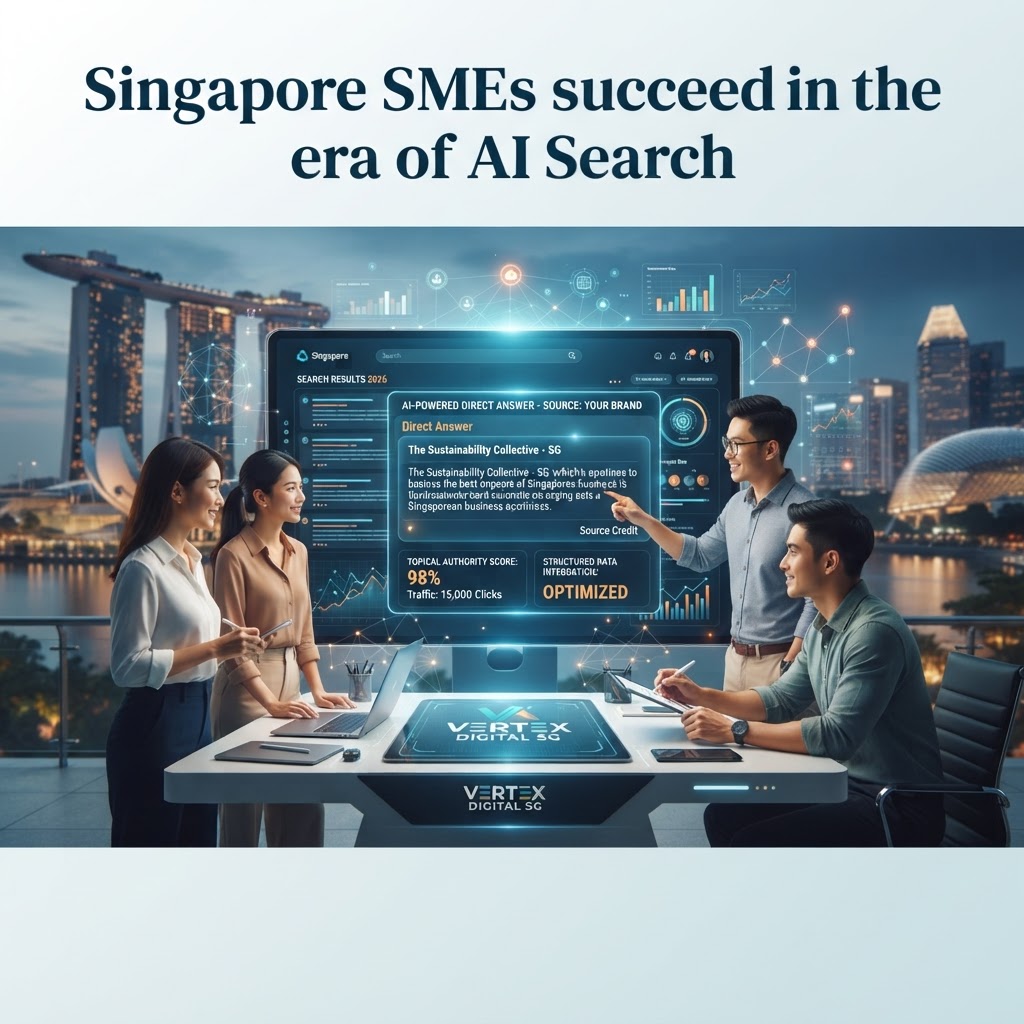
Traditional SEO was built on a simple premise: if you have enough relevant keywords and high-quality backlinks, search engines will reward you with a high position on the results page. While relevance and authority still matter, the user experience is undergoing a massive transformation. Modern search engines are increasingly moving away from serving a list of websites and toward providing direct, synthesised answers to complex queries. This is the hallmark of the generative search era. When a user in Singapore searches for a solution, they now expect the search engine to act as a consultant rather than a directory. Consequently, the blue link model is becoming secondary to the AI-generated answer box that appears at the top of the screen. If your website content is formatted in a way that AI cannot easily parse or summarize, your brand effectively disappears from the conversation. This shift does not mean that search is dead, but it does mean that the strategy of gaming algorithms via keyword stuffing is fundamentally flawed. Instead, you need to focus on information architecture and content depth that demonstrates clear expertise and trust. Search engines now value high-quality, structured information that can be easily retrieved and cited by AI models. Our team at iPro Dezign emphasizes that this move toward Generative Engine Optimization requires a pivot toward creating original, valuable content that answers the specific questions your customers are actually asking. By aligning your digital presence with the way AI synthesizes information, you position your SME to remain authoritative, reachable, and influential, regardless of how the search algorithm evolves in the coming years. This shift allows you to capture traffic that you might otherwise lose to generic AI summaries.
The Core Principles of Generative Engine Optimization
The transition to Generative Engine Optimization requires a new mindset focused on clarity, accessibility, and structured data. In the past, companies might have focused on word counts; now, they must focus on factual density and thematic coherence. When an AI scans your site, it looks for clean, semantic HTML and clearly defined entities—what your company is, what services you offer, and why you are a trusted entity in Singapore. To succeed, you must ensure that your website architecture follows logical hierarchies. If an AI cannot distinguish between your core service offerings and your secondary blog content, it will struggle to summarize your site effectively. Furthermore, your business must demonstrate E-E-A-T: Experience, Expertise, Authoritativeness, and Trustworthiness. This is even more vital when the search engine is synthesizing your credentials for a prospective client. We often advise clients to create comprehensive FAQ sections and granular product pages that utilize structured data markup, which helps search engines understand the context of your data. Consider the following comparison to see how the landscape has shifted for the average Singaporean business owner:
| Feature | Traditional SEO | Generative Engine Optimization |
|---|---|---|
| Goal | Rankings and Blue Links | Inclusion in AI Answers |
| Content Focus | Keywords and Backlinks | Context and Entity Authority |
| Success Metric | Organic Click-Through Rate | Source Visibility and Trust |
| Key Driver | Domain Authority | Content Quality and Accuracy |
As indicated in the table, the focus has shifted from mere site volume to information quality. In 2026, the brands that thrive are those that provide clear, concise, and structured answers to the specific challenges their local customers face. By streamlining your content and removing technical friction, you allow generative models to interpret your brand as a reliable source of truth. This is a deliberate process of optimization that requires professional oversight and a commitment to long-term digital growth.
The Technical Imperative for Singaporean SMEs
For Singaporean SMEs, technical excellence is the engine of digital growth. In the context of Generative Engine Optimization, your website’s performance—specifically metrics like Core Web Vitals, which measure user experience, load speed, and visual stability—is a direct reflection of your business’s legitimacy in the eyes of search algorithms. An AI will not favor a site that is slow, unresponsive, or difficult for a mobile user to navigate. Because Singapore has a mobile-first population, your site must provide a seamless experience on tablets and smartphones alike. If your site architecture is bloated with unnecessary code or outdated CMS plugins, you are not just hurting your user experience; you are actively preventing AI systems from crawling your content efficiently. Our team emphasizes the importance of a clean, headless or optimized WordPress build that serves content rapidly. When you optimize for performance, you also optimize for AI accessibility. Furthermore, technical compliance with PDPA standards is a mark of trustworthiness that AI models may implicitly factor into their evaluation of your business. Investing in a robust digital foundation is exactly where programs like the Productivity Solutions Grant (PSG) prove invaluable. Many SMEs in Singapore can leverage these grants to cover up to 50% of the cost of a professional website rebuild. This is not just a marketing expense; it is a vital infrastructure upgrade that ensures your business remains competitive. By prioritizing technical health—ensuring your site is secure, fast, and structured correctly—you give your brand the best possible chance to be selected as a credible source by AI search tools. This approach moves you away from the fragile tactics of yesterday and toward a resilient, future-proof digital strategy that stands the test of time.
Preparing Your Business for the Future
Adapting your business for the era of Generative Engine Optimization requires a proactive, rather than reactive, approach. You cannot afford to wait until your traffic drops to reassess your strategy. Instead, start by conducting a comprehensive audit of your current digital presence. Ask yourself if your website clearly explains the unique problems you solve for your local clients in Singapore. Are your services clearly categorized? Is your contact information and location data consistent across all platforms? These are foundational elements of GEO. Once your house is in order, focus on creating content that answers specific, long-tail questions that your customers might type into an AI interface. If you are an interior design firm, don’t just write a page titled “Interior Design Services”; instead, create content that addresses “How to maximize space in a 4-room HDB apartment in Singapore.” This type of intent-based content is much more likely to be utilized by AI when it answers a specific user enquiry. Furthermore, ensure that your brand voice is consistent across all channels. AI models rely on cross-referencing information across the web, so your reputation must be as strong off-page as it is on-page. Partnering with a digital agency that understands both the technical and strategic layers of this evolution is essential. At iPro Dezign, we work closely with SME owners to identify growth opportunities, secure necessary funding, and execute the technical builds that turn websites into high-performing digital assets. You do not need to be an AI engineer to succeed; you simply need a reliable partner who can translate these technical trends into actionable, revenue-generating steps for your unique business. The future of search is here, and it is ready for those who are prepared to adapt their digital strategies today.
Conclusion
Traditional search engine optimization is not dying, but it is undergoing a profound transformation into Generative Engine Optimization. For Singaporean SMEs, this is a clear signal to shift focus from gaming search rankings to building genuine, structured, and accessible expertise. By prioritizing high-performance technical foundations, clear information architecture, and content that answers real-world questions, you position your business as a preferred source for AI-driven platforms. The landscape is evolving, but the core business requirement remains the same: proving your value to your customers. Whether you are ready to modernize your web build or need help aligning your content with new search behaviors, iPro Dezign is here to support your growth. Remember that professional digital upgrades can be supported by the PSG grant, making this the perfect time to act. Book a consultation with our team today and let us start building your future-proof digital presence.
Frequently Asked Questions
- What is Generative Engine Optimization? GEO is the process of optimizing your digital presence to be recognized and cited by AI-powered search engines, shifting from simple keyword rankings to entity-based authority.
- Do I still need to use keywords on my website? Yes, but their role has changed. They are now used for thematic context rather than just for ranking, helping search models categorize your expertise correctly.
- Can I use the PSG grant to help with my digital pivot? Yes, many Singaporean SMEs can apply for the Productivity Solutions Grant to offset up to 50% of the cost of qualifying digital infrastructure and web improvements.
- How does a fast website affect my GEO results? Performance is a trust signal. AI models prefer to pull data from fast, secure, and mobile-responsive sites, as they provide a better experience for the end-user.
- How do I start transitioning my current SEO strategy? Start by cleaning up your technical structure, implementing schema markup for your business data, and creating content that directly answers your customers’ specific questions.