The AI reset: why 2026 matters for SEO in Singapore
The intersection of artificial intelligence and search is no longer an experiment — it’s now the operating system behind ranking, content creation and user experience. For any digital marketing agency in Singapore, 2026 brings a set of AI-driven changes that affect technical SEO, content strategy, paid media alignment and the client value chain. This guide breaks those trends down into practical strategies and measurable actions you can apply to win local visibility and conversions.
How AI is reshaping SEO fundamentals
AI has accelerated cycles in three core SEO areas: intent understanding, content assessment and on-site personalization. Search engines are moving from keyword matching to multi-dimensional relevance that includes semantics, user intent signals, and behavior across devices.
- Intent-first indexing: Search engines now prioritize pages that satisfy user intent signals (session depth, repeat visits, engagement) over purely keyword-optimized pages.
- Multimodal ranking signals: Text, image and video signals are combined; alt text, captions and structured data matter more.
- Real-time experience scoring: Page quality is assessed in real time using aggregated user interaction patterns—load time, layout stability and user paths.
Agencies must evolve from one-off optimization to continuous, data-driven SEO operations.
Top AI trends affecting digital marketing agencies in Singapore
Below are five AI trends that will dominate SEO and digital marketing in 2026, with practical implications for agencies.
- Generative optimization and content quality automation
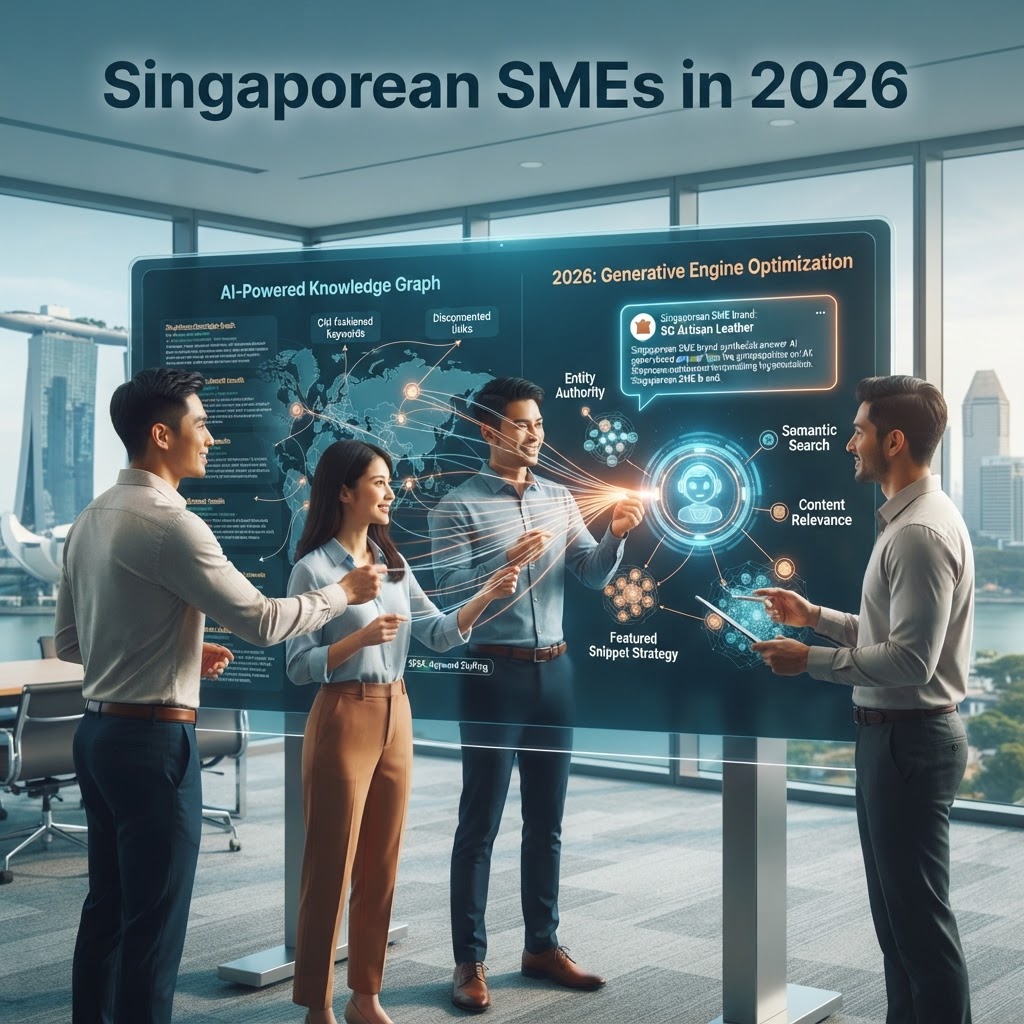
Generative AI tools can create and iterate content at scale, but search engines penalize low-value mass-produced pages. The winning approach is hybrid: human-led strategy + AI for research, drafting and personalization. Use AI to surface topic clusters, create initial drafts and generate variants for A/B testing.
Action: Implement a content workflow where AI drafts, an editor enforces brand and expertise, and analytics determine performance-based iteration. For deeper guidance on generative approaches tailored to SMEs, review a specialized guide on generative optimization that covers process and risk mitigation.
- Agentic AI and workflow orchestration
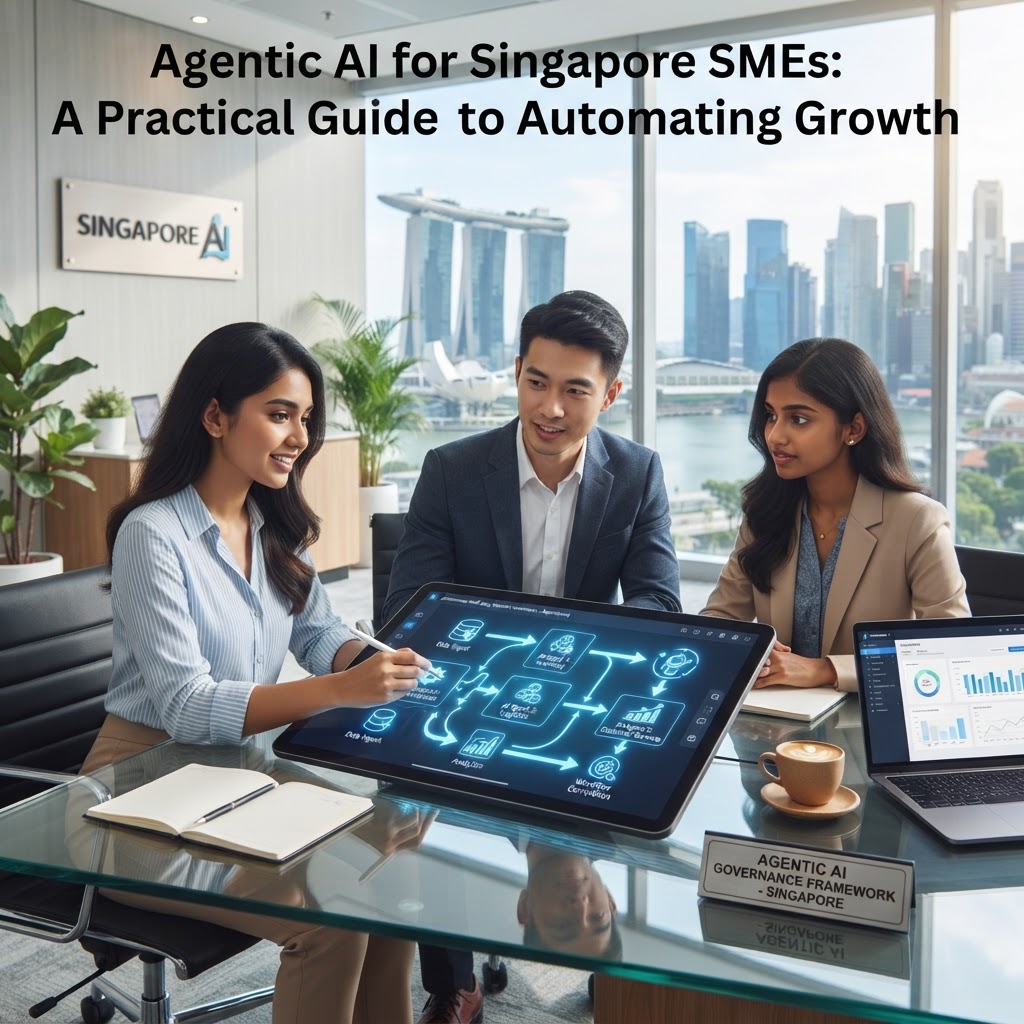
Agentic systems—AI that coordinates multiple tools and tasks—are streamlining campaign workflows. They can auto-generate meta descriptions, schedule social posts, and identify pages needing refresh based on performance thresholds.
Action: Adopt tools that allow safe automation (approval gates, audit logs). This reduces mundane tasks, lets your team focus on strategy, and shortens campaign time-to-value. A practical primer on agentic AI for small businesses outlines implementation frameworks for agencies.
- Multimodal search and visual-first discovery
Users increasingly use images and video to search; engines interpret those assets contextually. Optimizing visual assets with descriptive captions, structured metadata and context-aware sitemaps improves discoverability.
Action: Treat images and video as primary SEO assets—transcribe video, provide rich schema and optimize delivery for mobile. Resources on web design trends show how design and SEO converge in 2026.
- AI-driven personalization and privacy balance
Personalization increases conversion rates, but privacy regulations and cookieless environments demand smarter first-party strategies. AI helps by combining consented signals, cohort analysis and on-site behavior to personalize without invasive tracking.
Action: Build first-party data capture flows (e.g., value-driven gated content) and use AI models that respect consent while enabling personalized landing pages and recommendations. Guides on AI-driven digital marketing explain how to balance personalization with compliance.
- Search experience and E-E-A-T at scale
Expertise, Experience, Authoritativeness, and Trustworthiness (E-E-A-T) remain central. AI-driven content must still demonstrate genuine expertise and verifiable experience. Structured author profiles, case studies, and citations help prove credibility.
Action: Institutionalize an evidence layer for your content—author bios with credentials, linkable client case studies, and transparent revision histories. See AI-driven marketing resources for frameworks on scaling E-E-A-T.
Local SEO: what Singapore-specific signals matter in 2026
Singapore’s market is compact, competitive and mobile-first. Local signals you should prioritize:
- Micro-moment optimization: Optimize for high-intent micro-moments (near me, open now, price compare) with schema, up-to-date local listings, and FAQs.
- Platform alignment: Presence on local platforms and conversational apps (WhatsApp Business, Telegram, Google Business Profile) drives trust and click-throughs.
- Language and cultural nuances: Singlish and variations in Malay/Chinese searches mean keyword frameworks must include local terms and code-switch queries.
- Reviews and verified experiences: Authentic local reviews and case narratives boost local authority.
Action: Create localized landing pages that combine AI-assisted copy with real client proof points and live local schema. Pair automated review ingestion with manual verification to preserve authenticity.
Technical SEO in an AI-first world
Technical SEO is now about observability and automation:
- Continuous auditing: Use AI-based crawlers that prioritize remediation by predicted impact on traffic and conversions.
- Core Web Vitals as a business metric: Optimize LCP, CLS and FID not just for signals but for conversion lift.
- Index governance: AI can help decide which pages should be indexed vs. served via dynamic paths to avoid crawl waste.
Action: Adopt a technical SEO dashboard that flags high-impact issues and integrates with your ticketing system. Automate low-risk fixes (e.g., image compression) and human-review medium/high-risk changes.
Measurement: new KPIs and experiments
Traditional KPIs (rankings and clicks) are necessary but insufficient. The AI era adds metrics that focus on outcome and relevance:
- Engagement-adjusted traffic: Weight sessions by dwell time, scroll depth and action completion.
- Intent fulfillment rate: Percentage of sessions where the primary user intent was resolved (form submit, phone call, store visit).
- AI-attribution: Track which generative workflows or agentic automations contributed to content wins.
Action: Build experiments that compare human-only versus human+AI workflows, measure time-to-impact, and attribute business outcomes to each approach.
Process checklist for agencies (practical steps)
- Audit current workflows: Map content creation, review, publishing and measurement stages. Identify repetitive tasks for safe automation.
- Implement AI governance: Policies for hallucination checks, version control, and human sign-off.
- Invest in first-party data capture: Forms, progressive profiling and value exchange to power personalization.
- Optimize multimodal assets: Make video and images indexable and meaningful with transcripts and schema.
- Set outcome-based KPIs: Move from ranking goals to conversion, intent satisfaction and LTV impact.
Tools and integrations to prioritize in 2026
- LLM-powered content research tools with source attribution
- Agentic workflow platforms that integrate with CMS and analytics
- Multimodal asset managers that produce accessible transcripts and alt content
- First-party CRM integrations and consent management platforms
- Continuous SEO platforms that rank issues by business impact
Real-world wins: how agencies can demonstrate ROI
Case-based narratives resonate with clients. Focus on before/after metrics that matter to stakeholders: reduced CPA, higher conversion rates from organic channels, and faster content velocity without quality loss.
Example format to present to clients:
– Challenge: Fragmented content, low conversions from organic traffic
– Intervention: Implemented an AI-assisted content workflow, localized pages, and first-party data capture
– Outcome (60–90 days): +30% intent-fulfilled sessions, -20% organic bounce rate, +15% conversion rate from organic traffic
Risk management and ethical considerations
AI introduces risks: misinformation, brand tone drift, and governance issues. Protect clients by:
- Maintaining human oversight for claims and legal content
- Logging AI sources and edits for traceability
- Testing models for bias and hallucinations on a continual basis
Where to invest agency resources in 2026
Short-term (0–3 months): Pilots for AI-assisted content + automated audits
Medium-term (3–9 months): Integrations between CMS, analytics and agentic tools; staff training
Long-term (9–24 months): First-party data ecosystems, personalized experience engines, and scaled E-E-A-T content libraries
Final thoughts: turning AI trends into growth for Singapore agencies
The competitive edge for digital marketing agencies in Singapore will come from combining AI speed with human judgment. Agencies that build disciplined workflows, prioritize local signals and measure outcomes in business terms will stay ahead. Implementing small, safe pilots across content, technical SEO and personalization will produce the compound returns that define 2026.
For practical implementation frameworks and deeper resources on generative optimization, agentic AI, AI-driven digital marketing, and web design convergence, refer to in-depth guides and resources that focus on Singapore SME needs.
SEO Singapore guide for agencies
Digital marketing agency Singapore resources
Generative optimization reference
AI-driven digital marketing playbook
Web design and UX trends for 2026