Why 2026 is a turning point for web design Singapore and SEO Singapore
The digital landscape in Singapore is entering a new phase. Advances in AI, stricter privacy rules, and evolving user behaviors mean businesses must rethink how they design websites and optimise for search. In 2026 the line between web design Singapore and seo singapore blurs: design choices now directly influence discoverability, trust and conversion rates.
This article explains the most important trends shaping web design and SEO in Singapore this year, offers practical steps you can implement, and points to deep-dive resources for agencies and SMEs.
AI-native SEO: design and content built for engines and people
AI-native SEO moves beyond keyword stuffing to creating content and site structure that search models and generative engines can easily consume. That affects web design Singapore in three ways:
- Information architecture: design logical entity graphs that map content to intent, using structured data and clear relationships between pages.
- Content modularity: design templates that support modular snippets (questions, definitions, steps) so generative engines can extract answers.
- Performance-focused UX: ensure content loads instantly and remains accessible for both humans and crawlers.
For Singapore businesses, integrating AI-native SEO into site builds improves relevance for local queries and voice or assistant-driven search. For implementation guidance, see the AI-native SEO guide tailored to Singapore SMEs.
Core Web Vitals and human-first performance
Core Web Vitals remain critical. In 2026, web design Singapore demands faster interactive experiences and stable layouts across devices. Key priorities:
- Largest Contentful Paint (LCP): prioritise critical content and server-side rendering for instant visible content.
- Cumulative Layout Shift (CLS): avoid layout shifts by reserving image and ad space, and using aspect-ratio-aware CSS.
- First Input Delay (FID)/Interaction to Next Paint (INP): minimise third-party scripts and leverage browser-native features.
Performance is both an SEO signal and a conversion multiplier. Optimised assets, edge caching and careful third-party management are now standard practice for local and enterprise sites.
Mobile-first and progressive experiences for Singapore users
Singapore’s high mobile penetration means mobile-first web design Singapore is non-negotiable. Progressive Web Apps (PWAs) and adaptive design patterns improve engagement, retention and perceived speed. Design considerations:
- Thumb-friendly navigation and single-column layouts for quick browsing.
- Offline-capable elements for intermittent connectivity and fast repeat visits.
- Micro-interactions that guide conversions without heavy CPU costs.
Combining mobile-first design with seo singapore best practices—like mobile-friendly structured data and intent-driven content—boosts local visibility.
Visual, voice and conversational search optimisation
Search in 2026 in Singapore is multimodal. Visual search and voice queries influence both content strategy and visual design:
- Image-first pages: use high-quality, optimised images with descriptive alt text and structured image metadata.
- Conversational FAQs: design FAQ sections styled as short, scannable Q&A blocks for voice assistants.
- Video snippets: host short, captioned videos that answer common customer intents and embed structured timestamps.
These elements should be part of web design Singapore projects from the outset to capture different search channels for seo singapore.
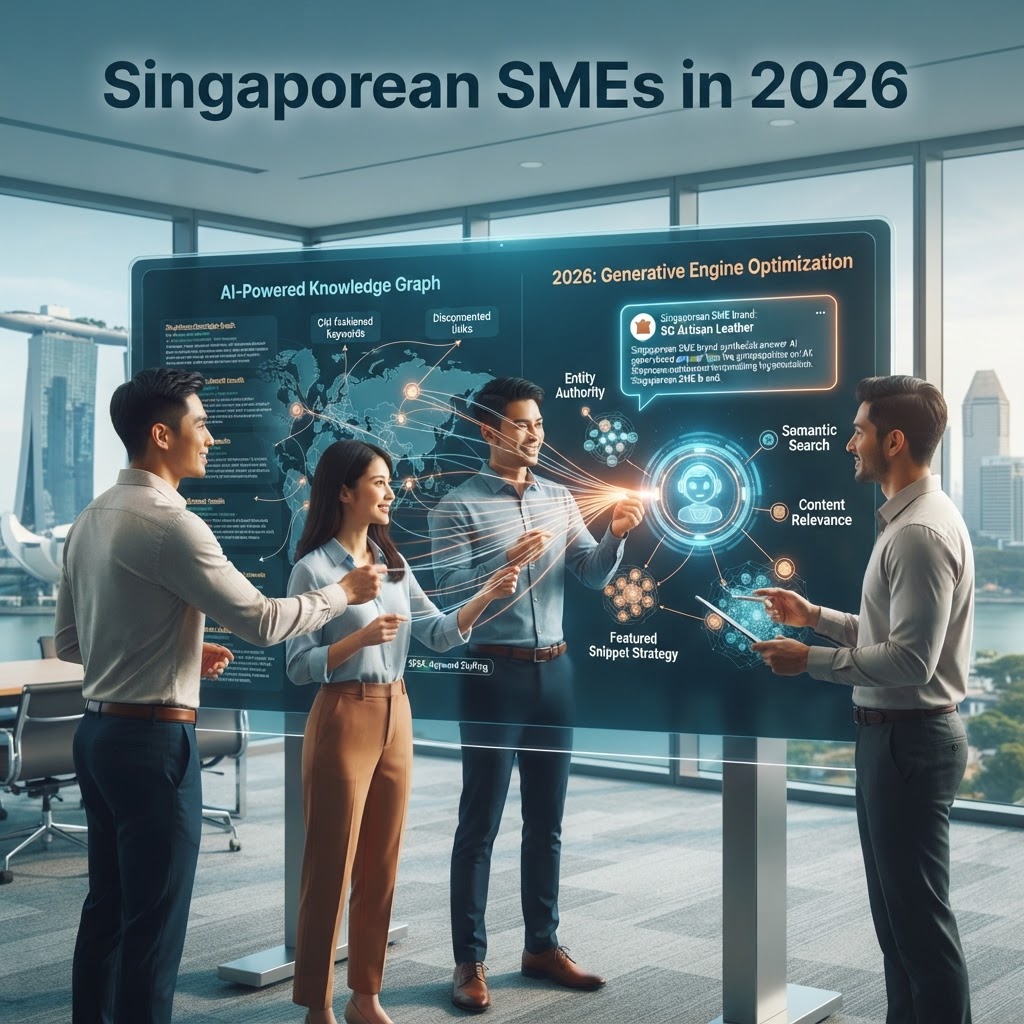
Generative Engine Optimization (GEO) and content strategy
Generative engines are now a primary source of answers. GEO focuses on ensuring your content is surfaced correctly by these models. Core tactics:
- Clear, factual canonical content for your domain that generators can cite.
- Use structured data to indicate authorship, date, and entity relationships.
- Maintain concise, authoritative pages for high-intent queries.
For detailed GEO tactics tailored to Singapore SMEs, consult specialist resources that explain how to structure content for generative consumption.
Building entity authority: credibility matters more than ever
Search models prioritise trusted entities. For businesses in Singapore, building entity authority involves:
- Consistent NAP (name, address, phone) across local listings and your site.
- Author pages and bios that link to social proof and real-world credentials.
- Thought leadership content and citations on reputable local publications.
Design plays a role: incorporate trust signals (awards, certifications, case studies) visibly across templates so both users and algorithms recognise authority. Learn more about building entity authority for 2026.
Privacy-first design and first-party data strategies
Data privacy regulations and browser changes have reduced third-party tracking efficacy. Web design Singapore must prioritise privacy and first-party data collection:
- Transparent consent UIs that don’t block user flow but capture necessary permissions.
- Server-side analytics and event models to retain measurement without invasive cookies.
- UX patterns that encourage voluntary profile creation (value exchanges like personalised content or faster checkout).
Privacy-first design supports long-term SEO by maintaining user trust and stable analytics for iterative optimisation.
Accessibility and inclusivity as SEO enhancers
Accessible sites reach broader audiences and often rank better. In Singapore, designing for inclusivity benefits users and search engines:
- Semantic HTML and ARIA roles that make content machine-readable.
- Keyboard-friendly navigation and readable typography for diverse user needs.
- Captioned media and clear content hierarchies.
Accessibility audits should be integrated into every web design Singapore project to boost usability and discoverability.
Local SEO Singapore: hyperlocal signals and content
Local search in Singapore is competitive. Priorities for seo singapore include:
- Geo-targeted landing pages and locality-specific FAQs.
- Optimised Google Business Profile content and local review management.
- Local schema (address, opening hours, service areas) embedded in templates.
Local-first design also means ensuring store pages or service area pages load quickly and contain instantly scannable contact actions.
Sustainable design and carbon-aware SEO
Sustainability is becoming a market differentiator. Low-carbon, efficient websites are not only responsible but can help SEO:
- Use lightweight frameworks and reduce unnecessary animations.
- Optimise media and leverage modern image formats (AVIF, WebP).
- Track and publish site performance metrics as part of brand transparency.
Sustainable sites often have faster performance and better accessibility—both positive for seo singapore.
Practical checklist: merging web design Singapore and SEO Singapore
Use this checklist when planning a 2026 website project:
- Define entities and map content to intent across the site.
- Implement structured data for products, FAQs, local businesses and authors.
- Prioritise mobile-first, accessible templates and reserve layout space to reduce CLS.
- Use server-side rendering or edge rendering for critical pages to improve LCP.
- Build modular content blocks for GEO and voice snippets.
- Design privacy-first consent flows and capture first-party data ethically.
- Add visible trust signals, case studies and consistent NAP data for entity authority.
- Produce localised landing pages with schema and fast-loading assets.
- Audit and reduce third-party scripts; measure Core Web Vitals continuously.
Design patterns that directly improve seo singapore performance
Specific web design choices can deliver immediate SEO gains:
- Content-first hero sections: indexable text near the top helps search models understand page intent.
- Predictive internal linking components: surfaces related content and strengthens topical clusters.
- Lightweight interactive elements: focus on CSS-driven transitions instead of heavy JS libraries.
These patterns maintain a strong user experience while keeping pages crawlable and machine-friendly.
Tools, testing and measurement for 2026
Testing and observability are essential. Recommended approaches:
- Use lab and field data for Core Web Vitals (e.g., Lighthouse, CrUX).
- Monitor SERP feature presence and how generative engines reference your content.
- Run A/B tests that measure both UX and ranking signals.
Local agencies and in-house teams should invest in tooling that combines web performance, SEO tracking and user analytics to iteratively improve both design and search visibility.
Where to start: a realistic roadmap for businesses in Singapore
- Audit: run a combined UX, accessibility and SEO audit to prioritise technical fixes.
- Quick wins: improve LCP and CLS, add structured data and publish local landing pages.
- Content strategy: create modular, authoritative pages designed for generative extraction.
- Continuous improvement: measure user behaviour, search performance and adjust design templates.
Agencies and teams can deepen their approach by following specialised Singapore-focused resources on AI-native SEO, entity authority and generative engine optimisation.
Final takeaways
Web design Singapore and seo singapore are converging. In 2026 winning sites are fast, accessible, privacy-respecting and built to communicate clearly with both humans and AI-driven engines. By embedding AI-native SEO principles into design workflows, prioritising Core Web Vitals, and building entity authority through consistent, localised content, Singapore businesses can improve visibility and conversions.
Further reading and implementation guides are available that focus on AI-native SEO for SMEs, building entity authority in Singapore, SEO 2026 AI trends for agencies, generative engine optimisation, and web design trends for 2026 — these resources provide tactical steps and templates to help teams act now.
AI-native SEO guide for SMEs explains how to structure content for generative models.
Building entity authority in Singapore outlines trust-building and schema strategies.
SEO Singapore 2026 AI trends dives into agency-focused AI opportunities.
Generative engine optimisation guide details content patterns for GEO.
Web design trends 2026 for Singapore agencies showcases design templates and performance patterns.