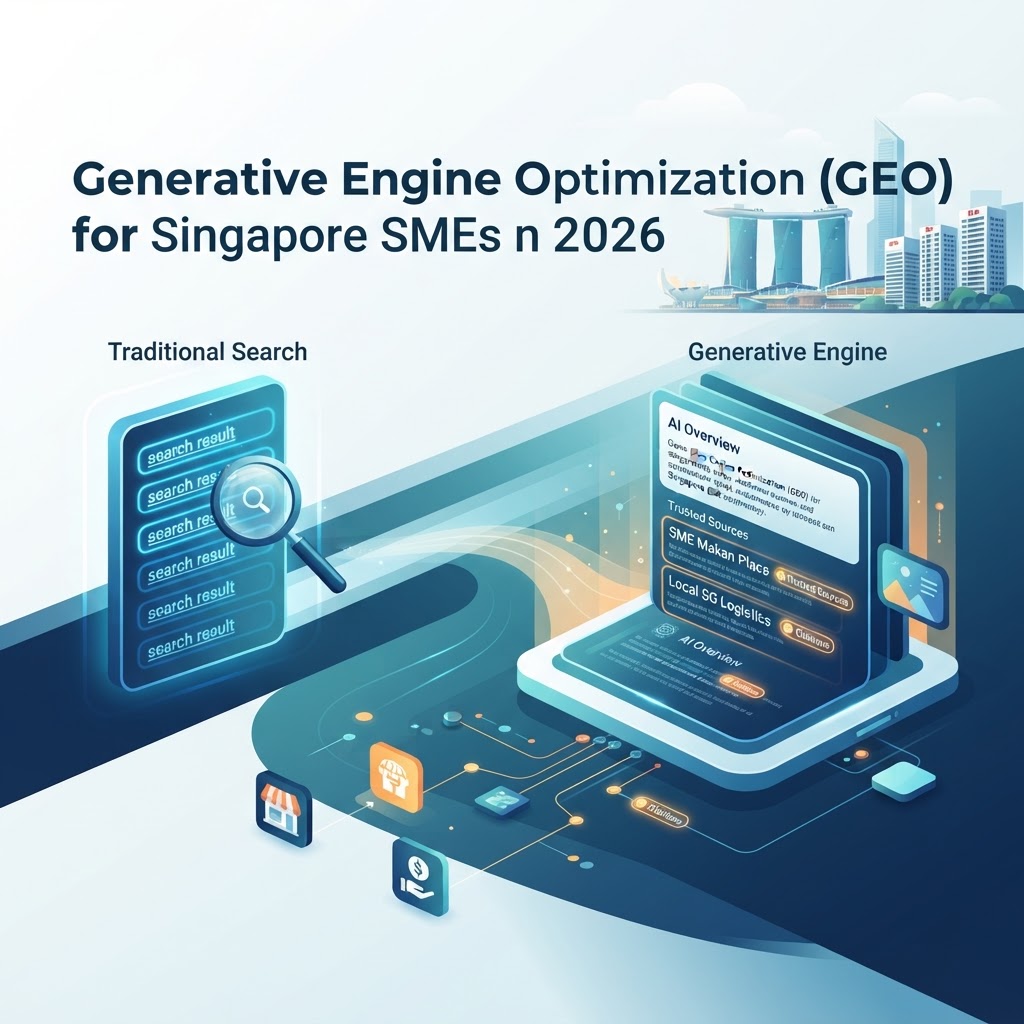
Generative Engine Optimization: A 2026 Guide for Singapore SMEs to Stay Visible
The digital landscape in Singapore is undergoing its most significant transformation since the invention of the search engine. As AI-powered summaries and answer engines begin to dominate user experience, the traditional blue-link search results are slowly retreating. For local small and medium enterprises, this shift represents a pivotal moment. Staying visible today requires more than just traditional search engine optimization; it demands the adoption of Generative Engine Optimization. This strategy moves beyond simple keyword stuffing or backlink acquisition, focusing instead on how your brand is perceived, processed, and cited by large language models. As AI agents increasingly act as the primary interface for consumers looking for local services, Singaporean businesses must ensure they remain the authoritative, trustworthy, and factual sources that these systems rely upon to answer queries. In this comprehensive guide, we explore how you can future-proof your digital presence, leverage available government support like the Productivity Solutions Grant (PSG), and maintain your competitive edge in an era where AI dictates the visibility of your business to your potential customers.
Table of Contents
Understanding the Shift to Generative Engine Optimization
Generative Engine Optimization, or GEO, is the practice of optimising your digital footprint to ensure that AI-driven search engines and conversational interfaces correctly identify, interpret, and cite your content. Unlike traditional SEO, which focuses primarily on ranking a specific URL for a query, GEO focuses on authority, brand sentiment, and the structured delivery of information. For a Singaporean SME, this means being the trusted source that an AI assistant recommends when a user asks for the best service provider in a local context. The transition from ranking a page to being a cited source is nuanced. AI models are trained to prioritize information that is verifiable, coherent, and demonstrably authoritative within a specific domain. When an AI summarizes information about a service, it synthesizes data from multiple reputable sources. If your business consistently provides clear, accurate answers to common industry questions on your website, you increase the likelihood of being referenced as an expert authority. Furthermore, the local aspect of search is becoming increasingly important. AI tools are becoming highly adept at understanding local nuances, such as location-based intent in Singapore, PDPA compliance requirements, or the specific needs of local industries. This means your content needs to be not only factually correct but also hyper-relevant to the Singaporean market. Our team has observed that businesses that build their digital presence around answering specific, high-intent questions see better visibility in AI summaries than those relying solely on generic keyword targeting. By positioning your business as a subject-matter expert, you align your content strategy with the logic used by modern language models to provide accurate, helpful answers to users. This strategy requires patience, as it involves building a body of high-quality, long-form content that establishes genuine thought leadership within your specific industry niche.
Crafting Content That AI Trusts and Cites
In the age of AI, the quality and structure of your content are more important than ever. AI models prioritize content that is easy to parse, factual, and deeply relevant. To thrive in this environment, Singapore SMEs must shift from producing thin, keyword-heavy pages to creating comprehensive, pillar-based content that serves as the definitive resource on specific topics. This involves using clear headings, bulleted lists, and tables that present information in a way that is easily digestible for both human readers and AI crawlers. For instance, if you are a local renovation firm, instead of just having a service page titled ‘Home Renovation,’ you should create detailed guides that explain the process, common pitfalls, and price ranges for various project types in Singapore. This provides the context and utility that AI models look for when synthesizing answers. Furthermore, transparency and factual accuracy are non-negotiable. Modern AI systems have safeguards against misinformation, meaning they actively favor sources that are consistent, reliable, and free from misleading claims. When you provide concrete examples, use clear language, and avoid hyperbolic marketing jargon, you build the kind of trust that these models require to recommend your services. Our approach emphasizes creating assets that answer ‘who,’ ‘what,’ ‘where,’ ‘when,’ and ‘why’ for your customers. Consider the table below for a quick comparison between traditional content tactics and modern GEO-focused strategies for the Singaporean market.
| Metric | Traditional SEO Approach | GEO-Focused Strategy |
|---|---|---|
| Primary Goal | Page Ranking | Source Citation |
| Content Style | Keyword Density | Thematic Authority |
| Format Focus | Blue Links | Direct Answer/Summary |
| Trust Signal | Quantity of Links | Factual Consistency |
This shift requires a commitment to high-quality information design. You should invest in creating original research, clear data visualizations, and professional guides that document your processes. By maintaining a structured, well-organized website, you allow AI tools to efficiently index your expertise and pull it into their generated answers, ensuring your brand is front and center when prospective clients engage with AI assistants.
Technical Foundations and Web Performance
While content remains the heart of your digital presence, the technical architecture of your website is the engine that drives visibility. AI crawlers and search algorithms evaluate websites based on their speed, mobile-friendliness, and security. A slow, outdated website not only frustrates users but also sends negative signals to AI agents trying to aggregate your data. Core Web Vitals, which measure user experience through metrics like loading speed, visual stability, and interactivity, have become even more critical in this new era. For Singapore SMEs, prioritizing a mobile-first design is essential, given the high penetration of mobile internet usage across the region. When we rebuild a client’s website to meet modern technical standards, we focus on minimizing bloat and optimizing code for lightning-fast performance. This includes implementing a headless CMS or high-performance frameworks that allow your content to load almost instantly on any device. Beyond pure speed, security and site structure are paramount. An AI agent is less likely to trust a site that is insecure or difficult to navigate. Ensuring your site is fully encrypted with SSL, follows standard schema markup protocols, and provides a clear site map helps the AI map out your business structure effectively. Our technical approach often utilizes the Singapore government’s PSG grants to help SMEs offset the costs of these crucial digital transformations. By modernizing your site, you are not just checking a box for search engines; you are building a robust platform that converts visitors into leads. We focus on lean, performance-first builds that prioritize user intent and clarity. When a site is technically sound, it acts as a reliable, ever-ready library for AI to consult, significantly increasing your chances of being featured in summarized results. Reliability and technical responsiveness are the foundations upon which we build long-term digital growth for our partners.
An Actionable Roadmap for Singapore SMEs
Transitioning to a GEO-first strategy does not need to happen overnight, but waiting for the landscape to fully shift will only leave you playing catch-up. Start by auditing your existing content. Identify the questions your customers frequently ask you during your daily operations and ensure these are addressed clearly and concisely on your website. Use tools to understand the search intent behind these questions, and create content that provides direct, useful answers. Next, focus on your local presence. Ensure your business information is consistent across all directories, as AI uses these as corroborating data points for truth. If your business is eligible, look into the PSG funding to support the development of a more robust, performance-optimized website that aligns with current standards. A strategic partnership with a digital agency can help you navigate these complexities, from technical implementation to content architecture. We have found that the most successful SMEs are those that treat their digital presence as an extension of their professional service. They are helpful, transparent, and highly knowledgeable. They do not resort to cheap tactics or over-promising, but instead focus on building genuine, lasting authority. Think of your website as a digital storefront that must be kept tidy, accurate, and welcoming. When you invest in your site’s health, you are investing in your brand’s reputation. Whether you need a simple site refresh or a full digital transformation, the key is to start with a clear plan and a commitment to quality. Reach out for a consultation to evaluate your current positioning and discover how you can leverage local government support to build a future-proof foundation for your business. We are always ready to help you navigate these changes, ensuring your business stays visible and trusted as the digital world evolves.
In conclusion, the rise of generative AI is not the end of SEO; it is an evolution that favors the helpful, the technical, and the authoritative. By adopting a proactive stance toward Generative Engine Optimization, Singapore SMEs can transform this technological shift into a significant growth opportunity. Focus on creating high-quality, structured content that clearly answers your customers’ needs, ensure your website is technically robust to meet modern performance benchmarks, and leverage available local support to facilitate these improvements. Success in this new environment is earned through consistent, professional effort and a commitment to providing real value to your audience. By positioning your business as a primary source of information, you ensure long-term visibility and credibility in an increasingly automated world. Our team is here to assist you in every step of this journey.
Frequently Asked Questions
What is the main difference between traditional SEO and Generative Engine Optimization? Traditional SEO focuses on ranking blue links for specific keywords, while GEO focuses on making your brand a trusted source that AI models cite in their summaries.
How can Singapore SMEs benefit from the PSG grant for this transition? The Productivity Solutions Grant (PSG) can provide up to 50% funding for qualified digital solutions, including website overhauls that improve technical performance and align with GEO best practices.
Do I need to change my entire website to keep up with AI? Not necessarily. Start by ensuring your content is structured, authoritative, and fast. A technical audit can identify whether you need a full rebuild or just targeted performance improvements.
How long does it take to see improvements in AI visibility? While results depend on your market and content quality, implementing a consistent, authority-focused content strategy typically begins to show improved visibility within several months.
Why is local context important for GEO? AI models are increasingly local-aware. By demonstrating expertise in the Singapore market, you ensure that you are the primary answer for users searching for relevant services within the country.