Generative Engine Optimization: A 2026 Guide for Singapore SMEs
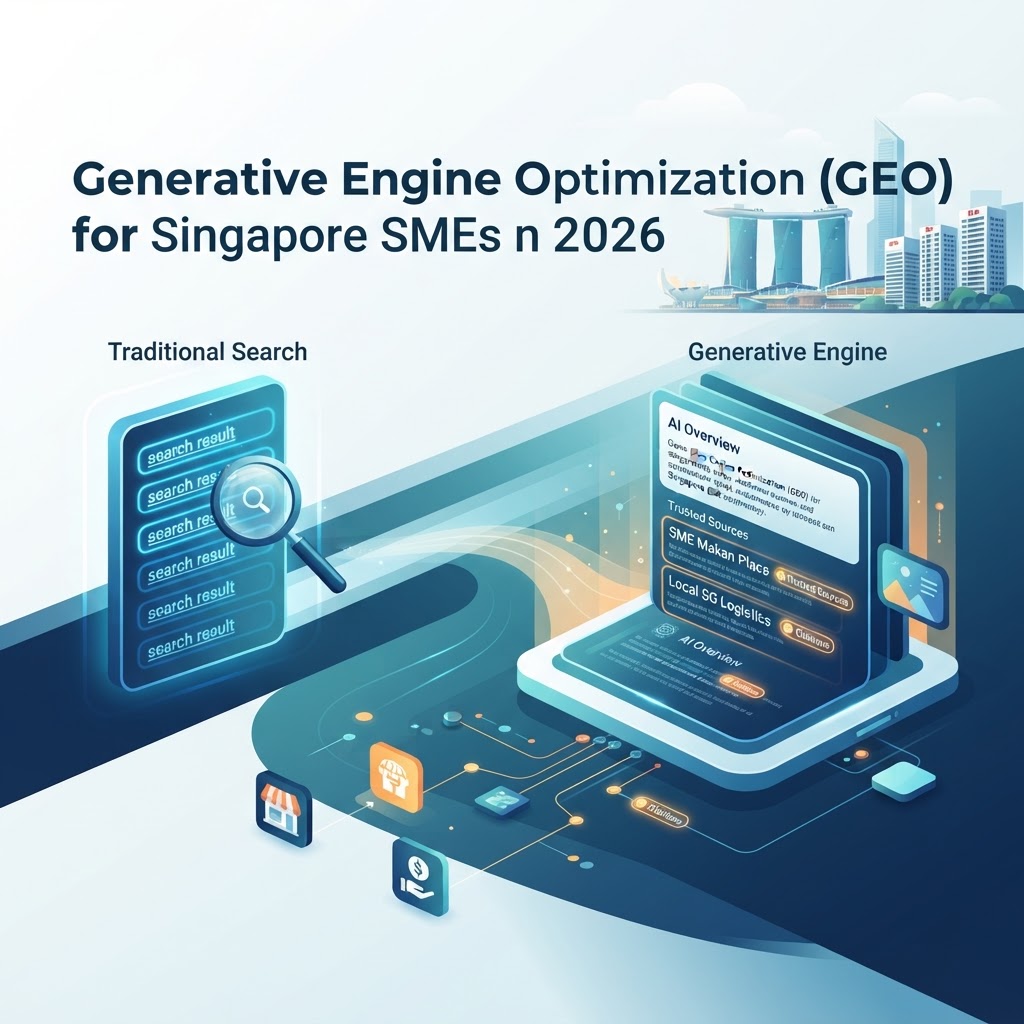
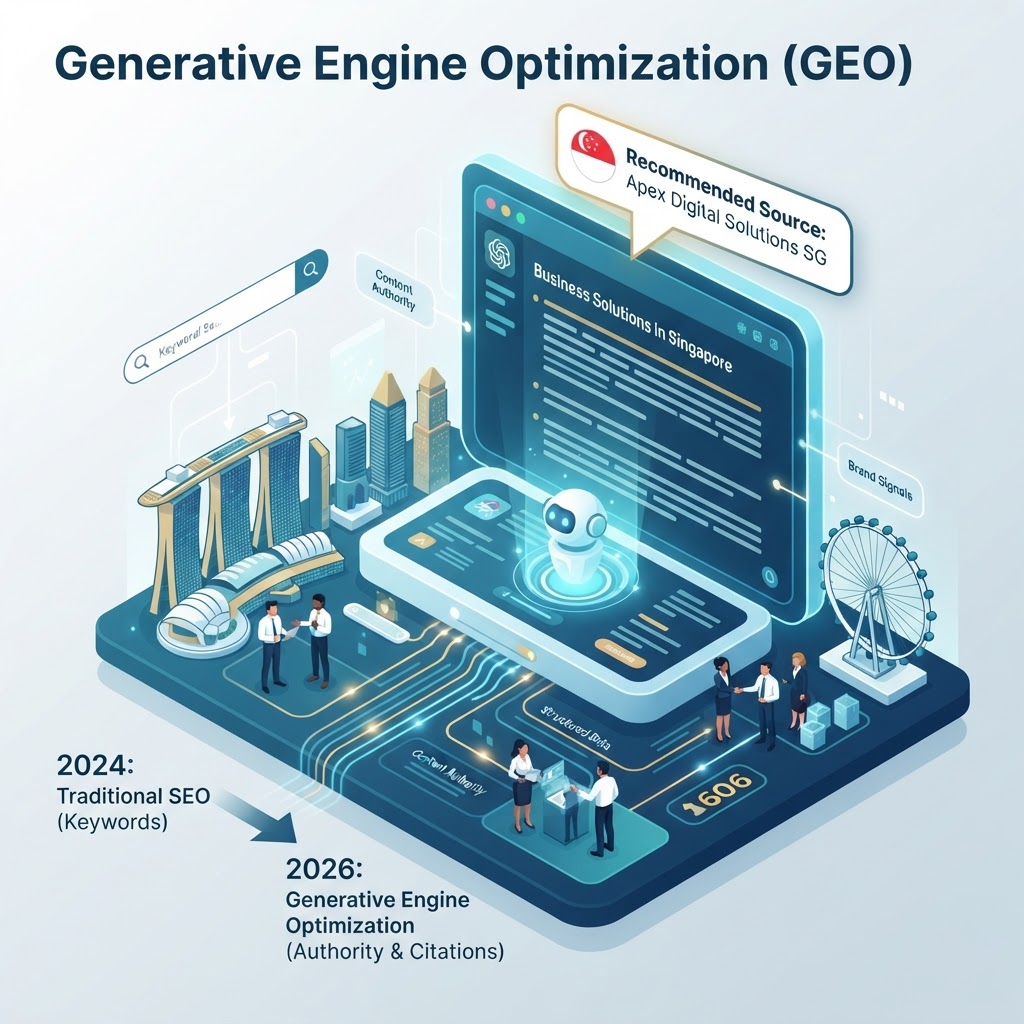
As the digital landscape in Singapore evolves, the way your customers discover your services is undergoing a fundamental shift. We have moved beyond simple blue-link search results. Today, AI Overviews and conversational interfaces are answering user queries directly on the search engine results page. For local business owners, this transition necessitates a new approach known as Generative Engine Optimization. Unlike traditional SEO, which focuses heavily on keyword density and link-building to secure a top position, Generative Engine Optimization prioritizes trust, technical authority, and the ability to provide concise, factual, and helpful answers that AI models can easily ingest and cite.
For Singaporean SMEs, staying visible in this new era is not about chasing algorithms but about refining how your digital footprint conveys expertise. Whether you are navigating the complexities of eCommerce or service-based lead generation, understanding how AI identifies your site as a credible source is vital. At iPro Dezign, we help businesses transition from outdated strategies to performance-based frameworks that resonate with both human customers and AI systems. By focusing on your core value proposition and ensuring your technical infrastructure meets modern standards, you can secure your place as a trusted answer in the age of conversational search.
Table of Contents
Understanding Generative Engine Optimization
Generative Engine Optimization (GEO) represents a departure from the keyword-stuffed articles of the past. In 2026, AI search engines prioritize depth of knowledge, factual accuracy, and context. For an SME in Singapore, this means that providing a generic description of your service is no longer enough to win the top spot in an AI summary. Instead, you must become the definitive source of information within your specific niche. When a potential customer asks an AI assistant about the benefits of a particular service or product, the system looks for entities—specific facts, locations, and service details—that verify you are the right entity to recommend. This is where iPro Dezign’s focus on structured data and semantic clarity becomes an essential asset. By organizing your website content so that AI can process it effortlessly, you increase the likelihood of your brand being featured as the primary source in a generated response.
Furthermore, GEO emphasizes the importance of trust signals. AI models are programmed to favour information from sources that are perceived as authoritative and reliable. For a Singaporean SME, this involves maintaining an active, accurate Google Business Profile, ensuring your website remains compliant with local regulations like the PDPA, and fostering genuine client reviews. When your digital presence is cohesive across all platforms, it creates a feedback loop that search engines find highly compelling. Rather than fighting for a generic keyword rank, you are now competing to be the trusted authority that AI references during a consumer’s decision-making process. This shift requires a professional mindset that prioritizes long-term brand equity over short-term traffic spikes. By aligning your business goals with the way AI synthesizes information, you position yourself to remain visible even as search technology continues to advance throughout the coming years.
Building a Technical Foundation for AI
In the age of generative search, your website’s technical architecture serves as the bedrock of your visibility. If a search bot cannot crawl or understand your site, it cannot cite your business. Core Web Vitals—the industry standard for measuring page experience such as Largest Contentful Paint (LCP) and Cumulative Layout Shift (CLS)—have never been more critical. An AI, much like a human user, demands a fast, responsive, and stable interface. If your site takes too long to load or experiences layout jumps, it is viewed as a poor resource, which diminishes its chances of being selected for a summary. Many Singaporean SMEs struggle with bloated code or outdated plugins that drag down performance. Our team focuses on lean, performance-first builds that ensure your content is delivered instantaneously across all mobile devices, which is vital in our mobile-first APAC market.
Beyond speed, you must ensure your site is technically “readable” for AI models. This involves the strategic implementation of schema markup—code that helps search engines understand the context of your data, such as pricing, service areas, and operational hours. Imagine a table of your services; by structuring this correctly, you allow AI to extract exact values for customer queries. Below is a simple comparison of how technical optimization impacts your visibility:
| Metric | Traditional SEO Approach | Generative Engine Optimization |
|---|---|---|
| Site Speed | Desired for ranking | Mandatory for AI ingestion |
| Content Focus | Keywords & Links | Entities & Factual Authority |
| Mobile User Experience | Recommended | Critical for Trust Signals |
| Structural Data | Optional | Essential for Machine Parsing |
Investment in a high-performance, secure website can be partially offset through government initiatives. We assist our clients in identifying PSG grant eligibility, which can provide funding for up to 50% of your digital transformation costs. By securing a robust technical foundation today, you are not just keeping up with trends; you are building a resilient platform that adapts to the future of search.
Developing Authority-Led Content
Content strategy has moved from writing for volume to writing for depth and utility. In the context of Generative Engine Optimization, your goal is to answer the ‘why’ and ‘how’ behind your customer’s problems. If you operate an interior design firm, for example, creating a generic page about ‘home renovations’ will likely be overshadowed by AI summaries that curate broader, more authoritative sources. Instead, you should create highly specialized content that answers specific, long-tail questions often asked by your target demographic in Singapore. This might include guides on HDB renovation regulations, cost estimation in the current market, or sustainable material choices. By becoming the go-to resource for specific, localized information, you increase the chances that AI systems will cite your content as the expert source.
Transparency and voice are your best tools here. AI is increasingly capable of identifying content that feels ‘canned’ or mass-produced. To truly resonate, your content must reflect the lived experience of your business. This means using case studies, explaining your unique methodology, and providing clear, actionable advice that solves a reader’s pain point immediately. As an agency, our team helps you draft content that balances professional expertise with an approachable, founder-led tone that builds genuine trust with potential clients. Remember that AI is looking for consensus and expertise. When you consistently publish high-quality, verified content, you build a profile that AI models trust. Furthermore, avoiding buzzwords and staying honest about the effort required for certain digital projects helps you stand out as a reliable partner. Clients looking for long-term growth value this transparency, and it is a key factor in converting a casual visitor into a qualified lead who understands the value of professional digital service.
Measuring ROI and Local Growth
Measuring the success of Generative Engine Optimization requires a shift in how we track performance. Traditional metrics like vanity traffic or keyword rankings are becoming less indicative of actual business health. Instead, we look at conversion rates, high-intent lead generation, and the quality of enquiries arriving via organic channels. When your business begins appearing in AI-generated summaries, you often see an increase in users who are further along in the buyer’s journey. These visitors have already received a concise answer to their search, meaning they have higher levels of trust and intent when they finally click through to your website. At iPro Dezign, we work with our clients to track these ‘hidden’ signals, ensuring that our efforts lead to tangible business growth rather than just superficial statistics.
Local market conditions in Singapore also play a significant role in your measurement framework. Understanding how local demand fluctuates based on regional economic shifts or government announcements allows us to refine your strategy in real-time. We emphasize measurable ROI, providing regular reports that tie your digital efforts to your bottom line. We avoid the temptation of promising short-term miracles; instead, we focus on consistent, data-backed improvements. Whether it is optimizing your site for local keywords or ensuring your contact information is perfectly synced across all business directories, every step we take is designed to improve your bottom line. By partnering with an agency that understands both the technical and strategic aspects of digital growth, you gain a clear, honest assessment of what is working and where your business can improve. This partnership-based approach is how we have helped numerous SMEs navigate the complexities of the digital economy while maintaining focus on their primary objective: sustainable growth through intelligent design and purposeful communication.
As you plan your digital strategy for the coming year, remember that the goal of optimization is not to master a tool, but to master your relationship with your customers. The future of search is conversational, and the brands that thrive will be those that provide the most helpful, accurate, and trustworthy answers. If you are looking to elevate your digital presence and ensure you are ready for the evolving AI landscape, we are always a call away to discuss your specific needs.
Frequently Asked Questions
1. What is the biggest difference between traditional SEO and Generative Engine Optimization? Traditional SEO focuses on ranking for specific keywords to drive traffic to your site. Generative Engine Optimization focuses on being the trusted, factual source that AI models cite within their summaries to provide value to the user.
2. How does mobile-first design affect my visibility in AI search? Since AI search interfaces are frequently accessed via mobile, a fast, responsive, and easy-to-read mobile experience is a non-negotiable factor in how search engines rank the reliability of your information.
3. Can I use PSG grants for website optimization? Yes, many SMEs in Singapore can leverage the Productivity Solutions Grant (PSG) to cover up to 50% of the costs associated with digital upgrades and web performance improvements. We can guide you through this process.
4. How do I know if my content is ‘AI-friendly’? AI-friendly content is structured, authoritative, and fact-heavy. It avoids fluff and directly answers user questions with clear, actionable, and verified information that makes the AI’s job of synthesizing data easier.
5. Is human expertise still relevant in the age of AI search? Absolutely. AI models thrive on high-quality human input. Your unique insights, brand experience, and local expertise are what differentiate your business from generic AI-generated content, making you the preferred source for AI systems to recommend.