Generative Engine Optimization: A Singapore SME Guide to Staying Visible in 2026
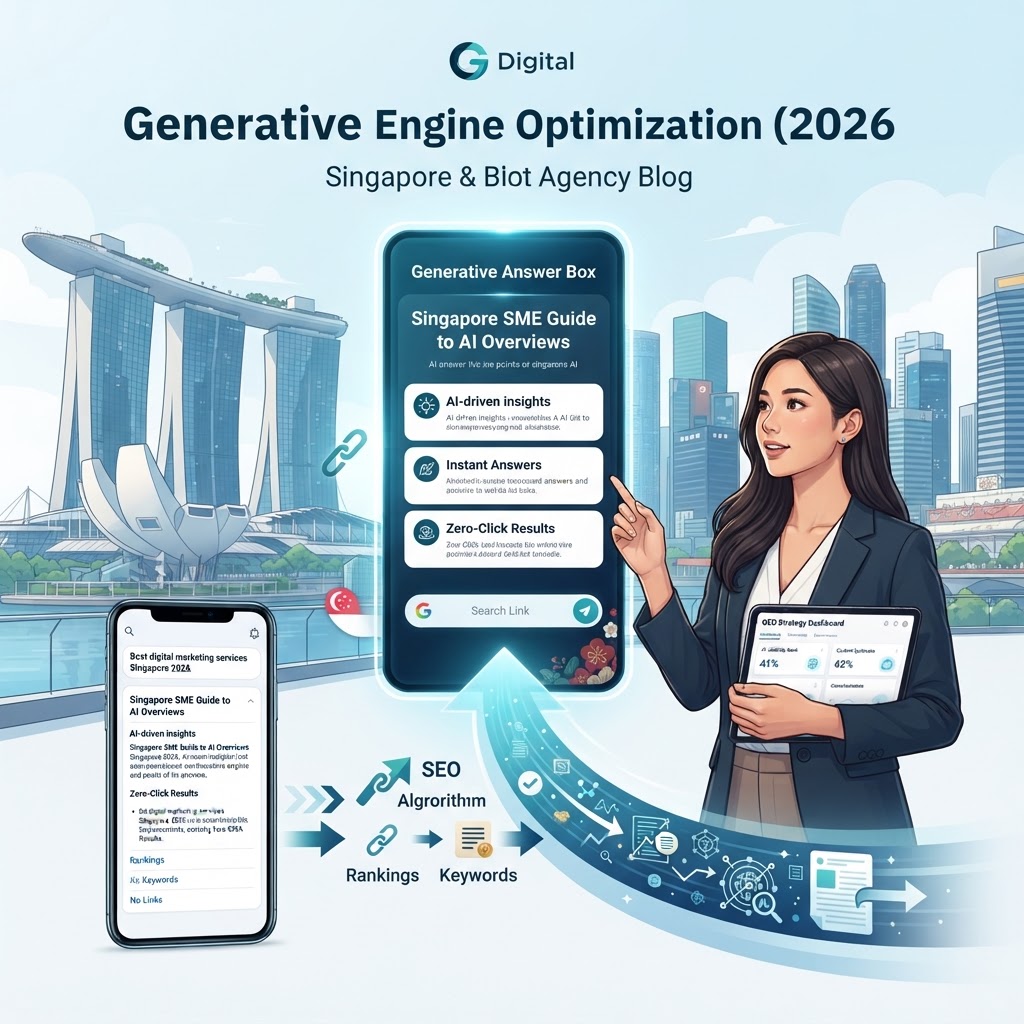
The digital landscape in Singapore is undergoing its most significant shift in a decade. For years, SME owners have focused on traditional Search Engine Optimization (SEO) to climb the rankings ladder. However, with the rise of AI-powered search summaries, the rules of visibility have changed. Generative Engine Optimization, or GEO, is the new essential strategy for brands aiming to remain relevant in an era of zero-click search environments. As AI tools curate answers directly on the search results page, users are increasingly satisfied with summary snippets, meaning they may never click through to your website. To maintain your digital authority, you must pivot your strategy from simply chasing keywords to providing the high-quality, authoritative, and structured data that AI models rely on to build their summaries. At iPro Dezign, we help Singaporean businesses navigate this transition, ensuring your brand stays front and centre even as user behaviour shifts. This guide explores how you can adapt your digital presence to secure visibility in this new search paradigm, leveraging our technical expertise to build resilient, high-performing web platforms.
Table of Contents
Understanding Generative Engine Optimization
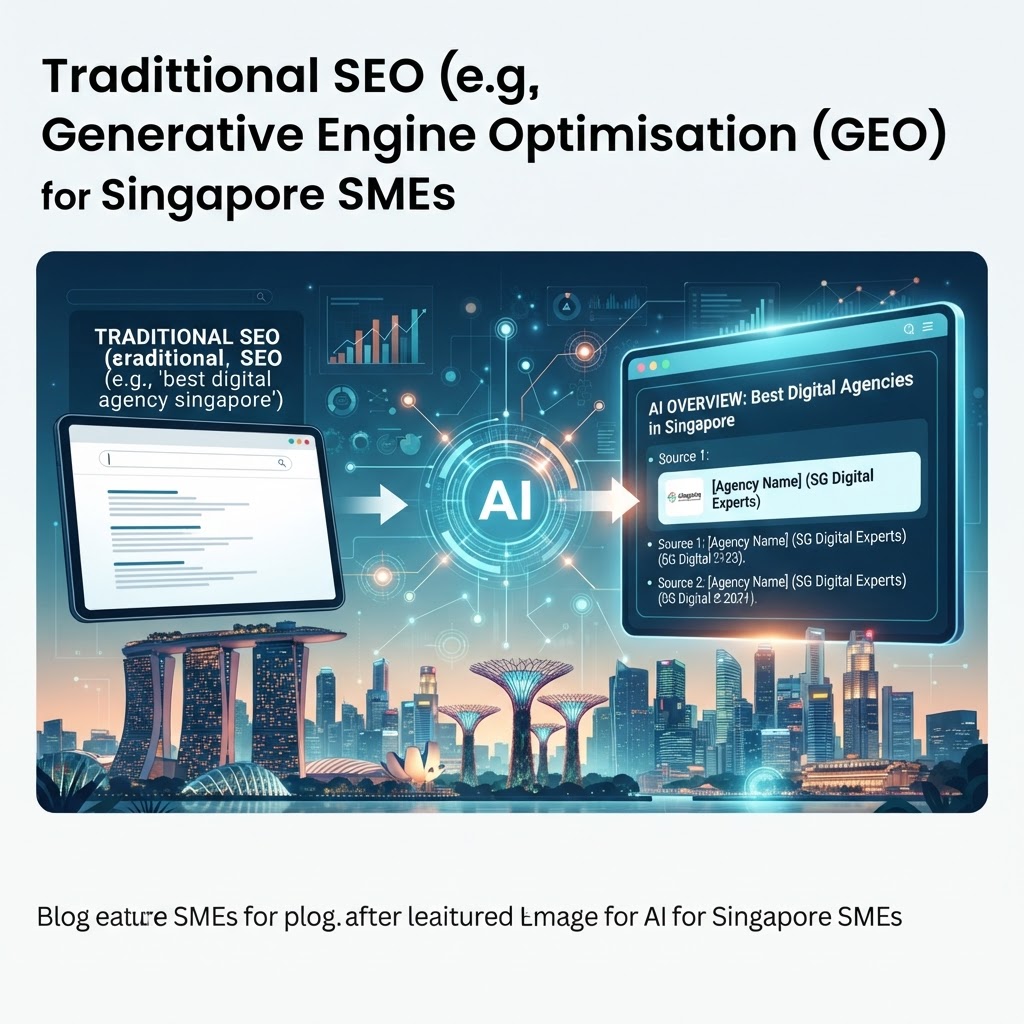
Generative Engine Optimization represents a fundamental shift in how search platforms process information. Unlike traditional SEO, which prioritises specific keywords to influence a link list, GEO focuses on providing the precise, factual, and structured information that Large Language Models (LLMs) use to generate AI-driven summaries. For a Singaporean SME, this means your online presence must be seen by these engines as a reliable source of truth. When a potential customer searches for a professional service or product in Singapore, the engine synthesises information from across the web. If your site lacks structural clarity, accurate business data, or clear answers to common questions, you risk being omitted from these helpful AI snippets. The goal is to move from being a hidden URL to being a verified citation within the AI response.
We help businesses understand that this is not about losing traffic, but about changing how that traffic is earned. When you are cited as a source in an AI summary, the quality of your brand authority increases significantly. This is particularly important for local businesses where trust is the primary driver of purchase decisions. Our team recommends focusing on three core areas: topical authority, entity recognition, and source credibility. Topical authority means creating deep, comprehensive content that covers your niche completely, rather than targeting singular, disconnected keywords. Entity recognition involves using schema markup, a form of code that helps search engines understand the context of your business, such as your location, services, and operating hours. By presenting your business as a well-defined entity to search bots, you increase the likelihood of being featured as a trusted source. Finally, source credibility is built through local engagement, consistent NAP (Name, Address, Phone) data across the web, and high-quality mentions from reputable local platforms, which signals to engines that your business is an established leader in the Singapore market.
Crafting Content for AI Relevance
Creating content for the AI era requires a departure from traditional keyword-stuffing techniques. In the past, repetition was often used to signal relevance to a search algorithm. Today, generative engines look for context, nuance, and intent. To remain visible, your content must be written for human readers while being structured for machine understanding. This involves adopting an answer-first approach where the most critical information is presented clearly at the beginning of each page. By anticipating the specific questions your customers ask, you can create concise, high-value sections that act as natural building blocks for AI summaries. We focus on developing ‘pillar content’ that covers broad themes, supported by ‘cluster pages’ that address specific, niche queries relevant to Singaporean consumers, whether they are looking for industrial engineering or boutique eCommerce solutions.
Transparency and accuracy are paramount when dealing with AI-influenced search. Since generative engines aim to provide factual summaries, they favour content that is backed by data, industry insights, and clear, authoritative explanations. Avoid using vague promotional language that offers no substance. Instead, provide practical advice, how-to guides, and detailed FAQs that help your customer solve their immediate problem. When your content is structured this way, it provides a stable foundation for the generative engine to extract accurate details about your offerings. Furthermore, localising your content to the Singaporean context is a powerful competitive advantage. Mentioning local regulations, regional trends, and specific Singaporean pain points adds layers of relevance that global, generic content simply cannot match. If you are operating a service business, include details on how your processes align with local industry standards or professional accreditations. This specificity makes your content more ‘digestible’ for AI models. Our experience shows that when SMEs shift their focus to answering the ‘who, what, where, and why’ of their niche, they build stronger relationships with their audience while naturally aligning with the preferences of modern search engines.
Technical Performance as a Ranking Factor
In the age of generative search, technical performance is the bedrock of visibility. An engine that cannot crawl or understand your site quickly will struggle to include your information in its summaries. Core Web Vitals, a set of metrics measuring real-world user experience—specifically loading speed, interactivity, and visual stability—remain critical for 2026. If your website is sluggish, complex to navigate, or fails to render properly on mobile devices, you are effectively signalling to search engines that your platform is unreliable. Most Singaporean users access the web via mobile devices while on the go; therefore, mobile-first design is not optional. It is the core of your digital footprint. Our team prioritises clean coding, image optimisation, and the use of modern, lightweight frameworks that ensure your site loads under three seconds, which is a key threshold for both user satisfaction and search engine efficiency.
Beyond basic speed, your site architecture plays a crucial role in how well generative engines interpret your site. A headless CMS—a backend-only content management system that allows for greater flexibility—can provide a cleaner, more efficient data structure that is significantly easier for AI to parse. By separating the content repository from the frontend presentation, you ensure that your site provides only the necessary data to search crawlers without unnecessary bloat. This is also where schema markup becomes essential. Schema is the invisible language of the web that tells search engines exactly what your content means. By implementing sophisticated schema for your products, services, events, and reviews, you are literally providing a roadmap for the search engines to map your content into their AI summaries. Consider the comparison below between traditional and modern performance factors:
| Feature | Traditional SEO (Pre-2024) | Generative Engine Optimization (2026) |
|---|---|---|
| Primary Focus | Keyword Density | Content Intent & Authority |
| Data Structure | Standard HTML/Metadata | Structured Schema & Entity Data |
| UX Priority | Desktop Layouts | Mobile-First/Core Web Vitals |
| Goal | Click-through Rate | Source Citation/Authoritative Snippet |
Improving these elements often leads to a measurable increase in organic reach and user engagement, which are key indicators of a healthy digital presence in Singapore.
Future-Proofing Your Digital Presence
Future-proofing your business means building an agile digital architecture that can evolve alongside AI technology. The speed at which search engines are changing is unprecedented, and the smartest approach is to build a robust, secure, and user-centric platform that does not rely on outdated ‘hacks’. At iPro Dezign, we believe that the best way to handle change is to focus on your core business value. Are you providing the most reliable, high-quality, and helpful information for your specific audience? If the answer is yes, then your strategy is already on the right path. However, you must also be mindful of your online reputation. As AI engines synthesise reviews and external feedback, your brand presence on third-party platforms becomes a component of your overall SEO health. Maintaining a high standard of client satisfaction and ensuring your business information is consistent across all directories is vital for long-term growth.
Digital transformation can be a significant investment for an SME, which is why we place such a strong emphasis on leveraging government support. The Productivity Solutions Grant (PSG) in Singapore is a powerful tool that allows eligible SMEs to fund up to 50% of the cost of digital transformations, including website development and system upgrades. By integrating modern, AI-ready architecture into your digital strategy through these funding channels, you can improve your competitiveness without overstretching your budget. Security is another pillar of this future-proofing approach; with increasing data sensitivity and PDPA compliance requirements in Singapore, your site must be robust against vulnerabilities. A secure, well-maintained site is a trusted site. As we look toward the future, the integration of generative AI will only deepen. Businesses that take the initiative now to structure their data, optimise their performance, and focus on delivering genuine expertise will be the ones that thrive. We are always a call away if you need a partner to audit your current presence and help you navigate these next steps for your SME.
To survive and thrive in 2026, SMEs must embrace the shift toward Generative Engine Optimization. While the transition from traditional SEO may seem daunting, it is essentially a move toward better structure, faster performance, and higher-quality content—all of which benefit your customers regardless of how they find you. By auditing your site for performance, implementing rigorous schema, and focusing on authoritative content that answers real questions, you position your brand as a leader in the eyes of both users and AI models. Digital excellence is a process of continuous improvement, and the right partner can help you leverage funding and technical expertise to stay ahead. Reach out to our team today to explore how a modern, high-performance website can secure your visibility for the future and to check your eligibility for PSG funding support.
Frequently Asked Questions
What is the main difference between traditional SEO and GEO? Traditional SEO focuses on keyword placement to drive clicks to a site. GEO focuses on providing structured, authoritative data that AI tools use to answer user queries directly, prioritising credibility and clarity.
Why is my website traffic changing? As search engines move toward AI-generated summaries, users often find answers without visiting a website. This is a normal evolution in search behaviour that requires a shift from chasing traffic to chasing source citations.
How does schema markup help with AI search? Schema markup provides machine-readable labels for your content, helping AI engines understand exactly what your business offers, where you are located, and how your services are structured, making you more likely to be cited.
Can Singapore SMEs still rank well in 2026? Yes, by providing unique, high-quality expertise that AI models struggle to synthesise from general web data, SMEs can become the ‘go-to’ source for their niche in the local market.
Does iPro Dezign assist with PSG applications? We provide comprehensive support for your digital projects, including the technical documentation needed to explore PSG grant eligibility for website and system development projects.