Introduction
Effective web design is no longer just about aesthetics — for agencies in Singapore, it’s a strategic engine that accelerates client results and agency growth. In a market where competition is fierce and user expectations keep rising, web design Singapore plays a decisive role in how a digital marketing agency Singapore wins briefs, improves campaign performance, and scales recurring revenue.
Why web design matters to digital marketing agencies
A well-designed site does more than look good. It reduces friction across the marketing funnel and amplifies every channel: paid ads convert better, organic search retains users longer, and email and social campaigns generate more meaningful actions. For a digital marketing agency Singapore, that means higher client satisfaction, stronger case studies, and more referrals.
- Trust and credibility: Clean, modern design signals professionalism and builds trust fast.
- Conversion efficiency: Design influences micro-interactions — signups, click-throughs, purchases.
- Cost-effectiveness: A site optimized for marketing reduces wasted ad spend and improves lifetime value.
Agencies that prioritise web design Singapore as part of their service stack consistently deliver higher ROI for clients and stronger margins on retainer projects.
Core elements of conversion-driven web design
Great web design combines visual clarity with measurement-driven UX decisions. Focus on these fundamentals to ensure design directly supports marketing outcomes.
- UX-first structure: Map user journeys for priority segments, then design pages to support those flows. Templates and components should guide users to conversion points. Implementing UX-first sites reduces friction and shortens time-to-conversion.
- Mobile-first responsiveness: With mobile traffic dominating, every layout must be optimised for touch, speed, and accessibility.
- Performance: Page speed directly affects rankings and conversions. Technical speed optimization — image compression, critical CSS, lazy loading, and CDN strategy — yields immediate gains.
- SEO-friendly architecture: A semantic HTML structure, schema markup, and fast load times help organic visibility.
- Analytics-ready build: Tracking layers, event tagging and consent-aware analytics are non-negotiable for agencies scaling campaigns.
Current trends shaping web design in Singapore (and why agencies should care)
Design and marketing tech are evolving rapidly — agencies that adapt can offer higher-value packages.
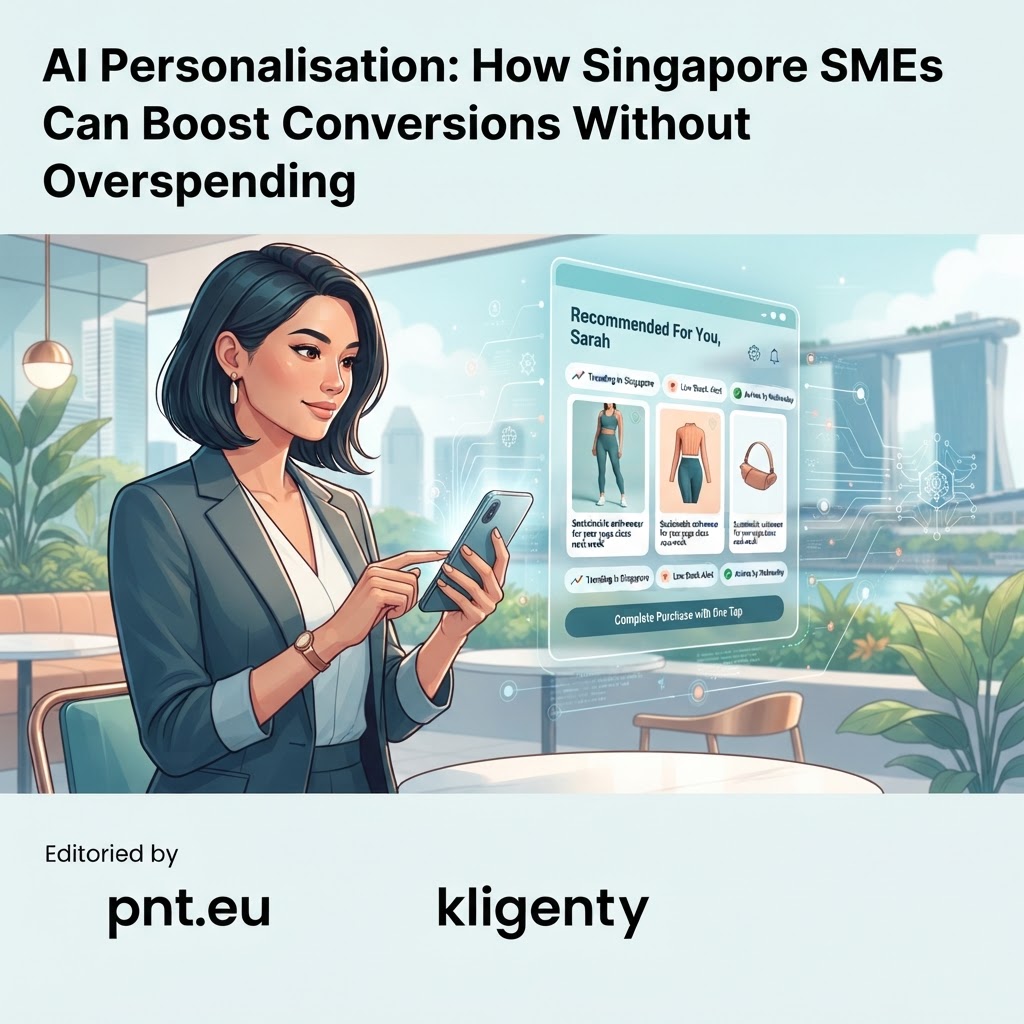
- AI-driven personalization: Dynamic content that adapts to user intent and behavioural signals increases relevance and conversions. Agencies can leverage AI to personalise CTAs, hero messaging, and product recommendations in real time.
- Headless and composable architectures: Separating front-end presentation from back-end content management allows faster experimentation and tighter integration with marketing platforms.
- Core Web Vitals and performance-first SEO: Google’s emphasis on user experience means performance improvements directly impact search rankings. Prioritise CLS, LCP and FID in every build.
- Privacy-first analytics and cookieless strategies: As third-party cookies fade, agencies must combine first-party data, contextual signals and server-side tracking to maintain targeting quality.
- Progressive Web Apps (PWAs): For clients with high repeat usage, PWAs deliver app-like speed and engagement without app store friction.
A forward-looking digital marketing agency Singapore pairs these trends with clear KPIs to demonstrate measurable value to clients.
Measuring the impact: KPIs that link design to agency growth
To make web design a revenue driver, measure outcomes that matter to both clients and agencies:
- Conversion rate uplift (by channel and landing page)
- Cost per acquisition (CPA) before and after redesign
- Average session duration and bounce rate for priority landing pages
- Organic traffic and ranking improvements for target keywords
- Revenue per visitor or per lead
Tracking these metrics turns design work into verifiable case studies. When agencies can show a decrease in CPA or a measurable lift in conversion rate after a redesign, that opens doors to higher fees and long-term retainers.
A practical workflow for agencies offering web design
Here’s a streamlined approach agencies can adopt to deliver consistent, measurable design outcomes:
- Discovery and hypothesis: Map marketing goals, user segments, and current performance gaps.
- Strategy and wireframes: Define information architecture and conversion paths.
- Rapid prototyping: Create high-fidelity templates and test critical flows with simple user testing.
- Build with analytics in mind: Instrument events, A/B test capability, and server-side tracking during development.
- Launch and iterate: Roll out in phases, measure results, and iterate based on data.
Agencies that systematise this process — and embed design as part of campaign planning — become indispensable growth partners. It’s why clients increasingly expect their digital partners to deliver both design and performance expertise, a service edge offered by many leading digital marketing agency Singapore.
Case example: turning design into growth (hypothetical)
A mid-sized e-commerce brand in Singapore faced high ad costs and poor landing page conversions. The agency implemented a redesign focused on faster load times, simplified checkout flow, clearer value messaging, and trust signals.
Results after 90 days:
- Conversion rate: +38%
- CPA: -27%
- Average session duration: +45%
- Repeat purchase rate: +12%
Beyond the metrics, the agency secured a multi-year retainer because they demonstrated measurable impact. This demonstrates how prioritising conversion-focused design converts marketing expertise into predictable revenue streams.
Actionable checklist for agencies and in-house teams
Use this checklist to align web design efforts with marketing growth:
- Map top 3 user journeys and design landing pages for each.
- Benchmark Core Web Vitals and set improvement targets.
- Implement mobile-first patterns and accessibility best practices.
- Set up analytics, event tracking, and A/B testing before launching changes.
- Use a headless or modular CMS to speed up iterative campaigns and creative tests.
- Build reusable components and a design system to reduce time-to-market.
This operational discipline allows agencies to scale creative tests and prove ROI faster — a competitive advantage in Singapore’s crowded market.
Pricing and packaging web design services for growth
Instead of one-off redesign fees, agencies should consider hybrid pricing:
- Fixed-price discovery and build for the MVP
- Monthly retainer for optimisation, A/B testing and updates
- Performance bonus tied to agreed KPIs (e.g., CPA reduction or revenue uplift)
This model aligns incentives and turns web design into a recurring revenue stream rather than a single deliverable.
Conclusion
For agencies operating in Singapore’s dynamic digital landscape, web design is a strategic lever that directly impacts campaign efficiency, client retention, and long-term growth. By prioritising UX-first builds, performance optimisation, and data-driven iteration, a digital marketing agency Singapore can convert design investments into measurable results — better conversions, lower acquisition costs, and stronger client relationships. Embedding these practices into your service offering positions the agency not just as a vendor, but as a growth partner delivering clear business outcomes.
For agencies ready to scale, partnering with designers and developers who understand both marketing and technical performance ensures each website is an asset that accelerates client success and agency revenue.