AI-Native Digital Marketing: A 2026 Guide for Singapore SMEs
In the evolving landscape of Singaporean commerce, businesses are moving past the novelty of simple AI chatbots to adopt AI-native digital marketing. As we approach 2026, the competitive advantage for SMEs lies not in using tools, but in building workflows where artificial intelligence is woven into the very fabric of web design, search engine optimisation, and customer engagement. For an SME owner, this shift represents a move from manual, fragmented marketing tasks to automated, data-driven ecosystems that function around the clock. By prioritising AI-native digital marketing, local firms can now deliver hyper-personalised experiences while managing the complex requirements of the Personal Data Protection Act (PDPA). This guide explores how your business can leverage these sophisticated integrations to drive measurable ROI, improve operational efficiency, and build lasting customer trust. At iPro Dezign, we believe that technology should serve your specific business goals, whether you are looking to scale your eCommerce presence or enhance your service visibility. With the support of PSG grants covering up to 50% of qualifying costs, there has never been a better time to modernise your digital presence with professional, results-focused guidance.
Table of Contents
Why AI-Native Workflows Matter for Singapore SMEs
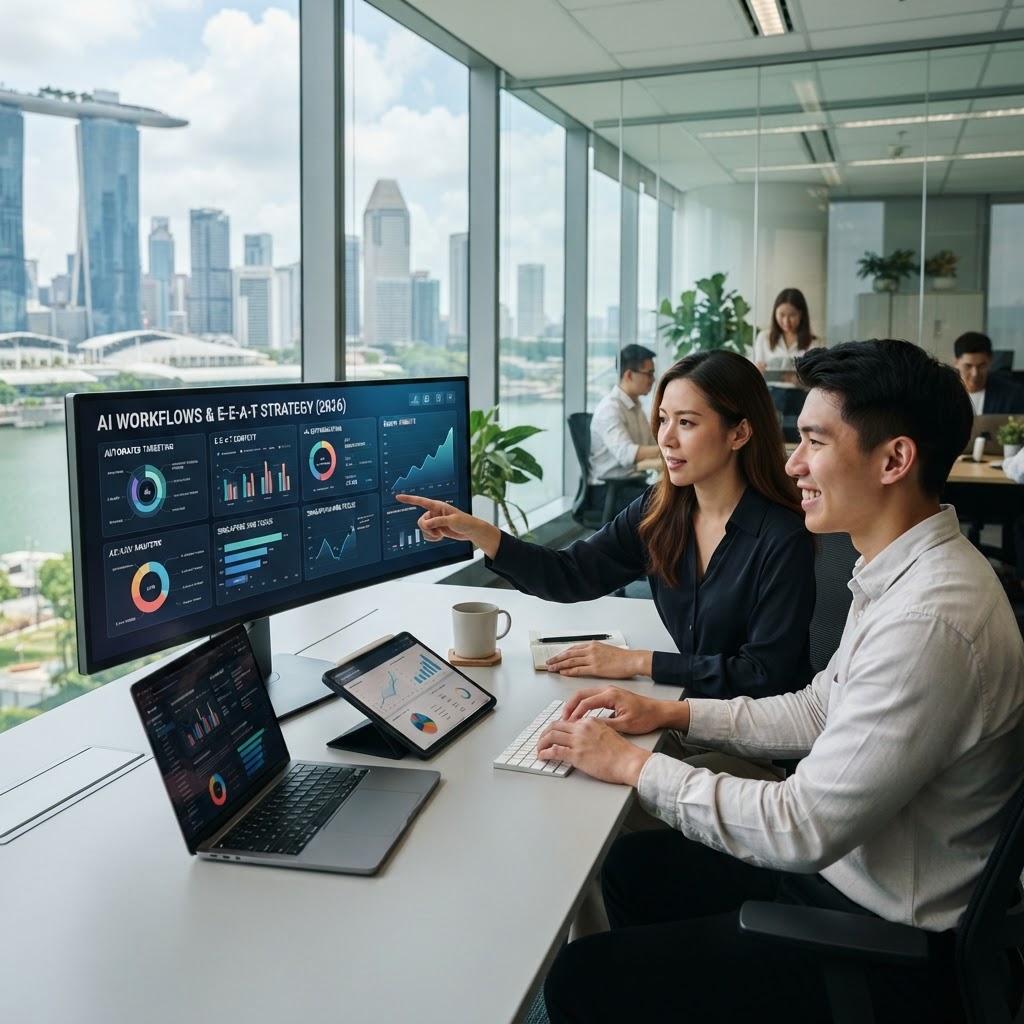
For many business owners, the term artificial intelligence often conjures images of automated customer support or simple drafting tools. However, true AI-native digital marketing goes deeper, focusing on the foundational systems that power your digital presence. In an era where Singaporean consumers expect seamless, fast, and secure digital interactions, relying on legacy manual processes is no longer sustainable. AI-native workflows allow SMEs to synchronise their web architecture with real-time analytics, ensuring that every click, scroll, and transaction informs the next stage of the customer journey. When our team helps clients transition to these advanced systems, we focus on removing the bottlenecks that typically hinder conversion. Instead of treating marketing and web design as separate entities, we look at the business holistically. For example, by integrating predictive analytics, a retail business can forecast inventory needs based on browsing behaviour rather than historical sales alone. This reduces waste and optimises marketing spend, ensuring your budget is directed toward the channels that actually move the needle. Furthermore, the efficiency gains found in automated workflows mean that your internal staff can focus on high-level strategy rather than administrative data entry. By investing in scalable, AI-ready architecture now, you position your SME to remain agile in a shifting market. We emphasise that these improvements are not about vanity metrics, but about creating a robust, high-performance foundation that supports your long-term growth objectives. With local expertise, we help you navigate the transition, ensuring that your digital assets are not just modern, but functional and aligned with the high standards expected by APAC consumers. The result is a more resilient business model that thrives on data-backed decisions.
Integrating AI into Web Design and User Experience
Modern web design is about far more than aesthetics; it is about performance, accessibility, and speed. Integrating AI-native elements into your website means building for Core Web Vitals—the industry standard for measuring user experience metrics like loading speed, visual stability, and interactivity. When we design sites, we leverage automated testing tools that simulate thousands of user paths to identify where friction points occur. By using AI to audit your site architecture, we can ensure that your LCP (Largest Contentful Paint), which is the time it takes for the main content to load, remains under the 2.5-second threshold recommended by search engines. This technical precision is vital for the mobile-first audience prevalent in Singapore. A site that is not optimised for mobile performance often experiences high bounce rates, which negatively impacts your visibility. Our approach involves using smart caching and dynamic content delivery that adapts based on the user’s connection strength and device type. Beyond speed, AI-driven personalisation allows your website to show relevant content to different visitor segments, effectively acting as a digital salesperson that never sleeps. If a returning visitor shows interest in a specific service, the site can adapt its layout to highlight relevant case studies or contact forms, thereby improving the likelihood of conversion. The table below illustrates the typical impact of integrating AI-focused web design on core business metrics, provided that the site structure is sound and content is relevant to the target audience.
| Metric | Before AI-Native Design | After AI-Native Design |
|---|---|---|
| Average Page Load Time | 5.2 Seconds | 1.8 Seconds |
| Mobile Conversion Rate | 1.2% | 2.4% |
| Bounce Rate | 65% | 42% |
We work closely with clients to ensure these design choices align with their branding while maintaining rigorous security protocols, ensuring that your digital storefront remains both fast and safe.
Advanced SEO and Automated Content Strategies
Search engine optimisation is no longer a game of guessing keywords; it is a systematic process of understanding user intent and matching it with high-quality content. AI-native digital marketing allows us to automate the technical aspects of SEO, such as monitoring broken links, updating meta descriptions at scale, and identifying content gaps. When we speak about SEO, we advocate for a content-first strategy that addresses the specific questions your customers are asking. By using natural language processing tools, our team can identify emerging trends in your industry and help you create content that serves as an authority, not just filler. Automation helps in maintaining a consistent content schedule, which signals to search engines that your site is active and relevant. However, we remain firm on the point that AI is an assistant, not a replacement for human expertise. Search engines are increasingly sophisticated at identifying low-quality, AI-generated fluff. Our strategy involves using AI to handle the data-heavy lifting—such as competitor analysis and keyword clustering—so that our content specialists can focus on injecting the nuance, empathy, and professional experience that only a human voice can provide. This balanced approach ensures that your content is not only searchable but also truly useful to the person reading it. We also focus on local SEO strategies, ensuring that your business appears in relevant map searches and location-based queries, which is crucial for Singaporean SMEs. By consistently refining your keyword strategy based on real-time search data, we help you maintain visibility in a crowded marketplace, allowing your business to reach the right people at the right time without relying on luck.
Data Ethics, PDPA Compliance, and Consumer Trust
In the digital age, trust is the currency of the internet. As SMEs collect more data to fuel their AI-native marketing initiatives, the responsibility to protect that data becomes paramount. Singapore’s Personal Data Protection Act (PDPA) sets a high bar for businesses, requiring explicit consent for data collection and strict protocols for storage and usage. An AI-native approach must be designed with privacy at its core, known as ‘privacy by design.’ This means that from the moment a user interacts with your website, their data is handled securely, with transparent policies clearly explained. We help our clients implement consent management platforms that are both user-friendly and fully compliant with local regulations. Being transparent about how you use AI to personalise their experience builds long-term loyalty; customers are generally willing to share data if they see a genuine benefit in return, such as tailored product recommendations or streamlined checkout processes. Our process includes regular security audits to ensure that your site, forms, and email marketing databases are shielded from vulnerabilities. We also educate your team on best practices for data handling, ensuring that your internal culture reflects the integrity of your brand. As an agency, we take security seriously, providing robust solutions that protect your reputation. When consumers know their data is safe, they are more likely to engage with your brand, complete purchases, and recommend you to others. By prioritising ethical data use, you turn compliance from a hurdle into a competitive advantage. We believe that professional, honest digital marketing is the only way to build a sustainable business in the modern economy, and we are committed to helping you navigate this complex, essential landscape with confidence.
To conclude, transitioning to an AI-native digital marketing strategy is a proactive step that every forward-thinking Singaporean SME should consider. By integrating performance-focused web design, data-driven SEO, and strict ethical compliance, you create a foundation that supports long-term profitability and customer trust. Remember that success in this space is not achieved through shortcuts or hype, but through the consistent application of smart technology and strategic foresight. At iPro Dezign, we are dedicated to helping local businesses leverage these tools effectively, ensuring that every dollar spent contributes to your growth. We understand the unique challenges faced by local enterprises and are here to guide you through the process, from initial consultation to the implementation of scalable, high-impact solutions. With PSG funding support available for many of our services, you can invest in the future of your business with confidence. We invite you to reach out for a consultation to discuss your specific needs and see how our team can help you thrive in the coming year.
Frequently Asked Questions
1. What exactly does AI-native mean for a small business? It means your web and marketing systems are built to process data and automate tasks intelligently, reducing manual work and improving ROI.
2. Can I use PSG grants for AI-related digital services? Yes, many digital solutions, including website development and marketing automation, fall under the PSG grant framework, which can cover up to 50% of the cost.
3. How does AI-native marketing impact PDPA compliance? It mandates ‘privacy by design,’ where data collection and usage protocols are automated to meet strict PDPA standards from the start.
4. Is AI-generated content bad for SEO? Low-quality, unedited AI content is discouraged by search engines. We use AI for research and strategy, while keeping the writing human and original.
5. How long does it take to see results? While infrastructure improvements like site speed are immediate, SEO and content strategies typically show measurable trends over 3 to 6 months of consistent effort.