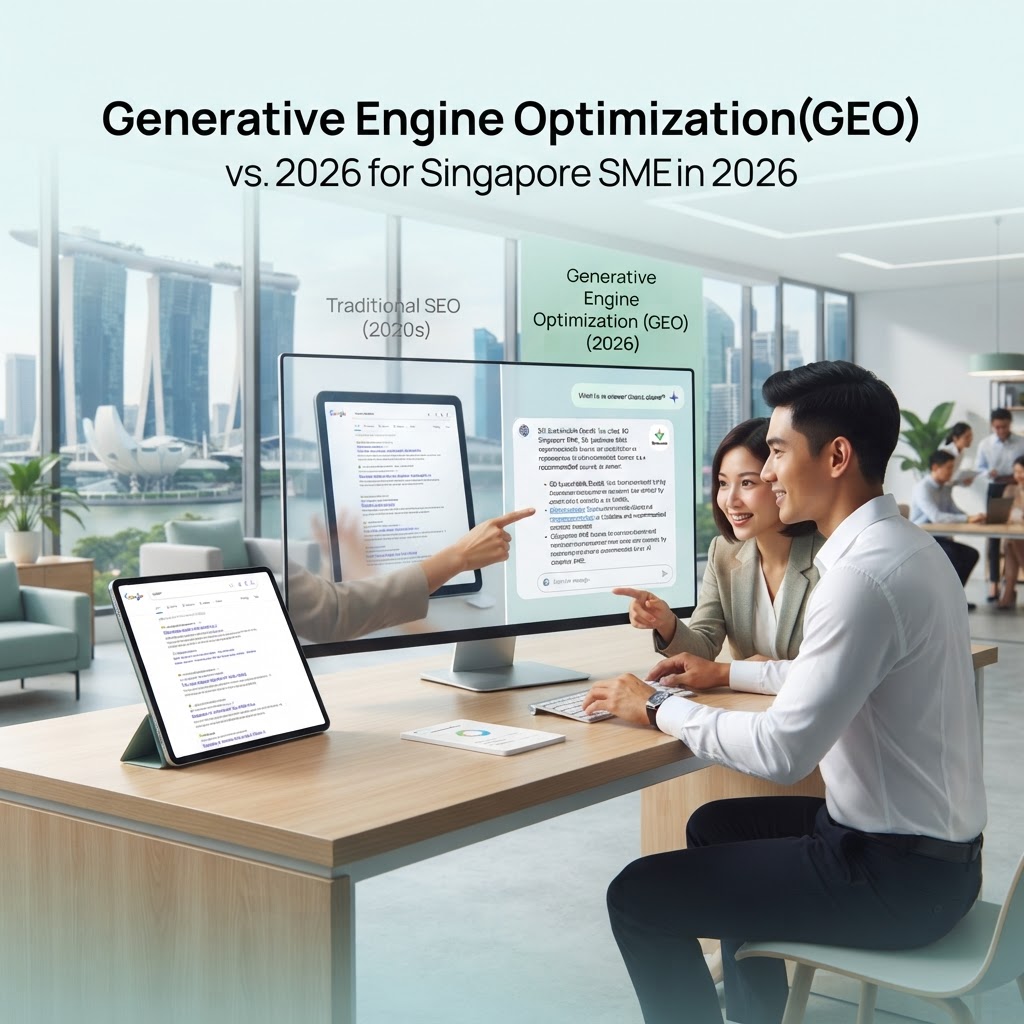
The AI shift in Singapore: why 2026 is a turning point
Singapore businesses face a unique set of digital challenges: intense local competition, mobile-first consumers, and rising user expectations for speed and relevance. In 2026 the difference between being discovered and being invisible will increasingly come down to how well brands combine AI-driven search strategies with experience-focused web design. This article explains practical, evidence-based approaches to AI-powered SEO Singapore and web design Singapore that boost visibility, conversions and long-term growth.
How AI changes SEO Singapore fundamentals
Search in 2026 is no longer just keyword matching. Generative models, contextual ranking and multi-modal signals mean relevance is measured by intent, content clarity and on-site experience.
- Intent-first indexing: Search engines increasingly infer user intent from query context, session history and generative understanding. Optimizing for intent (informational, navigational, commercial, transactional) is more important than chasing high-volume keywords.
- Semantic content clusters: Topical authority beats keyword stuffing. Well-structured clusters of content that answer user journeys perform better in local markets like Singapore.
- Rich snippets and multi-modal results: Images, product carousels and AI-generated summaries show up in results. Implementing structured data helps Singapore businesses earn visibility in those slots.
Practical implementation: map your services to user intents and build pillar pages plus brief, answer-focused pieces that satisfy immediate queries while linking to deeper resources.
AI-powered on-site tactics for SEO Singapore
AI tools speed up analysis and personalization, but the server-level fundamentals still matter.
- Core Web Vitals and user experience: Use AI-assisted monitoring to detect performance regressions, then prioritize improvements (image compression, critical CSS, server response times). A fast site is a ranking and conversion requirement.
- Automated content briefs and optimization: Use AI to generate content outlines that align with search intent, then edit for local nuance, brand voice and Singapore-specific signals like HDB/URA references or local payment options.
- Smart internal linking: Leverage AI to audit link equity flows and suggest internal link improvements that boost topical authority across service pages.
For more detailed guidance on AI approaches to search optimization for Singapore SMEs, explore an AI-focused optimization guide built for local businesses in Singapore.
Local SEO: voice, maps and proximity signals
Local search in Singapore relies heavily on proximity, business data accuracy and review signals.
- Optimize Google Business Profile with accurate categories, operating hours (including public holiday exceptions) and local photos.
- Conversational and voice queries: Optimize FAQ and short-answer snippets for natural-language queries used in voice search on local devices.
- Reviews as a signal: Encourage verified reviews and respond promptly; AI can help triage review sentiment and suggest response templates that fit your brand tone.
These local tactics are essential for any SEO Singapore campaign that wants to capture neighbourhood-level demand.
Web design Singapore: marry conversion design with AI personalization
Web design in 2026 is about speed, accessibility and personalized experiences that guide users toward conversion.
- Mobile-first, accessibility-first design: Singapore audiences use mobile heavily; design systems should prioritize responsive touch targets, readable fonts and accessible navigation.
- Personalization without friction: Use agentic personalization (AI-driven agents that act on user signals) to present relevant product bundles, local service availability and dynamic CTAs. Agentic approaches can automate conversions while preserving privacy-compliant data usage.
- Conversion engineering: Design pages to reduce friction—clear value propositions, progressive disclosure for complex services and microcopy that preempts objections.
If you’re redesigning for lead generation, examine best-practice templates that combine UX and SEO to capture intent and convert visitors into qualified leads.
Integrating generative search signals into content and UX
Generative search will increasingly synthesize content for users. Your content strategy must anticipate and feed that synthesis.
- Provide concise, factual summaries: Create short answer blocks that directly answer common queries, then link to detailed pages for depth.
- Source signals and transparency: Use citations, dates and structured facts so generative systems can verify and surface your content confidently.
- Multi-format readiness: Supply high-quality images, short videos, transcripts and structured metadata so generative engines can repurpose assets.
Companies that adopt generative engine optimization best practices will be prioritized for synthesized answers and richer SERP placements.
Measurement: what AI helps you track and what you still need a human to judge
AI expands measurement capacity but human judgment remains crucial.
- Predictive analytics for SEO: AI models can forecast keyword performance and traffic lift from specific content investments; use these to prioritize sprints.
- Behavioral segmentation with AI: Cluster users by behavior and measure cohort conversion performance to guide personalization and design changes.
- Human oversight: Use manual audits for brand tone, regulatory compliance and nuanced UX flows—metrics alone won’t capture brand fit or long-term trust.
Privacy, compliance and trust in Singapore
Singapore’s regulatory landscape emphasizes data protection and transparency. When implementing AI-driven personalization and tracking:
- Favor first-party data collection with explicit consent and granular preferences.
- Minimize cross-site tracking where possible and communicate data use clearly on-site.
- Use on-device or federated models for personalization to reduce central data risk.
Trust signals—clear policies, verifiable testimonials and transparent pricing—improve both rankings and conversions.
Tech stack recommendations for 2026
A pragmatic stack balances speed, AI capability and manageability:
- CMS with headless options: A headless CMS supports omnichannel delivery and faster experiments.
- Edge CDNs and serverless functions: Reduce latency for global and local Singapore traffic.
- AI-assisted SEO tools: Tools that generate briefs, surface keyword intent, and recommend structured data save time and maintain consistency.
- Analytics with privacy-aware features: Choose platforms that support consent mode and cookieless measurement.
These choices support both SEO Singapore goals and modern web design Singapore practices.
Case-style example: small clinic in Toa Payoh
A single-location clinic used an AI-led content cluster approach: location pages, condition-based guides and short-answer snippets. They combined a performance-focused redesign with localized schema and review management. Within 6 months organic visits for transactional queries rose by 45% and appointment requests increased by 30%.
If you’re considering a similar transformation, examine lead-focused web design patterns that combine on-page SEO and conversion psychology.
8-step checklist to implement AI-powered SEO Singapore and web design Singapore
- Audit intent gaps: map high-intent queries and missing content.
- Fix Core Web Vitals: prioritize mobile speed and interactivity.
- Build topical clusters: create pillar pages and linked supporting articles.
- Implement structured data: localBusiness, product and FAQ markup.
- Localize UX: clear local references, payment options and contact flows.
- Deploy AI-assisted briefs: generate outlines, then human-edit for local nuances.
- Set up personalization guardrails: privacy-first data collection and on-site controls.
- Measure and iterate: use cohort analysis and predictive forecasts to guide investment.
Resources and further reading
- Read a practical AI search optimization guide designed for Singapore SMEs to learn step-by-step techniques and templates.
- Explore generative engine optimization resources focused on delivering content that is easily synthesized by modern search systems.
- Learn how agentic AI can automate lead workflows safely for local businesses.
- Review examples of lead-generating web design templates that combine SEO and UX for measurable outcomes.
- For vendor information and agency capabilities, review the company overview and service pages to see implementation case studies.
Final perspective: balance automation with human insight
AI accelerates discovery, testing and personalization, but it doesn’t replace strategic thinking. For SEO Singapore and web design Singapore in 2026, success comes from combining automated efficiency with deep local knowledge and human-centered design. Focus on user intent, speed and trust—those elements make AI-driven strategies convert into real business outcomes.