AI Search Optimization in Singapore: A 2026 Guide for SMEs
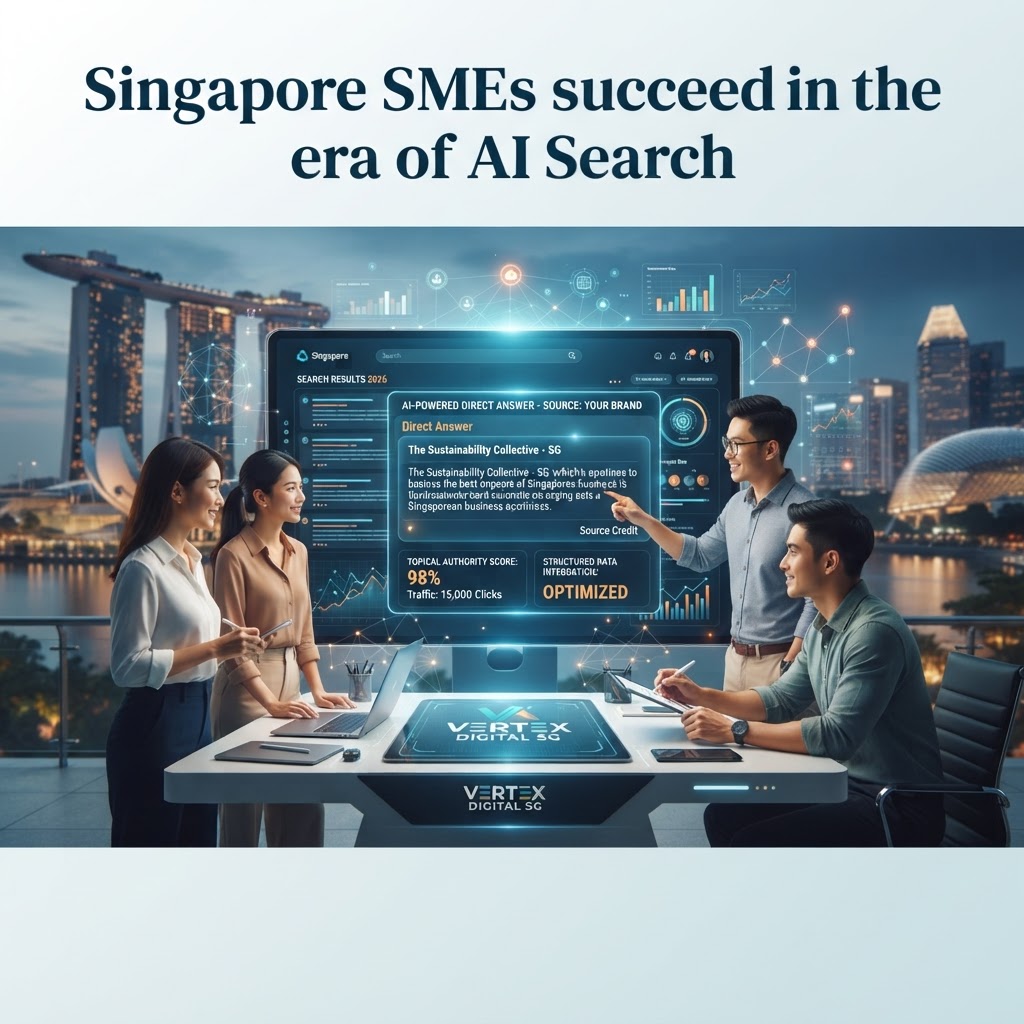
The digital landscape in Singapore has evolved significantly. By 2026, the traditional blue-link search results are no longer the sole destination for your potential customers. Generative AI, integrated directly into search engines, now provides instant, synthesized answers to complex queries, often without users ever clicking through to a website. This paradigm shift makes AI search optimization in Singapore an essential strategy for any local business aiming to remain relevant. For Singaporean SMEs, this means the focus has shifted from chasing high-volume keywords to establishing ‘zero-click’ authority. To thrive in this environment, your brand must transition from being just another website to becoming a verifiable, high-quality source of information that AI models trust and cite. At iPro Dezign, we specialise in helping local enterprises navigate these complexities by blending technical performance with content strategy. Whether you are leveraging the Productivity Solutions Grant (PSG) to modernise your digital infrastructure or refining your content to meet the demands of AI engines, understanding how to position your brand as a primary source is the key to sustainable growth in an increasingly automated digital ecosystem.
Table of Contents
The Strategic Shift: From Keyword Volume to AI Authority
In the past, SEO was largely a game of mapping keywords to page titles and building external links to signal popularity. Today, AI search engines prioritise accuracy, context, and credibility. When a user asks an AI assistant about the best digital marketing services in Singapore, the engine synthesises information from multiple trusted sources to provide a concise answer. If your business is not perceived as an authority in your niche, you will be excluded from these responses entirely. This shift requires a fundamental change in how Singaporean SMEs approach their online presence. Instead of attempting to manipulate rankings, businesses must focus on establishing themselves as deep subject-matter experts. This means creating comprehensive, structured content that clearly answers user questions and provides value beyond basic product descriptions. AI models lean heavily on E-E-A-T—Experience, Expertise, Authoritativeness, and Trustworthiness. For a Singaporean business, this implies showcasing your local knowledge, adhering to strict PDPA compliance standards, and demonstrating the specific expertise that only a local operator can offer. Our team emphasises that authority is earned through consistency and quality. When you provide clear, structured data that helps AI crawlers understand your offerings, you improve your chances of being cited as a primary source. This ‘zero-click’ authority is not just about rankings; it is about building brand awareness and trust before a customer even lands on your site. By focusing on your specific industry niche and addressing the granular pain points of your target audience, you create content that AI engines find indispensable. This proactive approach ensures your brand remains visible at the top of the search funnel, regardless of how the underlying technology evolves over the coming years.
Building a Technical Foundation for AI Crawlers
Technical performance is the silent engine behind your visibility. An AI-powered engine will not cite a website that is slow, insecure, or difficult to navigate, as it prioritises the user experience for the final reader. Core Web Vitals—a set of metrics that measure real-world user experience for loading performance, interactivity, and visual stability—have become a baseline requirement for any modern website. For SMEs in Singapore, building a site that is optimised for these metrics is no longer optional; it is a critical component of AI readiness. Our team frequently helps clients transition to high-performance architectures, often utilizing headless CMS solutions that separate your content management system from your front-end display, resulting in lightning-fast load times. Additionally, schema markup—a form of structured data that tells search engines exactly what your content is about—is vital. By implementing clear product, service, and business-location schema, you provide AI crawlers with the context they need to index your business accurately. Consider the following table which highlights essential technical components for 2026 digital infrastructure:
| Component | Purpose for AI Search | Benefit to SMEs |
|---|---|---|
| Mobile-First Responsive Design | Ensures accessibility on all devices | Improved engagement and local reach |
| Structured Schema Markup | Provides context for AI crawlers | Higher likelihood of featured snippets |
| Optimised Core Web Vitals | Maintains site speed and stability | Better retention and lower bounce rates |
| HTTPS/Security Protocols | Ensures user trust and privacy | Mandatory for business credibility |
Beyond these basics, you must ensure your site is built to handle the high-speed demands of modern browsing. When we rebuild an SME website, we look at the full tech stack to ensure it is lightweight and efficient. A slow site does not just frustrate human users; it signals to search algorithms that your site lacks the quality necessary for recommendation. By maintaining a clean, error-free, and fast website, you build a foundation that AI can trust. This level of technical excellence requires ongoing maintenance and periodic audits to keep up with changing web standards. Whether you are using a PSG grant to offset your development costs or investing directly, prioritising these technical foundations is one of the most effective ways to secure your place in the future of search, ensuring your site remains a high-performing asset for years to come.
Content Strategies for Generative Search Relevance
Content is the fuel for AI search. While technical foundations provide the house, your content is the furniture and the hospitality that keep users—and AI—engaged. To succeed with AI search optimization in Singapore, your content strategy must shift toward answering specific, complex queries. This is known as ‘answer engine optimization.’ Instead of writing generic posts about a broad topic, focus on creating content that solves a distinct problem. For instance, a local renovation firm should not just write about ‘renovation tips’ but should instead create detailed guides on ‘how to handle HDB renovation permits in Singapore’ or ‘selecting sustainable materials for small apartment layouts.’ These topics are highly relevant to your audience and offer the depth that AI models look for when synthesising information. Our team recommends a content-first strategy where you map your content to the customer journey, from awareness to decision-making. Include internal linking that connects your blog posts to specific service pages, making it easy for both humans and AI crawlers to navigate your site and understand your expertise. Use clear, jargon-free language that explains technical terms, but maintain a tone of authority that demonstrates your status as a leader in your sector. It is also crucial to incorporate local context. By referencing Singapore-specific regulations, local trends, and regional challenges, you distinguish your content from generic international articles. AI models increasingly value this local nuance because it provides higher relevance to local queries. Furthermore, your content should be highly readable and scannable, using headers, short paragraphs, and bullet points to break up complex ideas. By consistently providing value that answers the ‘how’ and ‘why’ of your industry, you establish a loop of trust. When your content is cited by an AI, your brand gains immediate credibility, leading to higher-quality traffic and improved conversion rates for your business, ultimately supporting your broader growth objectives.
Measuring ROI and Performance in the AI Era
Measuring success in an era of AI search requires a shift in mindset regarding what constitutes a valuable metric. Traditional metrics like vanity traffic or keyword rankings for broad terms are losing their significance. Instead, you should focus on metrics that reflect actual business impact and engagement. We advise our clients to monitor brand sentiment, referral traffic from AI platforms, and high-intent enquiry volume. When you provide authoritative content, you should expect to see an increase in branded search queries, indicating that your brand is becoming a primary destination in the minds of your target audience. It is also important to track ‘zero-click’ impact. If your brand is being cited in generative search results, you may see a change in your traffic patterns; look for shifts in the quality of your leads. Often, clients who are cited by AI engines see fewer, but more qualified, enquiries because the AI has already pre-qualified the user by explaining your service accurately. Measuring the effectiveness of your digital presence involves a holistic view of your conversion funnel. For Singapore SMEs, the ability to utilise government support like the PSG grant for digital marketing and web development makes this an ideal time to invest in tracking tools and analytics. By establishing a clear baseline before you implement your new strategy, you can accurately assess the growth that follows. Remember that ROI in digital marketing is a cumulative process. It requires consistent effort, technical vigilance, and a willingness to adjust your strategy based on data. We always encourage a consultative approach, where your marketing data informs your future content production and business decisions. By viewing your website as a long-term investment rather than a one-time project, you ensure that your digital assets continue to work for you, driving growth and enquiries even as the search landscape continues to evolve. Our goal is to provide you with the transparency and performance data you need to make smart, informed decisions about your company’s future.
The shift towards AI-powered search is not an obstacle, but an opportunity for Singaporean SMEs to stand out through quality and expertise. By building a fast, secure, and content-rich digital presence, you can ensure your business remains a trusted source for your customers. If you are ready to explore how your business can adapt to these changes, or if you want to understand how your current site can be optimised through PSG-supported initiatives, please reach out to our team for a consultation. We are here to partner with you and help you navigate the future of digital growth with confidence and clarity. Whether you need a performance-led website rebuild or a targeted content strategy, our experts are ready to assist.
Frequently Asked Questions
1. What is zero-click authority? It is the concept of becoming a primary, trusted source that AI engines cite directly in their search results, allowing users to find your information without needing to visit your website.
2. Can SMEs in Singapore still use PSG grants for this? Yes, the Productivity Solutions Grant (PSG) continues to support SMEs in adopting pre-approved digital solutions that include website design and marketing enhancements to improve competitiveness.
3. How does AI affect traditional SEO? Traditional SEO focuses on keyword volume and link building; AI search optimization focuses on structured data, E-E-A-T, and providing high-quality, authoritative answers to complex user questions.
4. Why is a headless CMS better for AI performance? A headless CMS offers superior speed and security by separating the back-end data management from the front-end presentation, which is a major factor in meeting the strict Core Web Vitals required for modern search.
5. Should I stop tracking keyword rankings? You do not need to stop, but you should shift your focus toward conversion metrics, brand growth, and the quality of leads that your content strategy generates over time.