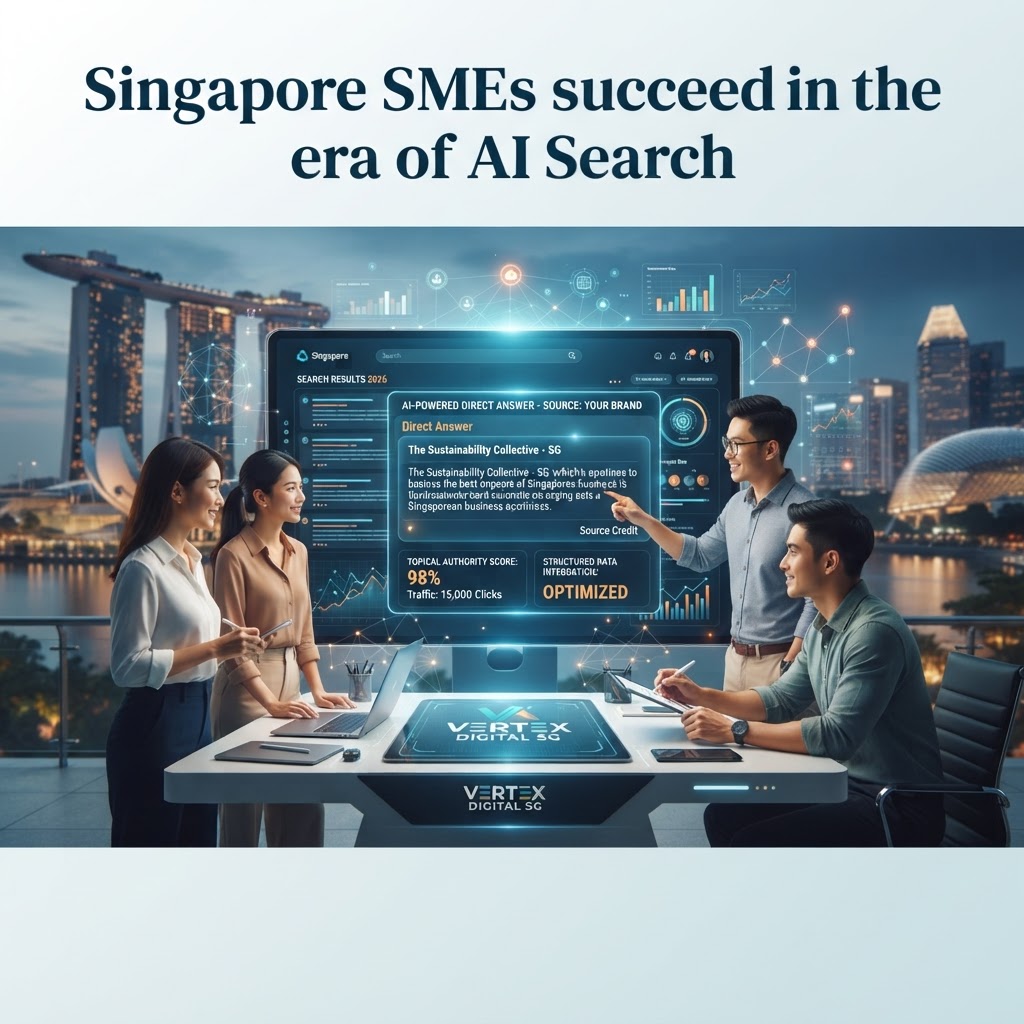
AI Search Optimization: A 2026 Guide for Singapore SMEs
The digital landscape in Singapore is undergoing a profound transformation. As we move further into 2026, the way potential customers discover your business is no longer limited to the traditional blue links on a search results page. Platforms like ChatGPT and Google AI Overviews are actively synthesizing information, creating a new paradigm where direct, AI-generated answers replace simple search queries. For local business owners, this evolution necessitates a strategic pivot toward AI search optimization. Relying solely on historical keyword stuffing or basic meta-tagging is no longer sufficient to maintain visibility in this competitive market. Instead, your digital presence must become a source of verified, high-quality data that AI models find easy to reference and trust. This shift represents a transition from competing for clicks to competing for citation. Whether you operate an eCommerce storefront or a professional service firm, understanding how to position your content so that AI platforms recognise your expertise is now a critical business survival skill. Our team at iPro Dezign is here to guide you through these technical adjustments, ensuring your brand remains relevant and discoverable in this new era of automated discovery.
Table of Contents
- Understanding the Shift Toward AI-Centric Discovery
- Crafting Content for AI Citability and Authority
- Optimizing Technical Infrastructure for AI Indexing
- Leveraging Local Insights and PSG Support for Growth
Understanding the Shift Toward AI-Centric Discovery
Traditional search engine optimization focuses on tricking algorithms to display your link at the top of a list. In 2026, AI search optimization flips this script by prioritizing informational accuracy and user context. When a user asks an AI model about local professional services or product reviews, the model aggregates snippets of data from across the web to construct a comprehensive answer. If your website is not structured in a way that AI systems can parse, your brand effectively becomes invisible. For Singapore SMEs, this means the content on your site needs to be exceptionally clear, authoritative, and structured. AI models look for specific signals such as expertise, experience, authoritativeness, and trustworthiness, collectively known as E-E-A-T. In the Singaporean context, this also includes local nuances. If an AI model is answering a query about the best IT consultancy or boutique retail shop in the Central Business District, it pulls data that reflects local consensus and verified business information. SMEs must now audit their content to ensure it provides direct answers to specific questions rather than relying on broad, high-volume keywords. This strategy requires a mindset shift from volume-based traffic to value-based relevance. You are no longer just writing for people; you are writing for the intelligence systems that serve information to those people. Failing to adapt to this change leaves you vulnerable to competitors who have already begun structuring their digital assets for machine consumption. By focusing on concise, fact-based answers and structured data, you ensure that your brand serves as a reliable source in the AI feedback loop, effectively increasing your digital footprint without needing a massive budget. This is the cornerstone of sustainable growth in the modern digital economy.
Crafting Content for AI Citability and Authority
To ensure your business remains a preferred source for AI queries, your content must evolve beyond promotional copy. AI models favour content that is logically organized, data-rich, and easy to summarize. When crafting blog posts, service descriptions, or product pages, prioritize the use of clear headers, bullet points, and definitive statements. Avoid jargon-heavy, overly complex sentences that confuse algorithms. Instead, provide direct responses to the common questions your target audience asks during their purchasing journey. For example, rather than writing a vague article about marketing, write a detailed guide on how to qualify for government grants in Singapore. This provides the AI with a factual, citable answer it can present to users. Our team focuses on building content architectures that leverage schema markup—a form of code that tells search engines exactly what your content is about—to make it easier for machines to understand your site structure. This is not just about keyword placement; it is about semantic clarity. Furthermore, incorporating original insights, industry data, and localized examples creates a unique footprint that generic content cannot replicate. When your site is the original source of an answer, the AI is more likely to cite your brand as the authority. This approach builds long-term trust with both the machine and the human end-user. Consider the following comparison to understand the difference in approach when updating your digital strategy:
| Metric | Traditional SEO Strategy | AI Search Optimization Strategy |
|---|---|---|
| Primary Goal | Higher Click-Through Rates | High-Quality Citations |
| Content Style | Keyword-Dense Articles | Fact-Based, Concise Snippets |
| Technical Focus | Backlinks and Page Speed | Schema Markup and Semantic Clarity |
| Result Tracking | Keyword Rankings | AI Visibility and Brand Queries |
By shifting your focus to these core metrics, you align your business with the future of digital discovery, ensuring that your expertise is recognized across all modern search interfaces.
Optimizing Technical Infrastructure for AI Indexing
Technical performance is the backbone of AI search optimization. If your website is slow, bloated with unused code, or fails to meet Core Web Vitals—the industry standards for page load speed, responsiveness, and visual stability—AI crawlers may struggle to index your content effectively. In the Singaporean market, where mobile browsing is dominant, a performance-first build is non-negotiable. Our team recommends a headless content management system or a lightweight, optimized WordPress configuration to ensure your site loads instantly on mobile devices. Fast load times are a strong signal of site quality to both users and AI systems. Furthermore, ensure your site is secure and compliant with local PDPA regulations, as AI models prioritize safe, reliable domains. Another critical aspect is structured data, which provides machines with a blueprint of your content. By implementing JSON-LD, a specific format for structured data, you can explicitly define your business hours, pricing, service offerings, and location. This allows an AI to instantly extract your business details without guessing. If you are an SME owner, you might wonder how to manage these technical requirements without a dedicated IT department. This is where our expertise comes in. We manage the technical burden of optimization, from optimizing images and scripts to setting up rigorous site architecture that facilitates easy scanning. When we rebuild client sites for better performance, the impact is often felt in both user satisfaction and search visibility. Faster, cleaner sites are inherently more discoverable. Remember that machines are simply looking for the most efficient path to provide a quality answer to a human user. By optimizing your infrastructure, you make your website the most logical, accessible, and reliable destination for that information, regardless of whether the traffic originates from a traditional search engine or a conversational AI interface.
Leveraging Local Insights and PSG Support for Growth
Singaporean SMEs have a unique advantage: access to structured government funding that can offset the costs of digital transformation. Under the Productivity Solutions Grant (PSG), eligible businesses can receive support for upgrading their digital presence, including web design, SEO, and AI integration services. This funding covers up to 50% of the cost, making it the perfect time to audit and enhance your current strategy. Our agency specializes in helping SMEs navigate these applications, ensuring you maximize your ROI while building a future-proof website. The goal is to integrate AI search optimization into your wider business growth plan rather than viewing it as a separate project. By combining PSG-funded technical builds with a refined content strategy, you can achieve a sophisticated digital presence that would otherwise be out of reach. We believe in transparency and honest partnerships. Digital success is not an overnight process, but a cumulative effort of consistent improvements, regular content audits, and technical maintenance. We help you measure your progress through clear, actionable data, showing you how your brand visibility grows as you become a more cited authority in your niche. Whether you need a full site rebuild, a performance audit, or a custom AI-ready content strategy, our team provides the hands-on expertise needed to succeed. We invite you to reach out for a consultation to discuss your current challenges and explore how you can leverage current funding to prepare for the 2026 digital environment. With our support, you can focus on running your business while we handle the complexity of staying ahead in the AI-driven search market. Let us turn your digital presence into your strongest growth asset.
The path forward for Singapore SMEs is clear: prioritize quality, clarity, and performance. By aligning your business strategy with these principles, you ensure that as search technology continues to evolve, your brand remains at the forefront of customer discovery. We encourage you to review your current digital assets and identify opportunities to improve your E-E-A-T signals. If you are ready to take the next step, our team is available to help you assess your site and discuss potential funding options. A consultative approach is the best way to determine your unique needs and ensure your budget is invested in areas that yield measurable outcomes. Let’s start a conversation about your future growth today.
Frequently Asked Questions
What is AI search optimization? It is the process of structuring your website’s content and technical code so that AI-powered search engines can easily index, understand, and cite your business as a reliable source of information.
Why is AI changing search? AI platforms like ChatGPT prioritize providing direct, summarized answers to user queries, which shifts the goal from earning clicks to becoming an authoritative source that is referenced by these systems.
How can Singapore SMEs benefit from the PSG grant? The Productivity Solutions Grant allows eligible SMEs to claim up to 50% of the costs associated with digital upgrades, such as website rebuilds and SEO services, helping businesses remain competitive with lower upfront investment.
What is the role of structured data? Structured data is code that provides machines with a clear context about your business, such as contact info, products, and services, making it easier for AI to accurately extract and display your data.
Does AI search optimization replace traditional SEO? It acts as an evolution of traditional SEO. While keyword and link strategies remain relevant, you must now add a layer of semantic clarity and technical speed to ensure your brand is compatible with modern AI interfaces.