Beyond Keywords: How to Adapt Your Singapore SME Website for the AI Search Era
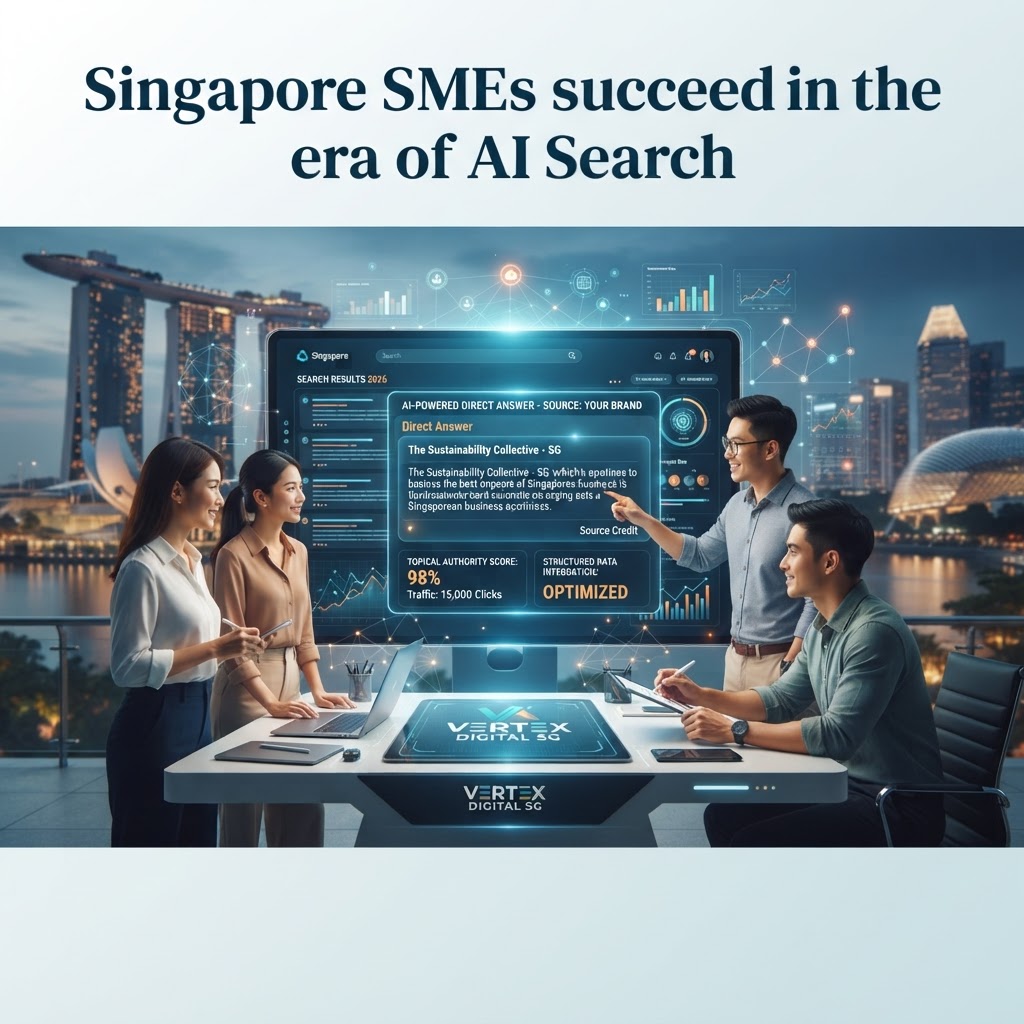
In the rapidly evolving digital landscape of Singapore, the way potential customers discover local businesses is undergoing a fundamental transformation. For years, digital marketing strategies have revolved around chasing specific search terms to drive traffic. However, the rise of AI-powered search engines—which provide direct, conversational answers rather than a list of links—means that traditional tactics are losing their edge. For Singaporean SMEs, this shift represents both a challenge and a strategic opportunity. To maintain your visibility and authority, you must shift your focus toward Answer Engine Optimisation (AEO). By positioning your content to be the definitive source that AI models reference, you ensure your business remains relevant even when users never actually click through to your website. At iPro Dezign, we specialise in helping local businesses navigate this transition, ensuring your web presence is built for both human users and the sophisticated algorithms that interpret your data. Leveraging government initiatives like the PSG grant to cover up to 50% of your digital transformation costs, your business can adapt to this new era without excessive capital strain, securing a sustainable path for growth in our mobile-first, high-tech market.
Table of Contents
Why Traditional SEO is Changing
The traditional search experience, which historically acted as a directory of links, is rapidly being replaced by generative AI systems. These platforms synthesise vast amounts of data to provide instant, contextualised answers directly on the search results page. For an SME owner in Singapore, this means that merely occupying a top spot for a high-volume keyword is no longer a reliable metric for success. If a potential customer asks an AI assistant about the best IT support services in the Central Business District, they may receive a concise summary of options without ever visiting your company website. This shift prioritises intent and depth over repetition. When you focus solely on keyword density, you risk producing thin content that fails to provide the comprehensive value these AI models are programmed to extract and display. The objective must pivot from capturing traffic to providing clear, authoritative expertise that AI can trust and cite. By understanding that AI search engines value structured data and logical flow, your team can refine existing web assets to be more searchable. This process involves stripping away unnecessary fluff and focusing on direct, problem-solving content that directly addresses the pain points your target audience faces. When we assist clients in auditing their digital footprints, we look at how well their content answers specific user questions rather than how many times a term appears in a paragraph. Relying on outdated practices will only lead to diminishing returns as user behaviour continues to migrate toward AI-driven interfaces. Adapting now allows your brand to become an inherent part of the answer landscape, fostering trust and authority in a digital environment where the first point of contact is often the only interaction a customer needs to make a purchasing decision for your services.
The Foundations of Answer Engine Optimisation
Answer Engine Optimisation (AEO) is the logical progression of search strategy in an era of conversational interfaces. Unlike traditional SEO, which targets a list of potential queries, AEO focuses on providing concise, authoritative, and fact-based responses that answer the ‘who’, ‘what’, ‘where’, ‘when’, and ‘why’ behind a user’s search. To effectively implement AEO, your website needs to be structured in a way that allows AI agents to parse and interpret your information easily. This starts with structured data, also known as schema markup, which provides search engines with explicit context about your business—such as your operating hours, service area, customer reviews, and pricing ranges. Think of schema as a translator that turns your website content into a machine-readable format. When we rebuild or optimise client sites, we integrate semantic markers that signal to AI exactly what your business offers. Additionally, the tone of your content must shift from generic sales-copy to an expert, helpful voice that solves problems. Consider the specific questions your customers ask during initial consultations. Are these questions documented in a comprehensive FAQ section? Do you have blog posts that delve deep into industry-specific challenges? By creating content that acts as an expert resource, you increase the likelihood that your content will be selected as the definitive answer by an AI model. Remember, AI systems prioritise accuracy and relevance above all else. Providing vague marketing claims will cause an AI to skip your content in favour of more technical, data-driven sources. To build a robust strategy, your business should treat every page as an opportunity to be a helpful, authoritative expert. In the Singaporean context, this also includes maintaining strict compliance with the PDPA and ensuring that all data-handling practices are transparently communicated, which further builds trust with both human users and the sophisticated algorithmic systems that evaluate your domain authority.
| Metric | Traditional SEO Focus | AEO Strategy Focus |
|---|---|---|
| Primary Goal | Pageviews and Clicks | Providing Direct Answers |
| Content Style | Keyword-Centric | Intent-Centric / Problem Solving |
| Data Usage | Metadata and Keywords | Structured Data (Schema) |
| Target Audience | Human Searchers | AI Agents and Humans |
Technical Excellence and Core Web Vitals
For any SME website, the technical foundation is the silent driver of success in the AI search era. Even the best-written content will struggle to be indexed or recommended if the underlying architecture of your site is cumbersome. This is where Core Web Vitals—a set of metrics introduced by Google to quantify user experience—become critical. These vitals measure three main aspects: loading performance, interactivity, and visual stability. In practical terms, this means your site must load quickly, respond immediately to user input, and not jump around while it is rendering. For a Singaporean SME, a slow, unresponsive site is not just a nuisance; it is a signal to AI search engines that your site is poorly maintained and potentially not a good resource for users. If your Largest Contentful Paint (LCP)—the time it takes for the largest visual element on a page to load—exceeds the recommended threshold, you are losing potential visibility. Our approach to performance-first web design involves streamlining code, optimising image delivery, and leveraging content delivery networks (CDNs) to ensure fast load times across the APAC region. A site that performs well is more likely to be crawled and understood by AI agents because these systems prefer clean, efficient codebases. Furthermore, mobile-first design is non-negotiable in Singapore. Given that a vast majority of local web traffic originates from mobile devices, your site must provide an intuitive, seamless experience on smaller screens. When we develop websites for our clients, we focus on headless CMS architectures, which decouple the front-end design from the back-end content management system, allowing for unprecedented speed and flexibility. This modern approach to web development ensures that your digital infrastructure is not just a vanity project, but a highly functional, performance-optimised tool that satisfies the technical requirements of today’s advanced search landscape while keeping your customers engaged.
Localising Your Strategy for Singapore
In a global digital market, localising your online presence is the most effective way to stand out. For SMEs in Singapore, AEO is not just about technical adjustments; it is about reflecting the local context that matters to your specific customer base. This means integrating local keywords, acknowledging regional holidays, and addressing specific Singaporean pain points. For example, if you are a local service provider, your content should explicitly mention your service areas, your familiarity with local regulations, and your presence in the community. When a user queries an AI for a service, the AI will naturally favour businesses that show physical presence and deep local knowledge. This is why our team at iPro Dezign emphasises the importance of a Google Business Profile that is kept current and accurate. Beyond this, localising your strategy involves aligning your service offerings with local government schemes. Mentioning your eligibility for the PSG grant or your compliance with Singapore’s strict digital standards communicates to both your customers and the search algorithms that you are a legitimate, established player. It frames your business as a partner that is integrated into the local economy, rather than a faceless web entity. This local focus helps AI models provide contextually relevant answers that include your business as a preferred solution. Furthermore, your content should reflect the multicultural and multilingual nature of our local business environment where appropriate. By building a site that speaks the language of your customers while maintaining high technical standards, you create a powerful digital presence that is difficult for generic competitors to replicate. Our consultative process helps you identify these unique value propositions and weave them into a web structure that is optimised for discoverability. Whether you are a small startup or an established firm, your goal should be to own the local conversation in your specific niche, making your business the obvious choice for both AI assistants and human decision-makers who value reliability and local accountability.
The path forward for Singaporean SMEs in the AI-dominated search era requires a shift from reactive keyword management to proactive, value-driven strategy. By focusing on technical excellence, structured data, and truly helpful content, you position your brand to thrive. Remember that success in this new environment is not about outsmarting an algorithm, but about serving the user’s needs so effectively that the algorithm has no choice but to recommend your business. At iPro Dezign, we are dedicated to helping local businesses leverage these insights to build high-performance websites that deliver measurable results. With support for government grants, our team is ready to guide you through this transition. If you are ready to evaluate your current digital presence, contact us today to book a consultation and explore how we can elevate your online strategy.
Frequently Asked Questions
- What is Answer Engine Optimisation? It is the process of structuring your website content so that AI-powered search engines can easily extract and present your business as the definitive answer to a user’s question.
- How does this differ from standard SEO? Standard SEO focuses on ranking pages for clicks, whereas AEO focuses on providing direct, authoritative answers to capture visibility within conversational AI outputs.
- Why are Core Web Vitals important? They measure site speed and stability, which are critical technical indicators that AI agents use to determine if a website is a high-quality, trustworthy source for users.
- Can Singaporean SMEs get funding for this? Yes, many digital transformation projects, including website rebuilds for performance, may qualify for the PSG grant, which covers up to 50% of eligible costs.
- How do I start my AEO journey? Start by conducting a content audit, implementing schema markup for your business data, and focusing on creating comprehensive, helpful FAQs that answer your customers’ most common questions.