Generative Engine Optimization: A 2026 Guide for Singapore SMEs
The digital landscape in Singapore is undergoing a profound transformation. As search engines integrate advanced artificial intelligence to provide direct, conversational answers rather than simple lists of links, the rules of visibility are changing. For local business owners, staying relevant now requires more than just traditional search engine optimization. You must embrace Generative Engine Optimization to remain visible in these AI-driven results. When a potential customer asks an AI-powered assistant for the best service provider in their neighbourhood, your business needs to be the one it cites as an authority. This transition from keyword-focused tactics to experience-based credibility is essential for long-term growth. At iPro Dezign, we help Singapore SMEs navigate this shift by building high-performance, secure, and content-rich digital experiences that satisfy both human users and sophisticated AI models. Whether you are looking to leverage PSG grants to upgrade your web infrastructure or need a strategic roadmap for modern discovery, understanding how AI interprets your data is the first step toward sustained digital resilience and improved online customer acquisition in our competitive local market.
Table of Contents
What is Generative Engine Optimization?
Generative Engine Optimization, or GEO, is the practice of optimising your digital presence to be featured in responses generated by AI search engines. Unlike traditional search, which focuses on earning blue links, GEO focuses on establishing your brand as a source of truth for Large Language Models. When an AI synthesises information, it looks for high-authority, clearly structured, and context-rich content that answers specific user intents immediately. For a Singapore SME, this means your website must move beyond basic keywords and focus on topical depth. You need to demonstrate expertise by answering the ‘why’ and ‘how’ behind your services. Imagine a user searching for home renovation advice; an AI engine will scan your site to see if you have comprehensive guides, clear data, and factual claims that support your business. If your site provides thin content or relies on outdated practices, the AI may bypass you entirely. We recommend that businesses focus on creating authoritative content that reflects their real-world experience. This is not about tricking an algorithm, but rather ensuring that your business is represented accurately in a machine-readable format. By prioritising clarity, accuracy, and depth, you ensure that when an AI assistant delivers a recommendation to a potential client, your business is the first one it references. This requires a systematic approach to content architecture where every page serves a specific purpose, providing high-quality information that is easy for AI systems to parse, index, and verify as trustworthy.
Why Traditional SEO is Evolving
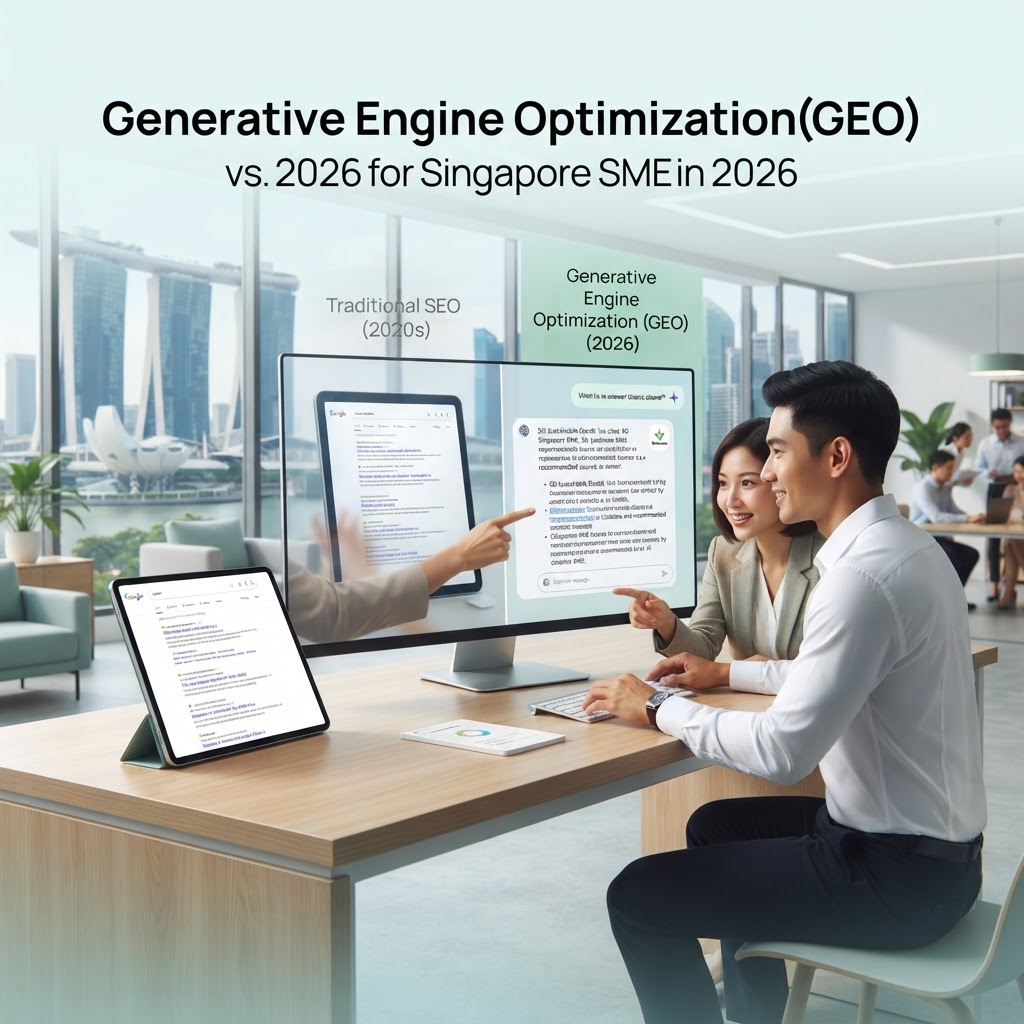
Traditional SEO was largely a game of volume and keyword placement. You would identify high-traffic terms and pepper them throughout your copy to signal relevance. While keywords still play a role, the 2026 search experience is no longer just about those links. It is about the ‘answer engine’ experience. As Google and other platforms shift toward AI-generated summaries, the traffic patterns are moving toward zero-click searches. This is a critical development for Singapore SMEs. If a customer can get a satisfactory answer within the search interface, they may not feel the need to click through to your website. Therefore, your goal must be to provide such high-value information that the AI includes your site as a cited source, effectively driving traffic that is more qualified and ready to convert. The transition is significant because it requires a shift in mindset from ‘ranking’ to ‘being cited.’ Your content strategy should now prioritise entity recognition. You want the AI to understand that your company is a distinct, authoritative entity in its specific niche within the Singapore market. For example, if you offer digital marketing services, your content should not just say you do SEO; it should show your methodology, your approach to ROI, and your alignment with local industry standards. The table below illustrates the core differences between traditional keyword-heavy strategies and modern generative-ready strategies, highlighting why your business must evolve its digital presence to stay competitive today.
| Metric | Traditional SEO Focus | Generative Engine Optimization |
|---|---|---|
| Core Objective | Traffic Volume and Keyword Rank | Authority and Source Citation |
| Content Style | Keyword-driven text | Contextual, entity-rich answers |
| Success Indicator | Click-through rate | Trustworthy brand mention |
| AI Interaction | Passive indexing | Active source synthesis |
Actionable Strategies for Singapore SMEs
To succeed in the era of Generative Engine Optimization, Singapore businesses need to adopt a data-first approach that prioritises clarity and structure. First, you must ensure your technical foundations are impeccable. Modern search engines, especially AI interfaces, rely heavily on schema markup—a form of code that helps machines understand the context of your content. By implementing structured data, you clearly tell the search engine that your site is a legitimate business with a specific location, service list, and positive customer feedback. Second, focus on ‘long-tail’ conversational content. Think about the specific questions your customers ask when they are on the verge of a purchase. Create content that directly addresses these queries with authoritative, evidence-based answers. Avoid fluff and focus on providing value that is grounded in your professional expertise. Third, prioritise local relevance. Because many Singaporean SMEs serve a specific geographic region, it is vital to embed local context into your digital identity. Mentioning specific areas, common local pain points, and adhering to regional regulations like PDPA builds trust. When our team works with clients, we focus on building a robust content library that serves as a resource for both humans and AI. This involves writing descriptive, helpful articles that naturally incorporate the terms your customers use, while ensuring the underlying site structure is easy to navigate. Remember, AI engines favour sites that are easy to crawl and understand. By keeping your site fast, mobile-friendly, and logically organised, you make it significantly easier for AI systems to recognise your site as a trustworthy, high-quality resource worth recommending to local users in Singapore.
The Role of Technical Excellence
Technical excellence remains the silent engine behind successful digital marketing. Even if your content is exceptional, it will struggle to gain traction if your website suffers from poor performance. In the context of 2026, Core Web Vitals—a set of metrics that measure speed, responsiveness, and visual stability—are more important than ever. AI search engines interpret a slow or broken website as a sign of low quality, which diminishes your authority. When a user experiences a slow load time, they leave, and AI engines take notice of this negative engagement. Our agency emphasises performance-first builds because we understand that every millisecond counts for both the user and the search bot. Investing in a headless CMS or a modern, lightweight framework can drastically improve your LCP (Largest Contentful Paint), which is a key metric measuring how quickly the main content of your page loads. Furthermore, security and mobile responsiveness are non-negotiable. With the majority of Singaporean consumers accessing services via mobile devices, your site must provide a seamless experience across all screen sizes. When you choose to upgrade your site, consider taking advantage of the PSG grant, which can provide funding for up to 50% of the cost of approved digital solutions. This allows SMEs to modernise their infrastructure without excessive capital expenditure. By maintaining a technically sound, fast, and secure website, you create the optimal environment for your content to be discovered. This foundation is not just about aesthetics; it is about building a reliable digital asset that consistently earns the trust of both human visitors and the increasingly sophisticated AI search engines that drive today’s traffic.
Conclusion
Generative Engine Optimization is not a temporary trend, but a fundamental shift in how digital information is discovered and verified. For Singapore SMEs, the ability to adapt to these AI-driven interfaces will determine who thrives in the coming years. By focusing on authoritative content, implementing rigorous technical standards, and clearly defining your business as a trusted entity, you can secure your place in the future of search. At iPro Dezign, we are committed to helping our clients navigate this landscape through professional, ROI-driven strategies and technical expertise. Do not wait until your visibility dips; take the proactive step of auditing your digital footprint today. Whether you need support with a website rebuild or are interested in PSG-funded digital transformation, our team is ready to discuss how we can help your business grow. Contact us today to learn more.
Frequently Asked Questions
What is the primary difference between SEO and GEO? SEO aims to rank for specific keywords to drive traffic, while GEO aims to provide authoritative answers to be cited by AI engines.
How can Singapore SMEs benefit from the PSG grant? The PSG grant can cover up to 50% of costs for approved digital solutions, including website upgrades that improve technical performance and search visibility.
Do I still need to use keywords in my content? Yes, but they should be used naturally within context-rich content that answers user questions, rather than forced for ranking purposes.
How does technical performance affect AI discovery? AI engines favour high-performance sites. Fast load times and mobile-first design indicate a quality user experience, which is a key factor for citation.
What is the first step in starting an SEO transformation? Begin with an audit of your site’s technical health and existing content to identify gaps in authority and performance.