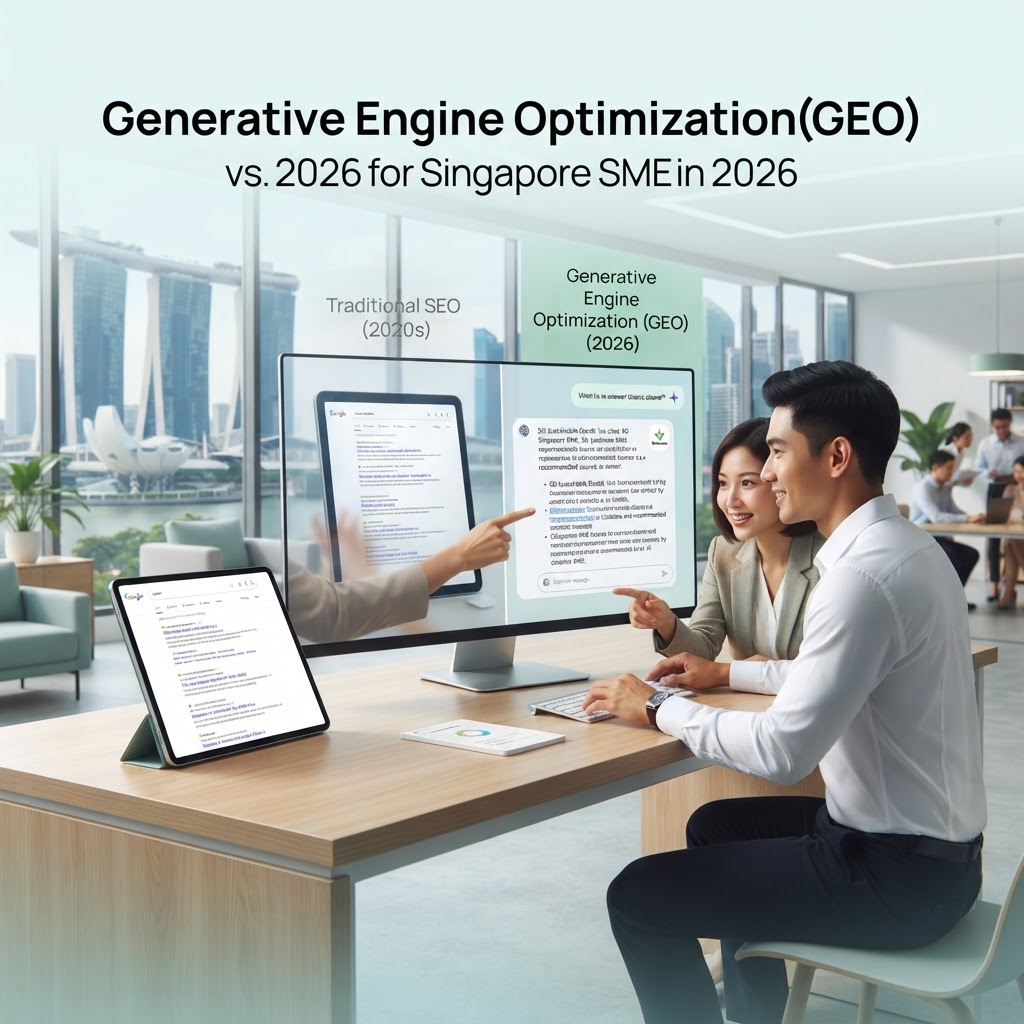
Generative Engine Optimization: A 2026 Guide for Singapore SMEs
The landscape of digital search is changing rapidly. As major search engines integrate artificial intelligence to provide direct, synthesized answers rather than just lists of links, Singapore business owners must adapt. The traditional method of chasing blue links is giving way to a new paradigm: Generative Engine Optimization. For small and medium-sized enterprises (SMEs) in Singapore, this shift represents both a challenge and a significant opportunity to capture market share. AI-driven search models prioritize authoritative, high-quality, and contextually relevant information that directly addresses user intent. By moving beyond keyword density and focusing on how these AI engines digest and present data, companies can ensure they remain visible in an era where the traditional search results page is evolving into a conversational experience. This guide explores how your business can navigate this transition, leverage local expertise, and maintain a competitive edge using modern digital strategies. Whether you are managing an eCommerce platform or a B2B service site, understanding these mechanics is essential for long-term growth and sustained digital presence in the evolving APAC market.
Table of Contents
Understanding Generative Engine Optimization
Generative Engine Optimization represents the evolution of how we think about visibility online. Unlike traditional search engine optimization, which focuses primarily on rankings within a list of websites, generative engine optimization looks at how large language models and generative search tools synthesize data to provide comprehensive answers. In a generative search context, an AI model scans the web to find the most accurate and useful information to answer a user’s query, often citing sources directly within a conversational response. For Singapore SMEs, this means your content must be structured in a way that AI can easily parse, evaluate, and trust. You are no longer just fighting for a spot in a ranked list; you are fighting to be the primary source material that an AI platform uses to formulate its response. This requires a shift from writing solely for search crawlers to writing for semantic clarity and factual accuracy. When an AI summarizes a topic, it looks for clear definitions, logical arguments, and consistent data points across your site. If your content is vague or fragmented, the generative engine will likely overlook it in favor of a competitor that offers a more structured, definitive narrative. Furthermore, because these systems prioritize speed and accessibility, the way you present your information—through clear headings, concise summaries, and schema markup—matters more than ever before. We work with many local businesses to audit their existing digital presence, helping them transition from legacy SEO tactics to these modern, AI-friendly standards. By understanding how these models weigh credibility and relevance, you can position your brand as a reliable expert in your niche, effectively becoming the ‘go-to’ source whenever an AI engine processes a query related to your specific products or services in Singapore.
Building Authority for AI Search
Building authority in the era of generative AI requires a disciplined focus on high-quality, expert-led content. AI engines are designed to identify patterns of expertise, trustworthiness, and experience. They do this by cross-referencing information across reputable sources and identifying gaps in competing data. For Singapore SMEs, this means your content must go beyond generic blog posts. You need to produce specific, original research, case studies, and localized insights that the AI cannot easily find elsewhere. Think about the unique value proposition of your business. Do you have proprietary data on Singaporean consumer trends? Can you provide a detailed guide on how local regulations affect your industry? By embedding this type of high-value information into your website, you create a footprint that AI models can identify as uniquely authoritative. Our digital agency emphasizes the importance of ‘Expertise, Experience, Authoritativeness, and Trustworthiness’—commonly known as E-E-A-T—as the cornerstone of this strategy. To facilitate this, we assist clients in developing content hubs that map out the entire customer journey, from initial problem-solving to final decision-making. When you answer common questions thoroughly and accurately, you increase the likelihood that an AI will cite your business as a primary resource. Below is a simple comparison table showing how traditional SEO differs from generative-focused strategies in its approach to content development for local businesses.
| Metric | Traditional SEO Focus | Generative Engine Optimization |
|---|---|---|
| Primary Goal | Search Ranking | Model Inclusion & Citation |
| Content Style | Keyword-driven | Semantic & Definitive |
| Target Outcome | Click-throughs | Direct Answer/Brand Presence |
| Core KPI | Ranking Positions | Source Authority & Mentions |
By shifting your focus to these generative metrics, you move your business toward a more sustainable future where your brand is ingrained in the fabric of the digital information ecosystem, rather than just chasing transient ranking positions that fluctuate with every algorithm update.
The Role of Technical Excellence
Technical performance remains a critical pillar of your digital strategy, even as search behavior changes. Generative search engines still depend on fast, secure, and mobile-responsive websites to deliver content to users efficiently. If your site suffers from poor Core Web Vitals—a set of metrics that measure real-world user experience, such as visual stability and loading speed—the AI might struggle to index your content effectively, or worse, view your site as a poor source of information. In the context of Singapore’s mobile-first audience, ensuring your site loads in under three seconds is not optional; it is a baseline requirement for maintaining high engagement levels. Furthermore, the use of a headless CMS or a modern, high-performance architecture can give your business a significant advantage. By decoupling your content management from your front-end presentation, you allow for faster data delivery and more flexible integration with emerging AI technologies. We often recommend that our clients invest in robust, secure builds that adhere to local PDPA compliance, ensuring that user data is protected while maintaining a seamless browsing experience. It is also important to consider structured data markup. This is a technical language that helps search engines understand the context of your content. By using schema markup effectively, you can tell the AI exactly what your business does, where you are located, and why you are the expert in your field. This level of technical clarity reduces the ‘guesswork’ for the AI and increases the probability that your content will be used to answer user queries. Many of our local partners have seen improved performance after implementing these technical optimizations, leading to more meaningful traffic that is already well-informed and closer to making a purchasing decision, which is a hallmark of a mature, performance-driven digital presence.
Strategic Implementation for SMEs
Implementing these strategies does not have to be an overwhelming task for a small team. Many Singapore SMEs can benefit significantly from government grants like the Productivity Solutions Grant (PSG), which offers up to 50% funding for qualified digital projects. This makes investing in a professional website rebuild or an AI-ready content strategy much more affordable. When we work with business owners, our approach is always consultative and transparent. We start by auditing your current site to identify technical debt and content gaps that might be hindering your AI visibility. From there, we build a roadmap that balances immediate performance improvements with long-term brand growth. It is important to remember that this is a partnership. We provide the technical expertise and strategic direction, while you provide the industry knowledge that makes your brand unique. This collaborative effort is what leads to measurable outcomes. For instance, after restructuring a client’s eCommerce platform to improve load times and content hierarchy, they often see a clearer path to conversions because the AI can present their products more effectively to potential customers. We avoid empty promises and instead focus on what we can control: your site’s architecture, the quality of your content, and your technical compliance with web standards. Whether you are a local startup or an established firm, your path to success lies in moving away from ‘quick fixes’ and toward building a robust, authoritative digital entity that respects both the user and the machines that help users find you. If you are ready to explore how these changes can impact your bottom line, our team is available to discuss your specific needs and help you navigate the application process for relevant government funding to support your growth.
The shift toward generative search is not a temporary trend but a fundamental change in how the internet functions. By prioritizing semantic clarity, technical excellence, and genuine authority, you can ensure your business thrives in this new environment. Success in 2026 and beyond depends on how well you adapt to these evolving standards today. Our agency is committed to guiding Singapore SMEs through this transition with professional, evidence-based strategies designed for measurable results. We believe in building long-term partnerships that grow with your business, ensuring that your digital footprint remains secure, high-performing, and relevant. If you are uncertain about your current position or how to begin your optimization journey, we invite you to book a consultation. Let us examine your site’s health and outline a strategy that aligns with your unique objectives and the available financial support programs. Together, we can build a future-proof presence that supports your continued growth in the Singapore market.
Frequently Asked Questions
What is the main difference between SEO and Generative Engine Optimization? Traditional SEO focuses on getting ranked in lists, whereas Generative Engine Optimization focuses on being the primary source of information used by AI to answer questions directly.
How can Singapore SMEs benefit from the PSG grant? The Productivity Solutions Grant can cover up to 50% of the costs for approved digital solutions, including website rebuilds that improve performance and AI compatibility.
Do I need a new website to be AI-friendly? Not necessarily, but you may need significant technical updates to improve load speeds, core web vitals, and structured data, which our team can assess for you.
How long does it take to see improvements? While technical fixes show immediate results in site speed, building authority for AI search is a steady, cumulative process that typically shows performance gains over several months.
What is the most important factor for AI visibility? High-quality, original content that demonstrates clear expertise and addresses specific user questions is currently the most significant factor for being cited by generative engines.