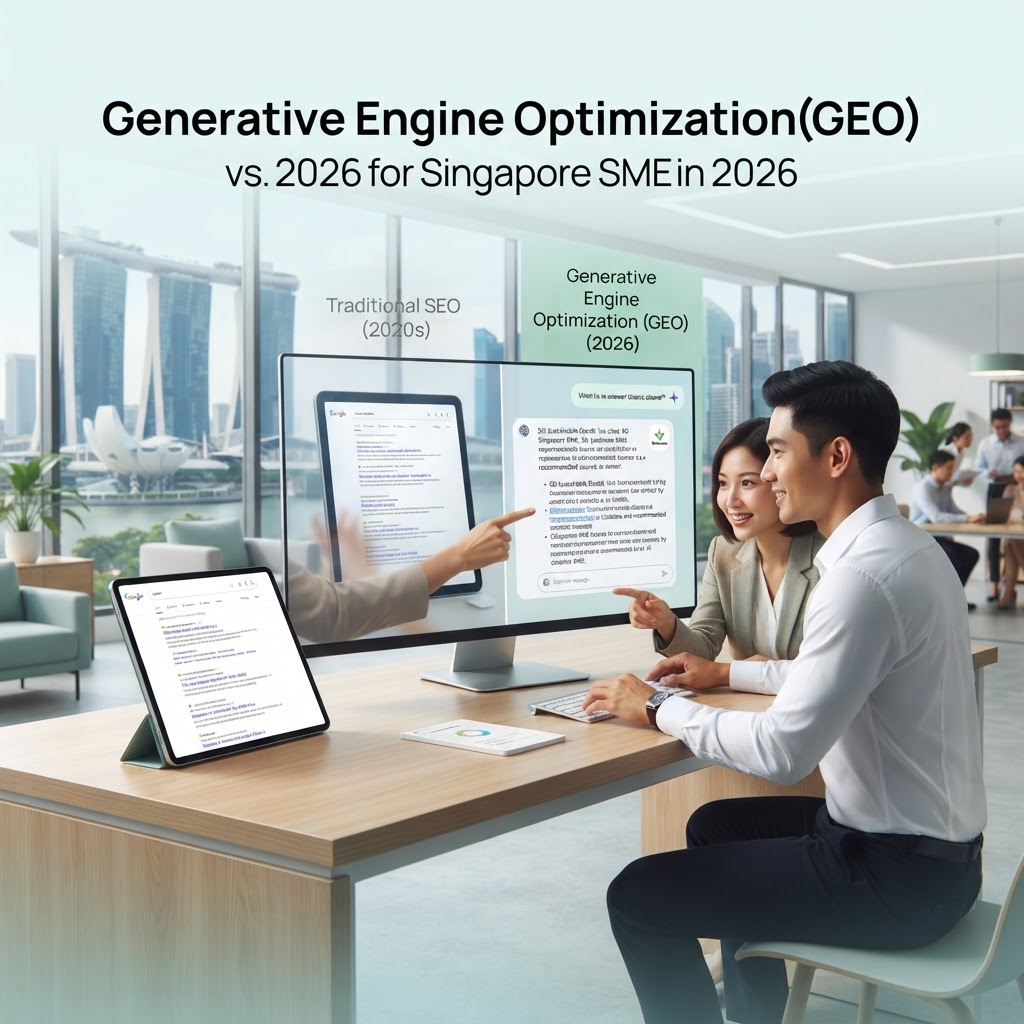
Generative Engine Optimization: A 2026 Guide for Singapore SMEs
The digital landscape in Singapore is shifting beneath our feet. For years, SME owners and marketing managers have focused their efforts on traditional search engine optimization to capture traffic from blue links on a results page. However, the rise of AI-driven search experiences means users are now receiving direct, synthesized answers rather than a list of websites. This transition necessitates a new strategic approach known as Generative Engine Optimization. If your website is not structured to provide the data, context, and authority that AI models demand, you risk being filtered out of the conversation entirely. As local business environments become increasingly competitive, adapting your digital presence to be machine-readable and highly authoritative is no longer optional—it is a business imperative. At iPro Dezign, we help Singaporean businesses navigate this complex transition, ensuring your brand remains visible where it matters most. Whether you are aiming to leverage government grants like the PSG to modernise your infrastructure or looking to build a robust foundation for the future, understanding how these generative engines interpret your content is the first step toward long-term digital growth.
Table of Contents
Understanding Generative Engine Optimization
Generative Engine Optimization represents a fundamental shift in how digital agencies approach visibility. While traditional SEO focused on keywords and backlinks, this new framework prioritizes the synthesis of information within large language models. For Singapore SMEs, this means your content must be curated to answer complex queries directly, providing the specific data points that AI search interfaces often pull into their summaries. When a user asks an AI-powered search tool a question about local services, the engine pulls from indexed databases that offer the most relevant and reliable information. If your website lacks clear, structured, and factual content, the model may overlook your business in favor of competitors who have invested in better data architecture. Our team often explains this to clients as the difference between being a library book that someone has to find and being the expert voice the AI cites as its primary source. This transition does not discard traditional SEO principles; rather, it elevates them. You still need technical performance, but you now require a greater depth of entity-focused information. This involves mapping out the services you offer, the problems you solve, and the specific geographic relevance you hold in the Singapore market. By organizing your site content in a way that is easily parsed, you help the AI understand exactly why your business is the most logical answer to a customer query. This approach is highly compatible with the current digital landscape where users expect immediate gratification from search engines. Investing in this strategy allows you to position your brand as a trusted authority, ensuring that when the AI provides a summary, it references your expertise, your products, and your unique value proposition to the customer seeking help.
Building Authority for AI Search
Content is the fuel that powers generative engines, but in 2026, not all content is treated equally. AI models are trained to value high-quality, expert-driven material that demonstrates real-world application. For a Singapore business, this means moving away from thin, keyword-stuffed articles and moving toward deep, authoritative guides that solve specific pain points for your target audience. You should focus on creating content that answers the “how” and the “why,” rather than just the “what.” When you provide comprehensive insights, you become the definitive source of truth in your niche, which is exactly what generative engines are programmed to favor. Furthermore, you must ensure that your content is factually accurate and regularly updated. Inaccurate information is quickly deprioritized by systems that prioritize user trust. Consider the following table for a comparison of traditional content focus versus the newer generative approach:
| Metric | Traditional SEO Focus | Generative Engine Optimization |
|---|---|---|
| Primary Goal | Traffic volume | Answer relevance & trust |
| Format | Keyword-targeted blog posts | Expertise-led, synthesized knowledge |
| Measurement | Ranking positions | AI citation & brand sentiment |
| Target | Human readers only | Human readers & machine parsers |
We work closely with our clients to refine their content strategy, ensuring that every page on their site serves a distinct purpose. This involves identifying the common questions your customers ask during their buying journey and creating structured responses that the AI can easily digest. We also emphasize the importance of local context, such as referencing Singapore-specific regulations, pricing in SGD, and local market trends. By blending this human-centric approach with technical clarity, you increase the likelihood of being cited by search tools. Consistency is key; by regularly publishing high-quality information that addresses current market challenges, you build the kind of digital footprint that search systems trust. It is not just about volume; it is about providing the specific information that searchers and machines find most helpful in their decision-making process.
Technical Requirements for 2026
The technical architecture of your website is the foundation upon which your visibility rests. In the era of generative engines, speed and accessibility are not just user experience metrics; they are essential for the effective crawling and indexing of your content. Core Web Vitals, which measure metrics like Largest Contentful Paint (LCP) regarding loading time, and Cumulative Layout Shift regarding visual stability, have become even more critical. If your site is sluggish or visually disjointed, the AI engine may struggle to process your pages efficiently. A headless CMS—a backend-only content management system that allows you to deliver content across multiple platforms—can provide the speed and flexibility required to stay competitive. Furthermore, structured data or schema markup is non-negotiable. This is the code that tells machines exactly what your content is, whether it is a business address, a product price, or a customer review. By implementing robust schema, you essentially provide a roadmap for the AI, making it easier for the system to identify your business as a relevant candidate for a query. Security is another pillar; compliance with the Personal Data Protection Act (PDPA) in Singapore is not just a legal obligation but a trust signal that search engines interpret positively. Our team at iPro Dezign ensures that your technical infrastructure is built to be resilient, fast, and secure. We often see SMEs struggle with bloated, outdated platforms that hinder their visibility. Rebuilding with performance-first principles allows for cleaner code, faster load times, and better integration with modern search tools. When you invest in these foundational elements, you are not just checking a technical box; you are building a scalable digital environment that is prepared for the next wave of technological advancements. Reliability in your tech stack leads to better uptime, which in turn leads to consistent performance in search results.
Measuring Success and Future Growth
Measuring the return on investment for an initiative as strategic as Generative Engine Optimization requires a shift in perspective. You cannot measure it solely by ranking for a specific term, as the search results page itself is now fluid and dynamic. Instead, you should focus on metrics that indicate brand growth and authority, such as the increase in brand searches, the quality of your referral traffic, and your presence in AI-generated answers. We encourage our clients to view these improvements as long-term investments rather than short-term gains. In the Singapore SME landscape, the ability to pivot and adapt to new technologies is a significant competitive advantage. Many businesses are currently utilizing the Productivity Solutions Grant (PSG) to offset the costs of digital transformation. This grant can cover up to 50% of the cost for eligible digital solutions, making it an excellent opportunity to upgrade your website and implement the strategies discussed here without excessive capital expenditure. The process of optimizing for generative engines is continuous. It requires keeping a pulse on how search behavior is changing and adjusting your content and technical strategy accordingly. Our role as your digital partner is to provide the expertise and execution required to stay ahead of these trends. We pride ourselves on a responsive, founder-led service model where you always have access to informed guidance. By taking a data-driven approach to your digital presence, you can ensure that every dollar spent contributes to measurable growth. While we avoid making inflated promises, we do guarantee a meticulous, results-focused approach to every project we undertake. Together, we can build a strategy that respects your budget, leverages local funding opportunities, and secures your place in the future of AI-driven search, helping your business grow effectively and sustainably in an increasingly crowded marketplace.
Conclusion
Navigating the transition toward Generative Engine Optimization is essential for any Singapore SME looking to maintain relevance in a digital-first economy. By focusing on deep authority, technical performance, and structured data, you prepare your brand to be a primary source for AI search tools. While this shift requires effort and a strategic mindset, the long-term benefits of increased visibility and brand trust are significant. Remember, the goal is to create a digital ecosystem that is as easy for machines to understand as it is for customers to love. If you are ready to explore how to optimize your current setup or wish to understand your eligibility for government grants like the PSG, our team is always available to help. Contact iPro Dezign today for a consultation and let us help you build a robust, future-proof online presence that drives measurable ROI for your business.
Frequently Asked Questions
What is the main difference between traditional SEO and Generative Engine Optimization? Traditional SEO focuses on achieving rankings in a list of links, while Generative Engine Optimization focuses on providing the precise, structured data that AI models use to synthesize answers.
How can Singapore SMEs benefit from the PSG grant? The Productivity Solutions Grant can cover up to 50% of the cost for qualified digital marketing or web transformation projects, helping SMEs modernise their infrastructure with reduced financial burden.
Why is technical speed important for AI search? Fast loading times ensure that AI bots can crawl and index your content without errors, preventing your site from being deprioritised due to poor performance.
Is content still the most important factor? Yes, but the focus has shifted toward high-authority, expert-led information that solves user problems directly rather than just repeating keywords.
How do I know if my site is ready for AI search? A site ready for AI search uses clean code, modern CMS architecture, and comprehensive schema markup to clearly define what the business offers to search engines.