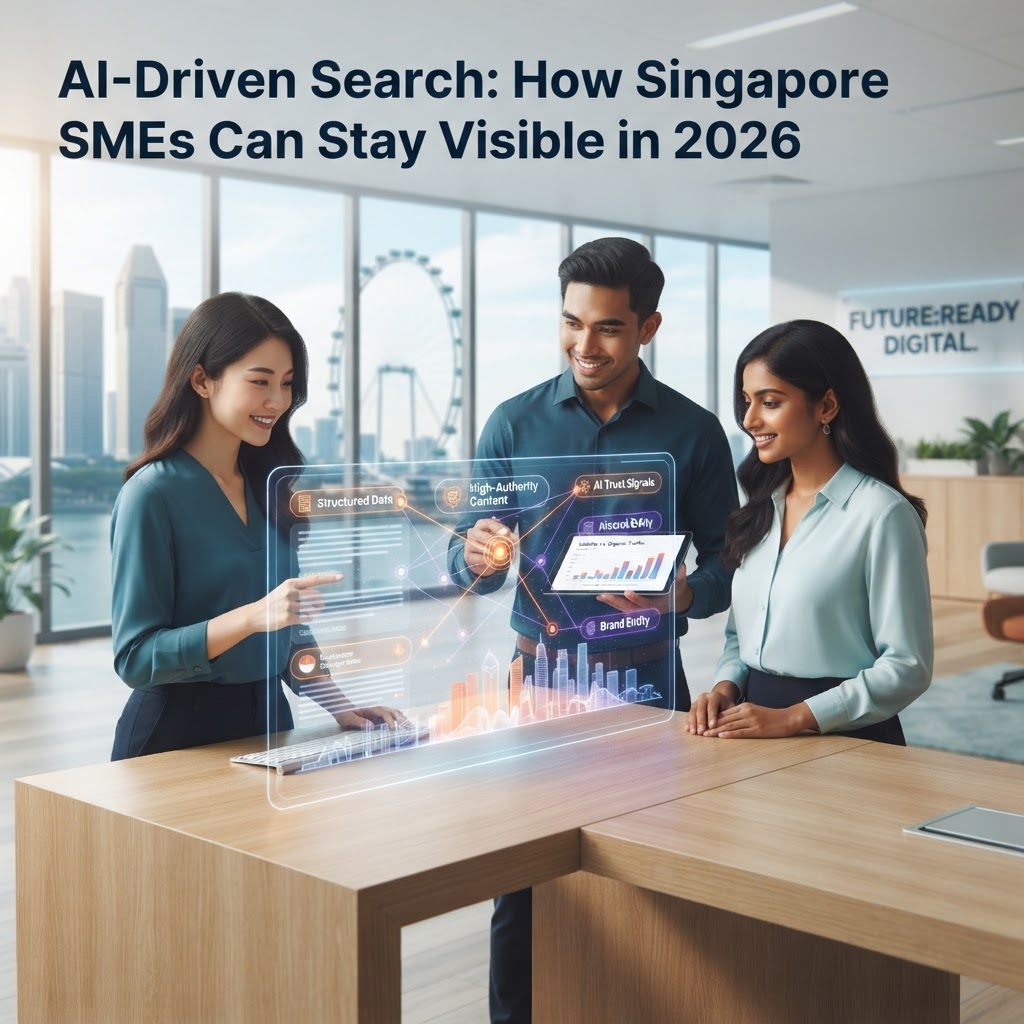
Beyond SEO: A Singapore SME Guide to Generative Engine Optimization (GEO) in 2026
The digital landscape for Singapore SMEs is evolving at an unprecedented pace. For years, the primary goal of digital marketing was securing those coveted blue links on search engine results pages. However, the rise of AI-powered search tools like ChatGPT and Google AI Overviews is fundamentally changing how your customers find information. Today, users are increasingly turning to generative AI for immediate, summarized answers rather than clicking through to traditional websites. This transition necessitates a strategic pivot toward Generative Engine Optimization (GEO). By shifting your focus, your business can remain a trusted, cited source within these new AI ecosystems, ensuring your brand stays visible to the high-intent traffic that keeps local businesses thriving. At iPro Dezign, our team helps local business owners navigate this shift, ensuring your digital presence is not just search-friendly, but AI-ready. Whether you are leveraging PSG grants for digital transformation or refining your existing content strategy, understanding how these models ingest information is the first step in future-proofing your online growth in the competitive Singapore market.
Table of Contents
What Is Generative Engine Optimization?
Generative Engine Optimization, or GEO, represents a move away from optimizing solely for search engine bots to optimizing for the sophisticated intent-based models powering generative AI. Unlike traditional search engine optimization, which focuses on keyword density and backlink profiles to satisfy algorithm crawlers, GEO focuses on establishing your brand as a source of truth that AI models find reliable, authoritative, and relevant. When an AI tool constructs a summary or answer for a query such as the best digital marketing solutions for Singapore SMEs, it evaluates thousands of data points to synthesize an answer. If your website is technically sound, structured correctly, and offers authoritative content that aligns with user intent, the AI is far more likely to cite you as a source.
For Singapore SMEs, the challenge lies in the shift from a list-based format to an answer-based format. AI models prioritize content that is direct, factual, and deeply relevant to the specific inquiry. This means your website must demonstrate expertise by using clear, descriptive language that answers questions definitively. Think of your website as a library. Traditional SEO ensures the library has a sign outside. GEO ensures the librarian understands exactly what your book says and recommends it whenever a patron asks for information on that topic. Our experience at iPro Dezign shows that when we help local businesses align their content with these semantic, intent-based frameworks, they see improved engagement across multiple touchpoints. It is not just about rankings anymore; it is about being the intelligence behind the answer. By prioritising clarity, expert insight, and high-quality information architecture, you turn your business into an essential resource for both human users and the AI systems that guide their buying journeys in our digital-first economy.
Why Traditional SEO Must Evolve for AI
The urgency to adapt to Generative Engine Optimization is rooted in changing user behaviour. Modern users in Singapore—from tech-savvy startup founders to busy procurement managers—value speed and accuracy above all else. When a user asks an AI model a question, they expect a single, comprehensive answer, not a list of ten websites to click through individually. This means the organic traffic model is shifting from high-volume, broad-search clicks to highly qualified, intent-specific interactions. If your SME relies heavily on traditional rankings for generic keywords, you might notice a subtle decline in traffic as users move toward AI-generated summaries. However, this shift also offers a significant opportunity. Being cited by an AI as a top-tier service provider is the digital equivalent of a expert recommendation, carrying more weight than a basic search ranking.
The following table outlines the key differences between traditional SEO and modern GEO strategies that our team monitors to help clients stay competitive:
| Metric | Traditional SEO | Generative Engine Optimization (GEO) |
|---|---|---|
| Core Objective | Traffic and Click-through Rate | Brand Authority and Source Citation |
| Content Focus | Keywords and Semantic Variations | Direct Answers and Expert Insight |
| Platform Bias | Blue Links and Search Results | AI Summaries and Conversational Engines |
| Success Indicator | Search Ranking Positions | Citations and Direct Traffic |
Relying on legacy tactics in 2026 is a recipe for diminishing returns. Traditional SEO is not dead, but it is no longer sufficient on its own. It remains the foundation, but GEO is the next layer of maturity for your digital strategy. By integrating these practices, you ensure that even as the interfaces of Google and other search engines change, your business remains a visible, authoritative leader in the Singapore market. We encourage our clients to view this transition not as a threat, but as a way to elevate their digital brand, focusing on high-quality content that provides genuine value to the reader, which is exactly what AI models are trained to prioritize.
Tactical Steps for GEO Success
Implementing a successful GEO strategy involves moving beyond surface-level keyword stuffing. Your primary focus must shift toward content depth and structural clarity. AI models excel at analyzing structured data and well-formatted text. For a Singapore SME, this means creating high-quality, long-form content that answers the specific questions your customers are asking. For instance, instead of just targeting the term digital marketing agency, create comprehensive guides that address common pain points, such as how to improve Core Web Vitals or how to leverage government grants like the PSG to enhance business performance. When your site provides these in-depth, expert-level answers, you become a much more attractive candidate for AI summarization tools to cite as a reference source.
Another crucial tactical element is authority building. AI models heavily weight content that comes from domains with established expertise, authoritativeness, and trustworthiness (often referred to as E-A-T). For local businesses, this means demonstrating your Singapore-based expertise. Showcase your experience with local regulations like PDPA, highlight your work with other local businesses, and be transparent about your services. When you create case studies that explain the problem, the solution, and the measurable outcome, you provide the exact kind of high-value data that AI systems use to build trust. Our team at iPro Dezign emphasises this in every project we lead. We help you build a content library that acts as an expert resource for your industry. Additionally, ensure your site is technically optimised for speed and mobile accessibility. An AI model cannot process a site that is broken or slow. By combining high-value content with a performance-first website build, you position your brand to be the go-to authority in your niche, effectively managing the transition into the generative era of search.
The Role of Technical Foundation in AI Visibility
A website that is not technically optimized is invisible to both human users and AI engines. While content is the language that AI speaks, technical infrastructure is the delivery mechanism. If your site suffers from slow loading times, poor mobile responsiveness, or complex, unorganized site architecture, AI agents may struggle to crawl and index your pages effectively. We strongly advocate for a robust, performance-first foundation, which includes clean code, fast server responses, and proper implementation of schema markup. Schema is the structured data that helps search engines understand the context of your content, such as whether a page is a service description, a case study, or a Frequently Asked Question section. By marking up your content correctly, you provide a roadmap that makes it easy for AI to interpret and represent your business accurately.
In the context of the Singapore SME landscape, where competition is fierce and digital expectations are high, technical excellence is a non-negotiable differentiator. Many businesses are now using PSG funding to overhaul their digital infrastructure, and it is a wise investment. A modern, secure, and fast-loading website does more than just please search engines; it drives conversions by providing a seamless user experience. When a potential client finds your business through an AI recommendation, the first thing they will do is visit your site. If that experience is slow or clunky, you lose the lead. At iPro Dezign, we focus on building sites that are both beautiful and technically superior, ensuring they are prepared for the future of search. We provide a partnership approach, where we handle the technical complexities—from Core Web Vitals to security protocols—so you can focus on growing your business. Investing in a strong digital foundation is the most reliable way to ensure that as AI tools continue to evolve, your business is always ready to meet the new standard of visibility, authority, and professional engagement.
Ultimately, Generative Engine Optimization is about preparing your business for a future where information is synthesized rather than merely indexed. By embracing this shift, you are not just keeping pace with technology; you are setting your business up for sustained growth. The path forward requires patience, a commitment to quality content, and a reliable technical partner who understands both the local landscape and the global evolution of search. We invite you to reach out for a consultation, explore our range of digital services, or discuss how you can leverage current government support to build a future-ready digital presence. Your next big growth opportunity starts with being seen, and we are here to help you get there.
Frequently Asked Questions
1. What is the difference between traditional SEO and GEO?
Traditional SEO targets blue-link rankings through keywords and backlinks. GEO focuses on being cited as a factual, expert source in AI-generated responses.
2. Does my current SEO strategy become obsolete?
No. Traditional SEO forms the foundation. GEO is an additional layer of optimization that ensures your site remains authoritative for AI models.
3. How can I increase the chance of being cited by an AI?
Focus on high-quality, original, and authoritative content that directly answers specific user questions while maintaining excellent technical site performance.
4. Can an SME in Singapore really compete in the age of AI?
Yes. Local expertise and specific, niche-focused content allow smaller businesses to build authority that general AI models will cite as relevant to local needs.
5. Should I apply for PSG grants for this?
If your website needs a technical overhaul to meet the standards required for modern performance and AI readiness, PSG funding can often cover up to 50% of the cost.