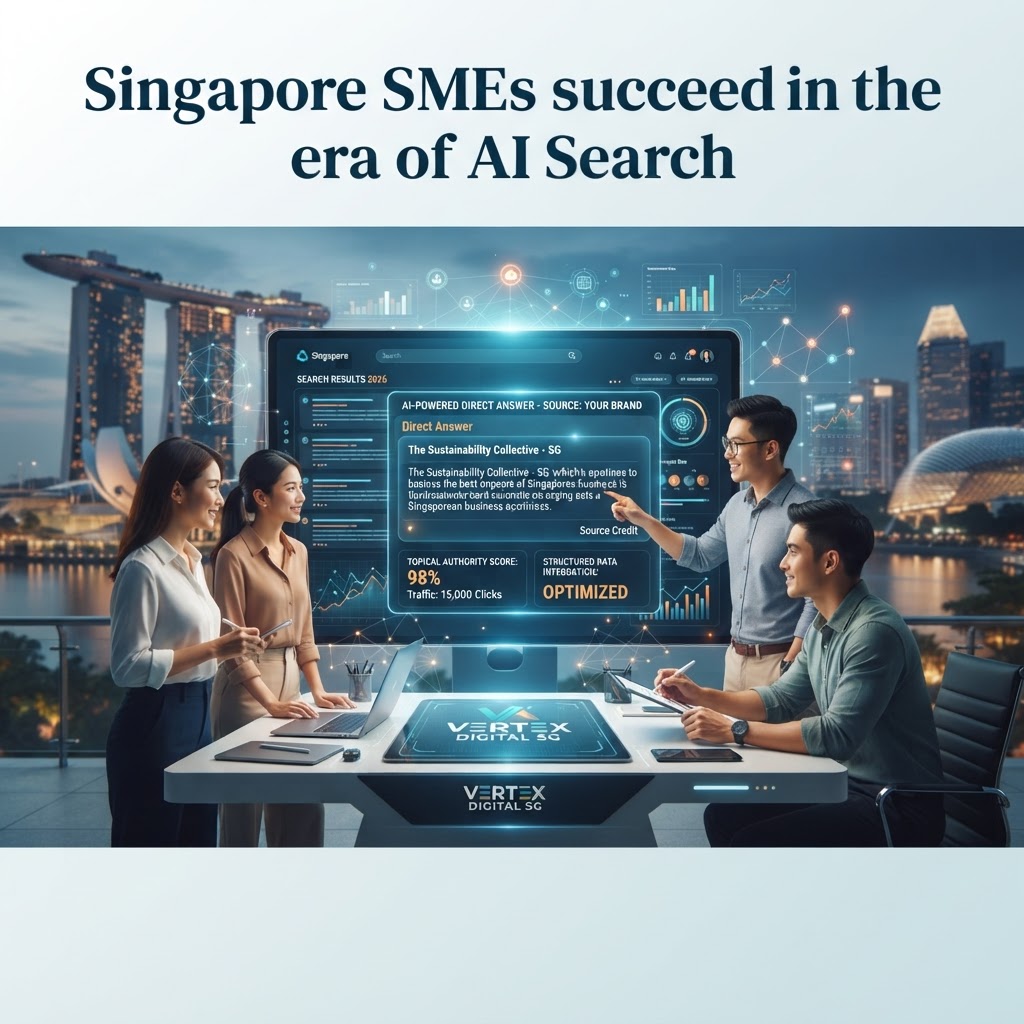
The AI inflection point for SEO in Singapore
Singapore’s digital landscape is shifting from manual, checklist-driven search optimization to AI-enabled strategies that scale personalization and intent understanding. For businesses and agencies focused on seo singapore, 2026 is the year AI moves from experiment to expectation. The result: faster insights, deeper content relevance, and genuine lift in conversion metrics when AI is used responsibly and strategically. Learn how digital teams can adapt processes, tools, and measurement to capture these gains.
Why AI matters for seo singapore in 2026
Search engines now combine semantic understanding, user behavior signals, and on-page relevance with broader context from multi-modal models. That makes classic ranking levers — keywords and links — necessary but not sufficient. AI adds three practical advantages:
- Intent modeling at scale: AI clusters searcher intent beyond keywords, revealing new content opportunities.
- Content personalization: Automated content variations increase relevance for local and niche segments in Singapore’s multilingual market.
- Faster experimentation: AI-driven hypothesis testing accelerates A/B and multivariate experiments across pages and ad creatives.
Agencies that embrace these capabilities can deliver measurable ROI for clients, while those that don’t risk commoditisation.
What digital marketing agency singapore should focus on now
Digital marketing teams in Singapore must balance creativity and control. Focus on these pillars:
- Data hygiene and integrations: Clean, unified datasets (analytics, CRM, search consoles) are the foundation for reliable AI models.
- Strategic content frameworks: Use AI to scale research (topic clusters, SERP gap analysis) then apply human editing to align with brand tone and compliance.
- Local-first SEO: Singapore’s market requires attention to localization, language variants (English, Chinese, Malay, Tamil) and Singapore-specific search behavior.
For agencies, these shifts mean investing in people who can translate AI outputs into strategy and train models on local signals. Consider partnering with specialists or tools that already understand the region — for example, seo singapore resources that emphasize local context and compliance.
Practical AI tools and workflows for 2026
AI isn’t a single tool; it’s a workflow layer that augments research, content, and measurement.
- Discovery and keyword intent: Use AI to generate intent clusters rather than long keyword lists. Tools that synthesize SERP features, query streams, and user journeys reduce guesswork.
- Content generation and editing: Combine generative models with human editors. Let AI draft outlines, variations, and metadata; apply human review for E-E-A-T, accuracy, and brand alignment.
- Automated testing: Programmatic SEO experiments (title/meta variations, schema tweaks) can be rolled out and evaluated by automated analytics pipelines.
Many local teams outsource part of this pipeline to a digital marketing agency singapore that integrates AI tooling into strategic playbooks.
Content strategy: scale responsibly with AI
Generative AI can produce volume quickly, but quality and trust remain paramount. A sustainable approach includes:
- Topic clusters that map to buyer journeys and Singapore-specific intent.
- Human-in-the-loop review for factual accuracy, brand tone, and legal compliance.
- Use structured data and content markup to help search engines interpret content contextually.
Linking AI content to business outcomes also requires CRO alignment — optimizing for conversion events, not just rankings. Agencies should design content experiments with landing page variations and measurement plans that tie traffic to revenue.
Local SEO, language and experience in Singapore
Local signals are more important than ever. Singaporeans search across devices and languages; voice and mobile-first queries dominate commuter and in-store moments. Key actions:
- Deep local keyword research: Identify neighbourhood phrases, local intent markers and culturally specific queries.
- Google Business Profile optimization: Complete, accurate listings with local posts and UGC reviews matter for discovery.
- Multilingual content strategy: Provide content in relevant languages and use hreflang and canonical tactics to avoid duplication.
Agencies that master local nuances and can operationalize them across clients gain a competitive edge. For localized service packages, many businesses consult a specialist provider or seo singapore partners.
Technical SEO and privacy-aware indexing
Technical excellence remains critical. Crawlability, performance, and structured data are prerequisites for AI-driven relevance. At the same time, privacy regulations and cookieless tracking make first-party data a priority. Best practices:
- Implement server-side or consented first-party analytics to feed models ethically.
- Optimize Core Web Vitals and page experience; AI models increasingly weigh user experience signals.
- Use schema markup to provide clear context to search engines about entities, reviews, events and products.
A digitally mature agency will pair technical audits with a roadmap for GDPR- and PDPA-compliant data practices.
Measuring impact: new KPIs for AI-driven SEO
Traditional KPIs (rankings, organic sessions) remain useful but insufficient. For agencies and in-house teams, add outcome-based metrics:
- Intent conversion rate: Conversions by intent cluster rather than by landing page only.
- Content ROI: Revenue or lead value per content cluster (adjusted for acquisition cost).
- Time-to-insight: Speed of learning from experiments and model iterations.
Dashboards that merge search console, CRM and revenue data give a clearer view of how AI improvements translate to business outcomes. Agencies should present these to clients in regular, actionable reports.
Organizational changes for agencies
To capture AI upside, agencies must evolve internally:
- Cross-functional squads: Combine data engineers, SEOs, content strategists and creatives in squads focused on verticals or markets.
- Training and governance: Build guardrails for generative content, ensuring brand safety and factual accuracy.
- Vendor selection: Prioritize tools that support explainability and provenance to avoid hallucinations and maintain E-E-A-T.
The most successful digital marketing agency singapore teams will be those that embed these capabilities into client delivery rather than treating AI as a bolt-on.
Future trends to watch in 2026 and beyond
- Multimodal search: Image, video and text signals will be used together to determine relevance — content planning must be format-agnostic.
- Conversational SERPs: Search will increasingly reward content that answers multi-step user journeys, not just single queries.
- Automated personalization at scale: AI will tailor experiences dynamically, so testing and privacy-safe profiling becomes business-critical.
Staying ahead means continuous experimentation, strategic adoption of AI tools, and a disciplined approach to measurement.
Conclusion
AI is changing how seo singapore is practiced and how a digital marketing agency singapore creates value. The technical foundation — data hygiene, local expertise, content governance and outcome-based measurement — will separate winners from laggards. Agencies that combine human judgement with AI speed can unlock sustained traffic growth, better conversion rates, and scalable personalization across Singapore’s diverse market.
For teams preparing for 2026, prioritize testable AI workflows, invest in local language capabilities, and measure impact in business terms. That combination will deliver the credibility and performance clients expect in the next phase of search.