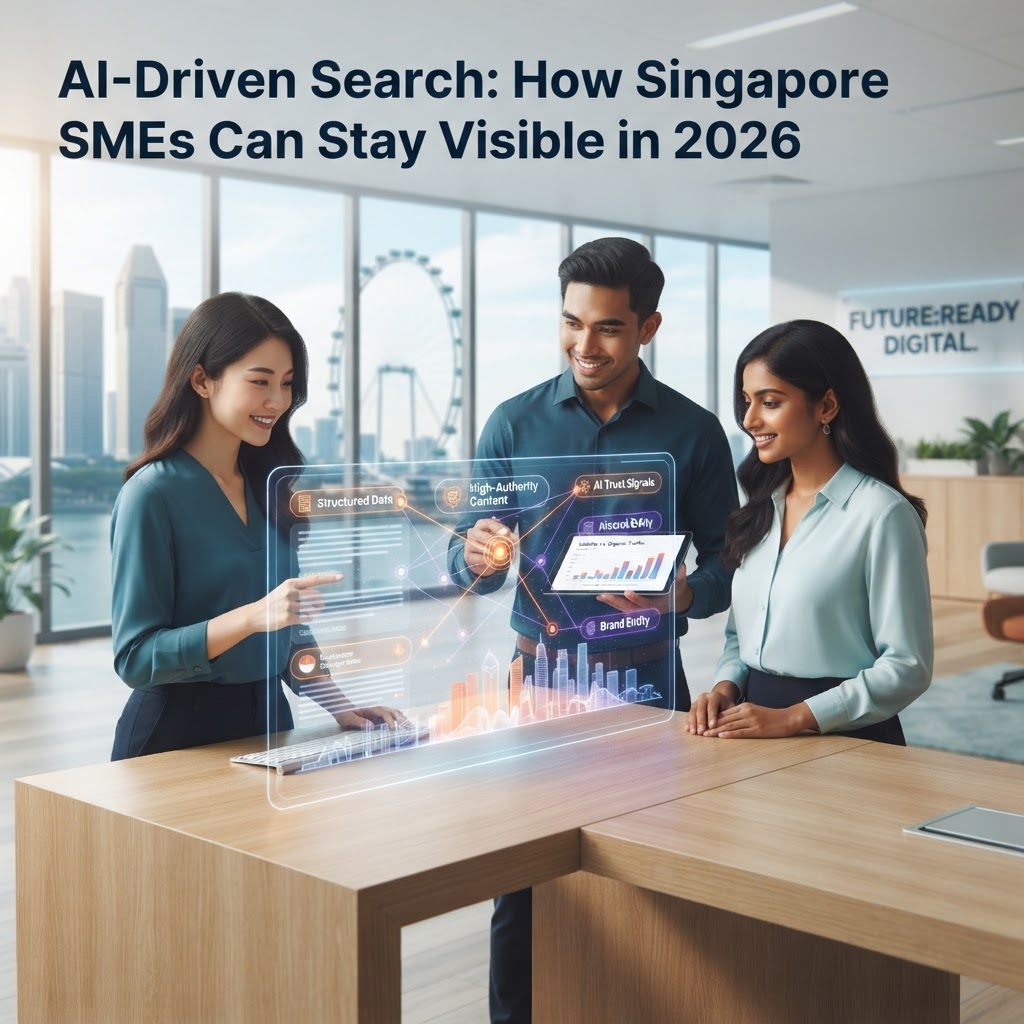
Why integrated SEO Singapore and web design Singapore matter in 2026
In 2026, the divide between web design and SEO is smaller than ever. Search engines reward sites that deliver useful content quickly and reliably, while users expect beautiful interfaces that work across devices. For businesses in Singapore — where competition is dense and mobile adoption is high — aligning design and search optimization is essential to convert local searches into paying customers.
This article explains the practical priorities for 2026: technical performance, helpful content, AI-enabled experiences, and local signals that lift visibility. It also includes a compact checklist you can apply to websites whether you’re a small local shop or an expanding SME.
Core technical priorities: speed, Core Web Vitals, hosting
Technical performance is the baseline for both web design and SEO. Core Web Vitals remain central to search ranking signals: largest contentful paint (LCP), cumulative layout shift (CLS), and interaction-to-next-paint (INP). Designers and developers must work together to reduce LCP (optimize images, defer non-critical scripts), eliminate unexpected layout shifts (reserve space for ads and dynamic elements), and prioritize responsiveness.
A modern approach includes using a performant hosting stack, edge CDNs, image formats like AVIF/WebP, and server-side rendering where appropriate. For Singapore-focused sites, choose hosting or CDN nodes with low latency to the region. Combining these technical improvements with an accessible, mobile-first UI directly boosts search rankings and user satisfaction.
Local-first SEO: optimize for Singaporean intent
Local intent drives many searches in Singapore. Optimize Google Business Profile (GBP) listings, ensure NAP (name, address, phone) consistency across directories, and use locally relevant structured data (LocalBusiness schema). Map-focused queries, “near me” searches, and voice queries are commonly used on-the-go, so structured location markup and concise service descriptions matter.
Content should reflect local relevance: offer pages for neighborhoods or districts, highlight local reviews, and publish event or promotion pages tailored to Singapore audiences. Implementing local schema and localized landing pages improves visibility for searches such as “web design Singapore” and “seo singapore.”
Helpful content and E-E-A-T: what works in 2026
Google’s emphasis on helpful, people-first content is stronger than ever. Present content that demonstrates Experience, Expertise, Authoritativeness, and Trustworthiness (E-E-A-T). For businesses in Singapore, that means:
- Publishing case studies and client stories with measurable outcomes.
- Including author bios with verifiable experience.
- Offering clear, transparent service descriptions and pricing where possible.
- Showcasing local credentials, awards, or partnerships relevant to the Singapore market.
Useful content formats include how-to guides, video walkthroughs, and FAQ sections that target micro-intent. Align design elements to surface this content — for example, highlight top FAQs in dedicated blocks that are crawlable by search engines.
AI-driven web design and AI search optimization (practical uses)
AI is now a practical tool across both design and SEO workflows. From automating image optimization and A/B testing to generating structured content outlines, AI accelerates iteration without sacrificing quality when used with editorial oversight. If you’re evaluating AI-driven web design solutions, focus on tools that improve accessibility, generate semantic HTML, and produce multi-variant layouts for testing. For hands-on guidance about integrating AI into design workflows, refer to practical industry guides that walk through implementation and governance.
On the search side, AI is used for content gap analysis, snippet optimization, and predicting query intent. Use AI to analyze high-performing pages in your niche, identify content silos, and create prioritized editorial roadmaps. Remember: AI should assist subject-matter experts, not replace them; human review ensures accuracy and brand voice.
Design patterns that improve SEO: structure, navigation, and accessibility
Good web design promotes discoverability. Organize content with clear hierarchical headings, logical URL structures, and breadcrumb navigation to help both users and search crawlers. Mobile-first design is not optional — use responsive layouts, touch-friendly controls, and conservative animation to maintain performance.
Accessibility plays a direct role in SEO: semantic HTML, alt attributes for images, and keyboard navigability make content more usable and often more indexable. Adopting accessibility best practices broadens your audience and reduces friction in search interactions.
Content strategy: topical clusters and helpful page experience
Move from single-page keyword targeting to topical cluster strategies. Build hub pages that cover broad themes (for example, web design services) and link to specialized cluster pages (e.g., e-commerce design, mobile UX, conversion optimization). This structure signals topical authority to search engines and supports internal linking that distributes ranking potential.
Focus on making each page genuinely helpful: answer the user’s primary question, provide actionable next steps, and use multimedia where it explains a concept better than text. Helpful pages earn backlinks and user engagement, which positively influence local and national rankings.
Privacy, tracking, and measurement in a cookieless world
Singapore businesses must balance user privacy and measurement. With tightened privacy controls and evolving browser restrictions, embrace first-party data strategies. Implement clean server-side analytics, consent-first measurement, and aggregated event modeling to understand user journeys without heavy reliance on third-party cookies.
Invest in tools and dashboards that track business metrics (leads, revenue, phone calls) rather than raw traffic alone. This aligns design choices with commercial outcomes and makes SEO an accountable investment.
Choosing partners: agency vs. in-house, and what to ask
Selecting the right partner depends on your scale, budget, and speed to market. Agencies can accelerate projects with multidisciplinary teams; in-house teams offer tighter product ownership. When evaluating partners, ask for:
- Demonstrable local results and case studies specific to Singapore industries.
- Technical audits showing Core Web Vitals improvement strategies.
- Clear content governance processes and AI usage policies.
- A roadmap that links design changes to measurable SEO outcomes.
If you’re researching agency workflows or want examples of integrated SEO and design projects, look for practical guides and service pages that explain end-to-end delivery and success metrics.
A compact checklist for SEO Singapore + web design Singapore
- Ensure mobile-first, responsive layouts and fast LCP under 2.5s.
- Use semantic headings and structured data for services and local business info.
- Optimize images (AVIF/WebP), lazy-load non-critical assets, and minify critical CSS/JS.
- Build local landing pages, keep NAP consistent, and manage Google Business Profile actively.
- Produce helpful, people-first content that demonstrates E-E-A-T and targets intent clusters.
- Implement consented measurement and server-side analytics for reliable reporting.
- Use A/B testing and iterative UX improvements informed by real user data.
Measuring ROI and continuous improvement
Track the metrics that tie to business outcomes: organic conversions, call volume, appointment bookings, and revenue per visitor. Use event-based analytics and set up attribution models that reflect the multi-touch journeys common in Singapore’s market. Regularly audit content for relevance — prune underperforming pages and expand high-value topics.
Continuous improvement means scheduling quarterly technical audits, monthly content performance reviews, and periodic UX tests. Prioritize changes that deliver the biggest lift in user experience and conversion with the smallest engineering cost.
Closing perspective
In 2026, success in SEO Singapore and web design Singapore depends on integrated thinking: fast, accessible, and helpful sites that answer local intent while leveraging AI responsibly to scale quality. Businesses that align design, content, and measurement — and partner with teams that understand regional search behavior — will capture more local demand and convert it into sustainable growth.
For teams building or redesigning sites, follow a pragmatic roadmap: secure technical health first, then layer on helpful content and AI-enabled insights, and finally optimize local signals and measurement. This approach delivers both immediate improvements in visibility and long-term gains in user trust and conversions.
Links to practical resources and deeper guides are available from industry providers and focused local agencies that specialize in combining SEO and web design for Singapore businesses. These resources explain step-by-step implementation, governance for AI tools, and measurable tactics that work in 2026.
AI-driven web design can speed prototyping and personalization while preserving accessibility. Use winning SEO strategies that adapt to local intent and helpful content. Explore AI search optimization for content gap analysis and query intent modeling. Embrace digital transformation practices to align teams and systems. When evaluating a digital marketing agency, prioritize results, transparency, and technical expertise.