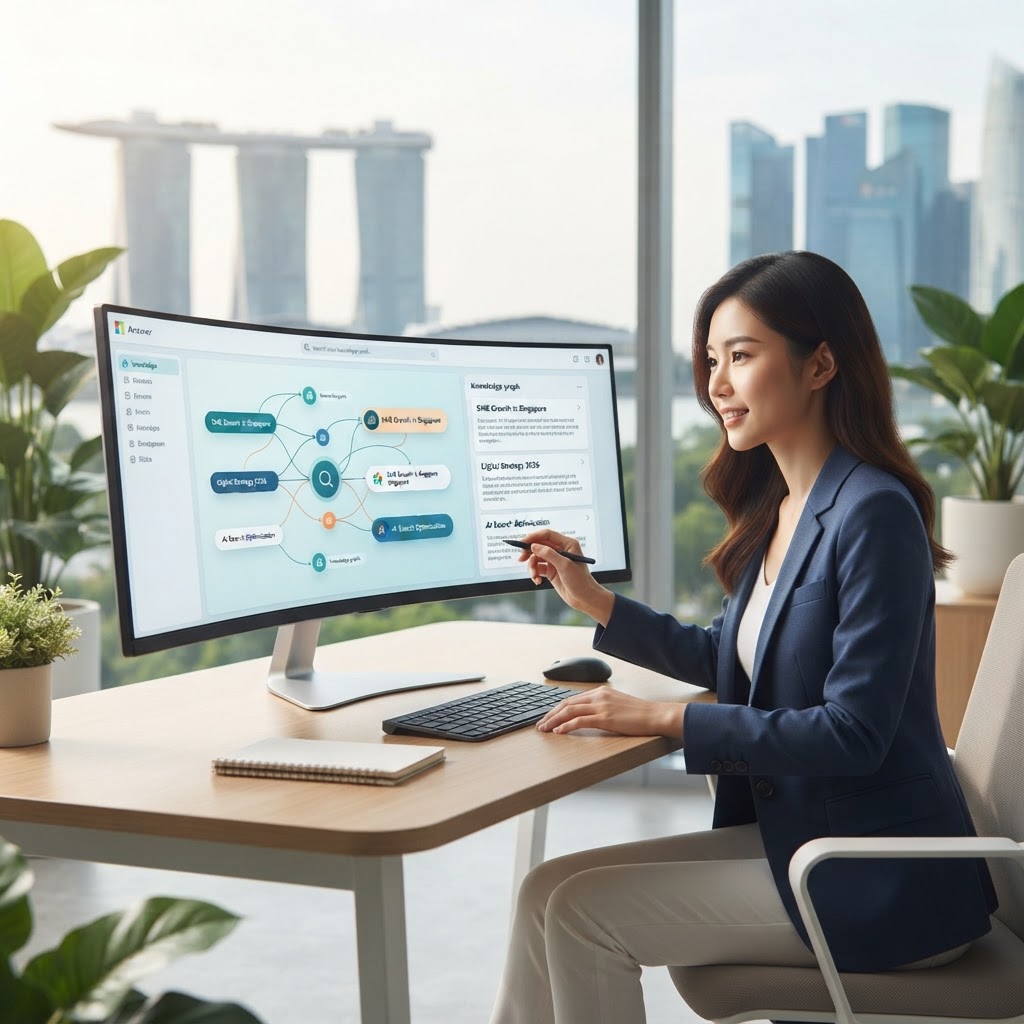
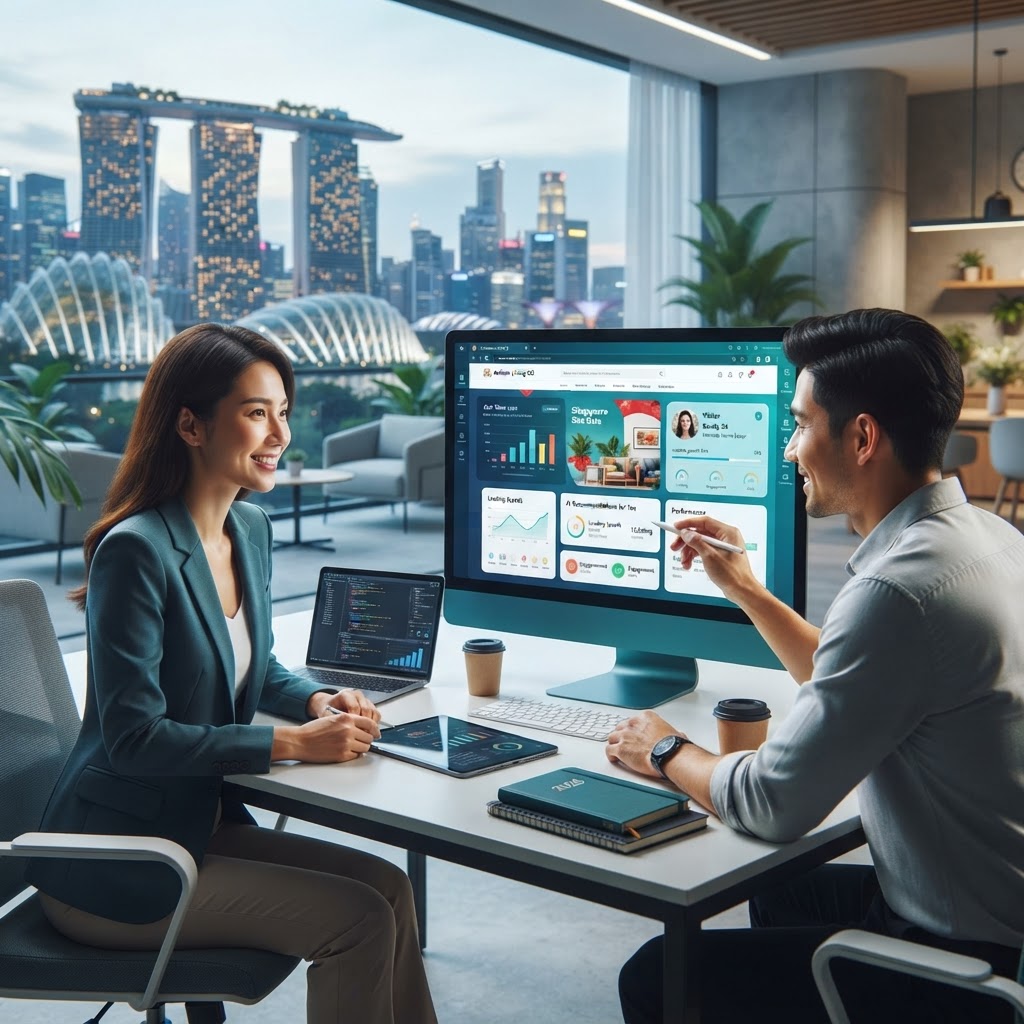
Singapore’s dynamic digital ecosystem continues to evolve rapidly, with web design Singapore trends reflecting the city-state’s position as a regional technology hub and its commitment to innovation. As we navigate through 2025, local businesses are embracing cutting-edge design philosophies that blend global best practices with distinctly Asian sensibilities and user preferences.
The convergence of artificial intelligence, sustainability consciousness, and mobile-first thinking has created a unique design landscape in Singapore. These trends aren’t just aesthetic choices—they represent strategic responses to changing consumer behaviors, technological capabilities, and business requirements in one of the world’s most digitally advanced markets.
Understanding these trends helps Singapore businesses create websites that resonate with local audiences while positioning themselves competitively in the global digital marketplace.

1. AI-Powered Personalization and Dynamic Content
Artificial intelligence has moved beyond buzzword status to become a practical tool shaping user experiences across Singapore websites. Businesses are implementing AI-driven personalization that adapts content, product recommendations, and user interfaces based on individual visitor behavior and preferences.
Local e-commerce sites now use machine learning algorithms to display relevant products, while service-based businesses employ AI chatbots that understand Singlish expressions and cultural context. This trend reflects Singapore’s embrace of smart nation technologies and consumer expectations for increasingly sophisticated digital interactions.
The integration of generative AI solutions enables websites to create dynamic content that speaks directly to individual users, improving engagement rates and conversion performance across diverse Singapore market segments.
Implementation Considerations:
- Real-time content adaptation based on user behavior
- Multilingual AI responses for Singapore’s diverse population
- Integration with local business systems and customer data
- Privacy compliance with Singapore’s data protection regulations
2. Immersive 3D Elements and Spatial Design
Three-dimensional design elements are transforming Singapore websites from flat interfaces into immersive experiences. Advanced CSS capabilities, WebGL technologies, and improved mobile device performance have made 3D elements accessible for mainstream business websites.
Singapore businesses in sectors like real estate, automotive, and retail are leveraging 3D product displays, virtual showrooms, and interactive spatial experiences that allow customers to explore offerings in unprecedented detail.
This trend particularly resonates with Singapore’s tech-savvy consumers who appreciate innovative digital experiences and expect businesses to leverage cutting-edge technologies in their customer interactions.
Popular 3D Applications:
- Interactive product configurators for customization
- Virtual property tours for real estate
- 3D model displays for manufacturing and retail
- Immersive brand storytelling through spatial design
3. Voice Interface Integration and Conversational UI
Voice search optimization and conversational interfaces reflect Singapore’s multilingual environment and growing adoption of smart assistants. Websites are incorporating voice-activated features that understand local accents, languages, and cultural expressions.
The trend extends beyond simple voice search to include voice-activated navigation, audio content delivery, and hands-free interaction capabilities that serve Singapore’s mobile-first, multitasking lifestyle.
Local businesses are discovering that voice interfaces improve accessibility while providing convenient interaction methods for users juggling multiple tasks in Singapore’s fast-paced environment.
Voice Integration Features:
- Multilingual voice search supporting English, Mandarin, and local languages
- Voice-activated customer service and FAQ systems
- Audio content narration for accessibility
- Hands-free navigation for mobile users

4. Sustainable and Eco-Conscious Design
Environmental consciousness has become a significant factor in Singapore web design, reflecting the nation’s commitment to sustainability and green technology. Businesses are adopting eco-friendly design practices that reduce website carbon footprints while maintaining aesthetic appeal and functionality.
This trend manifests through optimized code that requires less server energy, efficient image compression techniques, and streamlined user journeys that minimize resource consumption. Singapore businesses increasingly view sustainable web design as both an environmental responsibility and a competitive differentiator.
Dark mode implementations, minimal resource usage, and energy-efficient hosting solutions have become standard considerations rather than optional features, particularly among environmentally conscious Singapore consumers and B2B clients.
Key Sustainable Design Elements:
- Optimized images and compressed media files
- Efficient coding practices that reduce server load
- Dark mode options to reduce screen energy consumption
- Green hosting solutions and carbon offset programs
5. Micro-Interactions and Delightful Details
Subtle animations and micro-interactions have become hallmarks of sophisticated Singapore web design. These small details create emotional connections with users while providing visual feedback that enhances usability and engagement.
Singapore businesses use micro-interactions to guide user attention, provide system feedback, and create memorable brand moments that differentiate their digital experiences from competitors.
The trend reflects Singapore’s attention to detail and quality, with businesses investing in polished user experiences that reflect their commitment to excellence and customer satisfaction.
Effective Micro-Interaction Examples:
- Animated loading states that entertain during wait times
- Hover effects that provide visual feedback
- Progress indicators for multi-step processes
- Subtle animations that guide user attention
6. Minimalist Design with Bold Typography
Clean, minimalist aesthetics combined with striking typography create impactful visual hierarchies that work particularly well for Singapore’s multilingual environment. This trend emphasizes content clarity and readability across different languages and writing systems.
Bold typography choices help businesses establish distinct brand personalities while ensuring excellent readability on mobile devices. The approach aligns with Singapore’s efficient, no-nonsense business culture while creating visually striking digital presences.
Local businesses are discovering that minimalist design approaches improve loading speeds and user comprehension while reducing development and maintenance costs.
Minimalist Design Principles:
- Strategic use of white space for visual clarity
- Bold typography that establishes hierarchy
- Limited color palettes that reinforce brand identity
- Content-focused layouts that prioritize user goals
7. Advanced Mobile Gestures and Touch Interactions
Beyond basic touch functionality, Singapore websites are incorporating sophisticated gesture controls that leverage modern mobile device capabilities. Swipe patterns, pinch-to-zoom functionality, and multi-touch interactions create more intuitive and engaging mobile experiences.
This trend acknowledges that Singapore users spend significant time on mobile devices and expect sophisticated interaction methods that go beyond simple tapping and scrolling.
The implementation of advanced touch interactions particularly benefits Singapore’s visual sectors like fashion, food, and lifestyle businesses where product exploration and discovery drive engagement.
Advanced Touch Features:
- Swipe gestures for image galleries and product browsing
- Pinch-to-zoom for detailed product examination
- Pull-to-refresh functionality for dynamic content
- Multi-finger gestures for power users

8. Data Visualization and Interactive Infographics
Singapore businesses increasingly use sophisticated data visualization techniques to communicate complex information effectively. Interactive charts, animated infographics, and real-time data displays help businesses present information in accessible, engaging formats.
This trend particularly benefits Singapore’s finance, healthcare, and professional services sectors where data-driven insights provide competitive advantages and build client trust.
The integration of interactive data visualization with SEO optimization strategies helps businesses create content that both engages users and performs well in search results.
Data Visualization Applications:
- Real-time business metrics and performance dashboards
- Interactive market research and survey results
- Animated timeline presentations for company histories
- Dynamic pricing and comparison tools
9. Cultural Fusion and Local Identity Expression
Singapore web design increasingly celebrates the nation’s multicultural heritage through thoughtful integration of local visual elements, cultural references, and regional design sensibilities. This trend goes beyond mere decoration to create authentic connections with local audiences.
Businesses are incorporating Singapore-specific imagery, color schemes inspired by local culture, and design elements that resonate with different ethnic communities while maintaining universal appeal.
The approach helps Singapore businesses differentiate themselves in global markets while building stronger emotional connections with local customers who appreciate cultural authenticity.
Cultural Design Elements:
- Color palettes inspired by Singapore’s multicultural festivals
- Typography that works across English, Chinese, Malay, and Tamil
- Imagery celebrating Singapore’s unique urban landscape
- Design patterns that reflect local architectural and cultural motifs
10. Progressive Web App (PWA) Functionality
Progressive Web Apps represent the convergence of web and mobile app experiences, offering Singapore businesses cost-effective ways to provide app-like functionality without requiring app store distribution.
PWA features like offline functionality, push notifications, and home screen installation provide competitive advantages while maintaining the accessibility and discoverability benefits of traditional websites.
This trend particularly appeals to Singapore SMEs seeking advanced functionality without the development costs and complexity associated with native mobile apps.
PWA Advantages for Singapore Businesses:
- Offline functionality for unreliable internet connections
- Push notifications for customer engagement
- App-like user experience without installation barriers
- Improved loading speeds and performance optimization

Implementing Trends Strategically
Trend Selection and Business Alignment
Not every trend suits every business. Singapore companies should evaluate trends based on their target audience preferences, industry requirements, and brand positioning rather than adopting trends simply because they’re popular.
Consider how trends align with business objectives, budget constraints, and technical capabilities before implementation. Strategic trend adoption creates competitive advantages while trendy-for-the-sake-of-trendy approaches often waste resources without delivering meaningful results.
Professional Implementation Considerations
Complex design trends require experienced development teams familiar with both technical implementation and Singapore market preferences. Professional web design services can help businesses navigate trend selection and implementation while ensuring optimal results.
Consider the long-term maintenance requirements and update cycles associated with trend implementation. Some trends require ongoing attention and technical expertise to maintain effectiveness over time.
Performance and User Experience Balance
Trend implementation must balance visual appeal with performance optimization. Singapore’s mobile-first environment demands fast-loading websites regardless of design complexity or feature sophistication.
Regular performance testing and user feedback collection help ensure trend implementation enhances rather than hinders user experience and business performance.
Future Trend Predictions
Emerging Technologies
Augmented reality integration, blockchain-based verification systems, and advanced AI capabilities will likely influence Singapore web design trends in coming years. Early adoption of these technologies may provide competitive advantages for forward-thinking businesses.
Regulatory and Privacy Considerations
Increasing privacy regulations and data protection requirements will influence design trends, particularly around user consent, data collection transparency, and privacy-focused functionality.
FAQs
Q: How do I choose which web design trends to implement for my Singapore business?
A: Focus on trends that align with your target audience preferences and business objectives rather than following every trend. Consider your industry requirements, budget, and long-term maintenance capabilities when selecting trends to implement.
Q: Are web design trends expensive to implement?
A: Implementation costs vary significantly depending on trend complexity and current website architecture. Some trends like improved typography require minimal investment, while others like AI integration or 3D elements require substantial development resources.
Q: How long do web design trends typically last?
A: Design trends typically evolve over 2-3 year cycles, though foundational trends like mobile-first design and performance optimization have longer lifecycles. Focus on trends that improve user experience rather than purely aesthetic changes.
Q: Should I redesign my entire website to incorporate new trends?
A: Not necessarily. Many trends can be implemented gradually through incremental updates and improvements. Strategic web design approaches can help you integrate trends cost-effectively without complete rebuilds.
IPRO DEZIGN PTE LTD
Web Design Agency Singapore