Why SEO-first web design matters in Singapore 2026
Singapore’s digital landscape is more competitive than ever. With rising mobile usage, stricter Core Web Vitals expectations, and the growing prominence of zero-click search experiences, a site that looks great but ignores search fundamentals will lose traffic and revenue. A strategic approach to web design that embeds SEO from discovery through deployment ensures better organic visibility, faster conversions, and stronger local presence for Singapore businesses.
How web design and SEO intersect: the practical pillars
Design and SEO are not separate silos. They overlap across performance, structure, content, and user experience. Focus on these pillars when planning any web design singapore project:
- Performance and Core Web Vitals: LCP, CLS and INP are non-negotiable. Optimise server response times, critical CSS, font loading, and image delivery with modern formats and responsive sizing.
- Mobile-first UX: Google indexes mobile-first. Prioritise touch targets, progressive enhancement, and adaptive images for smaller screens.
- Semantic structure: Use clear heading hierarchies, schema markup and accessible navigation to help crawlers and assistive technologies understand your pages.
- Content strategy: Integrate keyword intent research (local and transactional) with content modules that support featured snippets and rich results.
- Technical hygiene: XML sitemaps, canonical tags, hreflang when needed, and a clean robots configuration prevent indexation issues.
These points are not theoretical. They power measurable gains in organic traffic and user satisfaction when executed consistently.
Technical SEO: building sites that search engines love
A technically sound site is the foundation of SEO. For Singapore businesses, the local search ecosystem amplifies the benefits of solid implementation:
- Fast hosting and CDNs in APAC reduce latency for Singapore users. Use edge caching and an HTTP/2 or HTTP/3 stack.
- Server-side rendering (SSR) or hybrid rendering for JavaScript-heavy builds keeps content crawlable and speeds first contentful paint.
- Optimize images with AVIF/WebP, implement responsive srcset, and use lazy-loading where appropriate.
- Minify CSS/JS, remove unused code, and adopt critical CSS inlining for above-the-fold content.
- Monitor Core Web Vitals via field data and lab tools, and prioritize fixes that deliver the biggest UX wins.
These technical fundamentals directly influence rankings for competitive keywords like “web design singapore” and “seo singapore” and improve conversion rates.
Content and information architecture for local relevance
Content must answer the user’s intent while signalling relevance to local search. Structure content to support both transactional and informational intent:
- Create localized landing pages for neighbourhoods, services, and verticals instead of relying on a single generic page.
- Use location-specific schema and local business metadata to improve visibility in map packs and local search.
- Build content hubs that link service pages to resources, case studies and FAQs to distribute topical authority.
- Optimize meta titles and descriptions for click-through potential while naturally including key phrases such as “web design singapore” and “seo singapore”.
Link internal topical pages strategically to pass authority and help users navigate toward high-converting pages. When discussing advanced local strategies, consider the insights a trusted seo singapore partner can provide.
UX patterns that boost SEO and conversions
Search engines increasingly model user satisfaction signals. Good UX equals better SEO outcomes. Prioritise the following:
- Clear CTAs above the fold and consistent microcopy to reduce friction.
- Breadcrumbs and logical site structure to improve indexation and user navigation.
- Accessible forms (labeling, progressive disclosure) to reduce abandonment.
- Performance-aware animations and interaction design to avoid penalties in CLS and INP.
A refined UX also supports better engagement metrics that indirectly influence ranking signals over time.
Local SEO and the map pack: win Singapore’s micro-moments
Local search remains crucial for conversion. For businesses targeting Singapore customers, local signals are decisive:
- Maintain an accurate and optimised Google Business Profile, with consistent NAP (name, address, phone) across citations.
- Publish localised content and events, leverage customer reviews and respond to them promptly.
- Use structured data for products, events, and service offerings to increase the chance of appearing in rich results.
For advanced approaches to capturing no-click and local opportunities, reference a tailored zero-click search strategy to adapt content and SERP assets for featured snippets, knowledge panels and instant answers.
Design considerations for zero-click and AI-driven SERPs
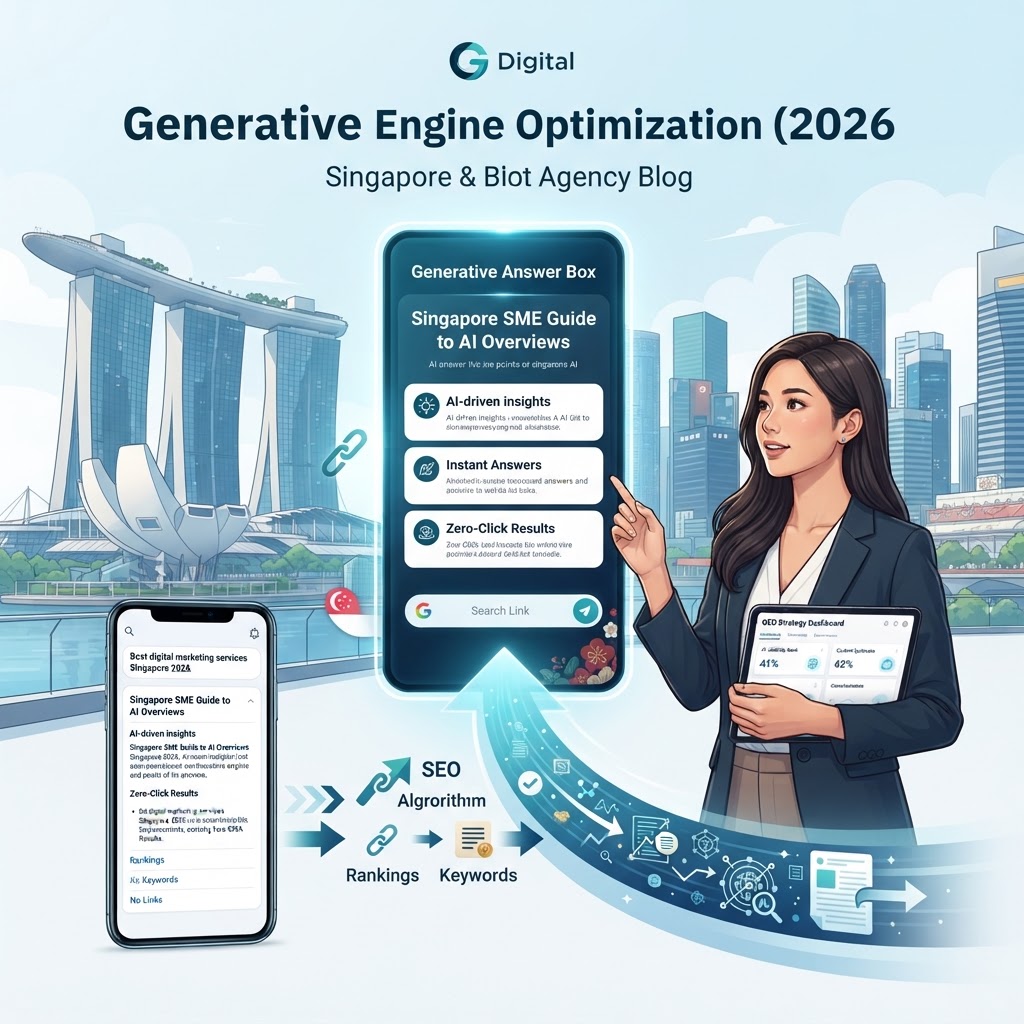
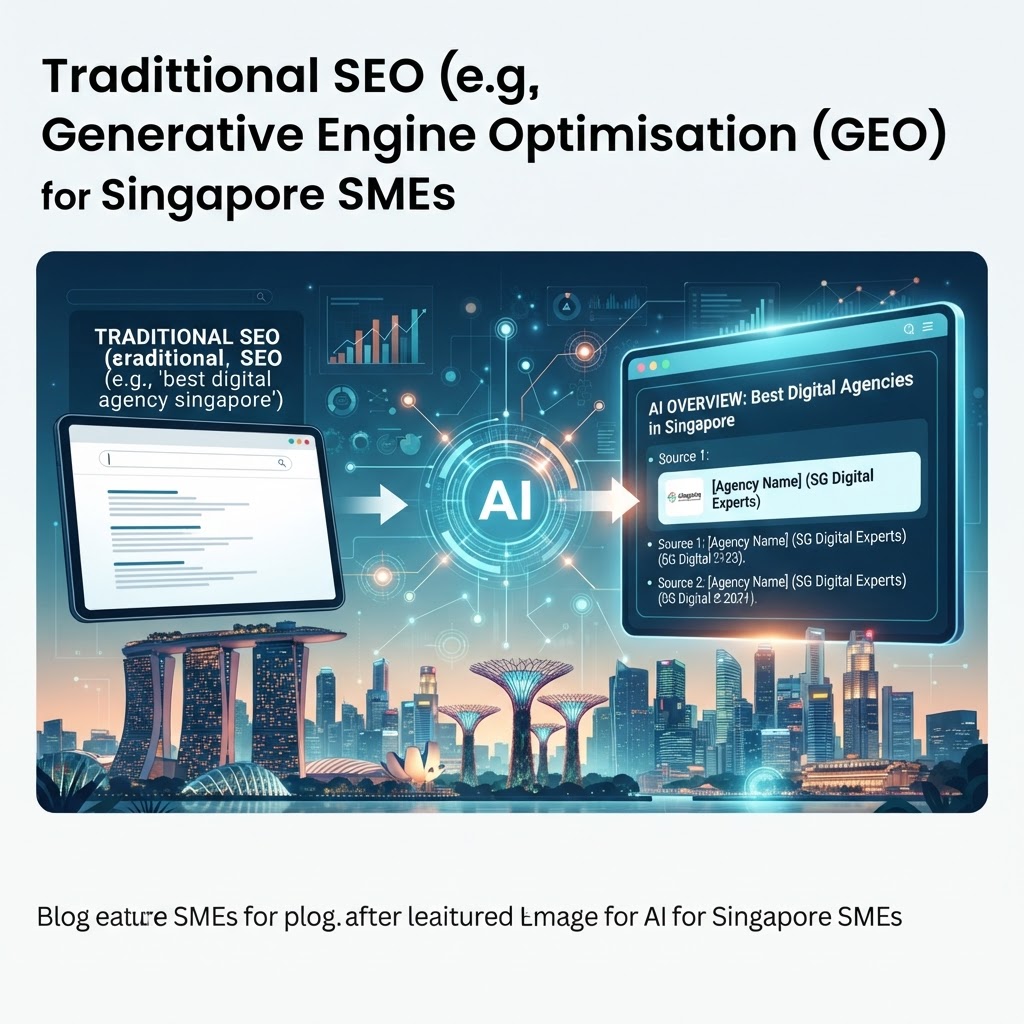
By 2026, zero-click searches and AI-assisted answers have matured. Designing for these outcomes requires intentional content engineering:
- Create concise, authoritative answer blocks in your content that are easily excerpted into featured snippets.
- Implement FAQ schema and Q&A blocks to increase the odds of being surfaced directly in search results.
- Prioritise factual accuracy, E-E-A-T (Experience, Expertise, Authoritativeness, Trustworthiness) signals, and citations for industry claims.
Balancing full-page content with snippet-ready summaries helps capture both on-site engagement and visibility in zero-click scenarios. Practical guidance on adapting assets for no-click experiences is available through a specialist zero-click search resource.
Modern tech stacks: headless, PWA and platforms
Choosing the right platform impacts speed, flexibility and SEO:
- Headless CMS architectures enable decoupled front ends that prioritise performance and flexible content delivery.
- Progressive Web Apps (PWA) offer native-like experiences and can improve engagement metrics when implemented correctly.
- Static site generation (SSG) with incremental builds is viable for many brochure, documentation, and blog-heavy sites.
Work with a digital marketing agency Singapore that understands both development and SEO trade-offs to choose the right stack.
Accessibility, privacy and compliance as ranking considerations
Accessibility improves UX for everyone and reduces risk. Privacy-first techniques (consented analytics, cookieless measurement) retain data integrity without breaking compliance. Search engines reward trustworthy sites; investing in accessibility and transparent privacy practices supports SEO and brand reputation.
Measurement, testing and continuous improvement
An SEO-aware web design is never finished. Use these measurement practices:
- Combine lab tools (Lighthouse, PageSpeed Insights) with field data (Chrome UX Report) to prioritise performance fixes.
- Track Core Web Vitals at the page level and tie improvements to conversion metrics.
- Run A/B tests on layout and content to identify UX changes that lift engagement.
- Monitor SERP feature presence for target queries and track organic CTRs with structured meta testing.
A growth-oriented process ties design sprints to measurable SEO outcomes.
Implementation checklist for Singapore businesses
- Perform a technical SEO audit before design starts.
- Define primary and local keyword mapping (including “web design singapore” and “seo singapore”).
- Choose a hosting and CDN solution with APAC edge nodes.
- Implement SSR/SSG where needed and optimise images and fonts.
- Add structured data for business, products and FAQs.
- Build localized landing pages and claim your Google Business Profile.
- Establish an ongoing content schedule aligned to search intent and seasonal trends.
Follow-up resources and case studies on these topics can be found via specialist partners who focus on integrated design and SEO solutions.
Final thoughts: position for growth in 2026 and beyond
SEO-first web design in Singapore requires a pragmatic blend of performance engineering, content strategy, and local optimisation. Embrace modern technical stacks, design for zero-click and mobile-first experiences, and measure impact continuously. Executed well, this approach reduces bounce, increases organic visibility for competitive terms like “web design singapore” and “seo singapore”, and drives sustained customer acquisition.
Moving forward with a disciplined, data-driven web design process positions your business to capture both immediate local opportunities and the evolving AI-driven SERP landscape.