Introduction
In 2026 local search has evolved beyond simple keyword targeting. Singapore businesses compete in a landscape shaped by generative AI, conversational interfaces, and tighter integration between search, maps, and commerce. A specialised digital marketing agency Singapore that understands local signals and modern search behavior is essential for companies aiming to convert local intent into revenue.
This article breaks down practical local SEO strategies for 2026, explains how an agency-driven approach multiplies impact, and lays out an actionable roadmap for measurable growth.
Why local SEO matters in Singapore in 2026
Local intent drives purchase decisions for services, retail, F&B and professional firms. With high smartphone penetration and a dense urban population, Singapore searchers expect accurate local results, near-instant answers, and frictionless booking or purchasing.
Key reasons local SEO stays critical:
- High conversion intent: searches with local signals (“near me”, neighbourhood names, + postal code) tend to convert at higher rates.
- Multi-platform presence: Google Maps, platform directories, social commerce and voice assistants form a unified discovery path.
- Competitive differentiation: local optimisation and reputation management create defensible visibility that national campaigns can’t replicate.
How a digital marketing agency Singapore approaches local SEO
A professional agency blends technical, content and reputation work into a continuous program. Here’s a practical framework agencies use to scale local visibility.
1) Local technical foundations
- Google Business Profile optimisation: accurate categories, service areas, booking links, up-to-date photos and regular posts. Consistent management prevents ranking drops.
- Structured data and schema: implement LocalBusiness schema, openingHours, geo-coordinates, and product/service markup to help search engines surface rich results.
- Site structure and mobile performance: mobile-first indexing and Core Web Vitals remain ranking factors; local landing pages must be fast and indexable.
2) Geo-targeted content and experience
- Location landing pages: create unique, value-first pages for neighbourhoods and service areas; avoid thin templated copies.
- Localized FAQs and conversational content: craft content that answers voice search and AI-driven snippets. Phrase answers in natural language and provide concise single-line answers followed by fuller context.
- Multi-language signals where relevant: Singapore is multilingual—consider targeted content in English, Mandarin or Malay where the audience warrants it.
3) Reputation, citations and local trust
- Citation consistency: ensure NAP (name, address, phone) is identical across directories and your site. Inconsistencies create ranking friction.
- Reviews strategy: proactively collect and respond to reviews across primary platforms; high-quality reviews feed both ranking signals and conversion lift.
- Local partnerships and backlinks: trusted local citations, news mentions and partnership links strengthen local authority.
4) Modern signals: generative AI and conversational search
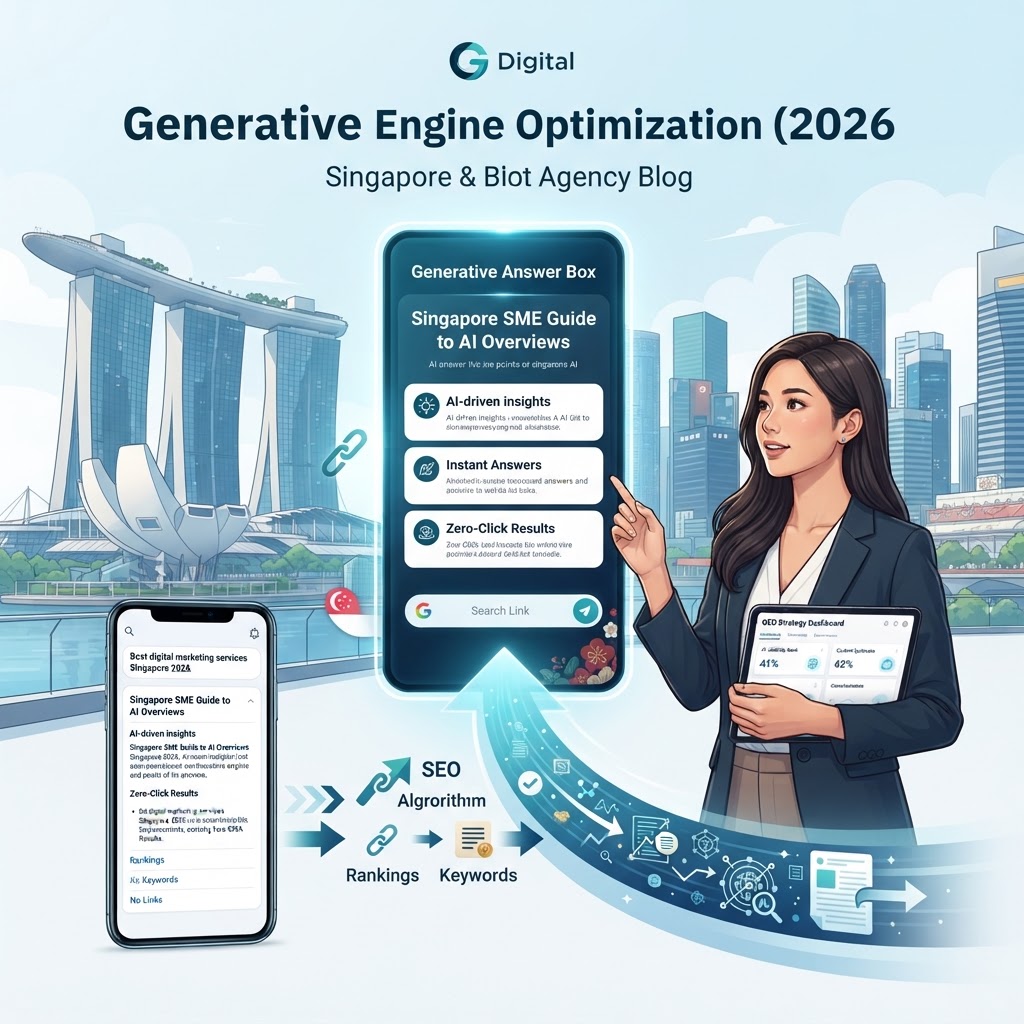
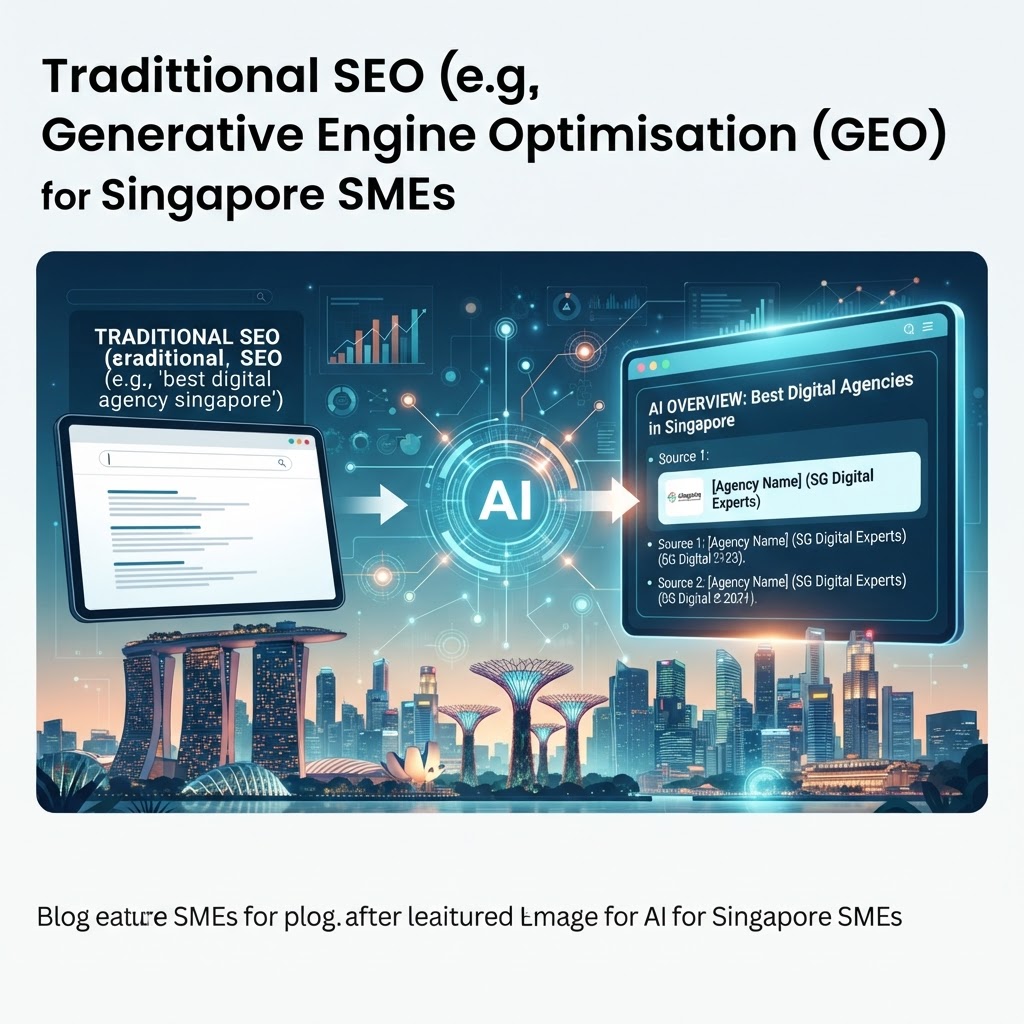
Generative engines and multimodal assistants now influence local discovery in 2026. Optimising for this era—often called generative engine optimization—means structuring content for AI consumption and downstream reuse. Learn practical guides and SME-focused tactics in resources on generative engine optimisation that detail how to surface your business in AI-driven summaries and answer boxes.generative engine optimization
Key tactics include:
- Answer-first content blocks: short, authoritative answers at the top of pages to feed snippet-based systems.
- Content provenance: clear authorship, date-stamps and credentials to boost trust signals for AI summarizers.
- Rich asset availability: FAQs, structured data, images with descriptive alt text and downloadable resources for reuse by AI platforms.
5) Integrated UX: web design and local conversion
Local SEO isn’t just about ranking—it’s about converting. Seamless booking, chat, localized offers and clear local landing pages bridge search visibility to revenue. Trends for 2026 emphasise integration of web design and SEO; an agency that marries both will drive higher ROI. Explore current web design and SEO trends that matter for Singapore businesses.web design and SEO trends
Practical local SEO checklist for 2026 (for Singapore businesses)
- Audit and fix NAP inconsistencies across at least 20 top directories.
- Fully optimise Google Business Profile weekly (photos, posts, offers).
- Implement LocalBusiness schema and FAQ schema on key landing pages.
- Create 3–5 neighbourhood-specific landing pages with original content.
- Set up a review acquisition program and standard operating procedure for responses.
- Monitor Core Web Vitals and maintain mobile speed under 2.5s.
- Produce short answer snippets and Q&A blocks to feed AI-driven results.
- Track phone call conversions and booked appointments as primary KPIs.
KPIs to measure local SEO success
- Increase in local impressions and map pack visibility.
- Organic local traffic growth to neighbourhood landing pages.
- Number of calls, bookings and in-store visits (where tracked).
- Review volume and average rating improvement.
- Conversion rate from localized pages and Map/Business Profile interactions.
Tools that agencies typically use: Google Search Console, Google Business Profile Insights, local rank trackers, call-tracking, and log analysis for deeper technical issues.
SEO Singapore: what sets local campaigns apart
‘SEO Singapore’ requires a local-first mentality: attention to postcode-level intent, Singapore-specific platforms, and culturally aligned messaging. Effective campaigns account for:
- Dense urban micro-markets where hyper-local ads and pages outperform broad targeting.
- Platform-specific behaviours—users often move from Google Maps to WhatsApp or chat-based bookings.
- Government and regulatory considerations for advertising in certain verticals.
For tactical approaches that combine SEO and revenue growth specifically tailored to Singapore’s market, see actionable frameworks used by agencies that help businesses boost local performance and sales.SEO Singapore
How to choose the right digital marketing agency in Singapore
Selecting an agency is about alignment of capabilities, transparency, and measurable processes. Consider these selection criteria:
- Local expertise: proven case studies for Singapore neighbourhoods and service areas.
- Technical depth: ability to implement schema, fix crawl issues, and improve Core Web Vitals.
- Content capability: experience producing localized, AI-friendly content and PR-led link building.
- Measurement: clear KPIs, dashboards, and reporting cadence.
- Cross-channel experience: capability across search, maps, social and on-site conversion.
An agency that demonstrates both strategic thinking and hands-on execution—plus a willingness to iterate—will deliver the best long-term ROI. Many agencies now publish guides and tactical playbooks; reviewing those is a quick way to assess capability.digital marketing agency Singapore
Case example: small clinic local lift (hypothetical)
A neighbourhood clinic in central Singapore implemented a local SEO program: improved GBP details, added three location pages for nearby MRT catchments, published weekly Q&A content, and ran a review outreach campaign. Within six months the clinic saw a 45% increase in map pack impressions, 30% more calls attributed to organic listings, and a 20% uplift in booked consultations.
This mirrors many SMB wins when local technical hygiene, content relevance, and reputation management are executed consistently.
Budgeting and timelines
Local SEO is iterative. Typical timelines:
- 0–2 months: audit, quick fixes, GBP optimisation and core technical remediation.
- 2–6 months: content rollout, schema implementation, initial review and link building campaigns.
- 6–12 months: measurable traffic and conversion improvements, iterative testing and expansion into adjacent neighbourhoods.
Budget depends on competition and scale. A focused local program for a single-location business is more affordable than multi-location rollouts which require templating, governance and localised content production.
Advanced trends to watch (2026+)
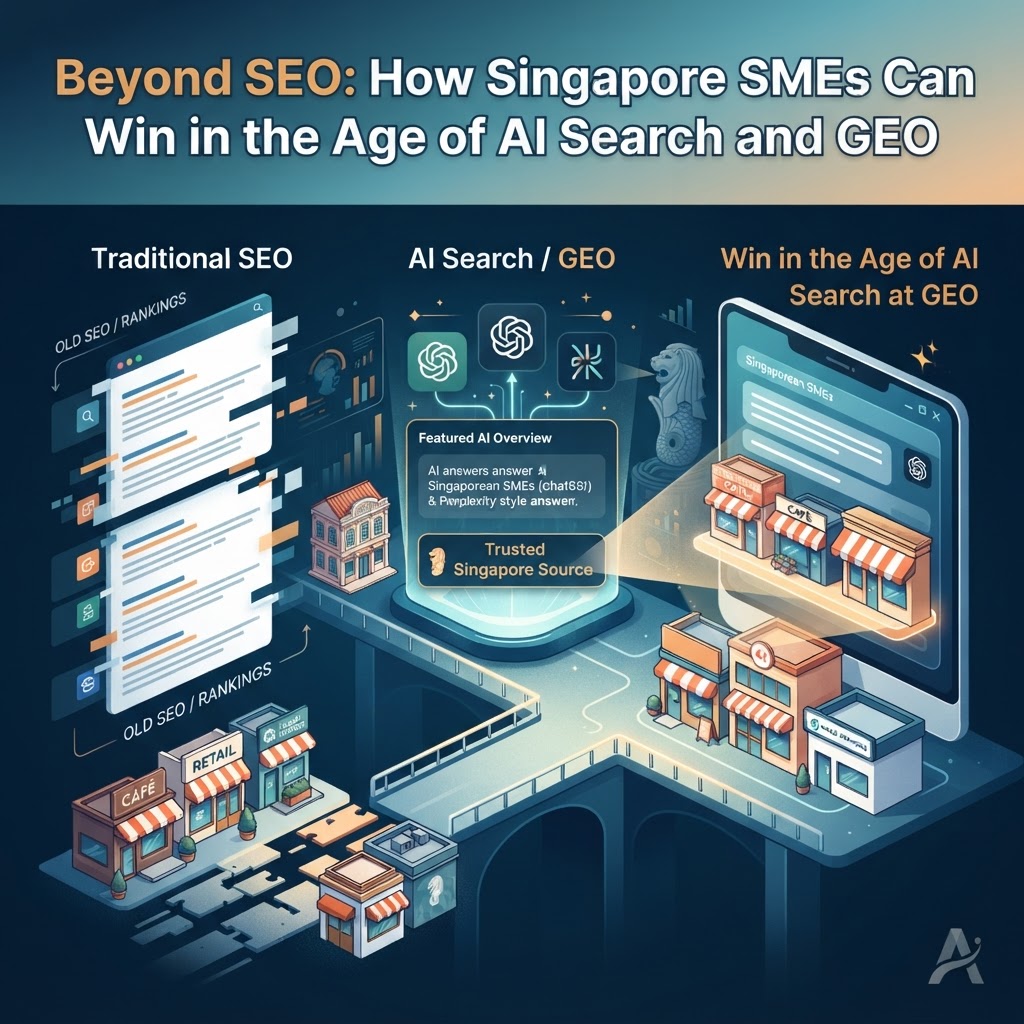
- Generative ranking signals: AI-driven summarizers will increasingly surface businesses based on structured content and trustworthy data—invest in content designed for these systems.generative engine optimization
- Voice commerce: voice-driven local queries will grow; short, transactional answer blocks and conversational flows are essential.
- Cross-platform commerce: discovery to checkout can happen entirely within maps or social platforms—tracking and channel integration matter more than ever.
Final roadmap: first 90 days
- Run a full local SEO and GBP audit.
- Standardize NAP and update top directories.
- Launch 1–3 hyper-local landing pages with FAQ/snippet-ready answers.
- Implement LocalBusiness schema and optimize page speed.
- Start a review acquisition workflow and weekly GBP postings.
- Set initial KPIs and a 3-month reporting cadence to iterate.
Partnering with an experienced digital marketing agency Singapore that understands both traditional SEO mechanics and the new generative landscape will accelerate results and protect your local market share. The right mix of technical hygiene, localized content, reputation management and AI-aware optimisation creates a sustainable edge for Singapore businesses in 2026.